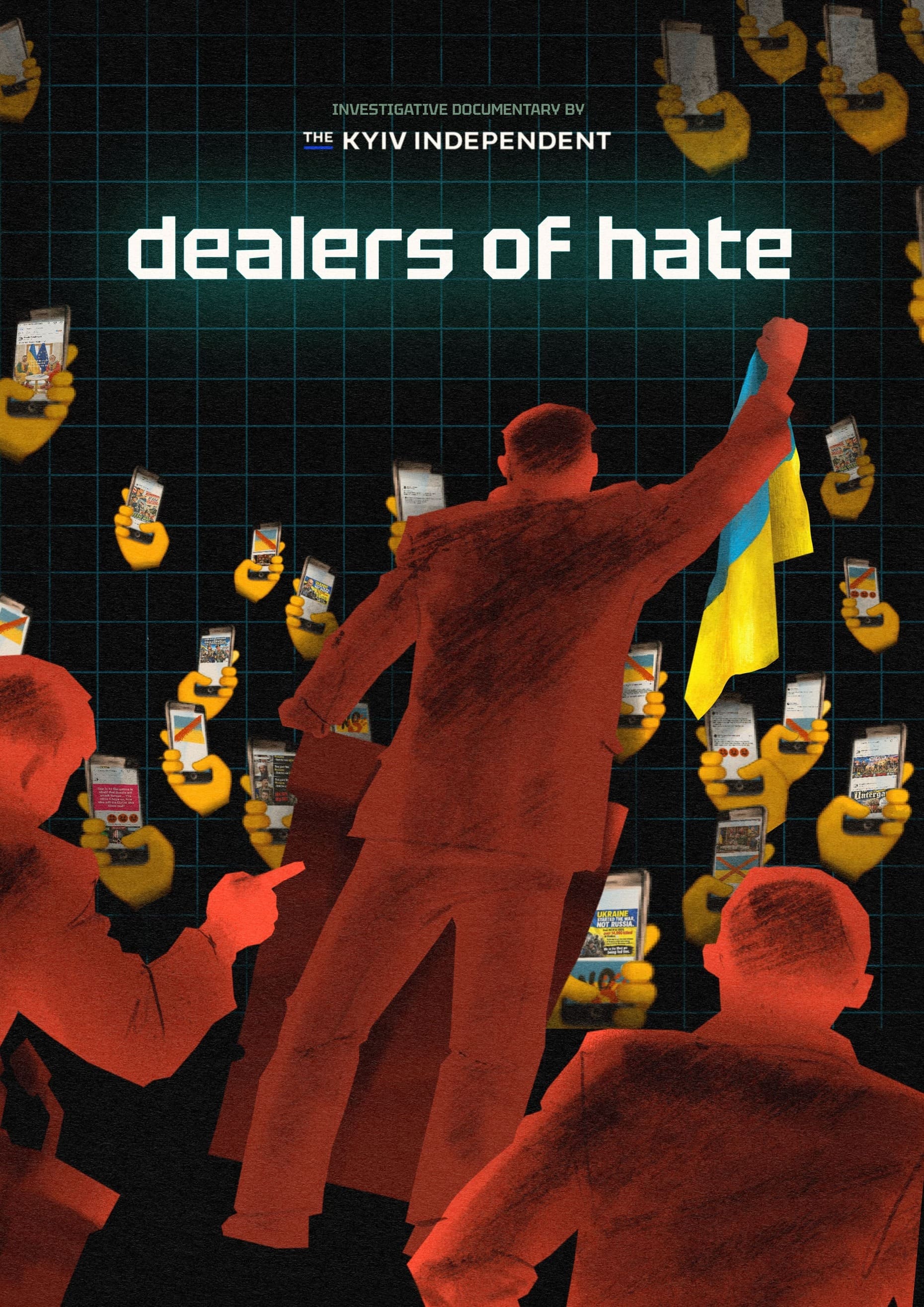
Dealers of Hate explores aggression against Ukrainians in the three EU countries that have taken in the largest numbers of Ukrainian refugees since Feb. 24, 2022: Germany, the Czech Republic, and Poland.
The film follows Ukrainians who have experienced various forms of anti-Ukrainian hostility in these countries, including everyday harassment, physical assault, and a sense of being left unprotected by the police. Their stories are just a few examples among many: statistics show that hundreds of Ukrainians in these countries are subject to anti-Ukrainian sentiment.
The documentary also explores how this sentiment is actively fueled by local politicians, using interviews and research to show how street-level aggression against Ukrainians is linked to the hate speech circulating on social media and coming from the political stage. Anti-Ukrainian sentiment is actively spread in these countries by politicians including Alice Weidel and Tino Chrupalla in Germany, Tomio Okamura and Andrej Babiš in the Czech Republic, and Grzegorz Braun and Karol Nawrocki in Poland.
Notably, particularly intense surges in anti-Ukrainian sentiment occur in these countries during election campaigns, suggesting that hostility toward Ukrainians has become an effective tool for local politicians. This view is supported by the film’s leading expert, American researcher and founder of the Dangerous Speech Project, Susan Benesch.
A key feature of the documentary is original research conducted by the Kyiv Independent in collaboration with data analyst Denys Hubashov. The team examined tens of thousands of tweets about Ukrainians on X in Czech, Polish, and German. They used an AI model to analyze a vast dataset, identifying the most prevalent anti-Ukrainian narratives in the three countries, and exploring how these narratives resonate with the distinct social dynamics of each country.

INVESTIGATION
Eva Yakubovska and Vladyslava Vorobiova have lived in Germany for nine years, where they founded the organization Vitsche. After Russia launched its full-scale invasion of Ukraine, the two began holding regular rallies in support of their home country. At these rallies, they have found not only support but, increasingly, faced aggression.
"We've seen all kinds of things at those rallies. People spat at those who came, shouted at them, and got right up in their faces, screaming at them aggressively," Vorobiova said.
In the first months of Russia's full-scale invasion, Ukrainian refugees in EU countries were met with a wave of support that began right at the border. Today, aggression against Ukrainians is increasingly common in those EU countries that have taken in the largest numbers of Ukrainian refugees — Poland, Germany, and Czechia.
On Ukraine's Independence Day, Aug. 24, 2024, as Vorobiova and Yakubovska held a rally near the Brandenburg Gate in Berlin, Vorobiova noticed a man approaching them with a knife in his hand. Yakubovska only remembers that he was shouting something about Russia.
"I thought I would protect Vlada because I'm older — I could die," she said.

More investigations