Belarus frees over 100 political prisoners, including Kalesnikava, Babaryka, Nobel prize winner Bialiatski, in sanctions deal with US
 on Google
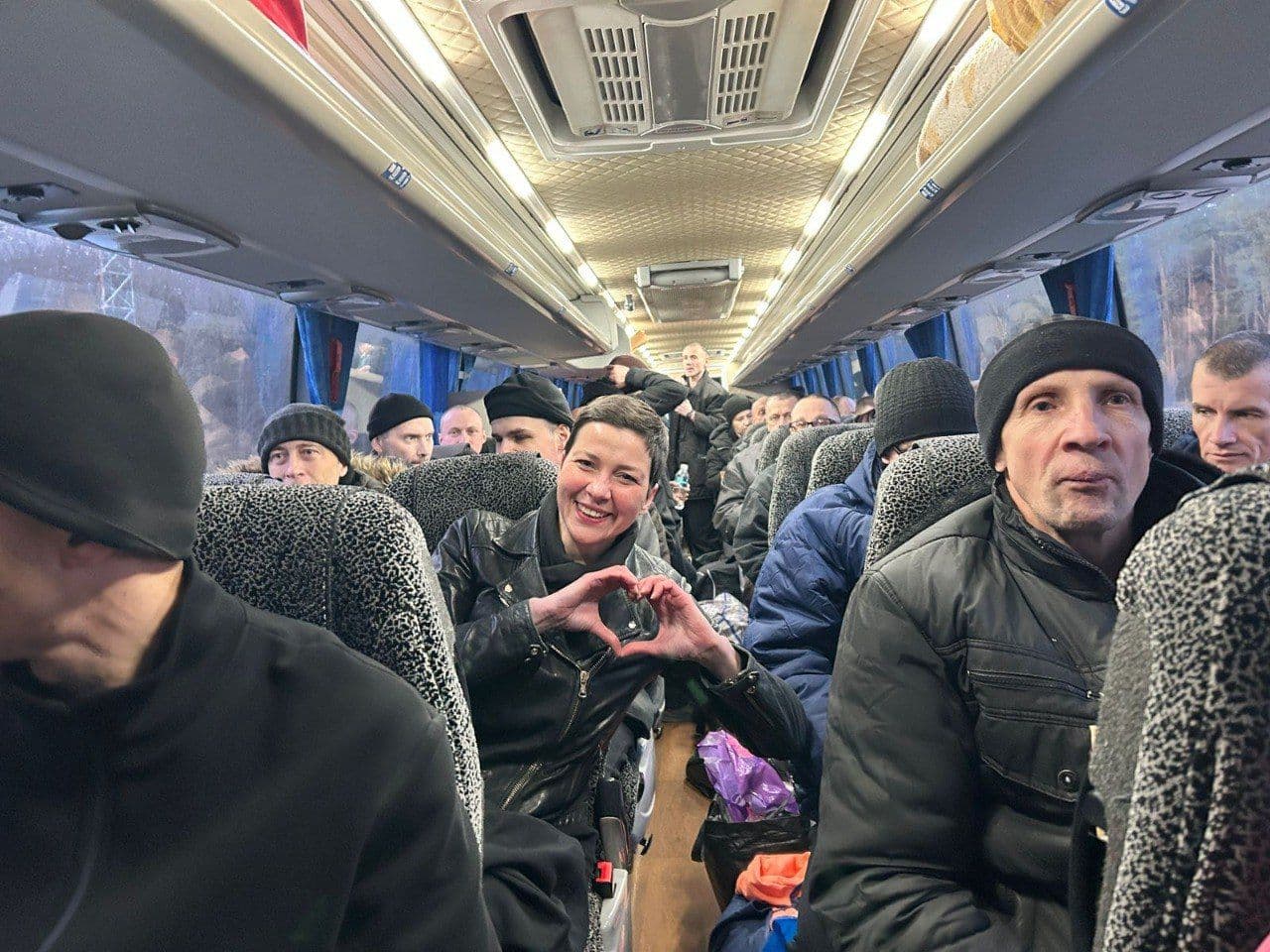
More than 100 political prisoners were released from Belarus on Dec. 13, including several high-profile figures, in exchange for the U.S. lifting its sanctions on Belarusian potash.
Of those released, 114 were transferred to Ukraine, including prominent opposition figures Maria Kalesnikava and Viktor Babaryka, a former presidential candidate in the disputed 2020 election, HUR said. Nobel Peace Prize laureate Ales Bialiatski was also released.
"I am very happy that I am free. I understand that in order for us to be free, we had to do a lot of work. We were able to be free thanks to the efforts of many thousands of people. First of all, the American diplomats, the American government officials, who made an effort for us to be free," Bialiatski said.
The Nobel Peace Prize laureate was told to ask for a pardon while in prison, but declined to do so, he said, adding that he was only told of his release earlier in the day.
The move comes amid a warming of relations between Washington and Minsk and follows the lifting of sanctions on Belarus's flag carrier, Belavia, in November.
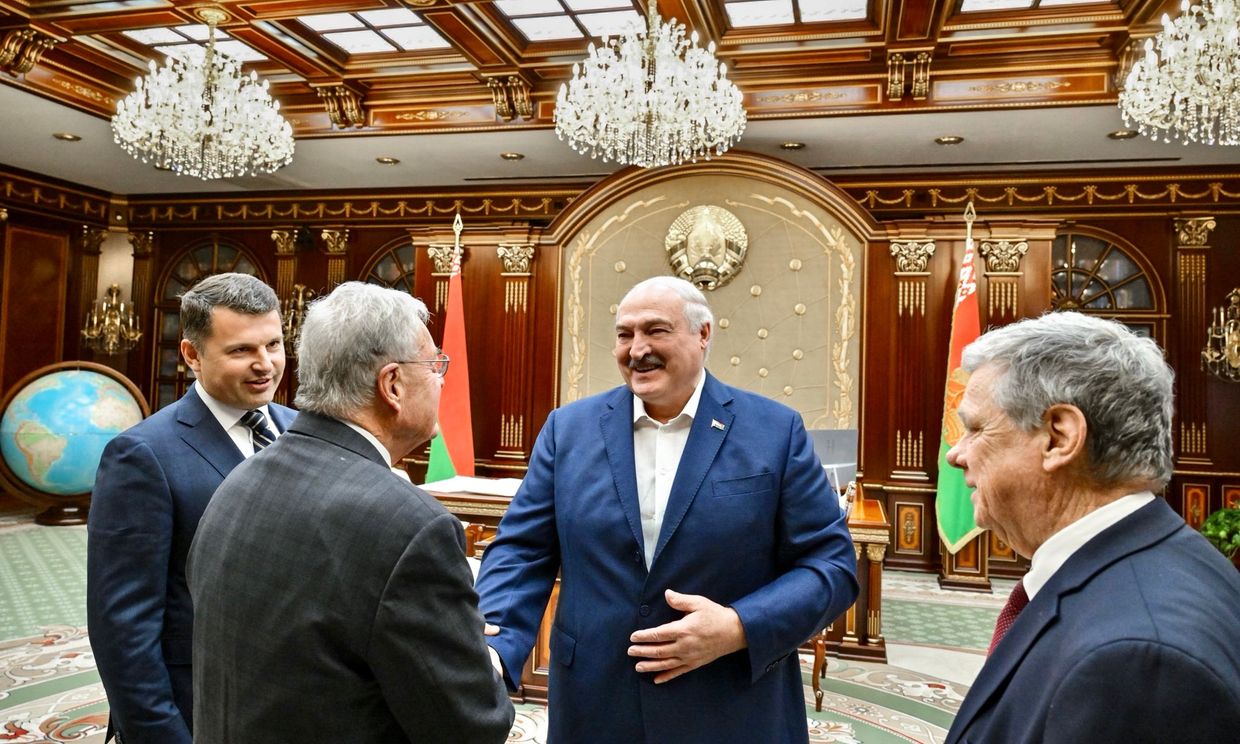
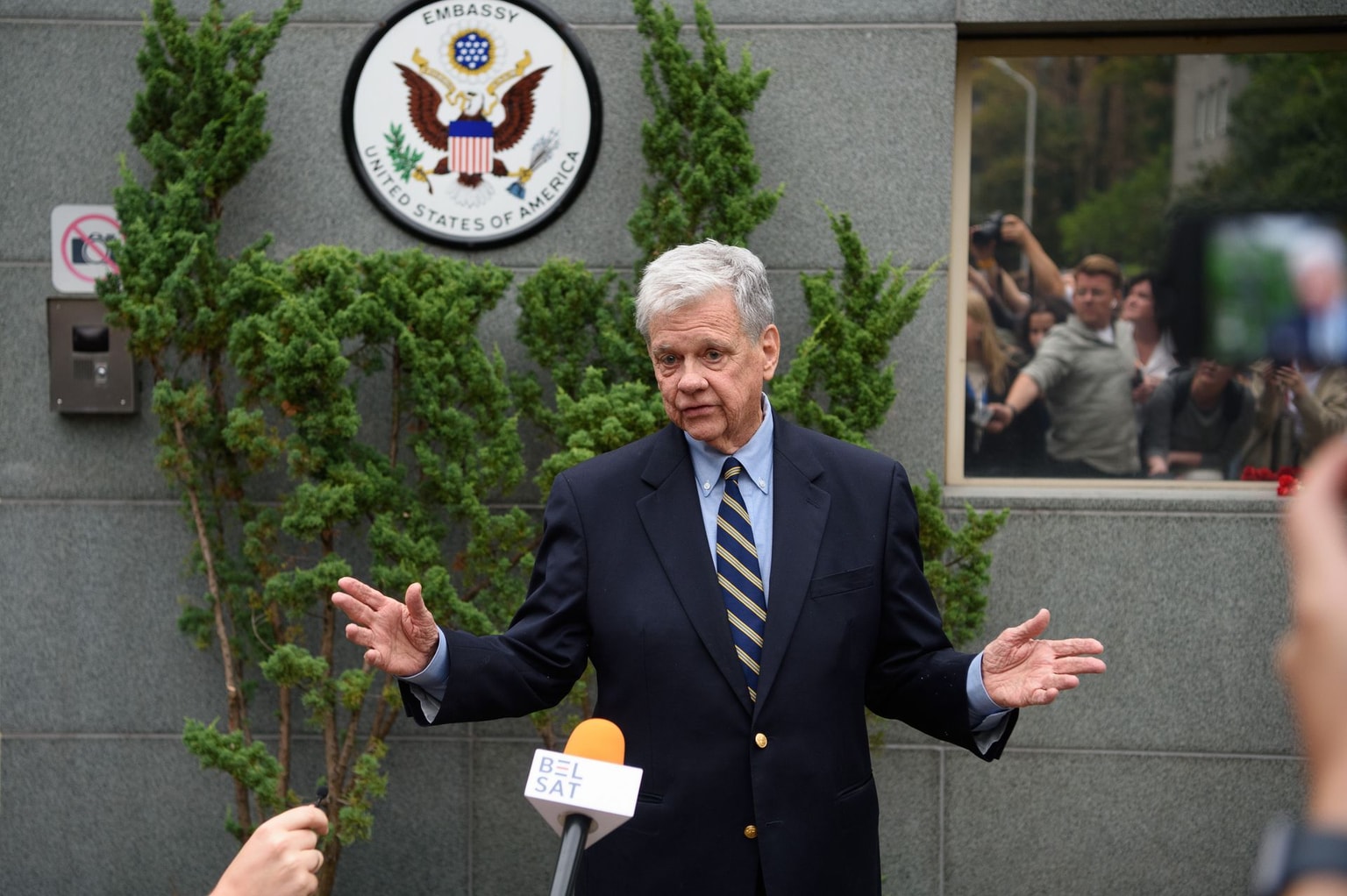
"Per the instructions of President Trump, we, the United States, will be lifting sanctions on potash," U.S. presidential envoy to Minsk John Cole said on Dec. 13 following a meeting with Belarusian leader Alexander Lukashenko.
"This is a very good step by the U.S. for Belarus," Cole said.
Potash is one of Belarus's key exports and its most significant mineral resource, with the state-owned producer Belaruskali ranking among the world's largest suppliers.
Cole said Washington and Minsk would continue talks on sanctions and expressed hope that other measures could eventually be lifted altogether.
The lifting of sanctions was in exchange for the release of 123 political prisoners in Belarus, which included five Ukrainian nationals, Ukraine's military intelligence agency, HUR, said in a public statement.
Sviatlana Tsikhanouskaya, exiled Belarusian opposition leader, told journalists in Vilnius on Dec. 13 that she is still awaiting a full list of those who have been released.
Eight released political prisoners, including Bialiatski, were transferred directly to Vilnius, Lithuania, while the rest "unexpectedly" ended up in Ukraine, according to Tsikhanouskaya. She is coordinating with Polish and Ukrainian authorities to ensure the safe transfer of prisoners to the Lithuanian border, she said.
"Now we have more than 100 people in Ukraine, we will try to agree now with the Polish, Ukrainian, American, and Lithuanian blocs about further steps, so that they can all move, at least to Lithuania, to Vilnius, so that we can see them here tomorrow or the day after tomorrow. But again, there is no solution yet," Tsikhanouskaya's chief political advisor, Franak Viachorka, told the Kyiv Independent.
The released prisoners were taken to Ukraine "at the very last moment" despite initial plans for all to arrive in Lithuania in Minsk's attempt "to harm people," he said, adding that Kyiv was not expecting the arrival of the released prisoners, but that they are now "secured, and they are being treated" in Ukraine.
According to President Volodymyr Zelensky, Minsk informed Kyiv via intelligence channels that it was ready to release the prisoners to Ukraine rather than "this or that EU country."
Tatsiana Khomich, the sister of Kalesnikava, said she had spoken with her and that Kalesnikava appeared well and was now free, a Kyiv Independent journalist reported on the ground.
"We knew about the possible release for a long time," Khomich told reporters. "But as we saw recently, as well as last month, it was kind of a surprise every time who was released. And, of course, I could not believe it until now."

Khomich added that lifting sanctions on Belarusian potash in exchange for the release of political prisoners was a "fair price."
Veteran politician Pavel Seviarynets, political analyst Alexander Feduta, and journalist Marina Zolotova are among the Belarusian citizens freed from captivity, according to a full list of names released by the Ukrainian government project "I Want to Live."
An Australian citizen has also been released as a part of the deal, Viachorka said.
Zelensky said the release of Ukrainian citizens was made possible by the involvement of the U.S., as well as cooperation between Ukrainian and U.S. intelligence services.
The president also said he had instructed HUR and other bodies within the Coordination Headquarters for the Treatment of Prisoners of War (POWs) to intensify efforts to secure the release of Ukrainian POWs before the end of the year.
Belarus faces sanctions from a number of Western countries, including the U.S., over political repression by Lukashenko's regime. The restrictions were expanded after Russia launched its full-scale invasion of Ukraine, as Minsk is a close ally of the Kremlin.
U.S. sanctions imposed on Belaruskali in 2021 forced Belarus to redirect its potash shipments via Russia, tying Minsk more closely to the Kremlin economically.
Washington previously lifted sanctions imposed in 2021 on Belarusian airline Belavia after Lukashenko released 52 political prisoners in September.
The U.S. also removed the private jet used by Lukashenko's family from its sanctions list and authorized three additional aircraft linked to Lukashenko to operate.
Tsikhanouskaya told reporters that the release of prisoners may reflect Lukashenko's desire to continue dialogue with U.S. President Donald Trump, but stressed it does not signal any fundamental change in his regime.
"Sanctions are instruments. It is leverage to make dictators do something," Tsikhanouskaya said. "Lukashenko will not release people because he somehow became humane. He wants to sell people as expensively as possible."
Tsikhanouskaya also said that the sanctions against Belarus must remain in place, adding that political repression continues.
Former election staff coordinator to Babaryka, Ivan Kravtsov, expressed hope that the release of political prisoners is a step in the right direction.
"I hope that we will come pretty soon to the point when there will be zero political prisoners in the country. Because it is absolutely logical that if Lukashenko, on his part, expects normalization of relations with the West, then there should not be political prisoners. I think we will come to this," he said.
Lukashenko, who has ruled Belarus since 1994, is widely seen as a close ally of Russian President Vladimir Putin. Lukashenko allowed Russian forces to use Belarusian territory to launch attacks on Ukraine at the start of Moscow's full-scale invasion in 2022.