Venezuela will be governed by US until 'safe, proper, and judicious transition,' Trump says, as Maduro arrives at detention center

US President Donald Trump, alongside (L/R) Deputy Chief of Staff Stephen Miller, Secretary of State Marco Rubio, and US Secretary of Defense Pete Hegseth, speaks to the press following US military actions in Venezuela, at his Mar-a-Lago residence in Palm Beach, Florida, on January 3, 2026. President Trump said Saturday that US forces had captured Venezuelan leader Nicolas Maduro after launching a "large scale strike" on the South American country. (Photo by Jim WATSON / AFP via Getty Images)
 on Google
The U.S. has carried out a large-scale military operation against Venezuela on Jan. 3. U.S. President Donald Trump said that Venezuelan leader Nicolas Maduro and his wife were captured and snatched out of the country.
"The United States of America has successfully carried out a large-scale strike against Venezuela and its leader, President Nicolas Maduro, who has been, along with his wife, captured and flown out of the country," Trump said on Truth Social.
Maduro arrived at a military base in New York around 5:30 p.m. local time and arrived at the Metropolitan Detention Center in Brooklyn around 9 p.m.. He is being charged with narcoterrorism conspiracy, cocaine importation conspiracy, and possession of machineguns and destructive devices against the United States.
In a press conference on Jan. 3, Trump said that Venezuela will be governed by the U.S. until a "safe, proper, and judicious transition" could take place.
He noted that a second and "much larger" attack wave could take place and had been planned out, but likely won't have to happen anymore following the operation's success.
"All political and military figures in Venezuela should understand that what happened to Maduro can happen to them, and it will happen to them, if they aren't just, fair, and even to their people," Trump warned.
Venezuela’s Supreme Court late on Jan. 3 appointed Maduro's Vice President Delcy Rodriguez as the country's acting president.
Ahead of appointment, Rodriguez condemned the U.S. attack, stating that Venezuela "will never return to being the colony of another empire."
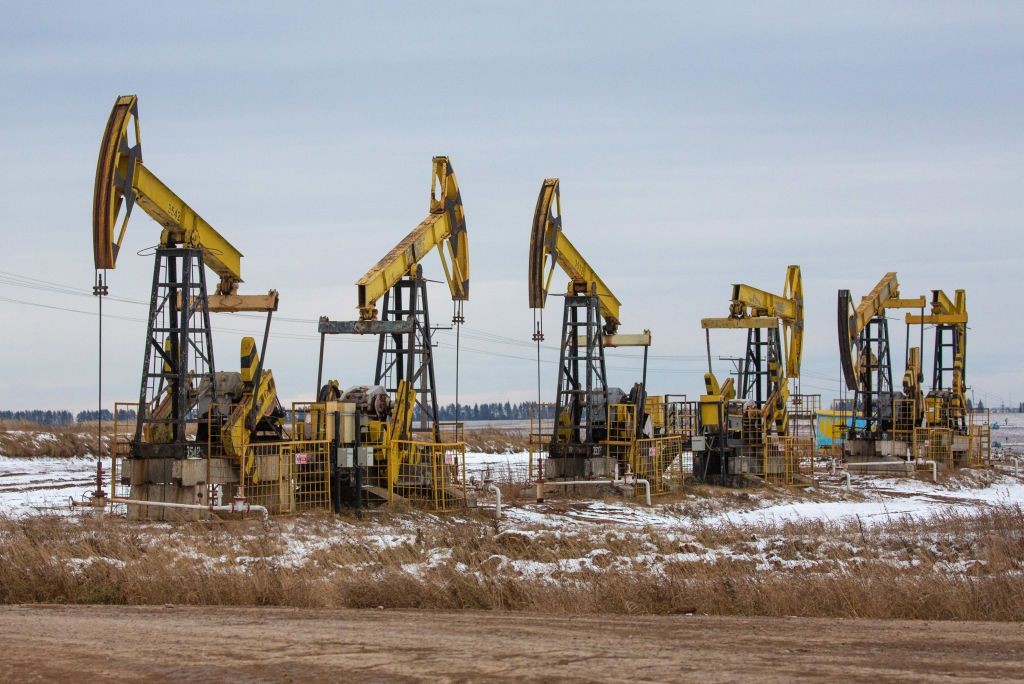
The U.S. president also spoke about Venezuela's oil industry, claiming that it was built by "American talent, drive, and skill" and that the "socialist regime stole it through force, constituting a large theft of property from the U.S."

Trump said that U.S. oil companies plan to now spend billions of dollars in Venezuela in order to fix the "badly broken" oil infrastructure and start making money for the country, with the eventual goal of selling "large amounts of oil" to other governments.
The administration's foreign policy decision in Venezuela were referred to by Trump as an example of following the Monroe Doctrine strategy and asserting U.S. dominance in the Western Hemisphere.
"Under the now deposed dictator Maduro, Venezuela was increasingly hosting foreign adversaries in our region and acquiring menacing offensive weapons that could threaten U.S. interests and lives, " Trump said.
"These actions were in violation of the core principles of American foreign policy dating back more than two centuries, from the Monroe Doctrine. They now call it the Donroe Doctrine."
A series of explosions rocked Caracas, Venezuela's capital, at about 1:50 a.m. local time on Jan. 3, knocking out power in several parts of the city. Explosions were also reported in several cities beyond the capital.
Venezuela's Foreign Ministry described the events as a "military aggression" by the U.S. Foreign Minister Yvan Gil Pinto appealed to the U.N., requesting an urgent meeting of the Security Council in response to the U.S. strikes.

The U.S. Army's Delta Force, an elite special operations unit, carried out an operation to arrest Maduro, who was indicted in a U.S. court in 2020 on charges of narcoterrorism and conspiracy to import cocaine.
Republican Senator Mike Lee of Utah said on X that Secretary of State Marco Rubio told him Maduro will face trial in the U.S., and that the U.S. attack on Venezuela was intended to "protect and defend those executing the arrest warrant."
Preparations for the operation involved a months-long U.S. military buildup in the region, including the deployment of the USS Gerald R. Ford, the U.S. Navy's newest and largest aircraft carrier, along with several other warships in the Caribbean, according to CBS News.
Key military bases and ports in Venezuela were hit during the strikes, David Smolansky, a spokesperson for Venezuelan opposition leader Maria Corina Machado, told CBS News.
Russia, which signed a new strategic partnership with Venezuela in May 2025, condemned the U.S. strikes, calling them an "act of armed aggression."
"We proceed from the assumption that all partners who may have grievances against each other should seek ways to resolve problems through dialogue," the Russian Foreign Ministry said in a statement. Russia has been conducting a war against Ukraine since 2014.
"Ukraine has not recognised Maduro’s legitimacy following rigged elections and violence against protestors, along with dozens of other countries in different parts of the world," Ukrainian Foreign Minister Andrii Sybiha wrote on X in reaction to the strikes, but stopped short of voicing approval for the U.S.'s armed intervention.
EU foreign policy chief, Kaja Kallas, responded to the U.S. strikes, saying "the EU is closely monitoring the situation in Venezuela" and calling for "restraint." Kallas added that she had already had a phone call with Rubio.
"The EU has repeatedly stated that Mr. Maduro lacks legitimacy and has defended a peaceful transition," Kallas said on X.
"Under all circumstances, the principles of international law and the U.N. Charter must be respected. We call for restraint. The safety of EU citizens in the country is our top priority," Kallas added.
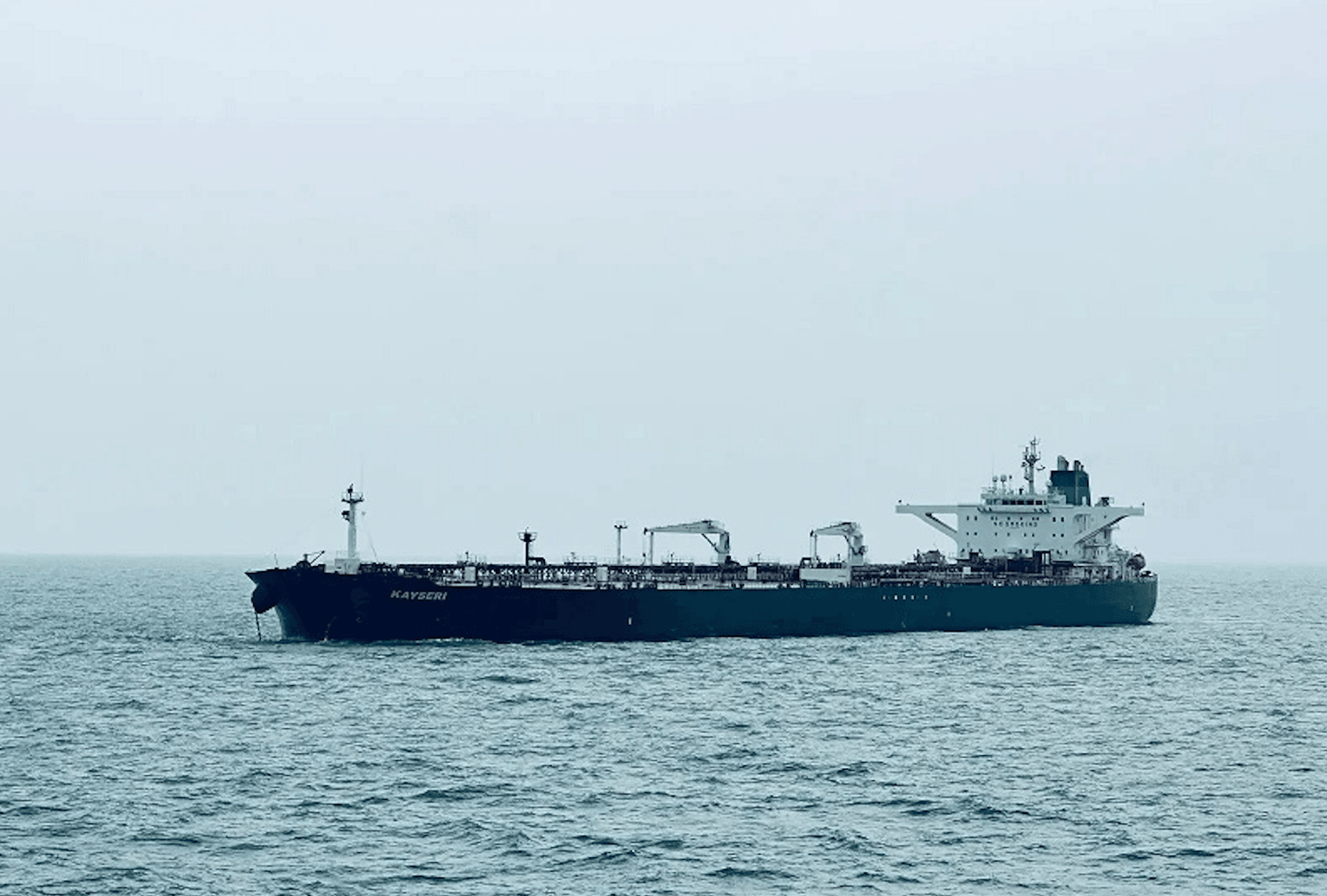
On the eve of the attack, the U.S. seized two oil tankers off Venezuela and launched strikes on more than 30 vessels, which the Trump administration said were transporting drugs, according to CBS News.

In response to Washington's latest actions, Maduro said in an interview broadcast on Venezuelan state television on New Year's Day that he was ready for "serious talks" with the U.S.
"If they want to speak seriously about an agreement to battle drug trafficking, we are ready... If they want Venezuela's oil, Venezuela is ready to accept U.S. investments like those of Chevron, when, where, and how they want to make them," Maduro said.
Relations between the U.S. and Venezuela deteriorated this fall, as Washington launched attacks on Venezuelan vessels, citing efforts to combat drug trafficking.
Trump has also repeatedly warned that the U.S. is preparing additional measures against drug trafficking networks operating out of Venezuela.
Washington also unveiled on Dec. 11 a new package of sanctions targeting three nephews of Maduro's wife, along with six oil tankers and transport companies involved in shipping Venezuelan oil.
On Dec. 16, Trump ordered a blockade of all sanctioned oil tankers entering and leaving Venezuela.

Maduro, who succeeded long-term President Hugo Chavez, has been in power since 2014. His government has faced accusations from the opposition and human rights organizations of election fraud and human rights violations. Under Maduro's leadership, Venezuela has been plunged into a deep economic crisis.
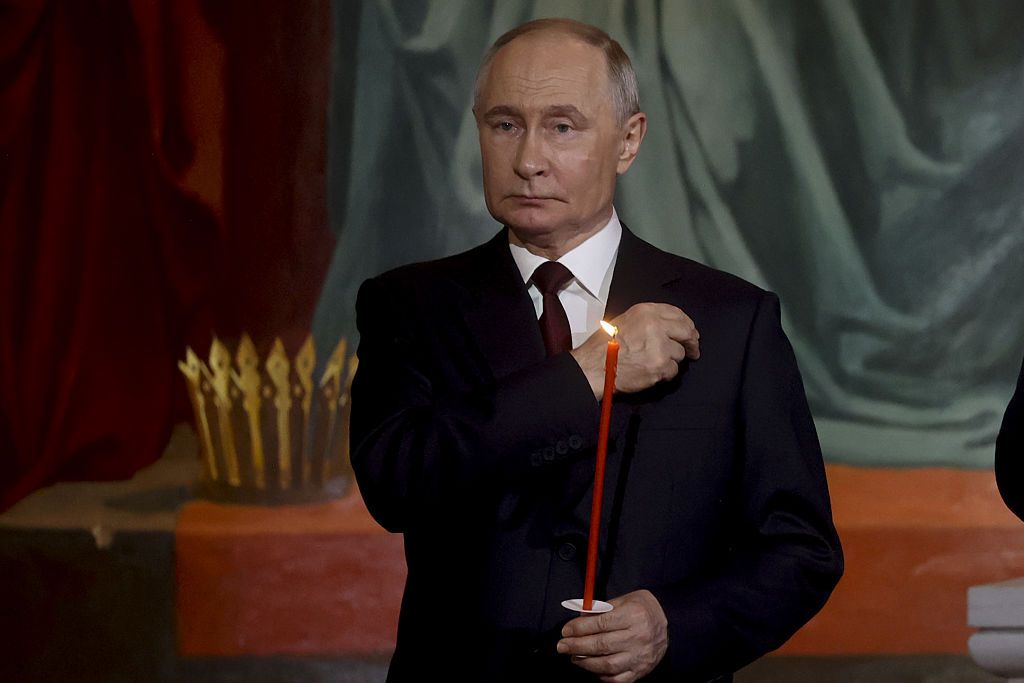
Maduro maintained close ties with Russian President Vladimir Putin, with Russia serving as one of Venezuela's largest arms suppliers and providing significant financial loans.
The Trump administration initially offered a $15 million bounty for the arrest of Maduro. The bounty was raised to $25 million in early January 2025 under President Joe Biden and to $50 million in August 2025 during Trump's second term, when the administration also designated the Cartel de los Soles a foreign terrorist organization, calling Maduro its leader.