Ukrainian veteran politician Yulia Tymoshenko charged in bribery case
 on Google


Editor's Note: This is a developing story and is being updated.
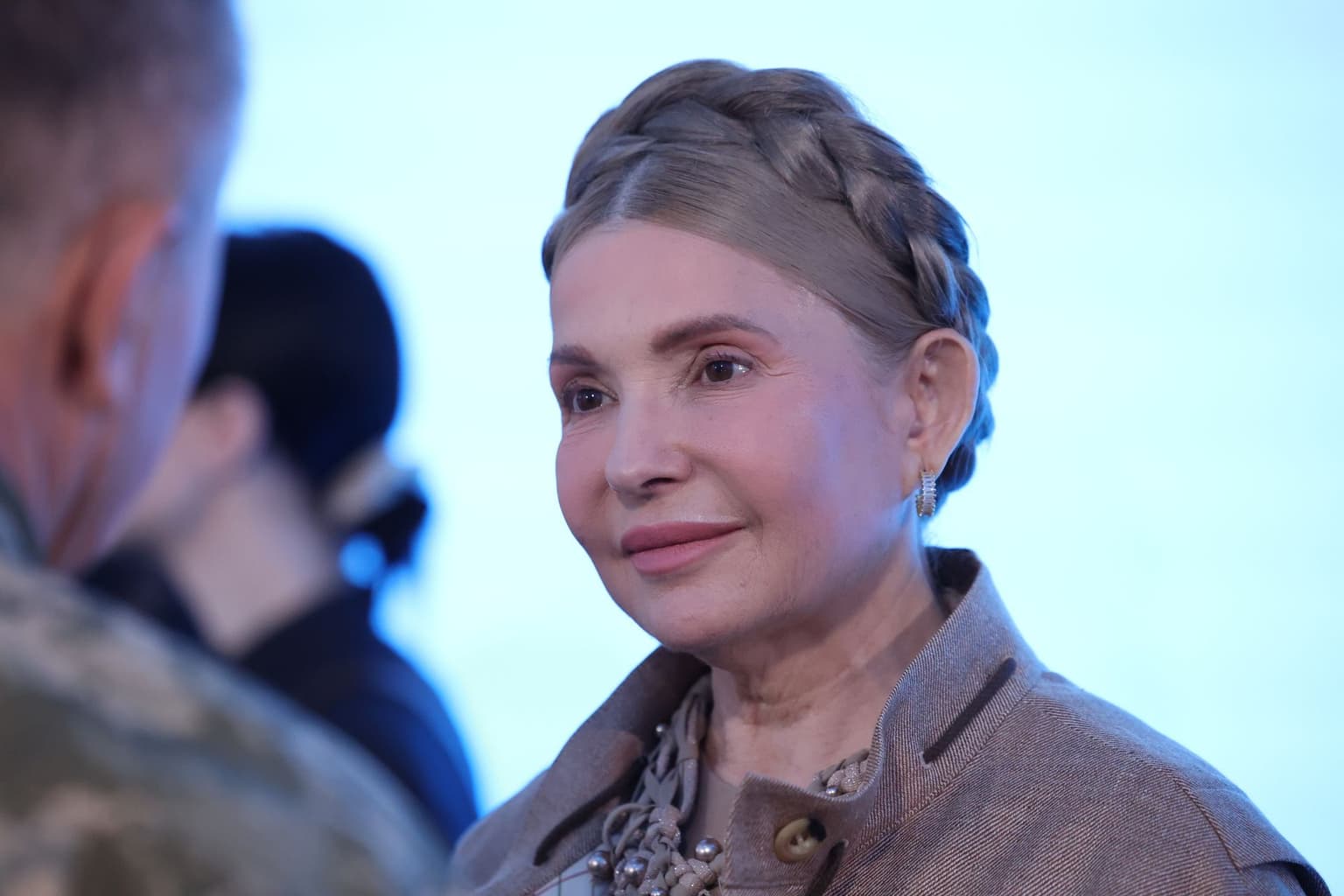
Yulia Tymoshenko, the leader of the Batkivshchyna (Fatherland) party, has been charged with offering bribes to members of parliament, Olha Postolyuk, a spokesperson for the Specialized Anti-Corruption Prosecutor's Office (SAPO), told the news outlet Suspilne on Jan. 14.
After the National Anti-Corruption Bureau (NABU) charged several lawmakers from President Volodymyr Zelensky's party in December, Tymoshenko initiated discussions on regularly offering bribes to some members of parliament in exchange for votes, the NABU alleged.
"It was not about one-time agreements, but about a regular mechanism of cooperation that involved advance payments and was intended for a long-term period," the bureau added. "Members of parliament were supposed to receive instructions on how to vote, and in certain cases — on abstaining or not participating in the vote."
Tymoshenko offered bribes to lawmakers from Zelensky's Servant of the People party, a law enforcement source told the Kyiv Independent.
The NABU also published an alleged instruction sent by Tymoshenko to a lawmaker.
Specifically, she instructed the member of parliament to vote for firing Vasyl Malyuk, head of the Security Service (SBU), Defense Minister Denys Shmyhal, and Digital Transformation Minister Mykhailo Fedorov, according to the NABU. She also said that the lawmaker should vote against appointing Fedorov as defense minister, Shmyhal as energy minister, and Denys Maslov as justice minister, according to the alleged instruction.
According to an audio recording published by the NABU, Tymoshenko allegedly offered "10" as an advance payment to each lawmaker for two parliamentary sessions once a month — an apparent reference to $10,000.
"If we come to an agreement today, we’ll record who is with you, and I’ll be handing the money over to you as to a cash desk," she allegedly told a lawmaker. "And then you’ll deal with them yourself — it’s not 20 or 30 people, there are only three of you here, so you could say it’s a very small group. But I need to tell you what to vote for. Can I then just send it to your phone via Signal?"
Tymoshenko also mentioned in the recording that she sought to "take down the majority" by voting against certain initiatives — an apparent reference to the Servant of the People's majority in parliament.
The SAPO and the NABU searched the Batkivshchyna party offices on Jan. 13.
Tymoshenko confirmed the searches in a Facebook post on Jan. 14 and argued that they "have nothing to do with law or legality."
"They found nothing, so they just took my work phones, parliamentary documents, and personal savings, all of which are fully declared in my official statement of assets," Tymoshenko added. "I categorically reject all the absurd accusations."
She also wrote that "it seems the elections are much closer than they appeared, and someone has decided to start clearing out the competition."
The announcement comes two weeks after NABU said on Dec. 27 that it had unveiled a criminal group involving lawmakers who received cash in exchange for parliamentary votes.
Tymoshenko, who served as prime minister of Ukraine in 2005 and again from 2007-2010, leads the Batkivshchyna party, which currently holds 25 seats in parliament. She took part in the Jan. 13 parliamentary session, voting on the government reshuffle that saw a number of top-ranking officials assume new roles.
The latest reshuffle followed Ukraine's biggest corruption scandal, involving money laundering and embezzlement at Energoatom, the state-run nuclear power company. The scandal was exposed by NABU in fall 2025.
The scandal implicated several high-level politicians, including members of President Volodymyr Zelensky's inner circle.
The cash-for-votes scheme has not been directly linked to the Energoatom case.

Who is Yulia Tymoshenko?
Tymoshenko is a veteran Ukrainian politician and leader of the opposition party Batkivschyna. Her long career in politics, involvement in Ukraine's major mass movements, and signature braid have made her an internationally recognized figure.
She was a co-leader of Ukraine's 2004 Orange Revolution, a mass protest movement that emerged in response to election fraud. She then served two terms as Ukraine's prime minister.
In 2010, Tymoshenko ran for president against the pro-Kremlin Viktor Yanukovych — the same politician whose presidential bid was defeated by the Orange Revolution. She lost the election to Yaunukovych, who then jailed Tymoshenko 2011 to 2014 on politically motivated charges.
She was released from jail towards the end of the 2013 EuroMaidan Revolution, which ousted Yanukovych and laid the foundations for Ukraine's independent civil society, including its anti-graft organizations.
Tymoshenko ran for president again in 2014, but lost to Petro Poroshenko. She then failed to qualify for the second round of the 2019 presidential vote, which brought Zelensky to power.
Tymoshenko was among the high-profile political rivals of Zelensky who took part in back-channel talks with members of the Trump administration, Politico reported in March 2025.
Despite her opposition to Zelensky's party, Tymoshenko was also a vocal supporter of last year's controversial bill to dismantle Ukraine's independent anti-corruption groups — the same agencies now poised to charge her with trading bribes for votes. Zelensky signed the bill into law in July 2025, but was forced to backtrack after nationwide protests and international pressure.
When parliament initially passed the bill, Tymoshenko praised the move, saying it was necessary to move Ukraine out of a "colonial" model of governance.
"I want to ask the Verkhovna Rada today not to stop at this vote, but step by step to repeal all laws where international advisory councils and international supervisory councils were applied, because this deprives Ukraine of its sovereignty," she said in a parliamentary speech.