These Russians fought for Ukraine. Then, they faced risk of deportation — to Russia
Russian volunteers who fought for Ukraine say their commanders punished them by sending them to migration jail, where they feared deportation back to Russia.
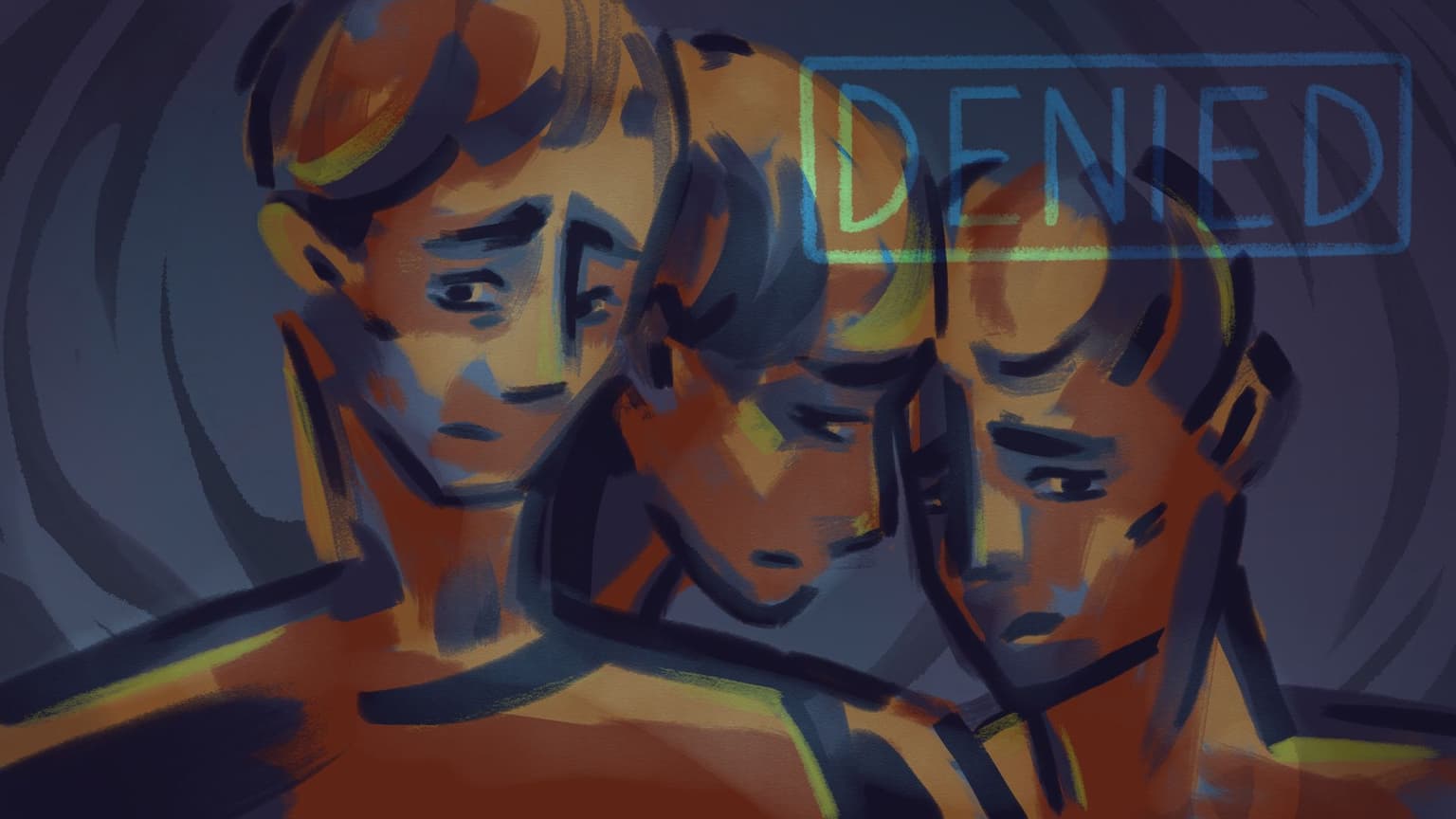
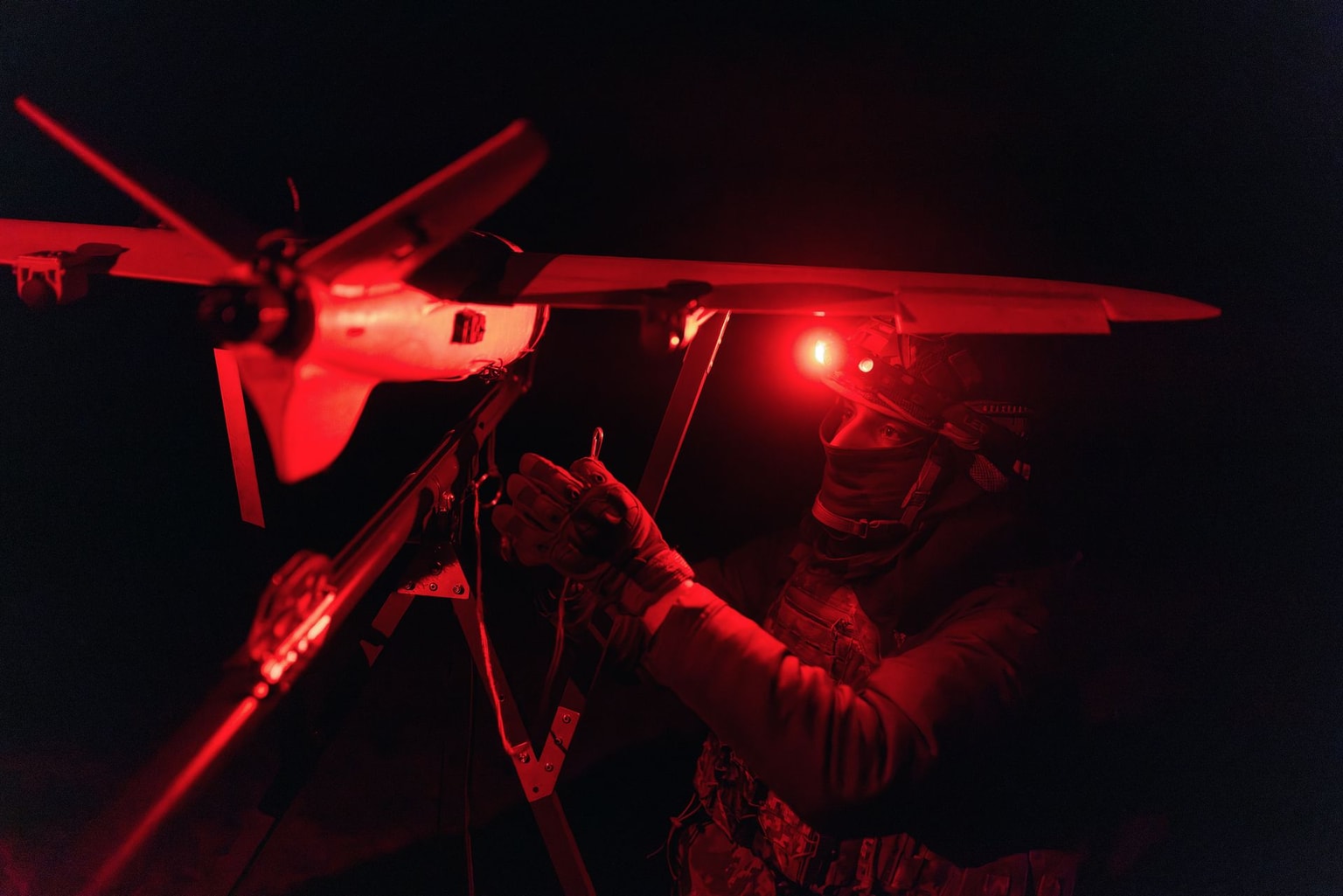
Several Russian volunteers in Ukraine told the Kyiv Independent they were in a legal limbo and faced the threat of effective deportation to Russia. (Karolina Gulshani / The Kyiv Independent)
 on Google
In September 2023, Russian national Igor Boichenko swam across a river and crossed a minefield to enter Ukraine from Russia.
Boichenko was one of thousands of Russians who came to Ukraine that month. What was unique about him is that he didn't come to fight Ukrainians — but rather, to join their ranks.
He signed a military contract and served as a sniper against his homeland.
Then, he found himself locked up in a migration jail, under threat of being sent back, to the country he signed up to fight for.
Boichenko, 49, call sign "Comanche," is one of five Russian volunteer fighters from the Freedom of Russia Legion, a unit of Russian nationals fighting for Ukraine against Russia, who told the Kyiv Independent — directly or through their family members — that their commanders detained them, then held them together for over a month in a basement, where they said they were forced to sign paperwork terminating their military contracts.
The men said the unit then turned them over to Ukraine's migration authorities, who placed them in separate cells. While in detention, they said the 90-day window to legalize their status after their contracts ended expired, leaving them classified as undocumented migrants.
The soldiers spent nearly seven months in a migration detention center in southern Mykolaiv Oblast before they were finally released in mid-November. A court canceled the forced deportation order against one of the men, apparently prompting the migration service to release the others from detention.
Their cases point to two connected problems: the men's allegations that commanders in the Freedom of Russia Legion arbitrarily detained them and forced them out of service, and a broader legal gap that can leave anti-Kremlin Russian volunteers in Ukraine undocumented and at risk of being sent back to Russia.
That risk has alarmed lawyers, rights advocates, and members of other Russian volunteer units fighting for Ukraine, who say Russians and Belarusians who took up arms against Moscow should never be put at risk of being sent back.
"This is definitely unacceptable, regardless of which unit the fighter belongs to," Denis Kapustin, founder and commander of the far-right Russian Volunteer Corps, who is also known by the alias "White Rex," told the Kyiv Independent.

"If this is just some foreigner — European, Colombian — they can simply expect deportation to their homeland. But all volunteers from post-Soviet countries, like Russia and Belarus, are at mortal risk. If they are handed over to the Russian Federation, it will mean their participation in a terrorist organization (under Russian law). And that's certain death. Essentially, it's also a prolonged one within the Russian prison system."
The Kyiv Independent reached out to the Freedom of Russia Legion but has not received a response.
Russians fighting Russians
Three prominent Russian units fighting for Ukraine have drawn global attention for their cross-border incursions into Russia: the Freedom of Russia Legion and the Russian Volunteer Corps (RDK), both established in 2022, and the Siberian Battalion, formed a year later with volunteers from Russia's indigenous communities.
In Russia, the Federal Security Service (FSB) has labeled them as "terrorist organizations," which means that their soldiers will be prosecuted if they are sent back.
The volunteers interviewed by the Kyiv Independent came from different backgrounds. Some are ethnic Russians who have lived in Ukraine their entire lives, while others came only after the full-scale invasion, having fled Russia to fight alongside the Ukrainian army.
"When Russia's full-scale aggression began in 2022, I made the decision that I must be in Ukraine."
Boichenko, an ethnic Ukrainian born in Uzbekistan who spent most of his life in Russia's Siberia, said he faced threats in Russia over his views on Ukraine.
"When political discussions about Ukraine arose, I expressed my (pro-Ukrainian) position. I received multiple threats that I would be handed over to the FSB because I disagreed with the policies of the Russian government," Boichenko told the Kyiv Independent.

"When Russia's full-scale aggression began in 2022, I made the decision that I must be in Ukraine."
After crossing into Ukraine in September 2023, he reached the border village of Ohirtseve in Kharkiv Oblast, where locals helped him before law enforcement officers took him into custody.
Russians willing to fight on Ukraine's side are kept under close watch by Ukrainian security services and are required to pass a polygraph test. Afterward, they are allowed to remain in Ukraine under a signed military contract, which gives them legal status to stay in the country.
Conflict with command
The five men who ended up detained in the migration center in Mykolaiv appeared to have had conflicts with their commanders.
In Boichenko's case, the issue was medical — or a dispute between him and his commanding officer over his physical ability to carry out orders.
After his arrival, he asked to join a Ukrainian brigade, but was instead directed to the Freedom of Russia Legion.
After almost seven months of training, Boichenko signed a contract with the Defense Ministry in March 2024 and trained as a sniper. He said he was sent to Sumy Oblast in May 2024, and later, on his commander's orders, to a training camp. His troubles began during shooting practice in late July, when he said he suffered a pinched nerve and underwent surgery and was hospitalized. He said he was discharged from the hospital in early September 2024 and returned to his base.
In December 2024, the unit's command wanted to deploy him into combat, he said, but he told them he was not fit for it. That same day, Boichenko said the officer ordered him to complete a contract termination form, leaving the date blank.
In March 2025, on the orders of commander Ihor Popadiuk, fellow soldiers detained Boichenko at his unit’s base and seized his phone, he said.
"I was detained with no explanation, no charges against me, and no word about my supposed guilt," Boichenko told the Kyiv Independent. "It was pure lawlessness."
The Kyiv Independent was unable to contact Popadiuk directly, and the press office of the Freedom of Russia Legion did not respond to multiple requests for comment.
The following day, one of the soldiers transported Boichenko in a van under the guise of "holding" him until his contract was terminated, he said. Three other Freedom of Russia Legion volunteers were also in the van — soldiers say they also had separate conflicts with command.
Boichenko said that he and the other three soldiers were forced to sign a resignation document in a room he described as a "basement," the location of which remains unclear, where he said they were kept for about two months before being moved to the migration center in late May.
According to an incident report prepared by a Freedom of Russia Legion officer and seen by the Kyiv Independent, the men were detained on a street in a remote industrial area of Kyiv. Boichenko said they were actually taken from the basement at the unit's base and handed over to migration authorities.

The report indicates the group was detained for being in Ukraine illegally. It also cited allegations of drug use and the soldiers making statements that allegedly threatened Ukraine's national interests, but gave no details.
Erdem Tikeev, known by the call sign "Shaman," was one of those in detention with Boichenko.
Tikeev, a Russian citizen living in Ukraine, joined the Ukrainian army as a volunteer in 2014. After the full-scale war began, he enlisted in the Freedom of Russia Legion in 2023. Soon after, he received a promotion.
At the end of 2024, Ukraine's military intelligence (HUR) announced the formation of a new unit called "Nomad," composed of representatives from Russia's indigenous peoples. Tikeev, originally from the Republic of Kalmykia in Russia, was appointed as its leader.
But he, too, soon came into conflict with commanders. Soldiers who spoke with the Kyiv Independent said the dispute centered on allegations that Tikeev used drugs and violated discipline. Several also said drug use was a broader problem in the unit.
In early April, Tikeev's former Ukrainian partner, Natalia Gradova, received a message from him. He claimed that he had been "abducted by the command" and was being threatened with being handed over to Russia.

After receiving no further news from her ex-partner, Gradova started reaching out to military and government officials for answers, and filed a complaint with a lawyer.
"The response from the military unit was that the complaint regarding the soldier's conflict with the military command was not substantiated, so we do not see grounds for holding any officials accountable," she told the Kyiv Independent.
Another Russian volunteer, a man known under call sign Vit, ended up in detention in Mykolaiv after a flared-up injury allegedly prevented him from going on the mission — which his commander saw as him refusing an assignment, Vit's family told the Kyiv Independent.
Deportation fears
Russians held in migration detention centers live in fear of being sent back to Russia, where they would likely face severe punishment for having fought against their own country as part of Ukraine's Armed Forces.
Under Ukrainian law, foreign volunteers whose military contracts expire may remain in Ukraine for 90 days to legalize their status. If they miss that deadline, the State Migration Service can initiate deportation proceedings.
According to the soldiers' lawyer, Hanna Yankul, the men were held in the basement until the 90-day period to contact the migration service had expired. After that, authorities filed papers accusing them of staying in Ukraine illegally, effectively starting deportation proceedings.
Volodymyr Yavorskyi, program director of the Center for Civil Liberties, a Ukrainian human rights organization, said the men's situation reflects a broader pattern in how such cases are handled.
"This is standard practice," Yavorskyi said. "(Deportation to Russia) is the biggest risk, which worries me the most. Because it's a sentence to torture. In general, this shouldn't be done because these people fought. They participated in combat."
In June 2025, Kapustin visited the migration center in Mykolaiv Oblast where the five Russian volunteers were detained and tried to meet with them. He was worried that they could be sent to Russia. However, he says employees at the center told him there was an order not to let anyone in.
While at the migration center, the five volunteers worried they might be added to lists for prisoner exchanges. According to Boichenko, the guards said they were allegedly being considered for a swap with Russia, which only further fueled the fears.
"We were stunned by this news and understood what awaited us in Russia if we were handed over to the FSB," Boichenko told the Kyiv Independent.
Ukraine's migration service told the Kyiv Independent that under the law, "violations related to military service don't constitute legal grounds for a forced expulsion."
However, the soldiers' concerns were not unfounded. While they can't be deported to Russia in the traditional meaning of the word, it can in theory happen through a prisoner swap — and has reportedly happened at least once, to a Russian who was trying to join the Ukrainian army.
A swap or deportation?
In May 2025, Alexey Gerasimov, then a 21-year-old university student from the Russian Republic of Chuvashia, was handed over to Russia after illegally crossing the Ukrainian border in January 2024, and trying to join the Siberian Battalion in mid-February, according to sources familiar with the case.
Gerasimov's relationship with the unit's command appears to have deteriorated over months-long delays in signing his contract, which sources described as a fairly common problem. He did not attend training while waiting for the paperwork.
Since he never signed a contract, he was never considered a soldier in the Ukrainian Armed Forces and did not take part in combat.
Gerasimov had spent about six months at the training base with the Siberian Battalion, before he was taken to a migration center in northern Chernihiv Oblast. Several military sources told the Kyiv Independent that he was returned to Russia as a civilian as part of the large 1,000-for-1,000 prisoner exchange agreed to by Kyiv and Moscow in Istanbul.
Last May, Russia released 120 civilians to Ukraine, along with 270 Ukrainian soldiers. Ukraine, in return, transferred 120 Russian nationals — including convicted collaborators — to Russia. The sources familiar with the swap told the Kyiv Independent that it was rushed, and the Ukrainian side essentially scrambled Russian civilians in a hurry. Gerasimov was among those sent back.
The Coordination Headquarters for the Treatment of Prisoners of War (POW) oversees the exchanges, while the expulsion of Russians is managed by the Security Service of Ukraine (SBU) and Ukraine's migration service.
A military source told the Kyiv Independent that Gerasimov failed the counterintelligence check.
Once in Russia, Gerasimov was placed on a terrorist list and sent to a detention center, the Russian independent media outlet Verstka reported in July.
Ukraine's State Migration Service refused to reveal the circumstances behind the decision to deport him, but told the Kyiv Independent that violations related to military service or disciplinary issues within the Ukrainian army cannot serve as legal grounds to order the forced deportation of foreigners.
Migration law expert Kateryna Zatulko, of the law firm Expatpro, sees no legal grounds for deporting Russian volunteers to Russia, since Kyiv's diplomatic relations with Moscow have been severed. But she is concerned that the decision to send a Russian back to Russia in an exchange could pave the way for similar actions in the future.
The legal status of foreigners who have joined the Ukrainian army remains a pressing issue, dating back to 2015, when Ukraine officially allowed them to enlist in the Armed Forces under contract.
"They will now face danger wherever they go, because the risk of extradition to Russia will be very high."
According to Yavorskyi, the solution could lie in legislative changes that allow foreigners who have fought for Ukraine and have combatant status to obtain temporary residency. He argues that after six months on the front line, they would be eligible to apply for permanent residency or citizenship. Only the president can grant Ukrainian citizenship.
Zatulko agreed.
"(Ukraine) should change its approach, especially towards volunteers from countries with which we don't have diplomatic relations. Something will need to be done with them in the future, even if they are currently serving well in Ukraine's Armed Forces without any violations," she said.
"There are very few pathways for their legalization in Ukraine."
Several military contacts, speaking on the condition of anonymity because of the sensitivity of the matter, said commanders may have been reluctant to simply terminate contracts with Russian volunteers, even when some faced disciplinary problems or allegations of drug abuse. Instead, the volunteers ended up in a migration detention facility.
The sources said releasing a fighter who was angry at the Ukrainian command could pose serious security risks.
"Imagine, they will just walk around freely. Maybe, for example, he contacts the FSB of the Russian Federation and hands over information about the permanent base, all the locations, and the names," one contact said.
Uncertain status
Ever since Boichenko and four other Russian volunteer fighters were released from the migration center, they have been in legal limbo.
Although released from the migration center, their status hasn’t changed — they remain in Ukraine illegally.
They say they can't leave Ukraine or apply to legalize their status because their documents are held up by their former units.

"The command continues to torment me and drag things out, forcing me to hide and live outside the law because of their actions," Boichenko said. "Probably, they're hoping to drive me to despair and make me lose faith in Ukraine as a rule-of-law state."
The Kyiv Independent repeatedly reached out to the Freedom of Russia Legion for comment but did not receive a response.
Determined to continue fighting on Ukraine's side, Boichenko said he had applied to several other units, but found it impossible to enlist without his documents.
Tikeev said he had rejoined the Nomad unit. The Kyiv Independent was unable to determine the terms under which this took place.
The other three volunteers, Yavorskyi said, cannot leave Ukraine or regularize their legal status without their documents. Even if they wanted to keep fighting for Ukraine, they "are caught in this conflict, and certain people believe they shouldn't be in Ukraine at all," he said.
"The problem is that they have an illegal status, and at some point, this could lead to detention. A police officer might check their documents on the street, and they could be arrested," Yavorskyi said.
"They simply have no choice, they are effectively being forced to leave," Yavorskyi said.
But their options for leaving Ukraine are also limited. Despite fighting on Ukraine's side, Russian volunteers may still be denied entry to the EU because of their Russian citizenship. In countries such as Georgia and Moldova, they could also face arrest because of Russian influence there.
"They will now face danger wherever they go, because the risk of extradition to Russia will be very high," Yavorskyi said.
Note from the authors:
Hello! These are Kateryna and Myroslava, the authors of this story.
Reporting stories like this requires time, precision, and independence. We believe itʼs crucial right now to highlight issues of public importance, including those related to the war, so that it can lead to change.
This work is supported by the Kyiv Independent’s community. If you want to read more stories like this, please consider becoming a member of the Kyiv Independent.
Thank you.