Shahed is evolving threat that will keep haunting Ukraine. And rest of us
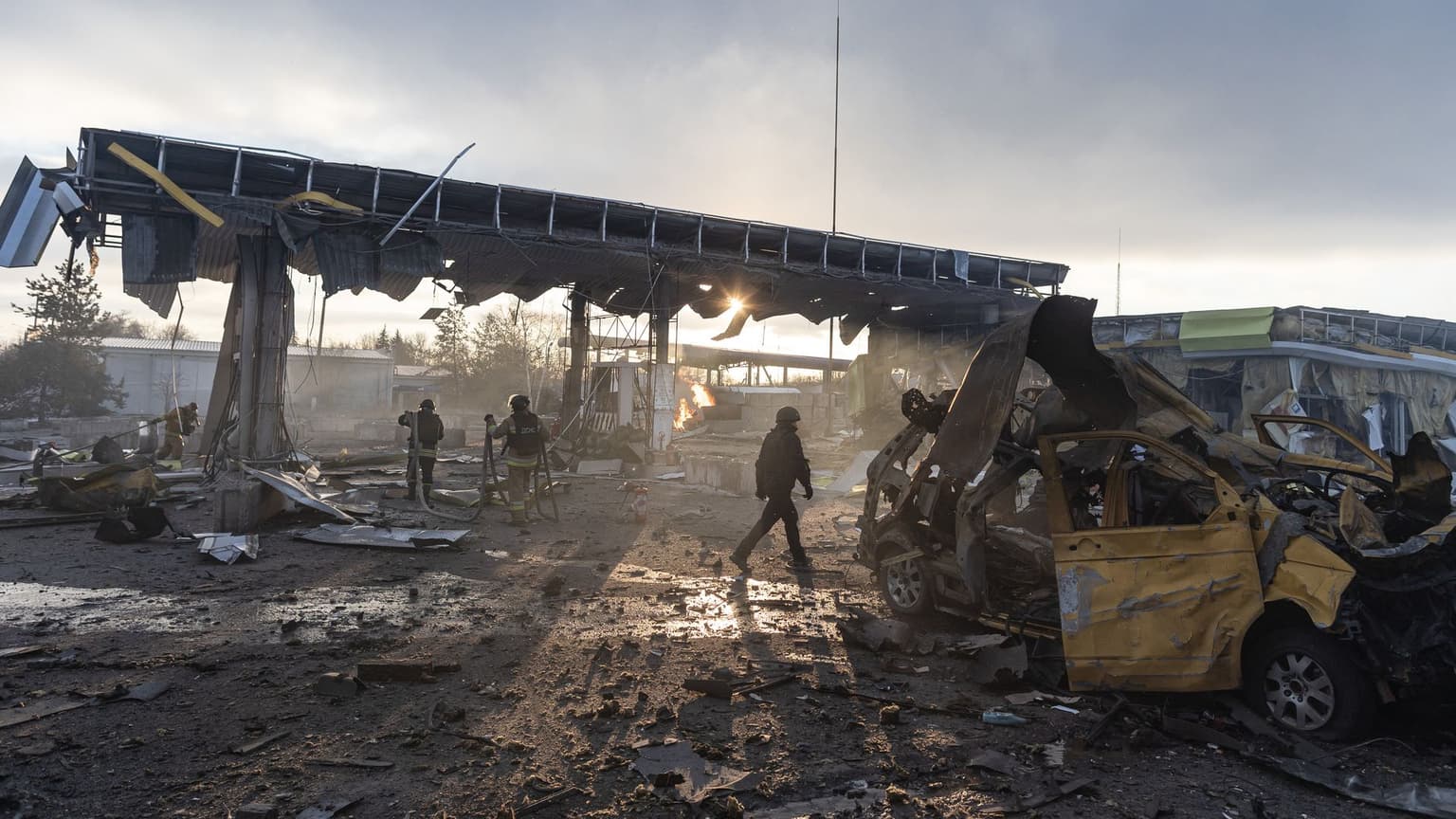
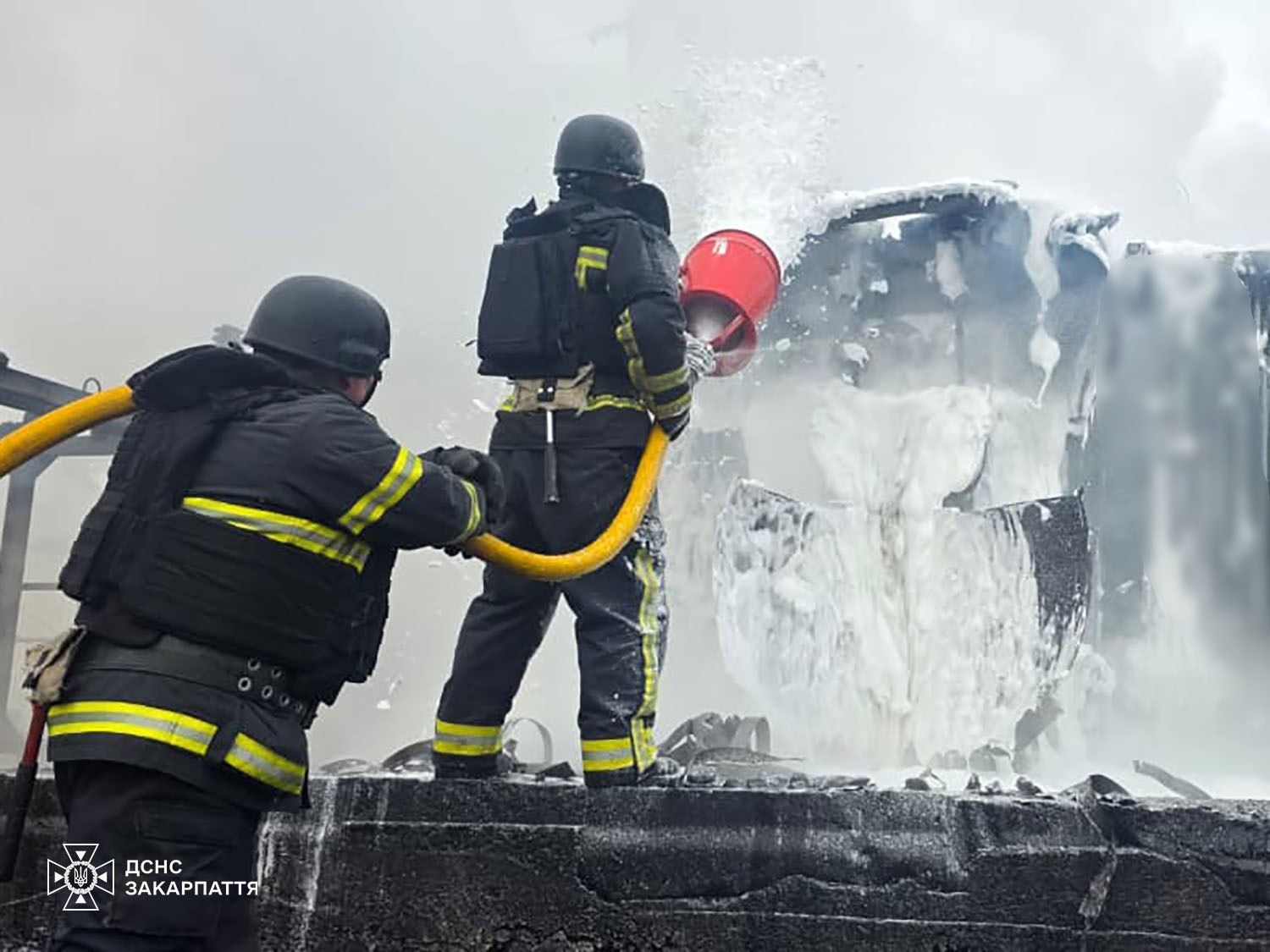
Ukrainian firefighters extinguish a fire at a petrol station after it was hit by two Russian Shahed drones in Kramatorsk, Donetsk Oblast, Ukraine, on Feb. 9, 2026. (Diego Herrera Carcedo / Anadolu via Getty Images)
 on Google
Vlad Sutea
Open Source Intelligence (OSINT) expert
Ukraine's interceptor drones are now one of the most sought-after defense technologies on the planet. But that success carries an uncomfortable caveat: every countermeasure Ukraine developed prompted Russia to field a harder, faster, and more capable Shahed in response.
That cycle will not stop as long as the factories producing these drones remain uncontested.
Whatever mutated variant emerges next — shaped by every innovation Ukraine threw at its predecessor — will continue to attack Ukrainian cities, violate NATO airspace, and emerge in other theaters.
The Shahed-136 that first struck Kyiv in October 2022 was a crude Iranian-manufactured one-way attack drone: propeller-driven, pre-programmed, and carrying 50 kilograms (110 lbs) of explosives at 185 km/h (115 mph).
What followed was systematic and fast-paced co-evolution, each Ukrainian countermeasure met with a Russian re-iteration of the Shahed, or the Geran, as Moscow calls it.
GPS jamming prompted hardened anti-jamming navigation. Better intercept rates prompted a 90-kilogram (200 lbs) warhead and thermobaric variants
When interceptor drones, helicopters, and fighter jets began destroying Gerans at scale, Russia added backward-facing cameras, backward-firing anti-tank mines, and shoulder-launched anti-aircraft missiles to the airframes.
Newer "man-in-the-loop" variants have been developed using LTE and MESH networking to add FPV-like capabilities, alongside a dedicated FPV drone carrier variant. Not all are in serial production, as many remain limited or experimental series.
Russia also developed a series of decoys, most notably the Gerbera and Parodya, built from polystyrene foam over a plywood frame, costing around $10,000, designed to mimic the Geran and exhaust or distract Ukrainian defenses.
A growing share now carries small warheads, making the decoy-or-threat distinction unanswerable in real time. Roughly 40% of all Russian drone launches are now in this category.

Ukraine's interceptor drone response has been a genuine success — 100,000 units produced in 2025, accounting for 70% of Shaheds destroyed in January 2026, and now in high demand across the Middle East to counter Iran's Shahed attacks. To evade them, Russia fielded jet-powered variants, likely based on the Shahed-238, known as the Geran-3, 4, and 5. With top speeds of 500-600 km/h (310-370 mi/h), jet-powered Gerans can outpace most current drone interceptors.
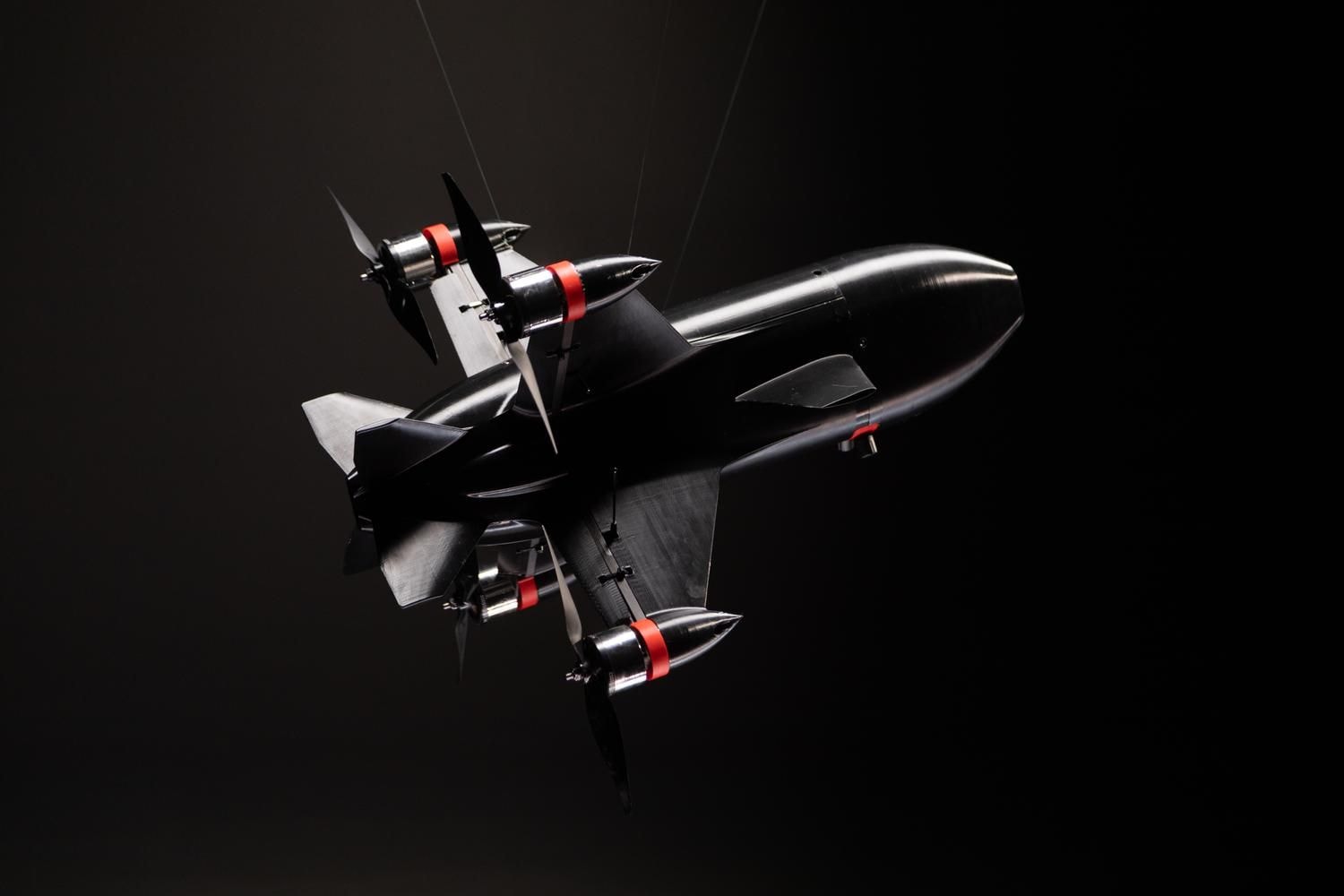
The Geran-5, debuted in January 2026, has shed the original delta-wing drone design altogether, embracing a conventional cruise missile configuration with a Chinese turbojet and reported air-launch capability from Su-25 aircraft.
Each of these variants was developed while the factories producing them faced no serious, sustained threat.
What uncontested industrial time produces
The primary facility is the Alabuga special economic zone in Tatarstan, 1,300 kilometers (807 mi) from Ukraine. A second confirmed line operates at the Kupol Electromechanical Plant in Izhevsk, a subsidiary of Almaz-Antey.
Russia launched over 54,000 Gerans and decoys in 2025, averaging around 4,500 per month — a figure already being surpassed in early 2026. Every month these facilities operated without sustained pressure was a month engineers spent integrating new capabilities into the production line, and amassing stocks for strikes on Ukrainian cities.

To sustain that output, Alabuga has reportedly drawn on teenagers as young as 14 in assembly roles, over a thousand women recruited from Africa and Latin America, and North Korean laborers from mid-2025. Satellite imagery confirms the construction of a dormitory with a capacity for over 40,000 workers when finished.
According to OCCRP, the Geran-2 remains almost entirely assembled from Western components in 2026.
Out of range and firepower
Ukraine has built an impressive arsenal of long-range strike drones and missiles, but developing a single weapon that combines the range, payload, and survivability needed to degrade a deep and well-defended target like Alabuga has proven elusive. And an "Operation Spiderweb" has yet to come for the Tatarstan factory.
Russia exploited this safety further by building a vast network of fixed launch hubs and fortified storage sites across its territory (or so-called drone ports) — positions that enable the mass Geran attack waves Ukraine endures regularly.
Primorsko-Akhtarsk airfield in Krasnodar, a well-documented example, held an estimated 100-plus Gerans launch-ready for a single wave.
It was only in August 2025 that the Security Service of Ukraine (SSU) struck and destroyed a significant stockpile there.
That the strike took this long is telling.
In the absence of a Tomahawk cruise missile transfer or equivalent Western deep-strike support, the Flamingo, with its claimed 3,000 km (1,800 mi) range and 1,150 kg (2,500 lbs) warhead, is Ukraine's current best bet for contesting targets at that depth. For now.

A problem that will keep growing, proliferating, and mutating
The Geran program is not a fixed threat. Across four years, Russia has spawned at least five major variants, two confirmed production sites, a distributed pre-positioning network, and a component supply chain largely impervious to Western sanctions.
Winning the countermeasure race is achievable, as Ukraine proved time and time again. But a threat pressured only at the point of impact, and never at the point of production, does not diminish. It adapts.
The Geran family that exists today is the product of an industrial space that was never seriously contested.
Whatever is being assembled in Alabuga tomorrow, NATO countries may have to shoot it down the day after.
Editor's note: The opinions expressed in the op-ed section are those of the authors and do not purport to reflect the views of the Kyiv Independent.
read also
 Tanya Kozyreva
 Yuliia Taradiuk
 Anastasiia Verzun