Hungary released detained Ukrainian bank staff, Kyiv confirms amid major row


Editor's note: The story has been updated with the latest details.
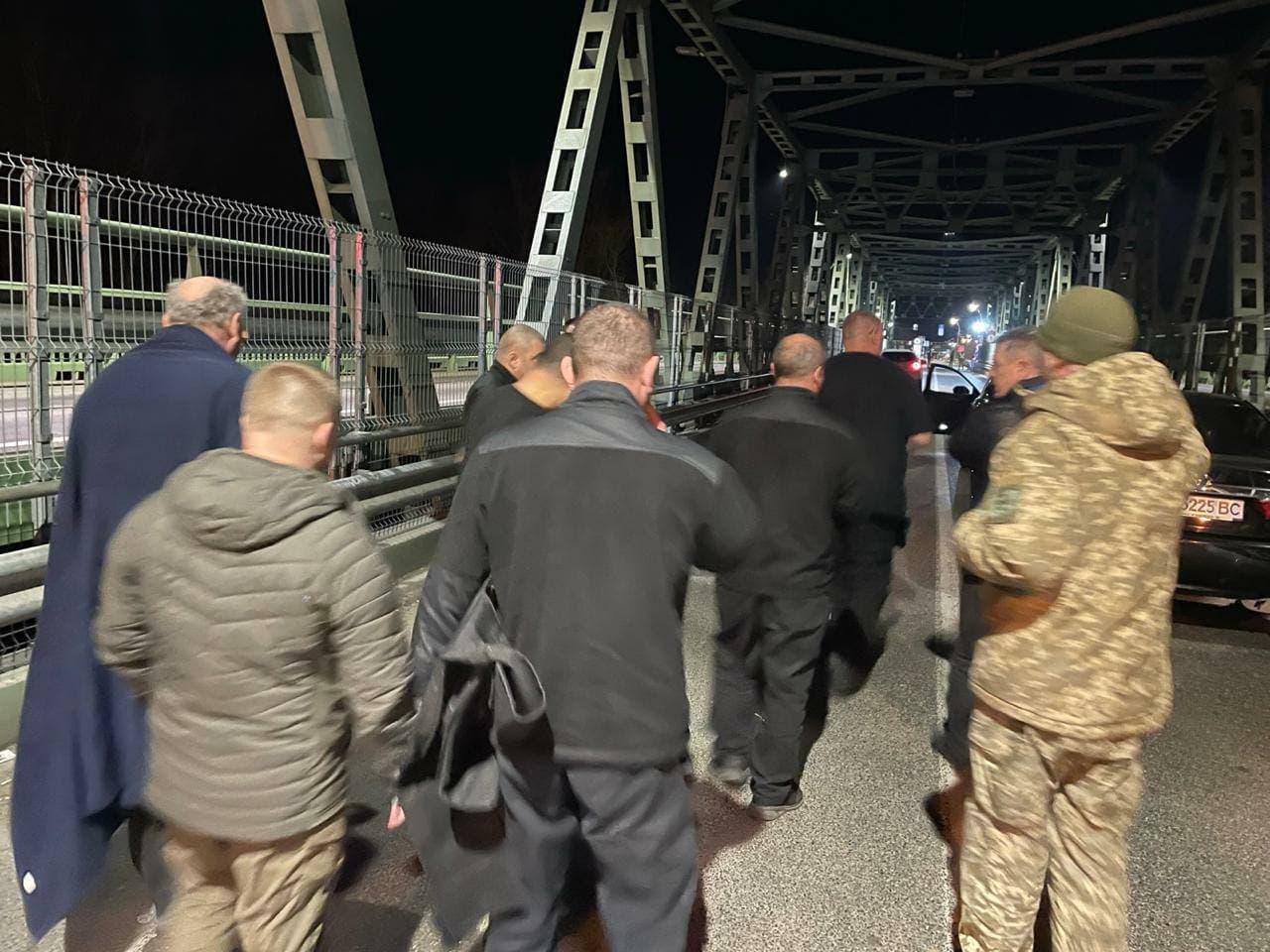
Seven staff members of a state-owned Ukrainian bank detained by Hungary have been released and crossed the Ukrainian border, Foreign Minister Andrii Sybiha announced on March 6.
Oschadbank employees were detained by Hungarian authorities on March 5 on suspicion of money laundering, Hungary's tax and customs authority said. They were passing through Hungary from Austria to Ukraine while operating two bank cars, carrying $40 million, 35 million euros, and 9 kilograms of gold.
Ukraine has blasted the move as "hostage-taking" and "state terrorism," fueling tension in already-strained Hungarian-Ukrainian relations.
"At the moment, they are already safe and have crossed the Ukrainian border," Ukraine's foreign minister said. "Our consuls have provided them with the necessary assistance."
Prior to their release, Sybiha has urged a response from European partners to "the Hungarian government's lawlessness" and accused Hungary's Prime Minister Viktor Orban of dragging Ukraine into his election campaign.
Sybiha also warned Kyiv could retaliate with sanctions and "other restrictive measures."
What Ukraine says
Throughout March 6, Ukraine has accused Budapest of withholding information about the detainees and preventing consular access.
Sybiha said Ukraine was not given an explanation for their detention, adding that Kyiv has sent an "official note" demanding their release.
Hungary's tax and customs authority contradicted Ukraine's statements, claiming it had notified the Ukrainian consular service immediately and received no response.
"We are talking about Hungary taking hostages and stealing money. If this is the 'force' announced earlier today by Mr. Orban, then this is the force of a criminal gang. This is state terrorism and racketeering," Sybiha wrote, referring to Orban's earlier comments.
In connection with the incident, the Ukrainian Foreign Ministry warned Ukrainian citizens to avoid traveling to Hungary for safety reasons.
‼️ We demand answers from Ukraine’s leadership!
— Balázs Orbán (@BalazsOrban_HU) March 6, 2026
Photos show the so-called “Ukrainian gold convoy” operation.
Hungarian authorities detained seven Ukrainian nationals — including a former intelligence general — who were transporting $40 million, €35 million and 9 kg of gold… pic.twitter.com/PWUm82lqoE
A Hungarian chargé d'affaires in Kyiv was summoned by the ministry to explain the legal grounds for the detention of Ukrainian citizens.
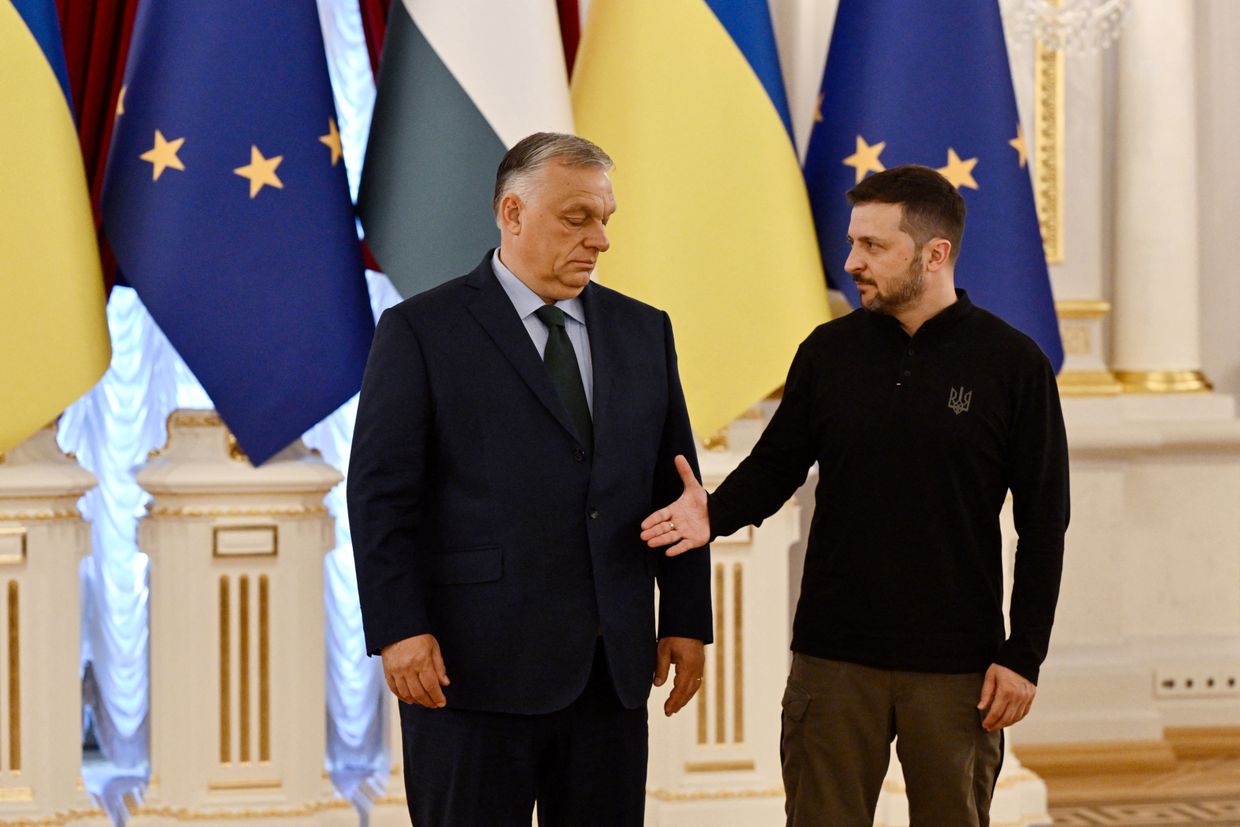
"Hungary taking seven Ukrainians hostage in a method reminiscent of the 1990s era Moscow would be a bit surprising if it hadn't come just a few days after the Orban entourage's visit to the Kremlin," Prime Minister Yuliia Svyrydenko commented.
Similarly, Sybiha noted he sees "Russian handwriting" in the incident, drawing attention to a recent visit by Hungarian officials to Moscow.
"We saw hints a few days before this incident that some kind of provocation was being prepared," he told reporters, adding that representatives of Ukraine's banking sector are briefing EU and U.S. envoys on the situation.
The Ukrainian police initiated criminal proceedings regarding a possible kidnapping or deprivation of liberty and reached out to Europol, the EU's law enforcement agency, and to Hungarian authorities.

Oschadbank said in a statement that the vehicles' GPS tracker shows the cars were located in central Budapest.
The National Bank of Ukraine (NBU) also issued a statement, demanding the immediate release of the detained employees.
The banks have dispatched their representatives to Budapest to clarify the situation.
Hungary's accusations
Hungary's Foreign Minister, Peter Szijjarto, who met Russian President Vladimir Putin in Moscow earlier this week, demanded "immediate answers from Kyiv regarding large cash shipments passing through Hungary."
Hungarian authorities have raised suspicions over the sums being transported physically rather than by bank transfers. Hungary's top diplomat even hinted at a "possible link to the Ukrainian war mafia," without providing evidence.
According to Budapest, over $900 million, 420 million euros, and 146 kilograms of gold have moved through Hungary toward Ukraine since January.
In its later statement, Oschadbank retorted that foreign currency and bank metals have been transported exclusively by land since the full-scale war began. Similar trips are being carried out weekly under an appropriate license by Ukrainian authorities, the bank said.
🚨 Watch the moment the “Ukrainian gold convoy” was stopped.
— Balázs Orbán (@BalazsOrban_HU) March 6, 2026
In the video: armored cash vehicles carrying $40M, €35M and 9 kg of gold through 🇭🇺 Hungary toward Ukraine. Among those detained was a former Ukrainian intelligence general.
This is not an ordinary transfer. Since… pic.twitter.com/LpMfQvlK71
The status of the transported cash and gold is unknown, according to the bank.
"At the moment, official sources from the Hungarian side have not provided a clear classification of violations confirmed by documents against Ukrainian citizens," NBU head Andrii Pyshnyi commented.
The deportation of the Ukrainian citizens "means that no criminal cases have been opened against them," he added.
According to Hungarian government spokesperson Zoltan Kovacs, the detainees included a former general of the Security Service of Ukraine (SBU) and a former Air Force major. The Kyiv Independent has reached out to Ukrainian intelligence services for comment.
Context of Hungary-Ukraine rift
The fresh accusations come amid growing strain between Kyiv and Budapest, one of the EU's most Moscow-friendly governments, over disruptions to Russian oil transit to the country.
The Druzhba pipeline, which supplies Russian crude to Hungary and Slovakia, has been offline since late January after a Russian strike damaged energy infrastructure in western Ukraine, according to Kyiv.
Budapest and Bratislava accused Ukraine of deliberately halting transit and demanded access to the pipeline. President Volodymyr Zelensky has said the pipeline could be restored within a month and a half, though he did not endorse its resumption.
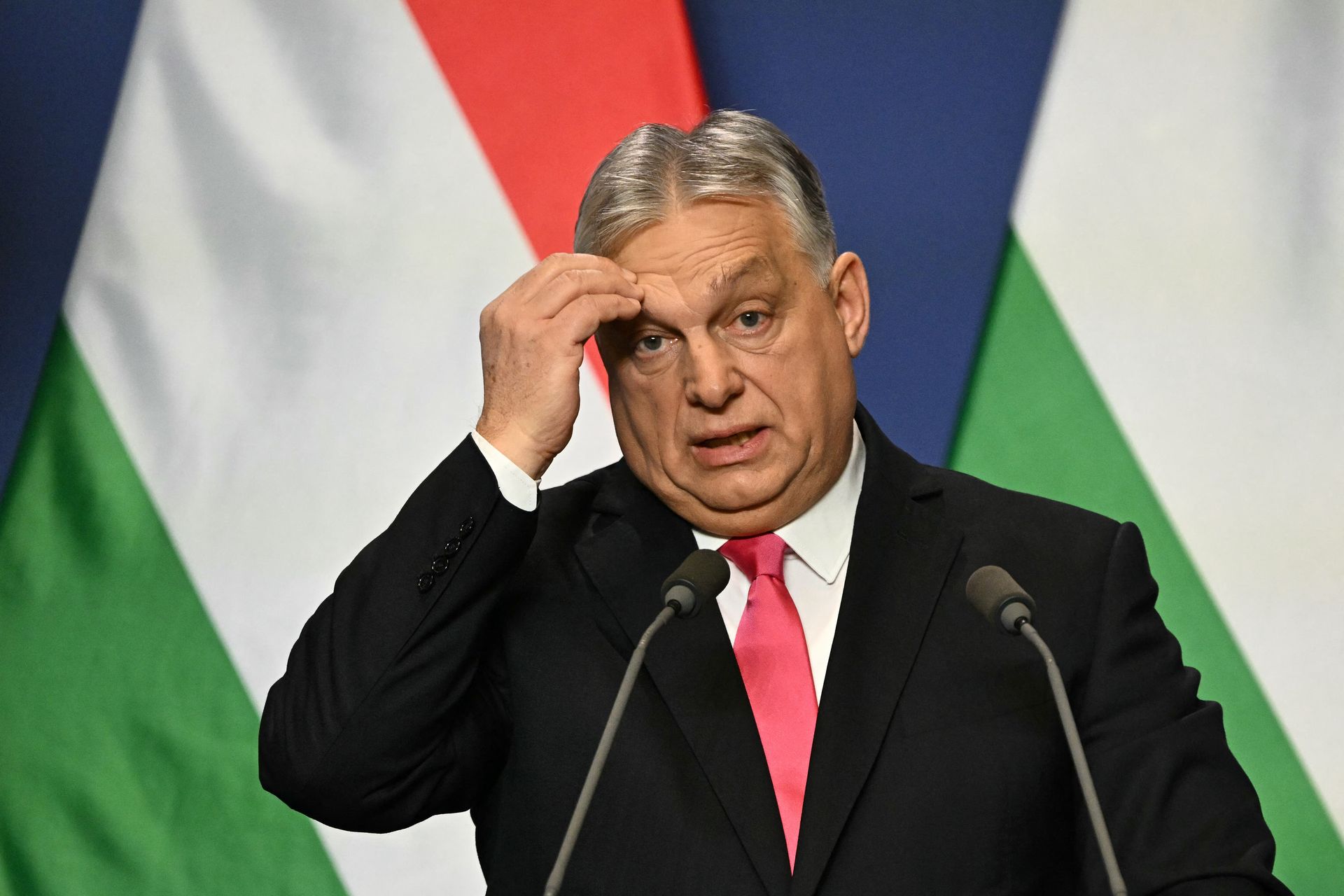
With no agreement in sight, Orban warned on March 5 that he would use "political and financial tools" to "force" the reopening of the Druzhba pipeline. His government has already blocked the EU's 20th package of sanctions against Moscow and a 90-billion ($105 billion) loan for Kyiv.
Amid the conflict, Zelensky hinted he would give Orban's "address" to Ukrainian soldiers, a comment seen as a veiled threat that drew rebuke from Hungary and the EU.
Analysts link Orban's confrontational rhetoric toward Ukraine to Hungary's upcoming parliamentary elections in April. The ruling Fidesz party trails the opposition Tisza party in polls.