Russia's drone machine grew while the West watched

The remains of a Russian-made, Iran-designed Shahed-136 drone, known as a Geran-2 in Russia, sit among a collection of Russian drones, glide bombs, missiles, and rockets launched at Ukraine, maintained as evidence for eventual war crimes prosecutions against Russia, on July 30, 2025, in Kharkiv, Ukraine. (Scott Peterson/Getty Images)
 on Google
Karina Buhaichenko
Investigative journalist at Slidstvo.Info
During the war in Ukraine, there is a sound that cannot be mistaken for anything else. It is the monotonous buzzing of the engine of an Iranian Shahed attack drone — the same one Russia has been using en masse since the fall of 2022 to strike Ukrainian cities. Ukrainians often call these drones "mopeds" because of the distinctive engine noise that resembles the sound of an old scooter.
When that sound appears over a city at night, it means only one thing — a drone is flying somewhere nearby.
Over the years of the full-scale war, Ukrainians have learned to recognize these sounds almost instantly. Then comes the explosion — when the drone is shot down in the sky or when it hits a building. For many people, this has become part of the nightly routine.
I live and work in Kyiv as an investigative journalist with the media outlet Slidstvo.Info. Over the years, I have repeatedly arrived at the sites of Russian attacks carried out with these drones. It has become a part of everyday reality for Ukrainians. At Slidstvo.Info, our newsroom decided to find out how exactly Russia managed to establish the production of these drones.
The principal assembly operations are concentrated at an industrial complex in Yelabuga, in Russia's Republic of Tatarstan, and at the Izhevsk Electromechanical Plant Kupol — facilities that form a system allowing Russia to regularly replenish its arsenal of attack drones.
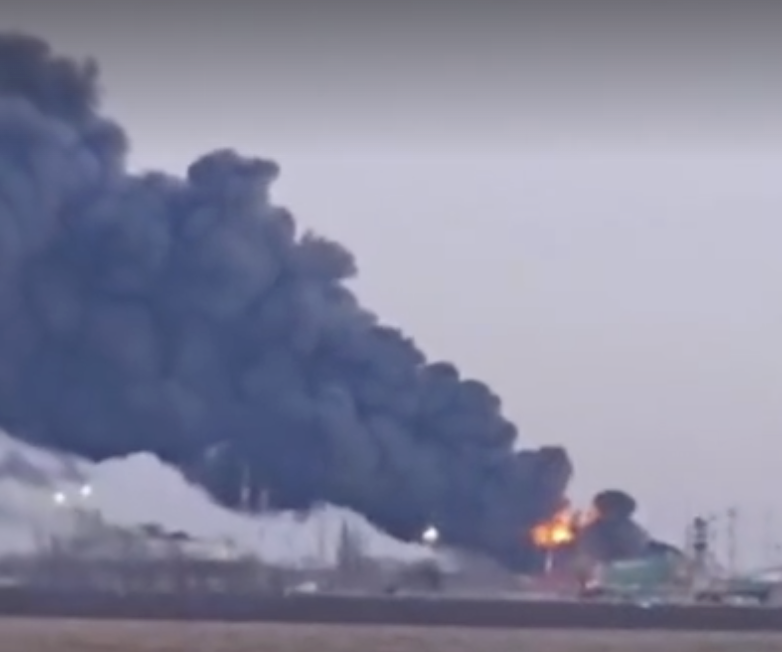
The scale of this campaign is also visible in the consequences of the attacks. According to data our newsroom received from Ukrainian state authorities, since 2022, Russia has launched nearly 50,000 Shahed drones at Ukraine. At least 253 people have been killed, and more than 1,500 have been injured.

While working on this investigation, we were also able to identify more than 2,000 employees of Russian enterprises connected to the production of these drones. Behind all these statistics, there are human stories. At the attack sites, rescuers clear rubble while medics and police work next to the drone debris. Sometimes rescuers themselves become targets of repeated strikes.
This drone capacity Russia built was, in part, enabled by the international community's collective inaction. Despite sanctions, Ukrainian experts regularly find foreign-made components in downed Shahed drones. These include microchips, processors, navigation modules, and other electronics manufactured by companies from the United States, Europe, and Asia.
Research shows that such components often reach Iran and Russia through complex networks of intermediaries and shell companies that help circumvent international sanctions.
According to Ukrainian military intelligence officials, these high-tech components used in Shahed drones are purchased through third countries and resold through intermediary firms — some of which may formally appear to be foreign companies while having hidden Russian beneficiaries.
My colleague investigated one such company operating out of Germany, whose products may have ultimately found their way into Russian drone production. German authorities have since launched a formal inquiry into potential sanctions violations.
Many of these parts, such as microchips and navigation electronics, are dual-use technologies that can be used both in consumer electronics and in weapons systems. China also remains one of Russia's largest trading partners, supplying electronics that can ultimately find their way into such systems.
As a result, the drones that attack Ukrainian cities are often assembled from technologies produced in countries that have formally imposed sanctions on Russia and Iran. For Ukraine, this is a matter of survival. But for the rest of the world, it is a warning.
These stories expose a complex international system of technology production and supply, without which these weapons could not function.
For a long time, the use of such drones in Russia's war against Ukraine was seen by many abroad as part of a local conflict. But gradually it has become clear that this technology extends far beyond a single war, after the same drones rattled the Middle East.
Ukraine has effectively become the place where the world first saw on a large scale how cheap attack drones can change the nature of modern warfare.
Russia uses them to attack energy infrastructure, residential buildings, and other civilian targets. They are relatively inexpensive, can be launched in large groups, and are capable of overwhelming air defense systems.
It has long been part of the war for Ukrainians, yet the world failed to recognize the risks in a timely manner.
In this sense, Ukraine has found itself on the front line of a new form of warfare.
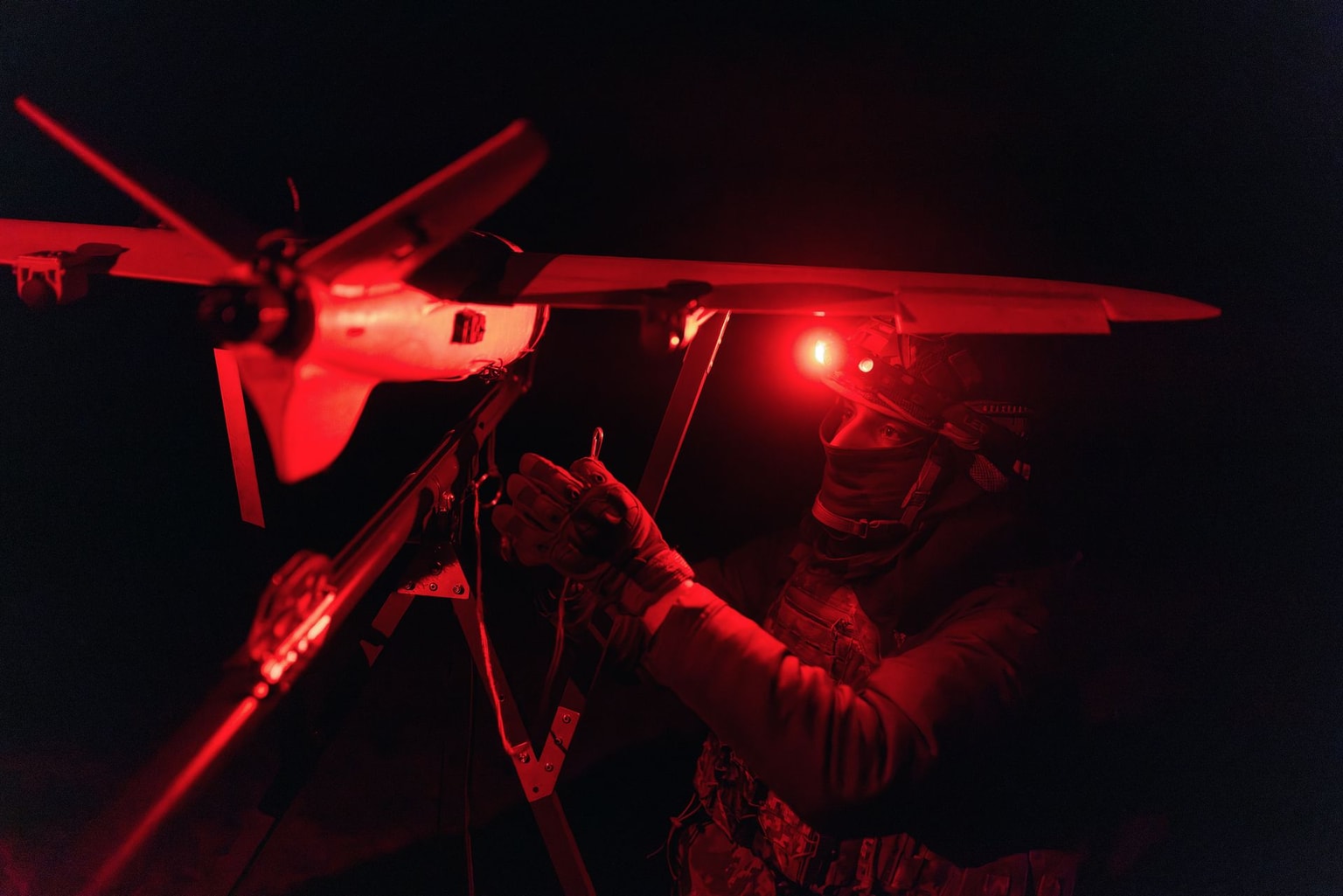
The Ukrainian military has begun using interceptor drones to counter Russian unmanned aerial vehicles (UAVs). Ukrainian companies are already producing relatively cheap systems designed to intercept Russian drones. And only now, Ukraine — forced to fend off drone attacks every day — is gradually becoming a country that teaches others how to fight them, including partners in the Middle East.
Over three years of war, Ukraine has accumulated one of the world's largest bodies of experience in countering strike drones of this type. Yet until March 2026, no serious international discussion had emerged on how to learn from that experience — or how to address the accelerating production of cheap drones in Russia.
The war in Ukraine shows how quickly cheap technologies can change the balance of power on the battlefield. What began as a tool for attacks on Ukrainian cities has become part of new conflicts in different parts of the world.
The world has had three years to learn from Ukraine's experience. The window to act on those lessons is narrowing.
Editor's note: The opinions expressed in the op-ed section are those of the authors and do not purport to reflect the views of the Kyiv Independent.
read also
 Kollen Post
 Tim Zadorozhnyy
 Polina Moroziuk