Russia’s disinformation campaign tests Canada’s support for Ukraine
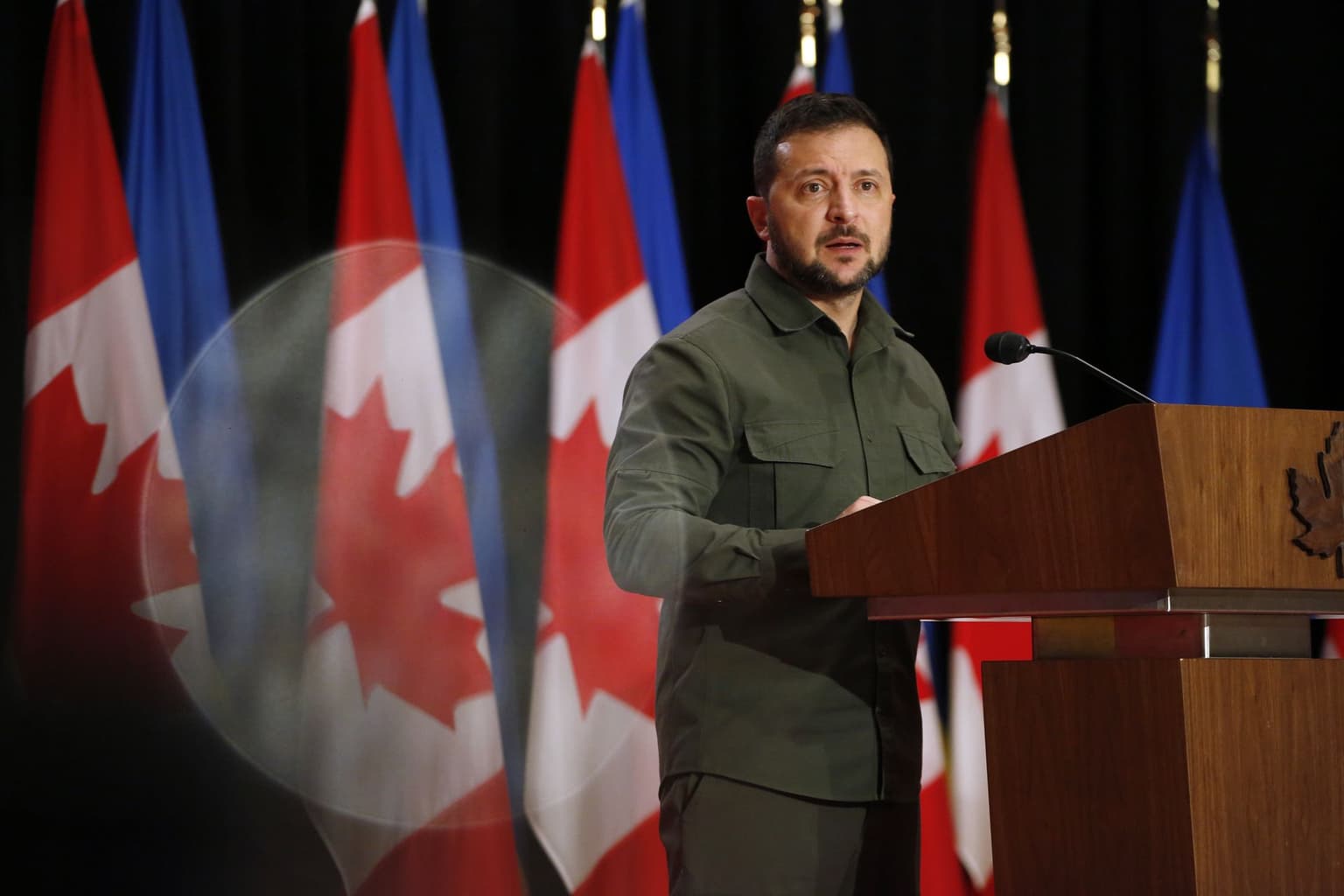
President Volodymyr Zelensky speaks on Parliament Hill in Ottawa, Canada, on Sept. 22, 2023. (David Kawai / Bloomberg / Getty Images)
 on Google
To the average Canadian, the moral lines of the war in Ukraine remain clear. But behind the closed parliament doors, a different picture is emerging. National Security Advisor Nathalie Drouin warned parliament in February that more Canadians are beginning to believe the Kremlin's narrative: that Kyiv, not Moscow, provoked the 2022 invasion.
On the surface, this shift isn't visible. Public polling commissioned by the Ukrainian Canadian Congress (UCC) shows that nine in 10 Canadians still blame Russia for the war, with 87% agreeing that Moscow is acting in bad faith and is "responsible for starting and continuing the war."
Canada, however, is not an isolated laboratory for Russian tactics.
In the United States, the Department of Justice in 2024 dismantled a Russian-backed "AI content farm" designed to "groom" the digital ecosystem by flooding it with millions of AI-generated personas. Since the 2024 election cycle, U.S. Intelligence officials have warned that these narratives have successfully jumped into the political mainstream.
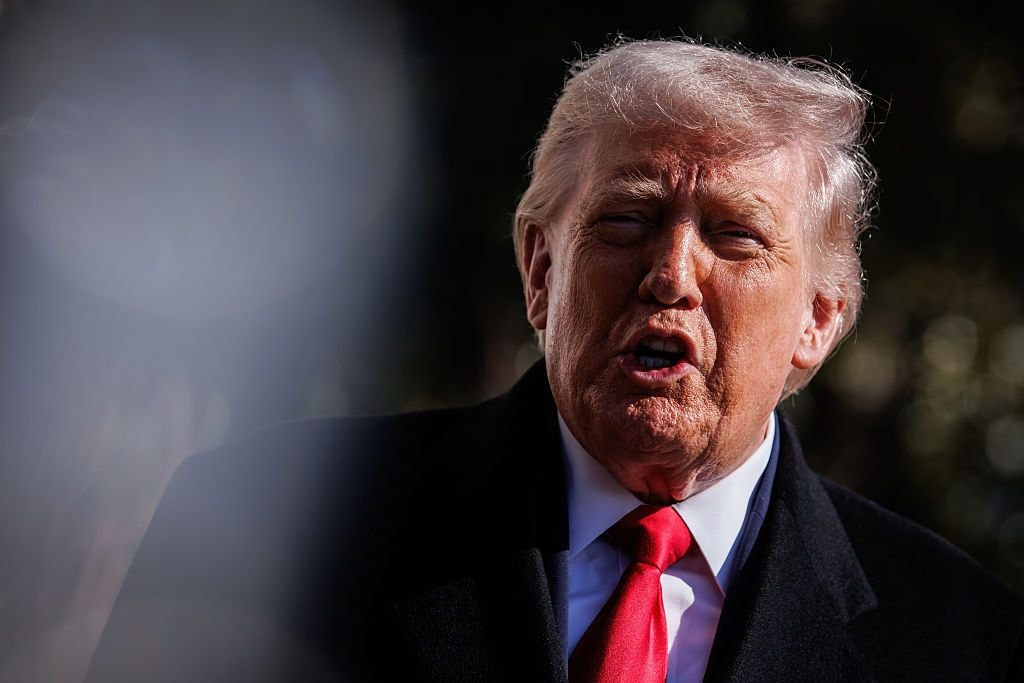
In 2025, some of those talking points were echoed by President Donald Trump, calling President Volodymyr Zelensky a "dictator without elections."
Across the Atlantic, Germany and the U.K. have faced similar "Doppelganger" operations, where cloned news sites mimic mainstream outlets like Der Spiegel and The Guardian to stoke domestic "war fatigue." According to the Center for Strategic and International Studies (CSIS) data, Russian sabotage and subversion attempts in Europe nearly tripled between 2023 and 2024, proving that while public support remains high on paper, the "grey zone" pressure on Western democracies is reaching a fever pitch.
"We may not think we're at war with Russia, but Russia is at war with us."
Marcus Kolga, a leading analyst on foreign disinformation, notes that Drouin's access to classified intelligence suggests that a dangerous erosion is occurring beneath the surface.
"The fact that (Nathalie Drouin) is concerned that there may be a shift (in public opinion) should concern all of us," Kolga told the Kyiv Independent.

Russia's targeting Canada isn't new. According to Kolga, Russia has targeted Canadians with influence operations since the Cold War, with well-documented evidence of escalated targeting over the last 15 years. The danger, experts say, lies in Canadian complacency.
"Canadians have traditionally always underestimated the threat that Russia is to Canada and to our democracy," Senator Stan Kutcher told the Kyiv Independent. "We may not think we're at war with Russia, but Russia is at war with us."
Kutcher said he initiated a Senate study on Russian disinformation and its impact on Canadian civil society. The report —which is expected for release by the end of April — will include recommendations on how Canada can better counter Russian influence campaigns.
The 'grey zone' attack
The erosion Drouin warned of is happening in what Senator Kutcher calls a "grey zone soft attack" on Canadian democracy.
"That activity is designed to push fracture points to attack democracy itself," Kutcher told the Kyiv Independent. The Meta news ban in 2023, which cut off news articles on Facebook and Instagram for Canadian users, has made that easier by pushing people toward less‑regulated platforms like TikTok, X, and LinkedIn.

"Its prime purpose is to cause political dissent and an inflamed criticism of democratic institutions."
Canada's primary weakness in the information war might be in its own diversity. Because the media landscape is fragmented across various linguistic and cultural pockets, news often travels through isolated, niche channels rather than a unified national discourse. This makes it easier for foreign actors like Russia to bypass mainstream scrutiny and infiltrate specific diaspora communities.
For Kutcher, the threat became personal: he eventually abandoned X (formerly Twitter) due to a relentless barrage of "recuperative, negative, and threatening" responses to his pro-Ukraine posts.
Recycling narratives
Russian disinformation in Canada generally falls into three buckets: fiscal resentment, false pacifism, and targeted personal attacks, according to experts interviewed by the Kyiv Independent.
For Ukraine, these narratives matter less for shifting average voters than for slowly poisoning the well around long‑term military and financial support.
The first narrative often questions the use of taxpayer dollars for Ukraine, alleging that diaspora fundraising is being embezzled. In 2024, an online campaign alleged that first lady Olena Zelenska bought a $4.8 million Bugatti — claims Bugatti itself had to refute.
The second frames Canada's support as a betrayal of its "peaceful nation" identity.
Personal attacks, however, are the most pressing sticking points.
"The narrative about Ukrainians, Estonians, Latvians, and Lithuanians being somehow fascists or neo-Nazis has been around since the end of the Second World War," Kolga explains. "It was used to discredit and dehumanize anyone who fled Soviet occupation."

This tactic isn't confined to the fringes. Kolga points to the coordinated attacks on former Deputy Prime Minister Chrystia Freeland's Ukrainian grandparents as a prime example. Initially pitched to Canadian journalists by the Russian embassy in Ottawa, the narrative was eventually picked up by influencers on both the far-left and far-right. The smear was recycled as recently as two months ago when Freeland was named a special advisor to Zelensky.
From defense to offense
To counter these "surgical strikes" on diaspora communities, Kutcher is spearheading a Senate study that will provide a roadmap for countering Russian influence.
But he isn't waiting for a report to act. Kutcher has begun holding "awareness-raising sessions" for the Ukrainian diaspora in cities like Edmonton and Ottawa, urging community organizations to move beyond a defensive crouch.
"We have to stop playing defense and start playing offense," Kutcher said. "The Ukrainian diaspora is going to have to step up and be part of the civil society response."
Social media's retreat makes it steeper. According to Kolga, the era of platform self-regulation is over. "Over the past year, we've seen social media companies completely abandon moderation," he says. Without that guardrail, the responsibility for defending the narrative has shifted from the platforms to the people themselves.
To clean up the digital space, Kolga argues that Canada cannot act in isolation. He advocates for a coordinated regulatory framework that aligns Canada with European standards to ensure that disinformation laws have actual teeth.
"We have to coordinate enforcement with the Europeans so that when we see violations or a failure to comply by these tech companies, we act together," Kolga says. By aligning with Europe's stricter standards, like the Digital Services Act to combat illegal content, Canada could force social media giants to abandon the "hands-off" approach that has allowed foreign narratives to flourish.
Beyond regulation, Kolga suggests a more proactive intelligence strategy: looking to the source. While the Kremlin and Belarusian state media push propaganda, a wave of independent journalists from those regions is currently living in exile, forced out for reporting the truth.
"There is a massive opportunity for us to tap into those resources," Kolga says. By supporting and collaborating with these exiled voices, Kolga believes Canadian media and government can get a more accurate look at what is happening inside Russia and Belarus — ensuring Canadians are informed by facts, not manufactured narratives.
read also
 Martin Fornusek
 Nykole King
 Martin Fornusek
Editor's note: This article was published as part of the Fighting Against Conspiracy and Trolls (FACT) project, an independent, non-partisan hub launched in mid-2025 under the umbrella of the EU Digital Media Observatory (EDMO). Click here to follow the latest stories from our hub on disinformation.