What an Iran oil spike would mean for Russia
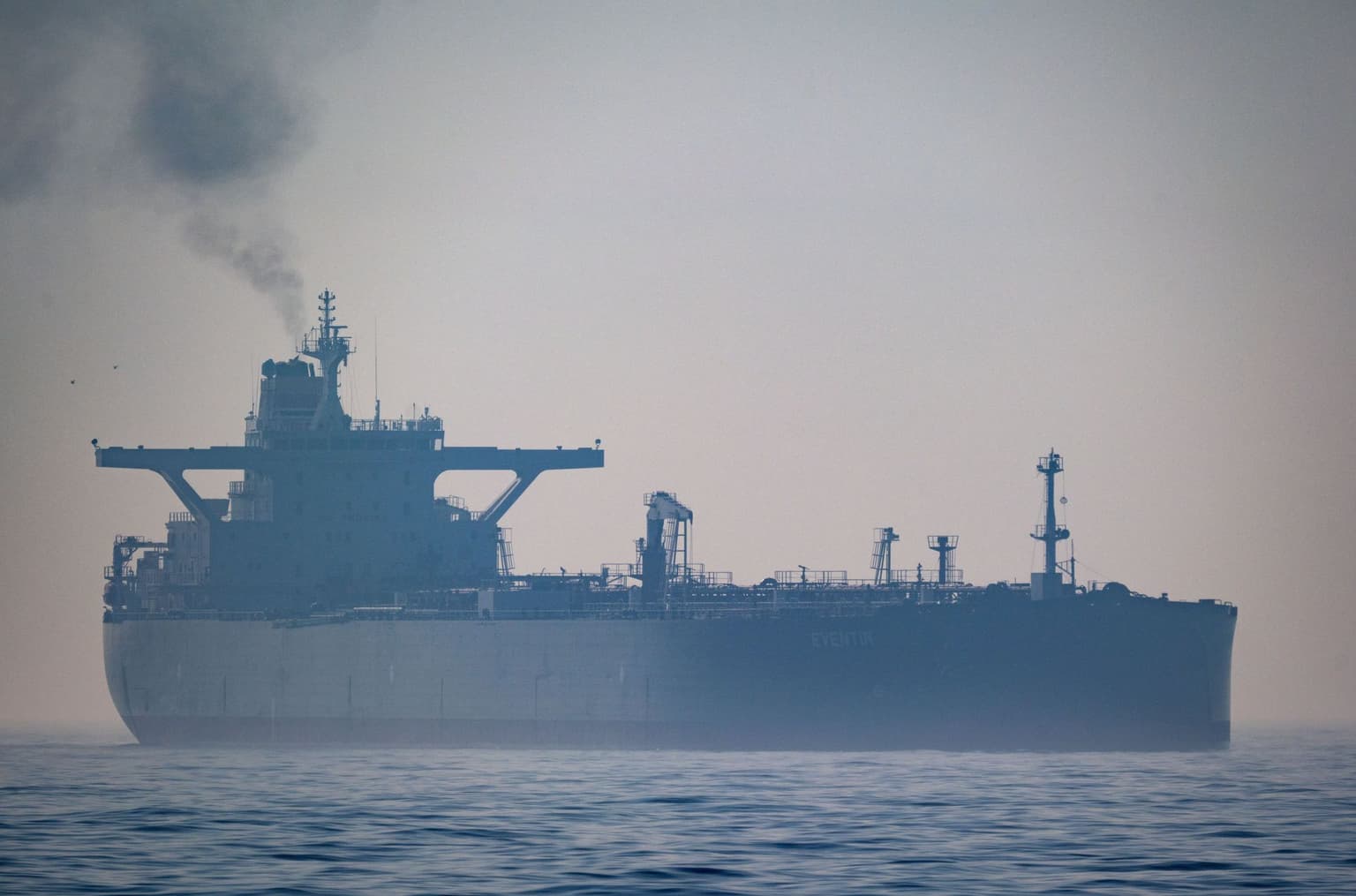
The tanker "Eventin," part of Russia's "shadow fleet," off the coast of the island of Rügen, Germany, on March 24, 2025. (Stefan Sauer / Picture Alliance / Getty Images)
 on Google
As markets opened on March 2, Russian officials were quick to frame the escalating Middle East crisis as an economic opportunity for the Kremlin.
Within hours of the first U.S. and Israeli strikes, Russian Envoy Kirill Dmitriev quickly posted on X about crude potentially hitting "$100+" per barrel.
Brent crude futures on the London ICE exchange initially had risen 13.04%, peaking at $82.37 per barrel — the highest level in over a year. Prices later eased to $79.38.
The spike followed Iran's March 1 announcement that it would suspend trade through the Strait of Hormuz in response to the strikes. Roughly 20% of global oil and up to 30% of liquefied natural gas flows transit the narrow waterway.
Against that backdrop, economists say the beneficiary is clear.
"Russia is very likely to benefit from the conflict," Oleksandr Talavera, professor of financial economics at the University of Birmingham, said.
read also
 Chris York
 Martin Fornusek
Oil windfall
Analysts warn that a prolonged disruption in the Gulf could drive prices higher.
Reuters reported that Middle Eastern leaders have cautioned Washington that prices could climb above $100 per barrel if the war expands.
A blockade would not only restrict sanctioned Iranian crude but also legal exports from Saudi Arabia, the United Arab Emirates, Kuwait, and Iraq.
In that scenario, Russia could emerge as one of the few major suppliers able to quickly fill part of the gap — especially through discounted shipments to Asia.
"Oil revenues, as well as the foreign exchange they generate, will be welcomed by the Kremlin," Dan Marks, research fellow at Royal United Services Institute, said.

Talavera explained that higher prices would strengthen Russia's fiscal and external balances, boost tax receipts, support the ruble, and expand President Vladimir Putin's capacity to finance military operations.
Oil and gas revenues account for roughly one-quarter of Russia's federal budget, underpinning Moscow's war effort in Ukraine.
Disruptions in Middle Eastern supply could also entrench Russia's role as an alternative crude supplier to Asian markets. However, Talavera cautioned that these gains hinge on the conflict's duration.
"If we see a rapid de-escalation, as happened in mid-2025, these benefits could be quickly erased," the professor said.
U.S. President Donald Trump has indicated that military operations against Iran could last about four weeks — a timeline that leaves considerable uncertainty.
Tom Keatinge, director of the Centre for Finance and Security at RUSI, said global oil prices remain the most impactful factor on the state of Russia's economy.
He noted that when Trump unveiled his so-called "Liberation Day" tariffs, the Kremlin acknowledged that although Russia was not directly targeted, the shock to the global economy — and the potential hit to oil demand — threatened Moscow's finances.
"More recently, the Russian press has been fixated on the implications of the low global oil price," Keatinge said. "When it comes to the impact of the U.S. and Israeli attacks on Iran and regional instability, Russia will be celebrating."
India, China recalibrate
The disruption could also reshape buying patterns in Asia — potentially undoing months of Western pressure to reduce Russian oil purchases.
In recent months, India and China — Russia's two largest oil customers — had trimmed imports under Western pressure, forcing Moscow to deepen discounts.
But as Bloomberg reported on March 2, India is weighing contingency plans, including switching back to Russian cargoes if Middle Eastern supply tightens.
Representatives of Indian state-owned refineries met with government officials over the weekend to prepare for potential supply shocks tied to Iran.

Last year, the Trump administration imposed a 25% "reciprocal" tariff on India and an additional 25% penalty linked to Indian purchases of Russian oil. The latter formed part of Washington's effort to pressure Moscow into meaningful negotiations over Ukraine.
Trump later canceled the additional 25% penalty on Indian goods, effective Feb. 7, following India's commitments to halt direct and indirect imports of Russian crude and increase purchases of U.S. energy.
Since then, New Delhi has reduced Russian oil imports to just over 1 million barrels per day in February — about half its peak level and the lowest since September 2022.
Middle Eastern supplies filled much of that gap.
John Lough, associate fellow at Chatham House, said China could also step in, particularly if it seeks to replace Iranian imports. Beijing has been building reserves and may increase maritime purchases from Russia if Hormuz remains blocked.
Limited impact?
Still, higher oil prices may not fundamentally shift the balance in Moscow's favor.
Marks noted that Russia's budget has diversified in recent years, with revenues rising despite lower oil prices due to broader tax collection.
"If it is true that economic weakness will not undermine Russia's war effort, it should also be true that the economic boon from higher oil prices will not turn the tide in Russia's favour."
He warned that Europe could face fiscal strain if energy prices surge again.
With European governments shouldering more of the financial burden for supporting Ukraine amid reduced U.S. backing, renewed inflation or industrial disruption could erode public support.
John Herbst, former U.S. ambassador to Ukraine and Uzbekistan, argued that the longer-term outcome depends on developments inside Iran.
If fighting subsides quickly — particularly if it results in a stable, non-theocratic government — oil prices could retreat, potentially even below pre-strike levels, he said.
"In any case, the rise of oil prices is an economic plus for Russia, but the easy taking-out of Russian-friendly leadership in Iran is a geopolitical negative," Herbst said.
"Commentators on Russian TV are apoplectic that in three months, Trump has removed two long-term Russian political allies from the geopolitical map."
Note from the author:
Hi, this is Tim. The author of this article. Thank you for taking the time to read it.
At the Kyiv Independent, we don't have a wealthy owner or political backing. We rely on readers like you to support our work.
If you found this article interesting, consider joining our community today.