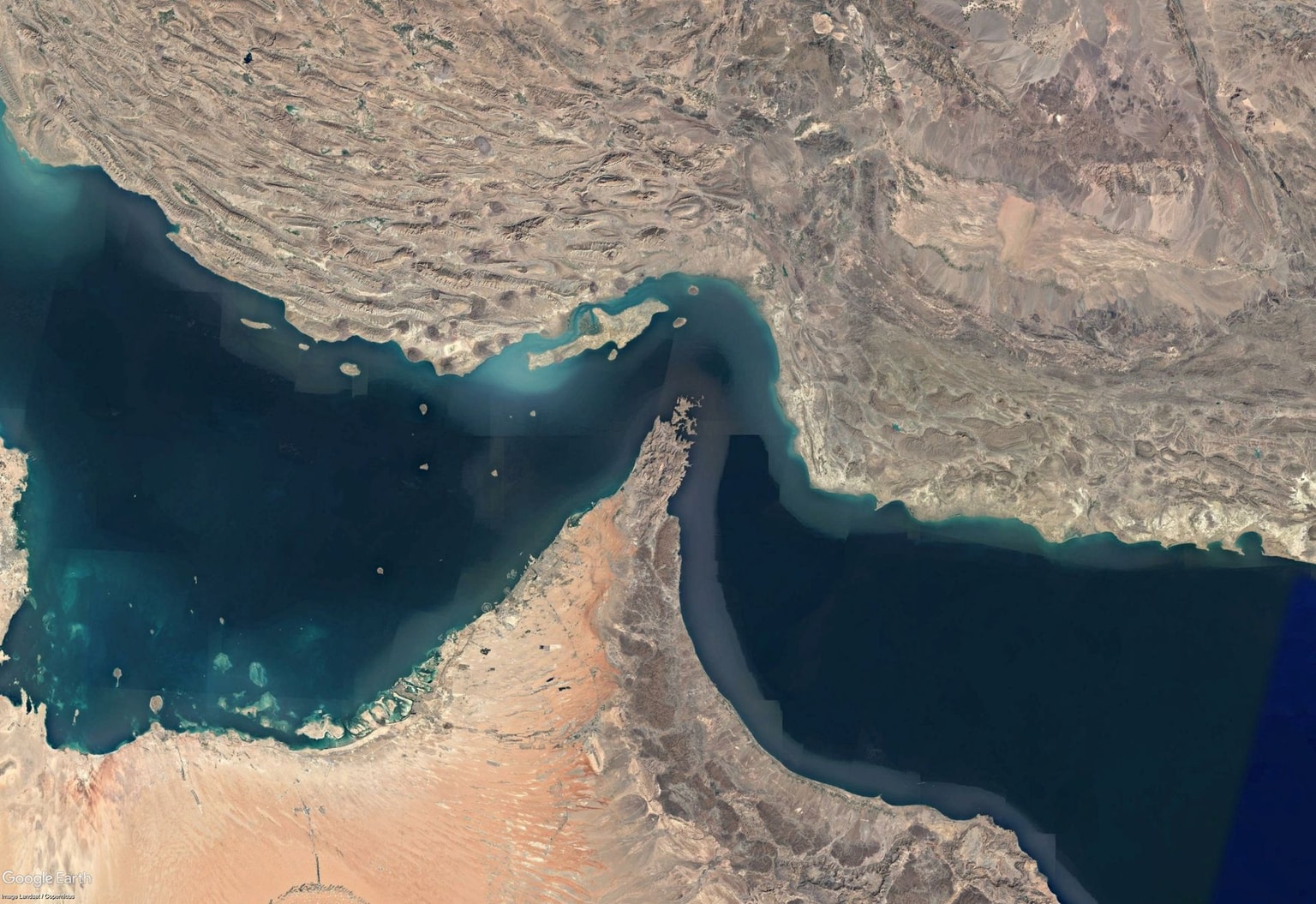
Russia uneasy as Trump's envoy quietly courts Moscow's closest ally
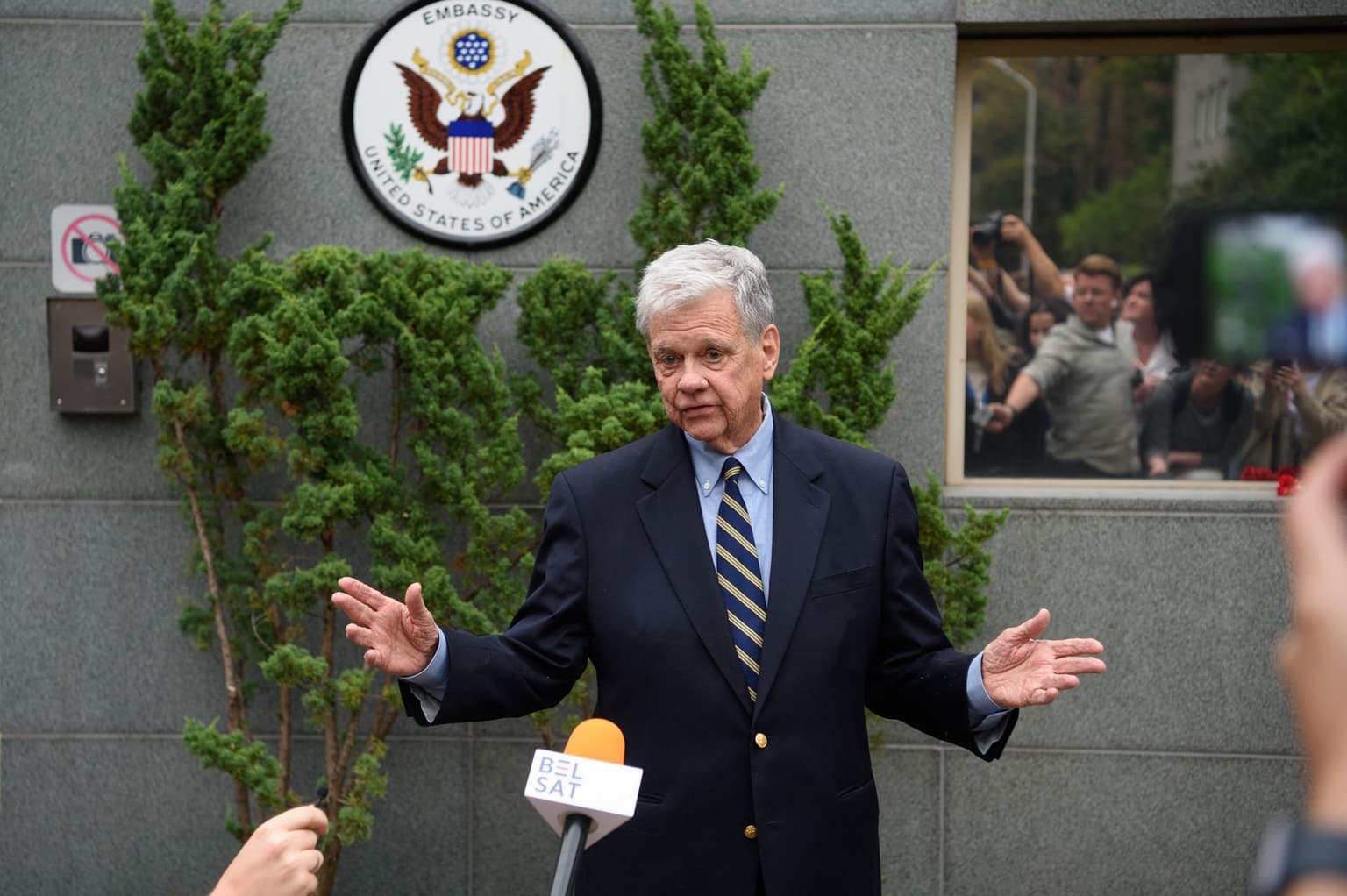
U.S. President Donald Trump’s representative John Coale in Vilnius, Lithuania, on Sept. 11, 2025. (Yauhen Yerchak / Anadolu via Getty Images)
 on Google
In early February, Russia's Foreign Intelligence Service (SVR) released a report that barely made headlines.
Yet for those paying close attention to Belarus and the region, the document carried a revealing signal about the Kremlin's concerns.
The report claimed that Western governments were attempting to weaken the alliance between Minsk and Moscow — and ultimately stage political change in Belarus.
According to the SVR, the West was allegedly trying to build a new Belarusian opposition movement with the goal of staging a coup against Belarusian dictator Alexander Lukashenko, one of Russia's most loyal allies.
The warning itself was not unusual. Russian intelligence agencies routinely accuse Western governments of plotting destabilization campaigns across the post-Soviet space.
What stood out this time was something subtler. The SVR conspicuously avoided naming the main actor supposedly behind the operation.
The omission raised an obvious question: why the sudden caution?
The answer may lie in Washington. The report appeared at a moment when the Kremlin has been notably careful not to antagonize the current U.S. administration.
Moscow has shown increasing interest in maintaining dialogue with U.S. President Donald Trump, hoping engagement with Washington could eventually ease sanctions imposed after Russia's full-scale invasion of Ukraine.
At the same time, Washington has quietly begun testing its own channel of communication with Minsk. And at the center of that effort is a relatively low-profile figure whose diplomacy has already produced results.
One White House official did not dismiss the possibility that the outreach could be part of a broader effort to loosen Russia's grip on Belarus.
The envoy few people noticed
Compared with the more visible figures shaping U.S. foreign policy, John Coale has largely stayed out of the spotlight.
Yet behind the scenes, the U.S. special envoy for Belarus has become one of the most active diplomatic players in Washington's engagement with Minsk.
Coale, a seasoned American lawyer, built his reputation decades ago through litigation against large corporations and high-profile political cases.
His legal career gained prominence in the late 1970s and 1980s, when he represented U.S. Marines and former hostages from the Iran hostage crisis.

Over the years, he also moved through a wide spectrum of American politics.
Coale endorsed John McCain in the 2008 presidential race while backing Hillary Clinton during the Democratic primaries. Later, he advised Sarah Palin, a key figure for the populist Tea Party movement, and helped establish her political action committee.
The Trump administration first appointed Coale deputy U.S. special envoy for Ukraine in March 2025. In that role, he helped negotiate the release of 14 Belarusian political prisoners in June, paving the way for his elevation to special envoy for Belarus.
People familiar with his work told the Kyiv Independent that Coale has developed a reputation for being "persistent, thus successful."
His approach — direct engagement with Lukashenko's government — has already produced tangible results on the humanitarian track.
Releasing prisoners
The most important breakthrough in talks with Lukashenko came on Dec. 13, when Belarus released more than 100 political prisoners.
The group included several of the country's most prominent detainees.
Earlier in the year, on June 21, Belarus released opposition leader Siarhei Tsikhanouski, a key political figure jailed before the disputed 2020 presidential election.


A source with knowledge of internal discussions told the Kyiv Independent that the envoy is deeply involved in talks over prisoner releases.
"It is primarily his personal achievement."
In total, Coale helped secure the release of more than 250 detainees from Belarusian prisons, including six U.S. citizens and 60 citizens of allied countries, according to people familiar with the negotiations.
As part of his ongoing diplomatic efforts, the envoy arrived in Minsk on March 19, where he held two-hour talks with the Belarusian leader.
Following the meeting, Coale said the sides discussed Lukashenko's possible visit to the U.S. and broader bilateral relations. Belarus reportedly pardoned an additional 250 political prisoners following the talks.
"Today's release of 250 individuals is a significant humanitarian milestone and a testament to (Trump's) commitment to direct, hard-nosed diplomacy," Coale said.
Previous accounts offer a glimpse into the nature of such engagements
Coale has described his meetings with Lukashenko in unusually personal terms. In one interview with Politico, the envoy recalled drinking vodka with the Belarusian leader while discussing prisoner releases.
"I did two shots, didn't throw up, but did not do a third one," Coale said.
Coordinating with opposition
Despite direct negotiations with Lukashenko's government, Coale's work has also been closely coordinated with the Belarusian democratic opposition.
People familiar with the process told the Kyiv Independent his first call after assuming the role was to Sviatlana Tsikhanouskaya, the opposition leader living in exile.
Since then, the two sides have remained in constant contact.
For the Belarusian opposition, the appointment of a U.S. envoy dedicated specifically to Belarus marked a long-awaited step. Franak Viacorka, Tsikhanouskaya's chief political adviser, said opposition leaders had been pushing for such a role for years.
"This was the first thing we asked the new U.S. administration to do," he told the Kyiv Independent. "And just a few months later, they did. We are very pleased."
Dzianis Kuchynski, Tsikhanouskaya's diplomatic adviser, emphasized the importance of the envoy's political standing in Washington.
"It is the Special Presidential Envoy, who is very close to Trump," he said. "For us, it is important that Belarus is singled out as a separate track within U.S. foreign policy."
The structure of negotiations reflects a coordinated chain of communication.
A White House official told the Kyiv Independent that the U.S. seeks the release of individual political prisoners based on a range of factors, adding that the list maintained by Viasna Human Rights Center serves as a "useful resource."
"We do not take specific recommendations from the opposition," the official said.
At the same time, opposition members said they sometimes try to pass on information about certain political prisoners to the U.S. administration.
Former U.S. ambassador to Poland Daniel Fried described efforts to secure releases as worthwhile but cautioned about potential risks.
"It has a moral hazard of incentivizing Lukashenko to keep some political prisoners and (is) limited in potential, but is worth a try," he said.
A delicate sanctions game
The negotiations have reopened one of the most sensitive aspects of Western policy toward Belarus: sanctions.
Following the December prisoner release, the U.S. Treasury removed potash producer Belaruskali and its subsidiaries from its sanctions list. The move enabled Belarus to resume potash exports to longstanding customers such as India and Brazil.
A White House official argued that Belarus had been exporting most of its potash through Russia to China after Western sanctions cut off access to key markets.
"Our sanctions relief gives Belarus the option to seek markets other than China and potentially open export routes via Lithuania, Poland, and Ukraine, but only if those countries relax their sanctions on Belarus," the official added.
Coale also announced on March 19 that the U.S. would lift sanctions on Belinvestbank, Belarus's Development Bank, and the country's Finance Ministry.
For the Belarusian opposition, the arrangement raises both hope and concern.
Viacorka warned that Lukashenko could attempt to turn political prisoners into a recurring bargaining chip.
"For him, hostages and political prisoners are a kind of commodity," he said.
According to Viacorka, the process must eventually include guarantees not only for releases but also for an end to new politically motivated arrests.
At the same time, he suggested that Europe could later join the effort.
"Europeans who imposed sanctions for the war and hybrid threats should maintain their sanctions to bring about more systemic changes in Belarus," he said.
The diplomatic thaw has been paired with a gentle tone from Washington. In February, Trump publicly described his relationship with Lukashenko in positive terms.

"We have a good relationship, and the leader is somebody that I have a lot of respect for," Trump said. "With Belarus, we have a very good relationship."
The comments stood out given Lukashenko's reputation. His government has carried out thousands of politically motivated arrests since the 2020 election crackdown.
Yet the remarks raised a broader question: what exactly is Washington trying to achieve?
Can Belarus be pulled away from Moscow?
For decades before 2020, Lukashenko pursued a careful balancing act.
He attempted to maintain working relations with both Russia and Western countries — a strategy often described as Belarus's "multi-vector" foreign policy.
That effort collapsed after the 2020 presidential election. The vote — widely believed to have been won by Tsikhanouskaya — triggered massive protests across Belarus when Lukashenko declared victory.
The regime responded with a sweeping crackdown. Western governments imposed sanctions, leaving Minsk isolated. In response, Lukashenko turned toward Moscow.
Russia provided political and economic assistance that helped stabilize the regime.
The relationship deepened further in 2022 when Belarus allowed Russian forces to launch their invasion of Ukraine from its territory.
Today, Belarus is far more tightly integrated into Russia's military and security structures than at any point since the collapse of the Soviet Union.
Despite that reality, Washington appears interested in testing whether engagement with Minsk could create even a small degree of distance between Minsk and Moscow.

White House spokesperson Olivia Wales told the Kyiv Independent that Coale's work advances broader U.S. strategic interests.
"Coale is doing a fantastic job as the Special Envoy to Belarus — working alongside President Trump to advance U.S. interests in the region and achieve historic results."
"The United States and President Trump are proud of the work that Special Envoy Coale is doing to advance freedom and diplomacy."
The stakes here are not merely diplomatic. President Volodymyr Zelensky warned in February that Russia is expanding its military presence in the country.
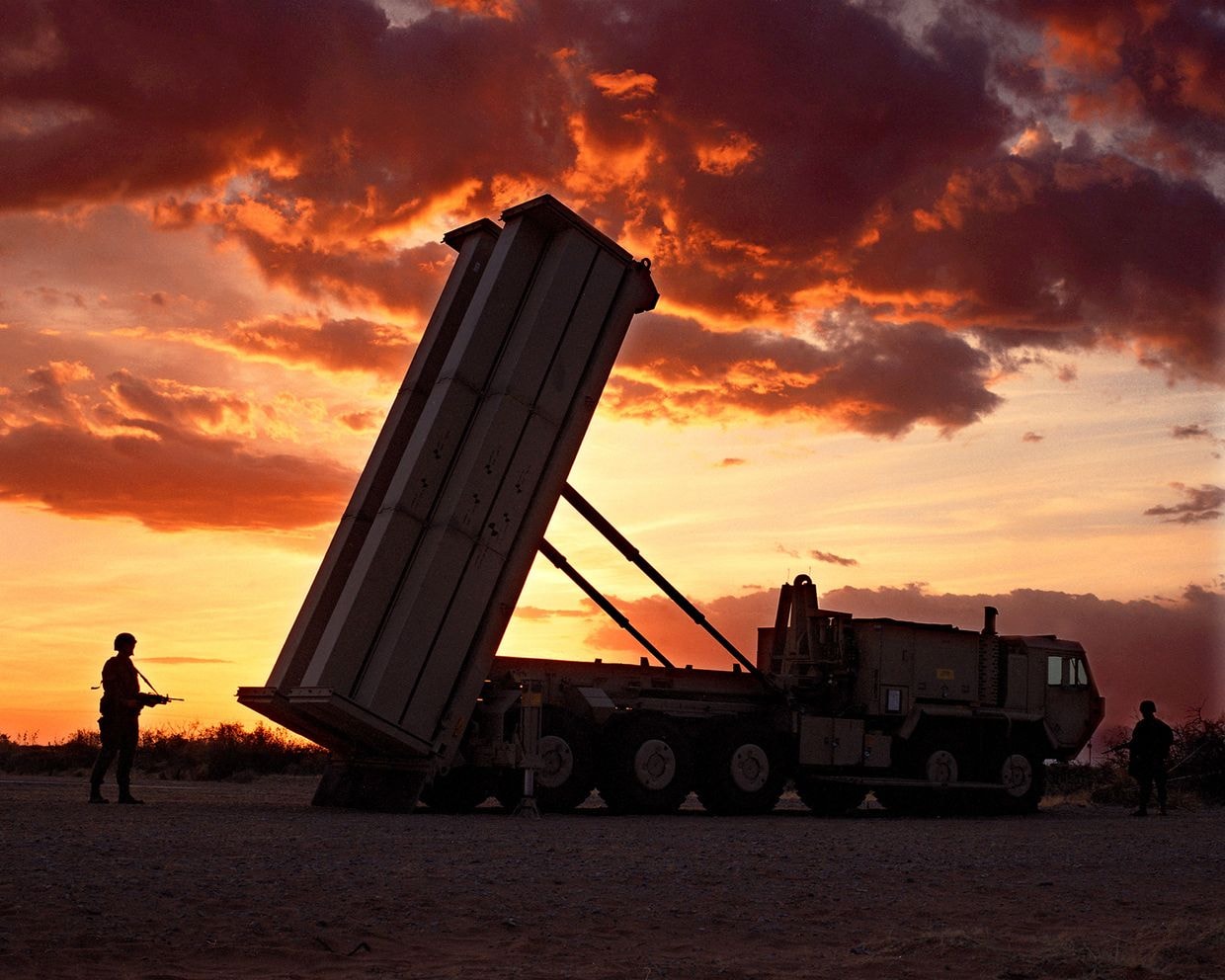
According to Zelensky, Belarus already "fully or partially" hosts Russia's Oreshnik intermediate-range ballistic missile system.
He said Moscow had completed "preparatory, technical work" related to the missile deployment on Belarusian territory — a move he described as a serious escalation risk.
Fried argued that engagement with Lukashenko could potentially reduce threats to neighboring states such as Poland, Lithuania, and Ukraine.
"Here the record is mixed, but it is reasonable to make the attempt," he said, adding that such efforts should remain reversible and rolled back if Lukashenko fails to uphold his commitments.
Experts remain skeptical
Many analysts doubt that Lukashenko will truly distance himself from the Kremlin.
Katia Glod, a fellow with the Democratic Resilience Program at the Center for European Policy Analysis (CEPA), said the idea that the United States could gradually pull Belarus away from Moscow rests on a fragile assumption.
"That dependency has only grown since Russia's full-scale invasion," Glod said.
Belarus is now deeply integrated into Russia's military and defense structures, she noted, leaving Minsk with "very limited room to manoeuvre."
For Lukashenko, political survival remains the priority. Any serious move away from Moscow could jeopardize the security guarantees that keep his regime in power.
Emily Ferris, a senior associate fellow at the Royal United Services Institute (RUSI), said Lukashenko may be returning to his familiar tactic of geopolitical balancing. He can maintain close ties with Russia while reopening channels with the West.
"While Trump's foreign policy approach tends to be to try to lock countries into economic projects and then hash out the political details, Belarus is an unattractive prospect for any foreign business," Ferris said.
Even so, engagement could offer strategic insight into the depth of Russia–Belarus integration and potential internal frictions, she added.
Fried said pulling Lukashenko away from Putin remains unlikely in the near term but could become more plausible if Moscow fails to secure its objectives in Ukraine.
"This outcome could weaken Putin and give Lukashenko an incentive to work with the West in a limited fashion," he said.
"In dealing with Lukashenko's Belarus, keep expectations under control and deal with the regime while maintaining ties with the democratic opposition, whose time may come."
For Belarusian opposition figures, the stakes go beyond diplomatic maneuvering.
Viacorka suggested the SVR report may have had another purpose: reinforcing Moscow's justification for maintaining a strong presence inside Belarus.
The presence of systems such as Oreshnik — alongside nuclear weapons and other military assets — poses risks not only for Ukraine but for the broader region.
The core challenge is not simply about Lukashenko's relationship with Moscow.
"The priority is not to save Lukashenko from Putin," Viacorka said.
"But to save Belarus from both Lukashenko and Putin."
Editor's note:
Hi, this is Tim. The author of this article. Thank you for taking the time to read it.
At the Kyiv Independent, we don't have a wealthy owner or political backing — we rely on readers like you to keep our journalism indeed independent.
If you found this article interesting, consider joining our community today.