Russia back at Paralympics under national flag, its war veterans eye 2028 games
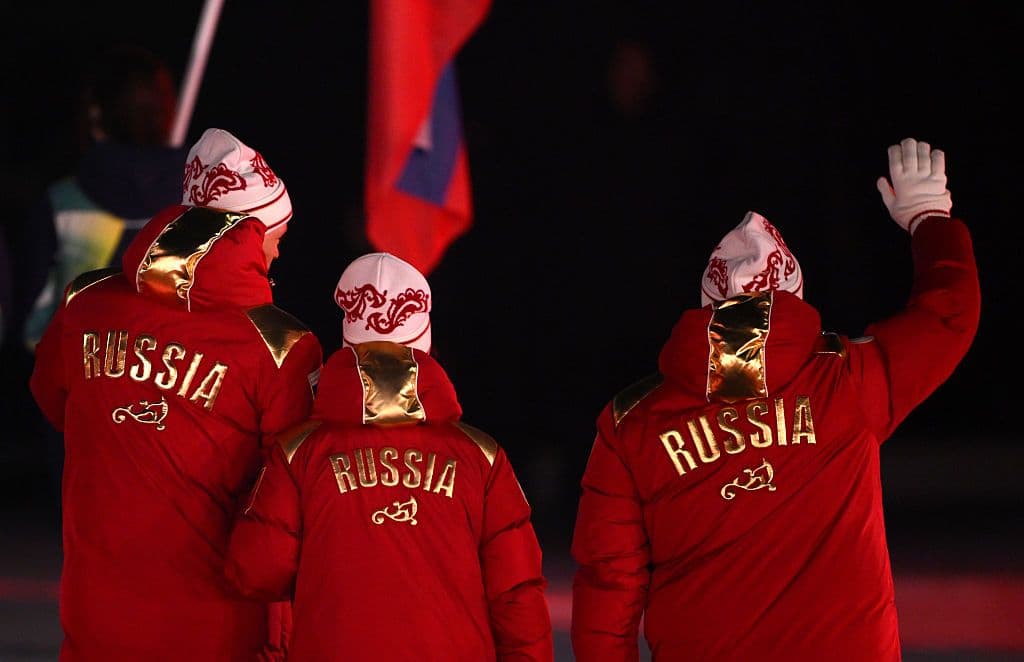
Athletes of Team Russia wave to the crowd during the Milano Cortina 2026 Winter Paralympic Games opening ceremony Arena di Verona on March 6, 2026 in Verona, Italy. (David Ramos/Getty Images)
 on Google
For the first time in 12 years, Russia will compete under its national flag at the 2026 Paralympic Games — a return that comes despite its ongoing all-out war against Ukraine and a pattern of doping scandals that led to the initial ban.
"There is simply no justification for the International Paralympic Committee (IPC) to allow Russia and Belarus back while the invasion of Ukraine continues," Global Athlete Director General Rob Koehler told the Kyiv Independent.
"The IPC has blood on its hands for allowing this to happen."
The International Paralympic Committee reinstated the national Paralympic committees of Russia and Belarus after a vote at its General Assembly on Sept. 27. Despite missing qualifying competitions, Russian and Belarusian athletes received individual slots — six for Russia and four for Belarus.
Veterans of the war in Ukraine are already eyeing to compete in the upcoming 2028 Paralympic Games, their participation was not ruled out by the International Paralympic Committee President Andrew Parsons.
"It does not matter to us what they have done in the past in the combat field. Of course, crimes of war are something different, but what we offer with the movement is a second chance," Parsons said.

At the same time, the Ukrainian Paralympic team entered the competition following a high-profile controversy at the Olympics involving Ukrainian skeleton racer Vladyslav Heraskevych, who sought to compete wearing a helmet honoring Ukrainian athletes killed in Russia's war.
On the eve of the Paralympics, the Ukrainian Paralympic Committee faced a similar controversy after athletes were barred from wearing a uniform featuring a map of Ukraine, which organizers said constituted a political message related to national identity.
Valeriy Sushkevych, president of the Ukrainian Paralympic Committee, said the Ukrainian team could face even more challenges at the Paralympic Games in Italy, which run from March 6 until the 15th.
"We know that some of the IPC leaders have a problematic attitude toward us," Sushkevych said. "We are already used to this. These behaviors have been systemic, and we are prepared for them to continue."
How Russia and Belarus regained their place
After Russia launched its full-scale invasion of Ukraine, the IPC banned Russian and Belarusian para-athletes from the 2022 Paralympics and subsequently stripped both countries of full membership in the organization.
Meanwhile, Russian para-athletes had already competed under a neutral status at the Paralympics for the previous eight years, following revelations of a state-sponsored doping program in Russia in 2016.
In 2023, restrictions on the Russian and Belarusian Paralympic committees were eased, with the suspension becoming partial, allowing their athletes to compete under a neutral status at the 2024 Summer Paralympics in Paris.
Less than six months before the 2026 Winter Paralympics, however, IPC members failed to secure the necessary votes to extend the suspension. As a result, Russia and Belarus were fully reinstated.
Speaking about the reinstatement of the Russian Paralympic Committee in the IPC, its president, Pavel Rozhkov, singled out President Vladimir Putin for praise.
"This victory was made possible thanks to the tremendous political and diplomatic work carried out by Russian President Vladimir Putin with countries in Asia, Latin America, and Africa," Rozhkov told Russia's Match TV channel on Sept. 29.
"First and foremost, it was these countries that supported us during the first and second votes," Rozhkov added.
Yet Russia and Belarus' participation in the 2026 Paralympics was cleared following a separate development.

In December 2025, the two countries successfully appealed an International Ski and Snowboard Federation (FIS) ban at the Court of Arbitration for Sport (CAS), lifting restrictions in ski and snowboard events and paving the way for their athletes to compete at Milano Cortina 2026.
Sushkevych said that by permitting Russia and Belarus to compete under their national flags, the IPC is effectively legitimizing Russia's occupation of Ukrainian territories under its banner.
Sushkevych noted that one of Moscow's first steps in occupied areas is to establish Russian branches of the national Paralympic and Olympic committees, integrating Ukrainian sports structures into Russian ones.
"For the first time in the history of the Paralympic movement, we have a situation where a participant represents Russia along with the illegally occupied territories of Ukraine," Sushkevych said.
The decision sparked protests from Ukraine and several other countries. On the eve of the 2026 Paralympic Games, the Ukrainian team announced it would boycott the opening ceremony.
Ukraine's Youth and Sports Ministry and the Foreign Ministry also called on other nations to join the boycott and condemn the International Paralympic Committee's "immoral actions," particularly its decision to allow Russia and Belarus to participate.
Following the appeal, 16 of the 56 participating countries, including Ukraine, boycotted the opening ceremony in protest of the International Paralympic Committee's decision to allow Russia and Belarus to compete under their national flags.
IPC President Parsons said at a Feb. 23 press conference that the decision to allow Russian and Belarusian para-athletes to participate "cannot be overturned by the board or by myself."
"If the IPC does not understand the implications or the reasons behind the countries boycotting the opening and closing ceremonies, then they simply do not understand geopolitics, which, arguably, they do," Koehler said.
"And they are willing to do all of this. They are willing to take away a country's or an athlete's glory at the opening ceremony just to appease one person. And that is Vladimir Putin."
From war to Paralympics
This year, the Russian team does not include para-athletes who fought in Ukraine, but many are already eyeing the 2028 Paralympics in Los Angeles. With recent statements from the IPC offering little resistance, it remains uncertain whether anything will stand in their way.
Russia openly promotes veterans' involvement in the Paralympic movement after their military service.
At the start of 2026, Rozhkov said that over 500 veterans were part of regional Paralympic teams, with 30 competing on the national team.
Many former Russian military personnel who fought in Ukraine have also expressed interest in competing in the Paralympic Games, with some actively preparing.
An investigation by Ukrainian public broadcaster Suspilne found that 33-year-old Anton Bushmakin from Russia's Krasnodar Krai is currently a member of the regional Paralympic canoeing and kayaking team.
Bushmakin volunteered to fight in Ukraine, serving as a sapper, and in 2023, he was severely injured by a mine near Avdiivka, Donetsk Oblast, resulting in the amputation of both legs.
In 2026, a propaganda film "Keep stepping forward" was released featuring Bushmakin, in which he said he was preparing for the Paralympics.

"As soon as the situation changes, I will be ready. I am ready to compete. Of course, under my flag, to the anthem, and to win these competitions," he said.
At the same time, the IPC does not view participation in the war in Ukraine as grounds for barring a para-athlete from competing in international events under its auspices.
Parsons said in an interview with the BBC published on March 6 that the Paralympic movement began after World War II among wounded military personnel, intending to help them reintegrate into society.
Responding to the IPC president's statement, Sushkevych highlighted war crimes committed by Russian forces that Ukrainian authorities have documented on their territory, including deliberate killings of civilians and sexual violence.
"The Russian Paralympic Committee is including killers of civilians in its team," Sushkevych said. "What, then, are we turning the Paralympic movement into?"
According to Sushkevych, Ukraine will continue to challenge the IPC's stance, warning that Russia's influence within the committee is only increasing.
Wayne Jordash, president of Global Rights Compliance, told the Kyiv Independent that Ukraine, like other IPC members or the IPC's sponsors, could also exert pressure on the committee outside its formal framework if it breaches fundamental business and human rights obligations.
Among the options — not just the Court of Arbitration for Sport, as complaints could be filed with National Contact Points (NCPs) for Responsible Business Conduct, since the committees are registered in Organisation for Economic Co-operation and Development (OECD) countries.
The NCPs could then evaluate whether their decisions meet human rights obligations, including the duty to avoid causing, contributing to, or being linked to abuses.
"It is difficult to see how (IPC) would defend themselves in these proceedings," the lawyer added.