Breaking: Over 400 Russian drones detected in Ukraine's airspace, missiles launched from bomber aircraft
 on Google
Editor's note: This is a developing story and is being updated.
Ukraine detected more than 400 Russian drones in its airspace during a rare morning attack on April 3, Yurii Ihnat, head of the Air Force communications department, said on national television.
Ukrainian forces first detected the drones around 4 a.m. local time. By 5 a.m., Ukrainian monitoring channels reported the presence of two Tu-160 aircraft, each capable of carrying up to 12 cruise missiles.
The number of drones continued to surge throughout the morning — 240 were recorded in Ukrainian airspace at 7 a.m., nearly doubling by 9 a.m., according to Ihnat.
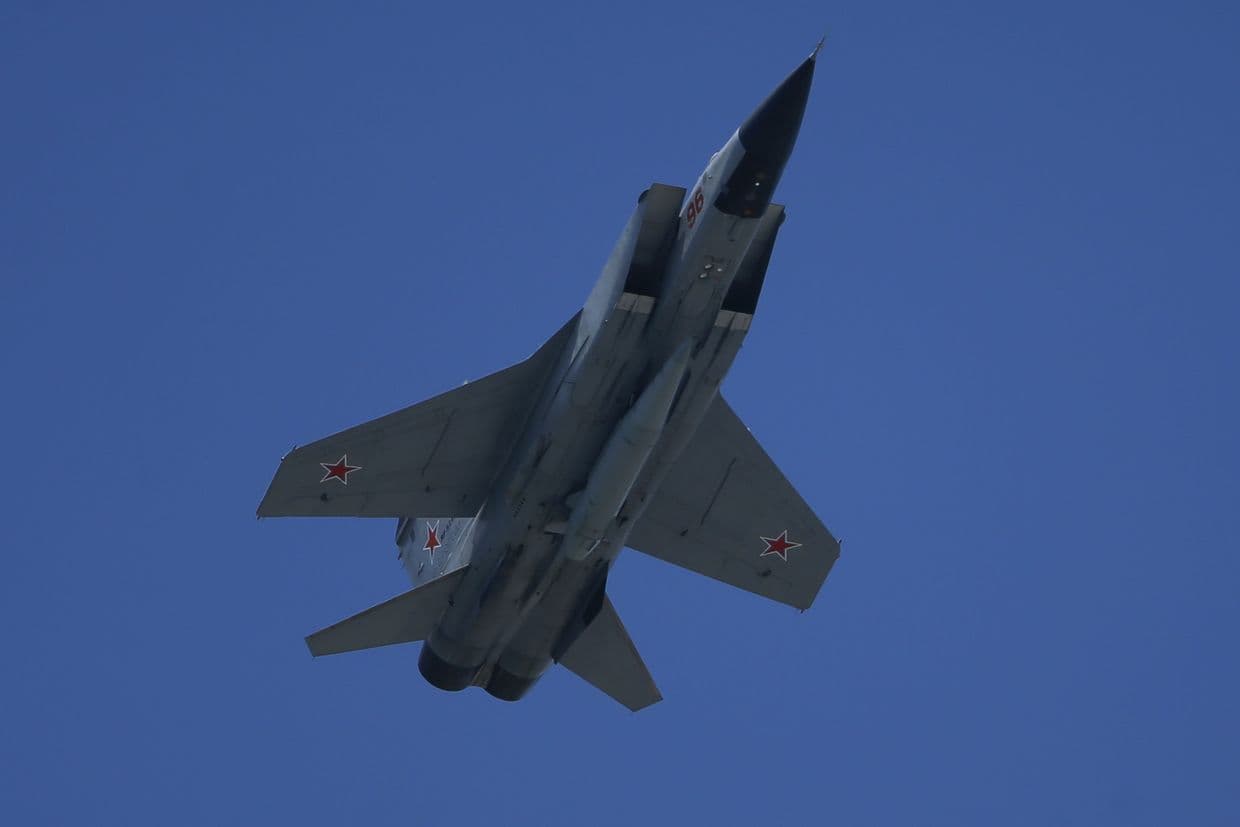
Ihnat also confirmed that Russia had deployed Tu-95 and Tu-160MS strategic bombers as part of the attack. Around 10:20 a.m. local time, Ukraine detected a MiG-31 fighter jet taking off, shortly before the Air Force reported that Russian missiles had been launched, mainly from the country's east and south.
At least one person was killed and another injured in Kyiv Oblast during the morning's attack, according to the Kyiv Oblast Military Administration.
Ihnat likened the pattern of the morning attack to previous Russian strikes on March 23–24 and March 31–April 1, when mass attack that began at night extended into daytime hours.
Drones have been reported over Kirovohrad, Vinnytsia, Sumy, Cherkasy, Poltava, Zhytomyr, and Kyiv oblasts, according to the Air Force.
Russian forces launched overnight strikes across Ukraine as well, with the heaviest attacks focused on the border regions of Kharkiv and Sumy, parts of which remain under Russian occupation.


Three ballistic missiles and several drones struck the regional center of Kharkiv, while guided aerial bombs hit the city of Shostka in Sumy Oblast, killing one woman and injuring four others, according to local authorities.
Hours later, Russian drones targeted the regional center of Sumy. One drone struck a shopping center, injuring at least three people, the local military administration said.
Ballistic missiles were also launched toward Zaporizhzhia and Dnipropetrovsk oblasts during the night, according to the Air Force.
This spring, Russia has increasingly carried out attacks during daytime hours, marking a shift from the winter months, when large-scale drone and missile strikes were typically launched at night.
"(The Russians) are testing us," Ihnat told the Kyiv Independent on March 22. "The question is, how many resources can they afford to use?"
"If they could launch a thousand drones a day consistently, they would. As it stands, they are just keeping us on edge constantly," Ihnat added.
Viktor Kevliuk, a reserve colonel and analyst at the Center for Defense Strategies, said that these prolonged attacks are designed to exhaust Ukraine's air defenses over the course of the day, paving the way for more effective strikes.
These strikes also serve as a psychological tactic aimed at intimidating the civilian population, the analyst added.
"(Their) goal is to create a sense of constant danger," Kevliuk told the Kyiv Independent.