Poland's right wing taps into anti-Ukraine sentiment to win votes
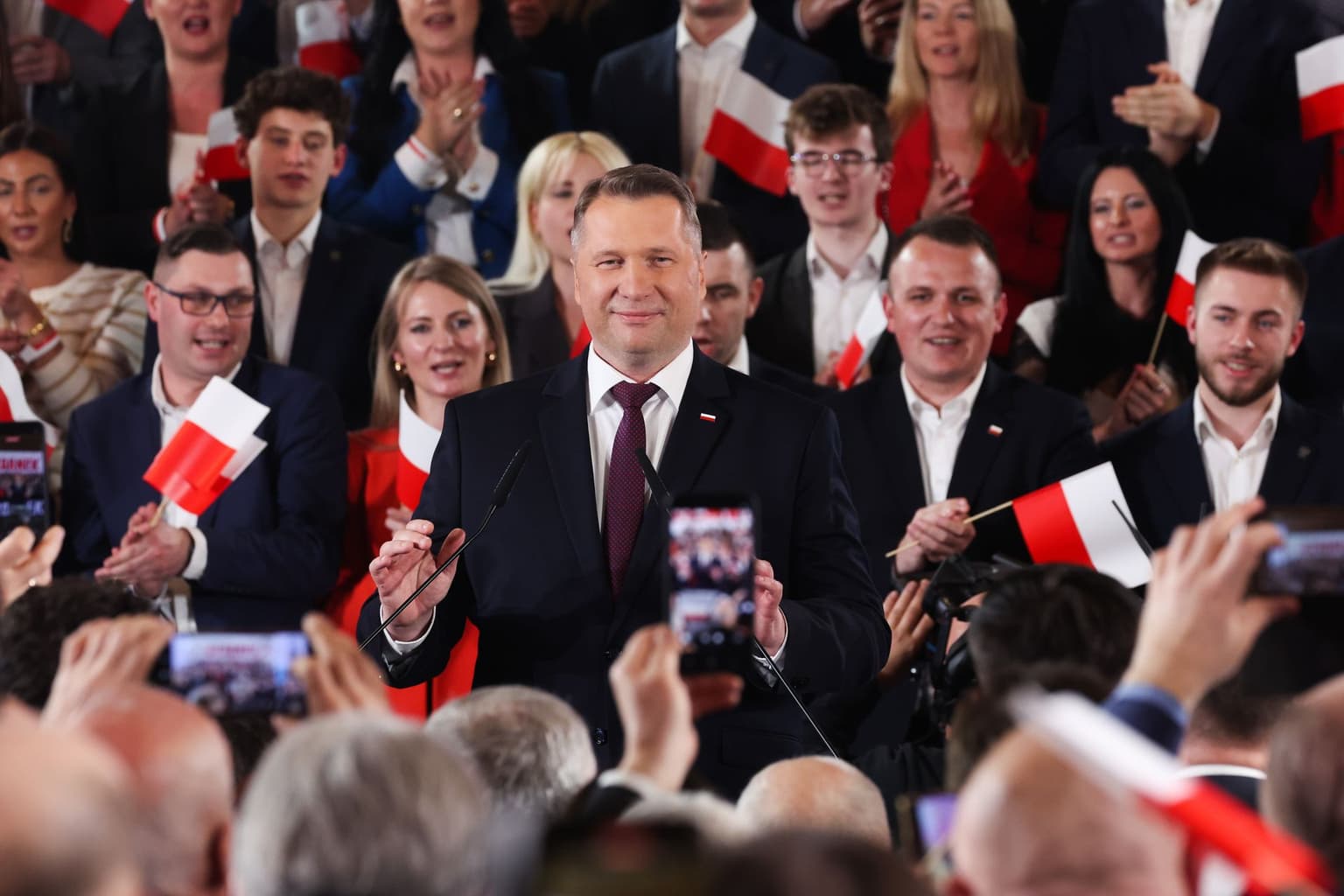
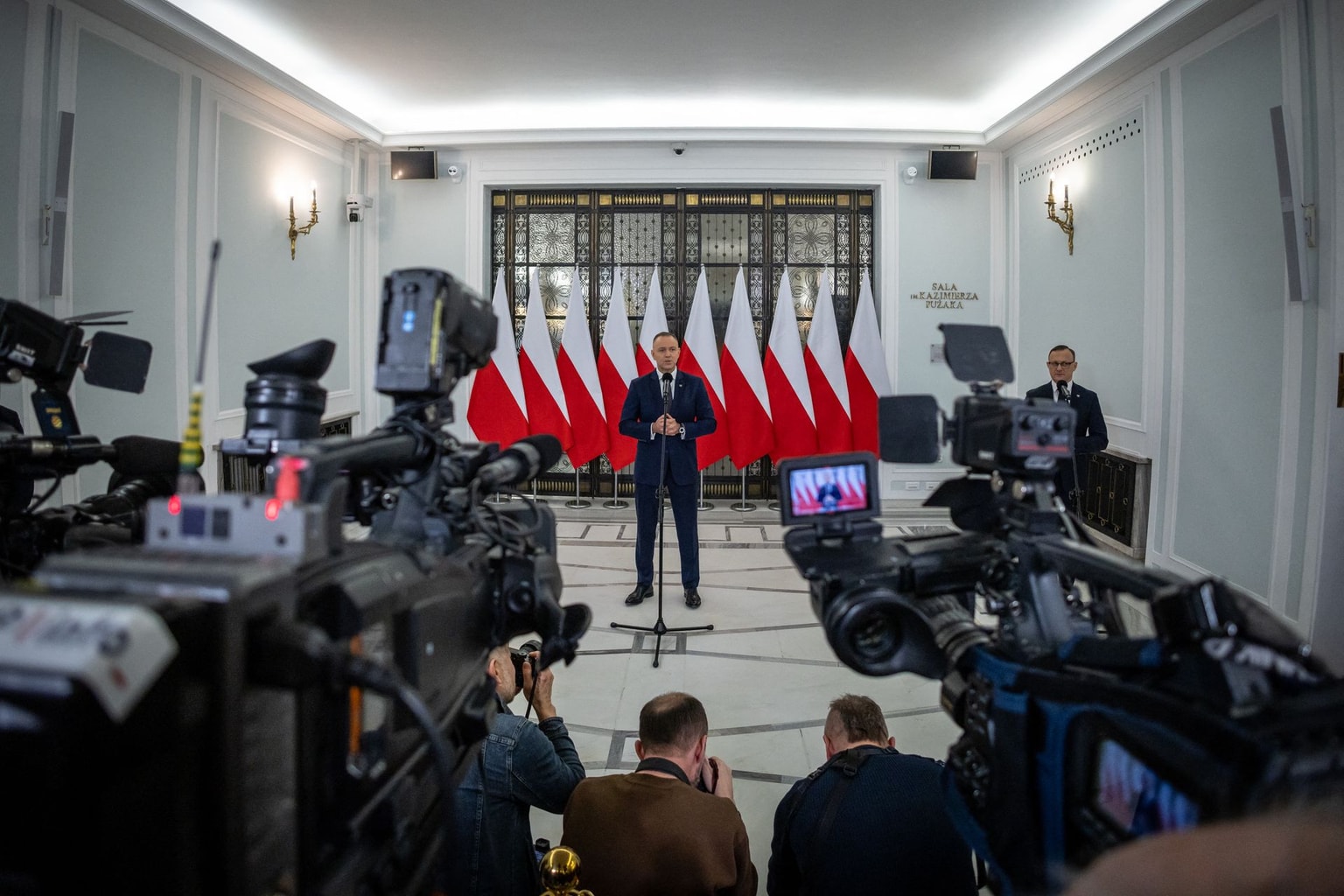
Przemysław Czarnek (C) attends a Law and Justice (PiS) party convention in Kraków, Poland, on March 7, 2026. (Beata Zawrzel / NurPhoto / Getty Images)
 on Google
Poland's conservative Law and Justice (PiS) party is ramping up Ukraine-skeptic rhetoric ahead of upcoming elections, in what analysts say is a bid to win back far-right voters after its 2023 defeat.
After pushing conservative Karol Nawrocki into the presidential palace, PiS tapped ex-Education Minister Przemyslaw Czarnek — a controversial hardliner — as its candidate for prime minister in next year's election.
Czarnek has a track record of criticizing the Ukrainian leadership over historical grievances, and has maintained that Polish support for Kyiv — while necessary — should not be unconditional.

Experts who spoke with the Kyiv Independent present Czarnek's rhetoric as largely instrumental: a tactic to keep voters from drifting toward the far-right Confederation Liberty and Independence and the Confederation of the Polish Crown (KKP) parties, both growing in popularity over the past few years.
The ultimate outcome, they argue, is the normalization of anti-Ukrainian sentiment among the Polish right — a worrying signal for Ukraine ahead of next year's vote.
Moving further right
Czarnek's appointment as PiS's candidate for prime minister in early March marked the culmination of an internal struggle among the party's factions.
Jaroslaw Kaczynski, the party's seasoned grey cardinal, placed his bets on the hardline ex-education minister instead of former Prime Minister Mateusz Morawiecki and his moderates.
It was under Morawiecki that the last PiS government firmly backed Ukraine at the outset of Russia's 2022 invasion, despite later tensions.
Czarnek's debut as a potential prime minister sent a less positive signal for Ukraine.
"He [Czarnek] can appeal to the Confederation electorate both in substance and form of communication,"
In his March 7 speech after nomination, the politician stressed that Warsaw is supporting Kyiv out of its self-interest: to prevent Russian tanks from being stationed at the Ukrainian-Polish border, calling Ukraine a "buffer."
Ukrainian political expert Stanislav Zhelikhovskyi described this framing as "alarming."
"Ukraine… must return to the Western world in full and integrate into its structures," he told the Kyiv Independent.
While Poland has thus far supported Ukraine along this path, Czarnek's statements indicate that the policy could be revised, Zhelikhovskyi warned.
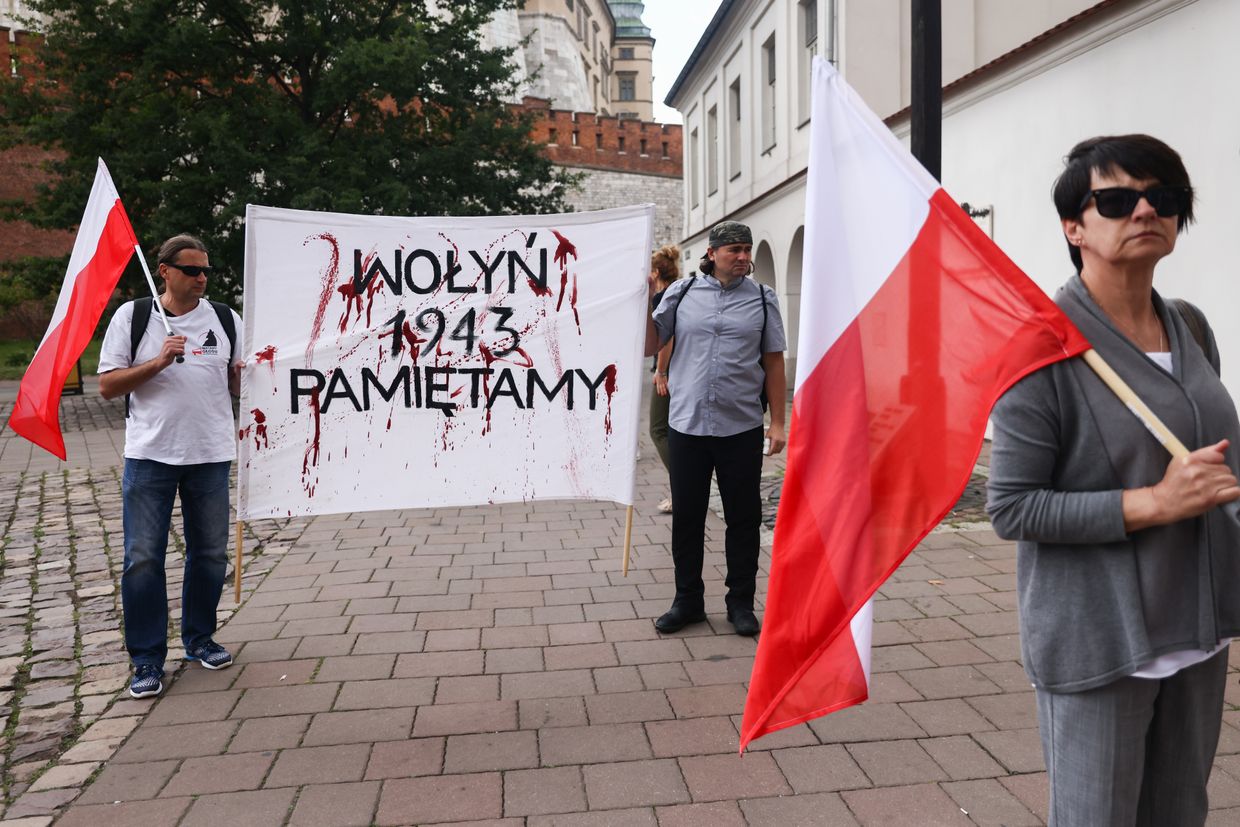
Czarnek also accused Kyiv of "impudence" over supposedly blocking the exhumation of the Polish victims killed by Ukrainian nationalists in the World War II-era Volyn massacres, despite the fact that the work began last year.

The firebrand politician has long leaned on historic grievances in his criticism of Ukraine, including during his 2015-2019 tenure as head of the Lublin province — a region where the killings also took place.
"No EU, no NATO for Ukraine until Ukraine starts behaving like a civilized state," Czarnek said last year, linking World War II events to Kyiv's efforts to join Western structures.
While voicing support for ongoing Polish assistance for Ukraine, Czarnek has also said Kyiv should be more grateful, a sentiment shared by President Nawrocki and other prominent voices among the Polish right.
"(Czarnek) is now where the center of gravity is within Law and Justice on the Ukraine issue," says Aleks Szczerbiak, an expert in European politics at the University of Sussex.
Normalizing anti-Ukrainian sentiment
Despite PiS losing to Donald Tusk's centrist coalition in the 2023 elections, it still won the plurality of votes — 35%.
But recent polls show a steep decline to around 25% as a number of Polish far-right parties have bitten off PiS votes.
The tapping of Czarnek — a professor known for his ultraconservative, anti-LGBT, and nationalist views — is meant to reverse that trend.
"He can appeal to the Confederation electorate both in substance and form of communication," Polish political scientist Pawel Borkowski told the Kyiv Independent.
The Confederation, a nationalist-libertarian party polling at 10-15%, is a vocal Ukraine critic. As a result, Czarnek's "views before the elections will be as anti-Ukrainian as necessary to effectively compete for the electorate," Borkowski says.
Some see such radical positions as a pragmatic strategy, rather than an ideological commitment.
"Although (Czarnek) has an image — which he's cultivated very carefully — of this kind of tough, combative, quite radical, quite traditionalist figure, he's also a very intelligent guy," Szczerbiak says.
The expert described the would-be prime minister as a flexible politician who has maintained channels with moderate factions within PiS.

Nevertheless, PiS's current strategy is to capture the full spectrum of right-wing sentiment, so that to the right of them, "there is nothing else but a wall," says Wojciech Przybylski, an editor at Visegrad Insight and president of Res Publica Nowa.
However, such an approach will likely have long-term effects across Polish society.
Recent surveys show that the Polish population is increasingly divided over Ukraine, with PiS and Confederation voters more skeptical toward assisting Ukrainian refugees than pro-government voters.
Another survey showed that while 44% of Poles back continued military support for Ukraine, 39% oppose it.
Michal Lebduska, expert in Polish-Ukrainian relations at the Association for International Affairs (AMO) in Prague, argues that by adopting more radical rhetoric, PiS also drives radicalization among its voters.
Using anti-Ukrainian sentiments as a tool ultimately "legitimizes actually anti-Ukrainian, pro-Russian politicians," Borkowski adds.
A radical coalition?
The latest polls show PiS is unlikely to gain a majority in parliament, and a coalition with the far-right Confederation party is no longer out of the question.
Czarnek has not ruled out such an option — a move that would mark the far-right party's first entry into government.
When congratulating Czarnek on his appointment, Slawomir Mentzen, one of the Confederation's leaders, sent him a list of questions, including whether he "fully accepts the PiS government's policy toward Ukraine."
Czarnek said he would respond to all questions in time — publicly or privately — but assured him that the two leaders agree on the need for a "responsible right-wing government."
At the same time, he rejected a coalition with KKP's leader Grzegorz Braun, an avowedly anti-Ukrainian politician criticized for antisemitic, Moscow-friendly views.
KKP has been polling at around 8%. The threshold to enter parliament stands at 5%.
Should the right-wing win the next election, observers expect a cooling in relations with Ukraine — but not an outright pro-Russian turn.
"I don't think that Warsaw under the 'PiS 2.0' will repeat what is happening in Hungary," Zhelikhovskyi says.
read also
 Kollen Post
 Karol Luczka
Note from the author:
Hi, this is Martin Fornusek.
I hope you enjoyed this article. In our team, we believe fact-based and truthful reporting should be available to all – that's why we don't use any paywall.
If you'd like to help us provide you with more in-depth coverage of Ukraine's struggle against Russian aggression, European politics, and other topics, please consider joining the Kyiv Independent community.