A 19th-century novel for a 21st-century war — Why Panteleimon Kulish’s ‘Black Council’ still matters
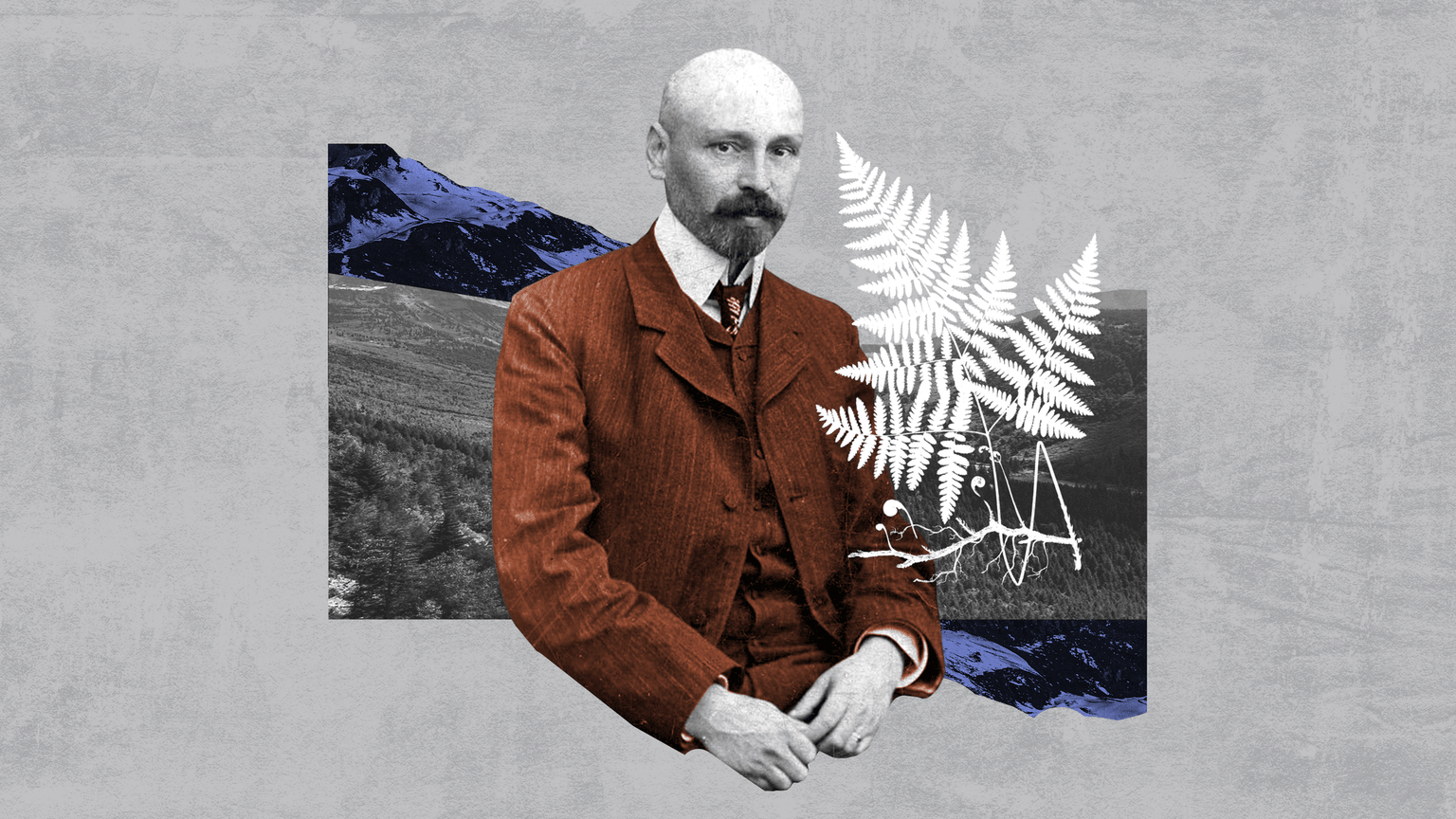
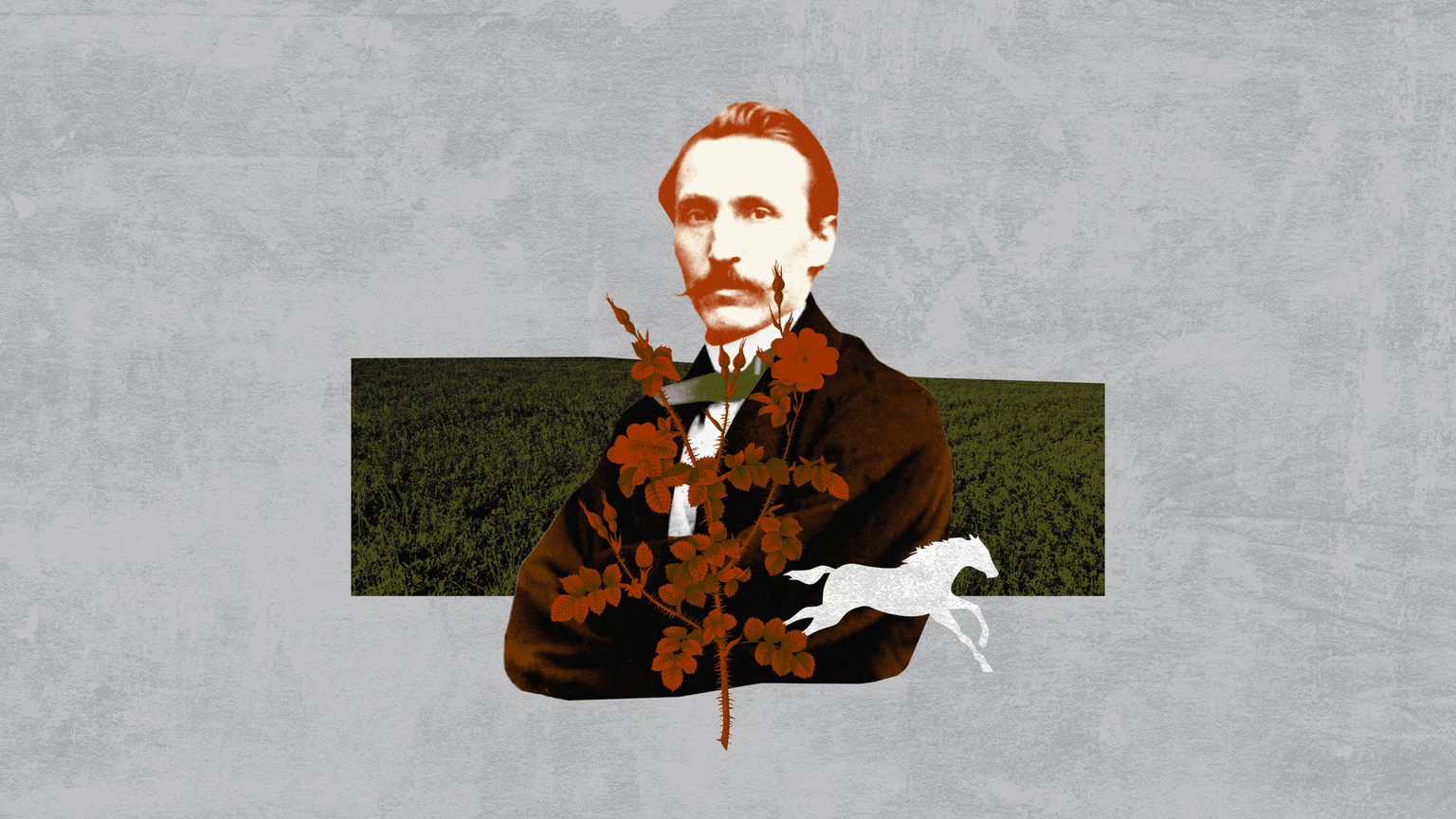
Ukrainian writer Panteleimon Kulish, the author of “Black Council,” the first major historical novel in Ukrainian literature. (Anastasiia Starko / The Kyiv Independent)

Editor's Note: This story is part of the "Hidden Canon" – a special series celebrating Ukrainian classic literature and aiming to bring it to a wider international audience. The series is supported by the Ukrainian Institute.
In 1663, the Cossacks stood at a crossroads. Six years after the death of Hetman Bohdan Khmelnytskyi, the architect of the Cossack state, rival factions vied for power. Left-bank and Right-bank Ukraine clashed, seasoned commanders sparred with rank-and-file warriors, while Russia and other enemies watched on, ready to exploit every weakness.
It was into this turbulent past that 19th-century Ukrainian writer Panteleimon Kulish transported readers with his 1857 novel “Black Council,” the first major historical novel in Ukrainian literature.
The novel remains as important today as it was at the time of its publication for its warning about how a country amid turbulent times must be led by seasoned and experienced leadership, as well as how domestic strife can lead to the state’s demise as easily as external threats.
“Kulish’s ‘Black Council’ is a kind of commentary on his historiosophical ideas (about this period in Ukrainian history),” Ukrainian literary scholar Tamara Hundorova told the Kyiv Independent.
“Through his own version of history, Kulish demonstrates real dangers: the discord of the Ukrainian elite on the one hand, and the power of the common people — the social mass that often decides the fate of history — on the other.”
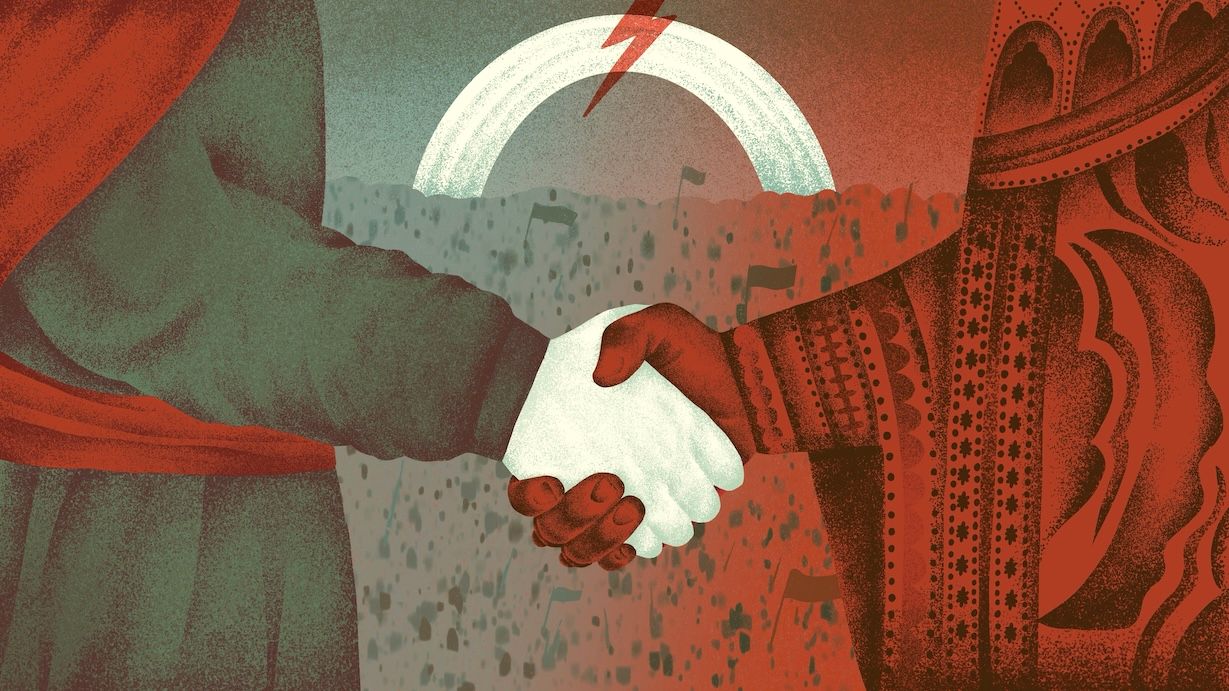
Thousands of Cossacks and commonfolk gathered in 1663 in Nizhyn, in what is now Ukraine’s northern Chernihiv Oblast, to elect a new hetman. The gathering became known as the Black Council.

This election proved to be a decisive historical moment, one that would determine not only the future of the Cossack state but also the unity of the Cossacks at a time when external pressures and internal divisions were rapidly intensifying.
At the novel’s opening, the reader meets Shram, or “Scar,” a veteran Cossack and priest, and his son Petro, who are traveling to the council. From Shram’s perspective, Kulish establishes an acute sense of crisis by recounting Shram’s horror at the mounting political crisis that has unfolded from the time of Bohdan Khmelnytskyii’s death to the titular event of the novel.
“Fights and quarrels arose, and the hetman’s mace was treated frivolously. Old Shram’s heart ached as he heard Cossack blood spilled beyond the Dnipro under Ivan Vyhovskyi and the reckless Yurii Khmelnytskyi, who took the hetman’s office after him; and when the mace passed to Pavlo Teteria, Old Shram clasped his head in despair. Whether praying or officiating, he worried about the ruin of Ukraine by internal strife,” writes Kulish.
Vyhovskyi was overthrown and later executed by the Polish-Lithuanian Commonwealth, the younger Khmelnytskyi abdicated after multiple instances of weak leadership, and Teteria ruled briefly before fleeing into exile, where he died.
Amid this turmoil, the Cossack Hetmanate split into rivaling factions. There was Left-bank Ukraine, east of the Dnipro River, which faced a growing Russian threat, and Right-bank Ukraine to the west, which contended with the threat of the Polish-Lithuanian Commonwealth. There was also the Zaporizhzhian Sich to the south — more independent and militaristic, yet also dangerously anarchic.
This period of internal division among the Cossacks is known today as the Ruin.
Among the contenders at the Black Council to lead the Cossacks were Yakym Somko, hetman of Left-bank Ukraine, known for his personal integrity and respect for tradition. Somko was largely supported by senior Cossack officers like Shram. His main rival, Ivan Briukhovetskyi, a populist leader from the Zaporozhian Cossacks, promised the masses reforms and lower taxes. Moscow preferred Briukhovetskyi, believing that he would be easier to control.
Other claimants, including leaders from Right-bank Ukraine, played smaller but still important roles in the political maneuvering for power.
Briukhovetskyi emerged from the Black Council as the leader anointed by the masses, a triumph of populist politics that soon curdled into repression. He moved swiftly to imprison and execute rivals such as Somko, consolidating his authority through force. Yet the same popular energies that carried him to power ultimately sealed his fate: in 1668, amid an anti-Russian uprising, Briukhovetskyi was seized by a crowd and beaten to death.
The question of how the Cossacks should handle their external enemies — and indeed which enemy, the Polish–Lithuanian Commonwealth or the Tsardom of Russia, posed the greater threat — hangs over the debates in the novel leading up to the council.
“Ultimately, ‘Black Council’ is an archetypal text, a timeless warning of the Ruin for Ukraine, which may come both from outside and from within.”
Shram’s son Petro, a fellow Cossack warrior, urges his father that the Cossacks must “join forces with the Russians (against the Poles). After all, this is all one Rus. If we prosper, so too will they. May God grant us the strength to unite both banks of the Dnipro. Then we can…elevate standards throughout Ukraine, and bring joy to the souls of the great Kyivan Princes Yaroslav and Monomakh.”
Upon hearing Petro’s claim, Shram’s response is, “My son, we have learned what the Muscovite boyars are like,” adding that the Poles would never succeed in bringing down the Cossacks.
Historical figures like Somko and Briukhovetskyi propel the political drama in “Black Council,” while fictional characters such as Shram and Petro give the story its human heart, revealing how ordinary people were swept up in the turbulence and difficult choices during this period of Ukraine’s history.
“Ultimately, ‘Black Council’ is an archetypal text, a timeless warning of the Ruin for Ukraine, which may come both from outside and from within,” Hundorova said.

“If we speak of the text as a cultural project, it narrates the period of the Ruin and demonstrates various social — and ideally national — models for the unfolding of the Ukrainian idea. Each of its characters embodies a distinct path and a distinct variant of the development of Ukrainian identity, and these paths are in conflict with one another.”
The political debates at the heart of “Black Council” weren’t just history lessons — they reflected struggles that were still relevant in Kulish’s own time. In the 19th century, Ukraine was not an independent state. Its western lands were ruled by the Austro-Hungarian Empire, while the east fell under the Russian Empire. Both imposed foreign control, but life under Russian control was far harsher, with strict limits on language, culture, and expression of national identity.
In the 19th century, a period of national revival was beginning to take shape, and Kulish was at its forefront. His work proved that the Ukrainian language could serve as a medium for serious literature, historical scholarship, and intellectual discourse. Beyond his writing, Kulish played a crucial role in shaping the language itself, developing its grammar, orthography, and literary style, and helping standardize Ukrainian for literature, newspapers, and education.
Kulish also counted among the members of the Brotherhood of Saints Cyril and Methodius, a secret society in Kyiv that dared to imagine a new Ukraine. Founded in the winter of 1845–1846, the Brotherhood championed the idea of a Ukrainian national renaissance, envisioning autonomy for Ukraine within a free and equal Slavic federation. The tsarist authorities put an end to the movement in the spring of 1847, and the majority of its members were either sent into exile or put in prison.
After the Brotherhood’s downfall and the punishment he endured for his involvement in it, Kulish moved toward a more conservative political outlook. For some time, he supported the development of Ukrainian culture and education within the bounds of coexistence with the Russian Empire rather than calling for full independence. He remained devoted to Ukrainian cultural identity, but he prioritized survival, education, and gradual reform over what was then seen as radical political activism.

In a similar vein, Kulish began to approach his contemporaries, including the poet Taras Shevchenko — who cast the Cossack era as the cradle of a Ukrainian national renaissance — with measured skepticism. For Kulish, historical episodes such as the Black Council of 1663 were cautionary tales: the period’s tumultuous, almost anarchic fervor, while heroic in spirit, had also sown the seeds of its own destruction. The pursuit of Ukrainian sovereignty remained important, but it needed more than just passionate zeal.
While the novel captures an important moment in the long and fraught history of Ukrainian-Russian relations — and reflects Kulish’s attempt to imagine a space for Ukrainian culture within the structures of the Russian Empire — it also became, paradoxically, a casualty of imperial power itself. For all its intellectual ambition, the work was shaped, constrained, and ultimately compromised by the imperial framework it sought to negotiate.
“Kulish wrote two versions of ‘Black Council’ — one in Ukrainian and one in Russian. They differ generically as a Romantic novella and a historical chronicle. Yet it seems they also have different intentions. The Ukrainian-language text is a novel, that is, a certain fiction, or a narrative about a desired history. It is addressed to a Ukrainian reader and written for Ukrainians,” Hundorova said.
“The Russian-language text is closer to a chronicle, that is, to history as it was recorded — a narrative ‘from the history of Little Russia,’ intended for an imperial reader. Yet both texts were published almost simultaneously. Kulish, semi-integrated into Russian imperial society, possessed a dual identity — one might say Ukrainophile — and this playing on two sides is quite characteristic.”
The Russian Empire’s systematic suppression of Ukrainian identity tested Kulish’s belief in peaceful coexistence. In 1863, the Valuev Circular restricted Ukrainian publications and dismissed the language as merely a “dialect.” This repression intensified with the Ems Ukaz of 1876, which banned Ukrainian books, newspapers, education, and even public use of the language, effectively criminalizing everyday expressions of Ukrainian national identity.
Yet Kulish’s work remains useful despite the limitations of his political vision. His skepticism toward an overly romanticized past and his insistence on disciplined, strategic nation-building, which he partly laid out in “Black Council,” resonate as urgent warnings for Ukraine as the country once again finds itself at a crossroads, grappling with the challenge of defending and defining its national identity in the face of both external and internal pressures.
The central questions that tormented Kulish persist today: how can cultural pride and historical memory be preserved without undermining the demands of effective governance in wartime?
Read critically, Kulish’s work suggests that nostalgia, while emotionally powerful, is politically insufficient. A nation may draw inspiration from its past, but its future is secured only through strategy, unity, and foresight — qualities that determine not merely perseverance, but the very survival of the nation itself.