Orban's election campaign strategy — blackmail EU, Ukraine over Russian oil and hope for a fight
 on Google
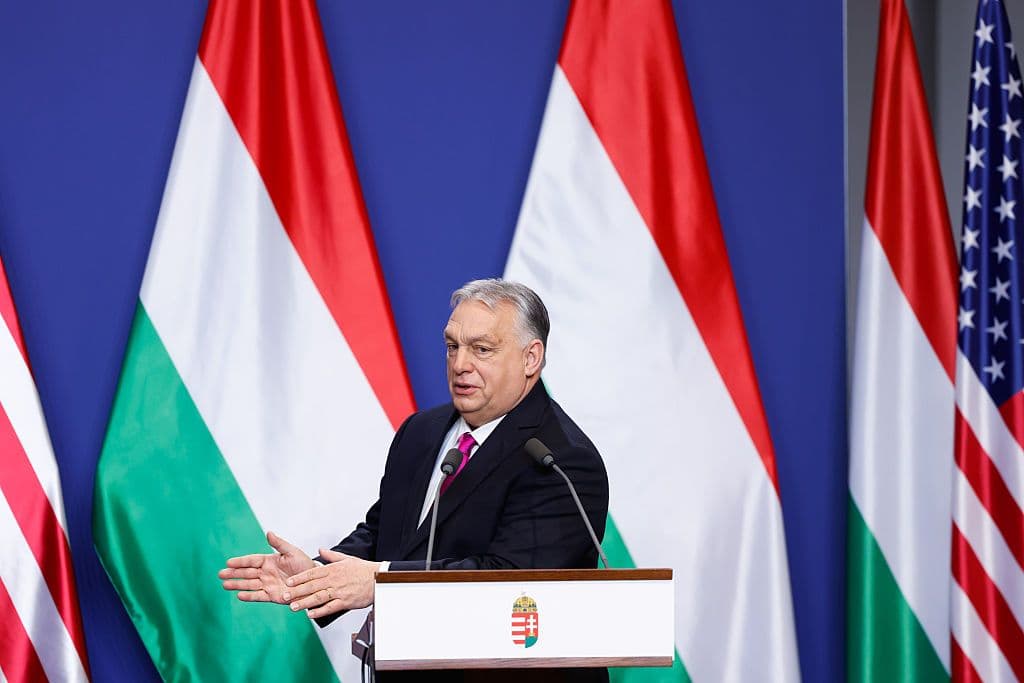
On Feb. 26, Hungarian Prime Minister Viktor Orban was feeling adventurous, sending two letters — one to Brussels, another one to Kyiv — with a set of demands.
The intended target audience for both, however, were not EU and Ukrainian officials, but the domestic population soon heading to the polls.
"Viktor Orban's ominous post is not an open letter to a foreign head of state, but rather a campaign message targeting a domestic audience," Daniel Hegedüs, deputy director at the Institute for European Politics (IEP), told the Kyiv Independent.
"Orban's main aim with the 'letter' to Zelensky is twofold: to send a clear message that he is acting according to campaign logic and that he is politically desperate; and, because of this desperation, that he is prepared for further escalation, which Ukraine and the EU should avoid," he added.
Last week, Orban accused Kyiv of halting Russian oil transit through the Druzhba (Friendship) pipeline, after Russian strikes damaged Ukraine's energy infrastructure in late January. The Hungarian prime minister said he would block the provision of the 90 billion euro ($105 billion) Ukraine Support Loan, a financial assistance package to Kyiv previously agreed upon by all EU member states.
On Feb. 23, both Hungary and Slovakia blocked the adoption of the EU's 20th sanctions package, with the pipeline dispute cited as the reason.
Four years into the all-out war, Hungary and Slovakia remain the only two EU countries still heavily reliant on Russian energy. Neither have diversified imports, despite existing alternatives, such as the Adria oil pipeline connecting Hungary to the Adriatic Sea via Croatia.
Pavel Havlicek, a research fellow at the Association for International Affairs in Prague, argues that the Slovak and Hungarian governments are leveraging the Ukraine issue for domestic political gain — stoking anti-Kyiv sentiment and shifting blame onto their political opponents at home.
In a Feb. 26 letter to EU Council President Antonio Costa, published by Politico, Orban has demanded the establishment of "a fact-finding mission with the participation of experts delegated by Hungary and Slovakia to verify the status of the Druzhba pipeline."
"Hungary will accept the findings of such a mission," Orban wrote.
In an open letter to President Volodymyr Zelensky, Orban wrote that the Ukrainian president has been "working to force Hungary into the war between your country and Russia."
"We do not want to finance the war effort, and we do not want to pay more for energy," Orban wrote. "I urge you to immediately reopen the Friendship oil pipeline and refrain from any further attacks on Hungary's energy security."
Ukraine's Foreign Ministry on Feb. 21 condemned what it described as "ultimatums and blackmail" from Hungary and Slovakia, adding that "the governments of Hungary and Slovakia are not only playing into the hands of the aggressor, but also harming their own energy companies that supply energy on a commercial basis."
Hegedüs said that "the EU and Ukraine must be aware that their relationship with the Orban regime has entered an endgame phase."

"The Hungarian regime is wounded and politically desperate. The strategic interest of Brussels and Kyiv is to avoid unnecessary escalation with Budapest, while ensuring that Orban cannot resort to authoritarian scenarios in order to remain in power, and that Hungary's Peter Magyar–led opposition achieves a democratic breakthrough domestically," he added.
Hungary's parliamentary elections are set for April 12, with the newly created Tisza party, led by Magyar, polling at 45-50%. Orban's Fidesz party is currently polling at 40%.