'No words to describe this' — Russian attack damages Kyiv’s Pechersk Lavra monastery for first time since World War II
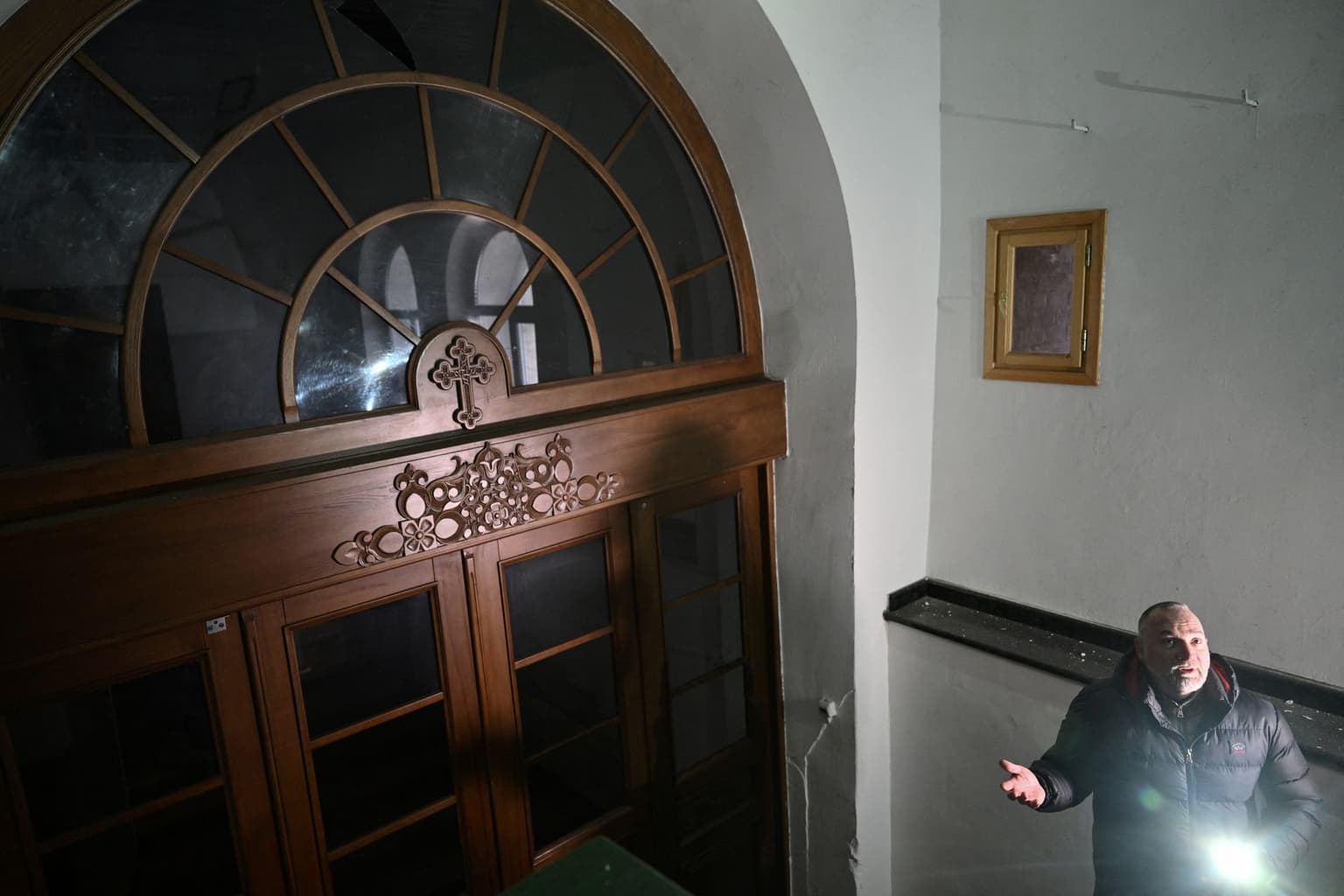
Maksym Ostapenko, director of the Kyiv-Pechersk Lavra National Preserve, gestures next to a damaged door at the UNESCO-listed monastery in Kyiv, Ukraine, on Jan. 26, 2026. (Genya Savilov / AFP via Getty Images)
 on Google
A Russian attack on Kyiv overnight on Jan. 24 damaged buildings at the Kyiv-Pechersk Lavra, a centuries-old monastery complex that holds some of Ukraine's most revered shrines and relics. Site officials said it was the first time since World War II that military action had damaged the Lavra.
"What happened this time was a direct threat," said Maksym Ostapenko, the site's director general. "The explosion occurred very close to the Lavra. The shockwave affected the structure itself, not just windows and doors, but the walls. Sites of national and global significance could realistically have been damaged or destroyed. There are simply no words to describe this."
The blast wave damaged Building No. 66, which serves as an entrance to the Far Caves, as well as Building No. 67, the 17th-century Annunciation Church, officials said. Windows and doors were blown out, and plaster and interior decorative elements were damaged. No injuries were reported.


The affected area lies above the Lavra's extensive catacombs, where the relics of dozens of Orthodox saints are interred. The strike also occurred near the Varangian Caves, a section of the complex dating back to the 10th to 12th centuries that has remained largely intact for centuries.
"For us, as staff of the preserve, this was a shock," said Karina Romanchenko, deputy head of the department for cooperation with international organizations at the Kyiv-Pechersk Lavra National Preserve. "As a historian and art historian, it is especially difficult to witness, because this is not only about religion, but about history itself."


Ostapenko said that cracks appeared in the gallery walls following the explosion, indicating potential structural damage that was not present prior to the attack.
The Lavra was previously damaged during World War II, when Soviet forces retreating from the German advance mined the Assumption Cathedral, which was blown up on Nov. 3, 1941, after German troops occupied Kyiv, as well as during artillery shelling of the city in 1918-19.
Following the attack, specialists launched inspections across all 140 monuments located within the Lavra complex to assess potential damage.
"Our experts are now conducting a detailed structural analysis," Ostapenko said. "Only after that will it be possible to determine whether reconstruction or restoration is required, and which elements can be repaired immediately."


The Kyiv-Pechersk Lavra is a UNESCO World Heritage Site and remains under constant monitoring amid continued Russian attacks on Kyiv.
According to Ukraine's Ministry of Culture, since the start of Russia's full-scale invasion, 1,640 cultural heritage sites and 2,446 cultural infrastructure facilities have been damaged across the country.
The ministry said it continues to coordinate with specialized services to document damage and conduct professional assessments aimed at preserving and restoring affected sites.