Looking for the 10 best Ukraine-related books of 2025? We’ve got you
 on Google
The year 2025 brought us more books about and from Ukraine that carry an inescapable heaviness, with war present on almost every page. Lives once shaped by literary ambitions continue to be cut short on the battlefield or under bombardment. Yet, thanks to the devotion of translators, publishers, and a growing audience of readers who refuse to look away, these voices keep traveling outward. They insist on being heard.
From the first days of the full-scale invasion, one imperative has remained constant: to make Ukraine’s cultural vitality visible to the world. The more deeply we engage with that heritage — its astonishing range, its modern experimentation, its centuries of endurance — the more sharply we understand what is at stake should Russia’s campaign of total annihilation succeed — and why ensuring that these stories continue to be heard is itself an act of resistance.
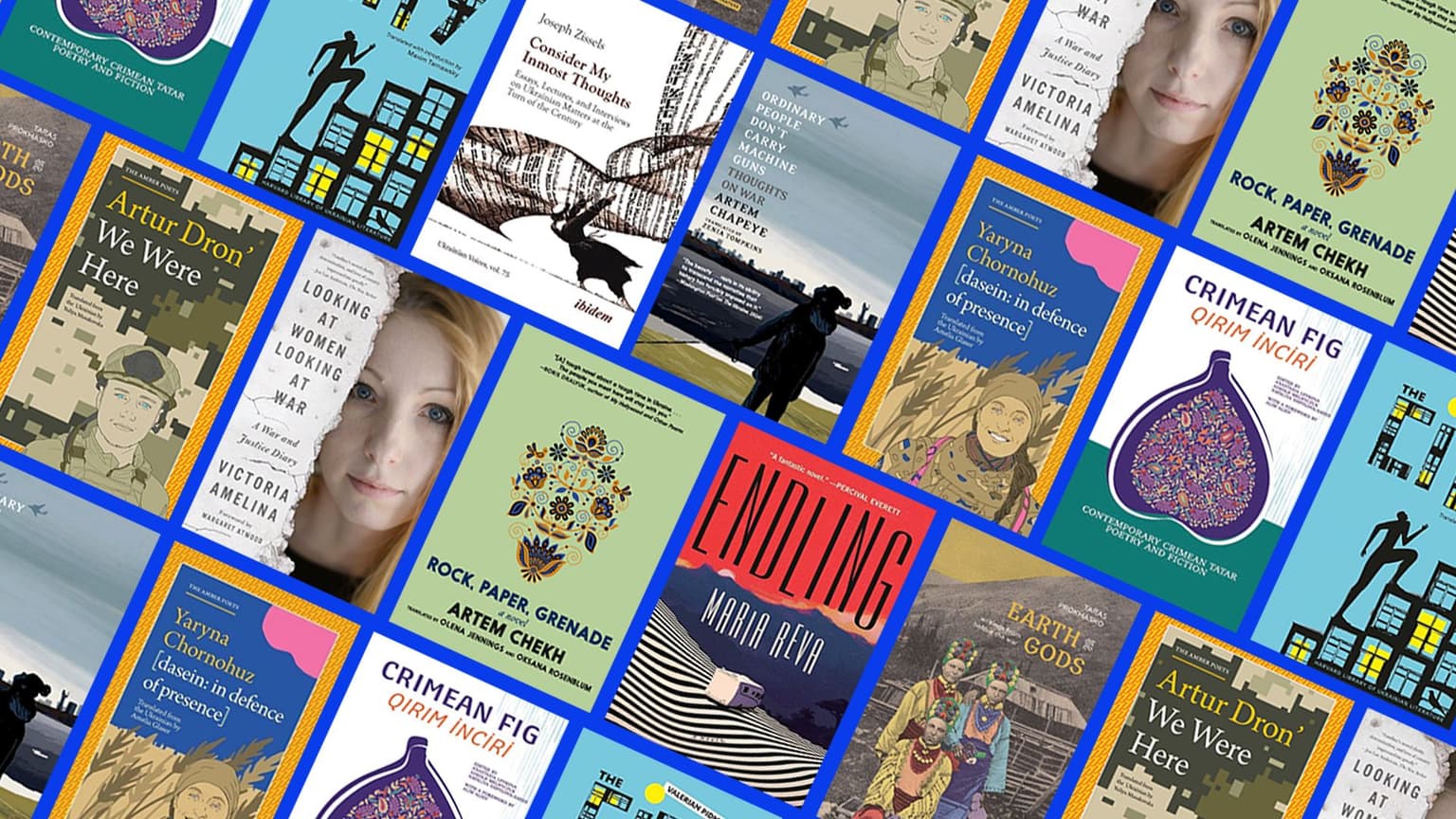
The Kyiv Independent has selected 10 of the best books published in 2025 related to Ukraine. Curious readers should use this list as a guide on the path to discovering even more books from this and previous years, with the anticipation of what is to come in 2026 as well.
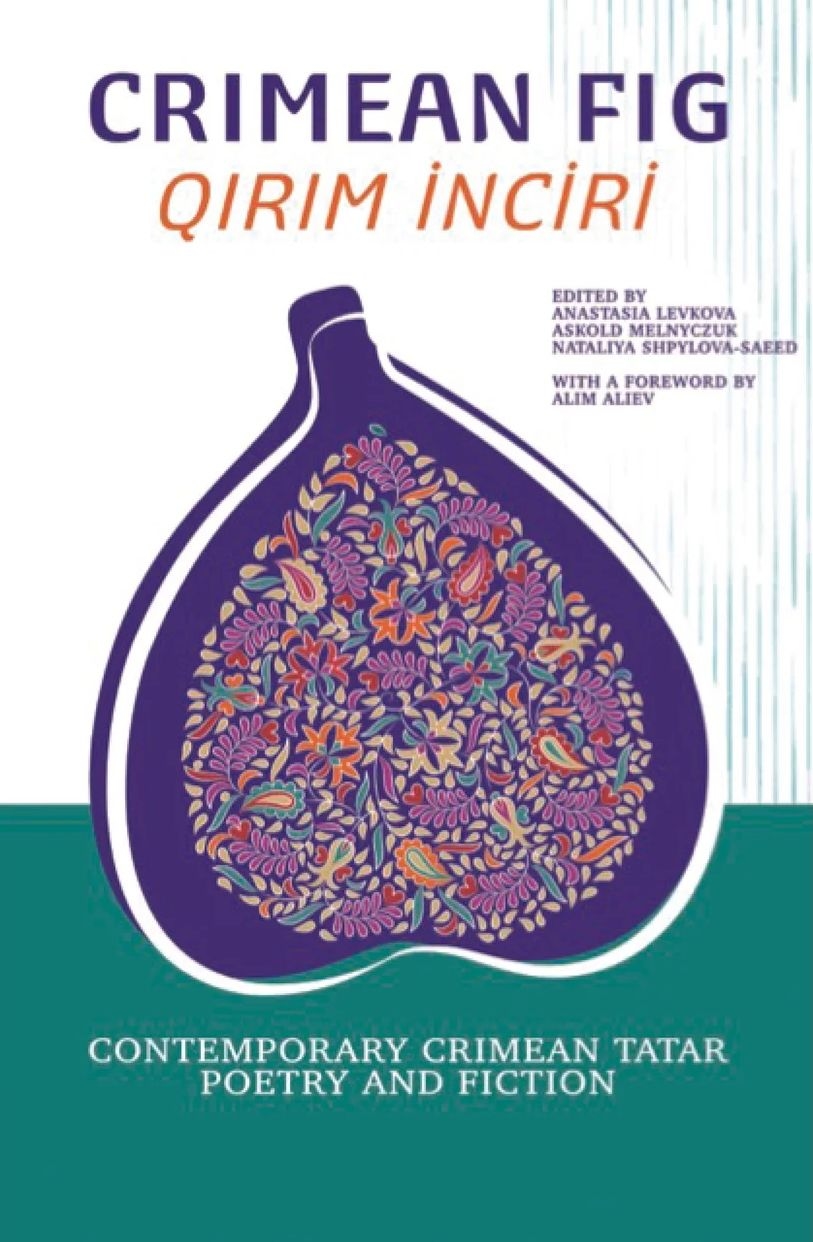
Crimean Fig Anthology, edited by Nataliya Shpylova-Saeed, Anastasia Levkova, and Askold Melnyczuk
To understand the richness and diversity of Ukraine and its culture, one must read about the Crimean Tatars — a people whose history of displacement and resistance has become inseparable from both the country’s past and present. Crimea, their ancestral homeland, was the first territory seized in 2014 in Russia’s ongoing war, and the Crimean Tatars who remain on the peninsula are among those targeted by the occupation authorities as “extremists” simply for wanting to live freely. This collection gathers some of the most impressive Crimean Tatar voices in fiction, non-fiction, and poetry. While their work often confronts the violence of Russian occupation and the long historical memory of persecution, it is equally marked by clarity, lyricism, and a steadfast devotion to language, culture, and place.
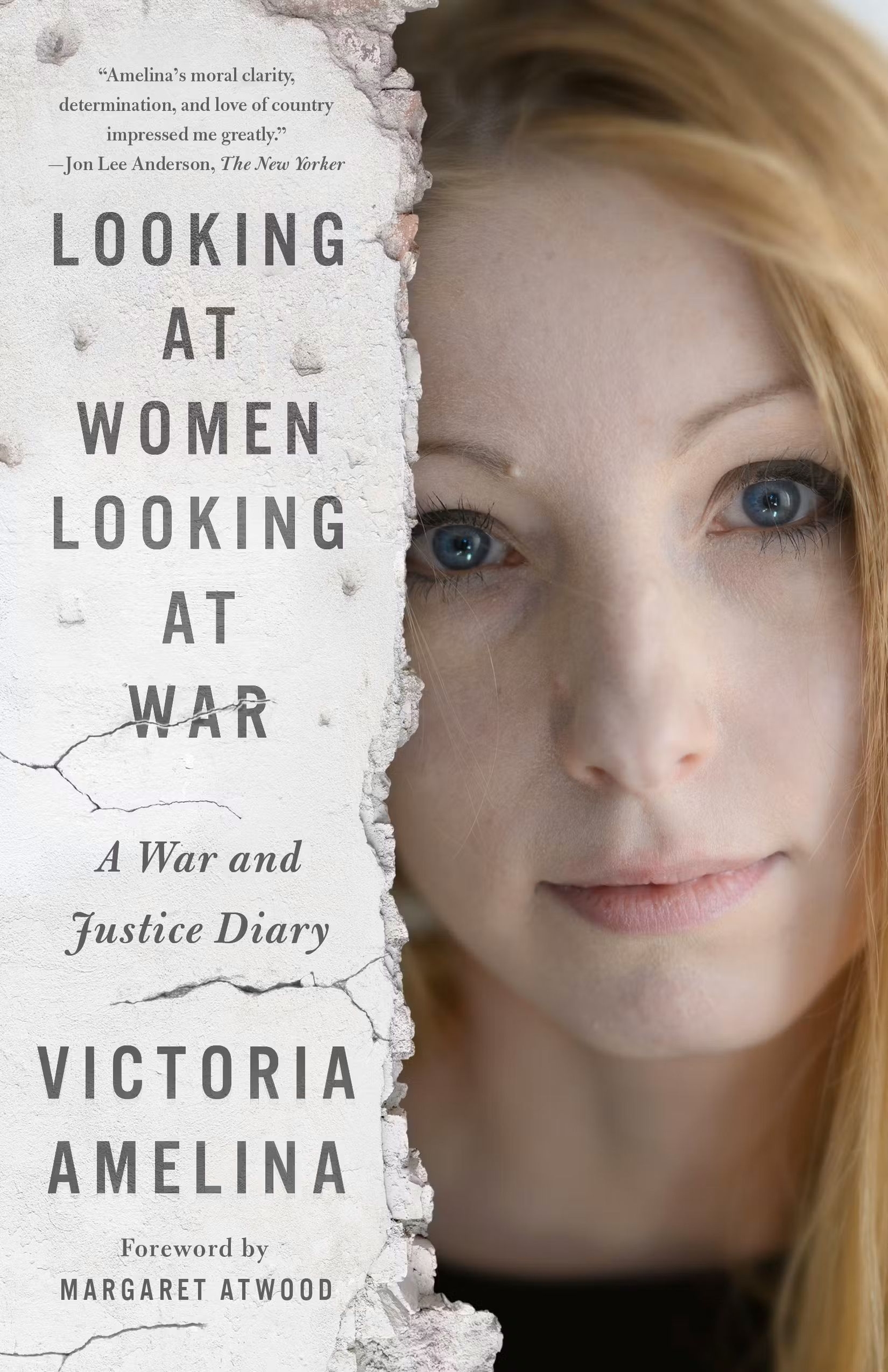
Looking at Women Looking at War by Victoria Amelina
Shortly after Russia’s full-scale invasion of Ukraine began, writer Victoria Amelina began traveling to recently liberated settlements as a trained researcher to document survivors’ testimonies and gather evidence of war crimes. Her work, centering the voices of Ukrainian women during wartime, including not only survivors of Russian occupation but those fighting for justice, became the heart of her book “Looking at Women Looking at War.” Tragically, Amelina was killed in 2023 during a Russian strike on Kramatorsk, leaving the manuscript unfinished. Yet, thanks to the efforts of her closest friends and colleagues, who did their best to intervene with light edits and make the manuscript ready for public consumption, the stories Amelina bore witness to endure.
Ordinary People Don’t Carry Machine Guns by Artem Chapeye, translated by Zenia Tompkins
In wartime, valor is often treated as a given — but soldiers step forward to defend their homeland because they understand that they must. Reading about who Ukrainian soldiers were before the start of the full-scale war deepens our respect for their sacrifices, as it underscores that going to war is no easy task. In this powerful personal testimony, writer Artem Chapeye does just that — a pacifist by conviction, Chapeye enlisted soon after the full-scale invasion began. He realized that if he wanted his children to inherit a future worth living in, he had no choice but to do his part to defend the country. With disarming honesty and empathy, he explores the journey leading to his enlistment, as well as the love and commitment to one’s brothers- and sisters-in-arms as they traverse the difficult path to victory.

Rock, Paper, Grenade by Artem Chekh, translated by Olena Jennings and Oksana Rosenblum
Few novels render the tension and uncertainty of the post-Soviet era so vividly, while still finding room for unexpected warmth. Set in Cherkasy, this is the story of Tymofiy, a boy coming of age in a place where the future feels perpetually deferred. Into his family’s life enters Felix, a traumatized veteran of the Soviet–Afghan war whose PTSD unsettles those around him and shapes the boy’s earliest sense of danger, loyalty, and friendship. As Tymofiy grows, searching for his place in life, his story becomes a meditation on how identity is forged amid uncertain times, and how even the most damaged lives can still be driven by the hope of something better. Chekh's wife, director Iryna Tsilyk, made a film adaptation of the book that is available on Netflix.

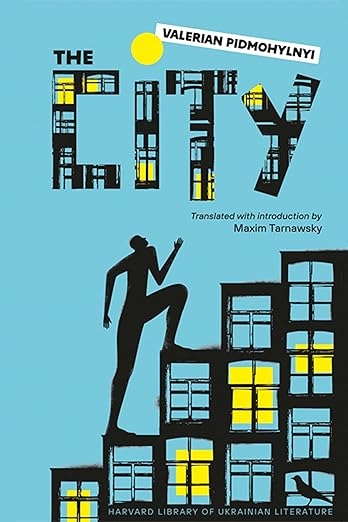
The City by Valerian Pidmohylnyi, translated by Maxim Tarnawsky
Kyiv in the 1920s is alive, electric, and unforgiving — and for Stepan Radchenko, a young man from the provinces, it is irresistible. Arriving full of ambition, he is both seduced and tested by the city’s relentless rhythm. As he moves from the life of a student to that of a writer, the clash between his rural past and the city’s intensity sparks moments of creation, devastation, and self-discovery. Kyiv doesn’t just set the stage — it shapes him, while the story thrums with inner turmoil and the hunger to define oneself. A modernist masterpiece of 20th-century fiction, this new translation will bring English-language readers closer to understanding the rich history of Ukrainian literature.
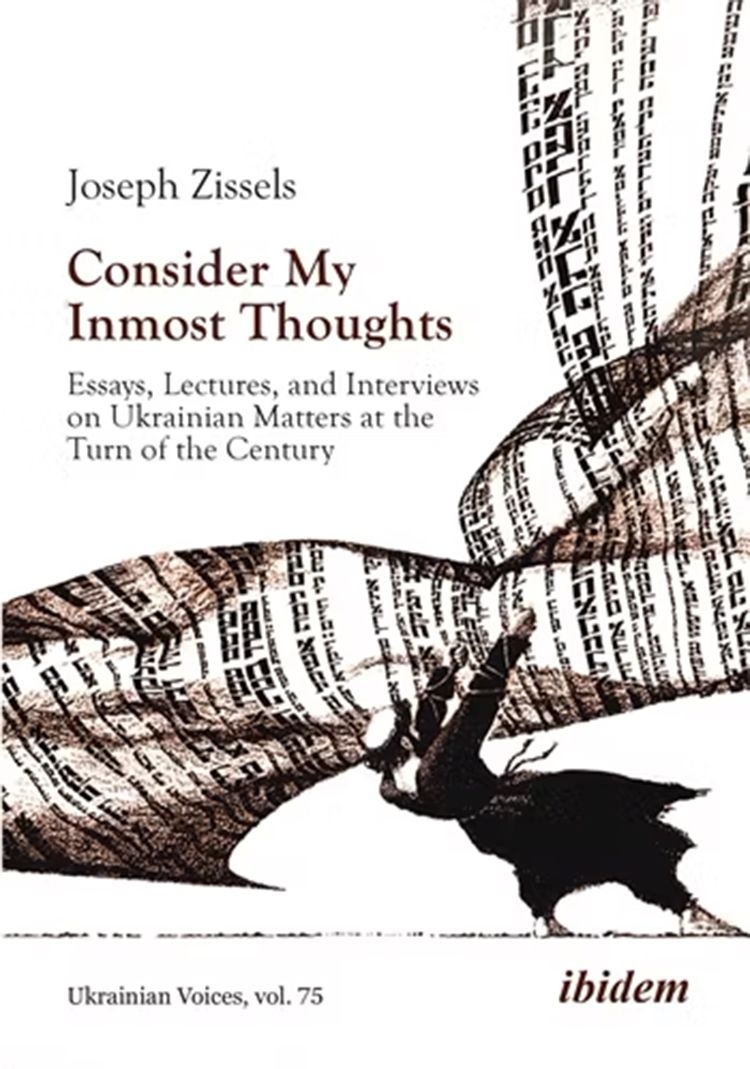
Consider My Inmost Thoughts: Essays, Lectures, and Interviews on Ukrainian Matters at the Turn of the Century by Joseph Zissels
From the Soviet dissident movement to Russia’s full-scale war against Ukraine, Joseph Zissels has lived through some of the most pivotal moments of Ukraine's history, and his voice carries the weight of those experiences. This compelling collection of his public writings from over the years not only chronicles Ukraine’s journey but also offers a thoughtful exploration of civic responsibility, tolerance, and democracy. In his writing, Zissels wrestles with enduring questions on Jewish identity, relations between Ukraine and its neighboring countries, and the moral challenges that arise as society seeks to balance tradition with progress. Each essay, speech, and commentary included in this collection illuminates both the obstacles and the possibilities in building a more just, inclusive, and resilient Ukraine.
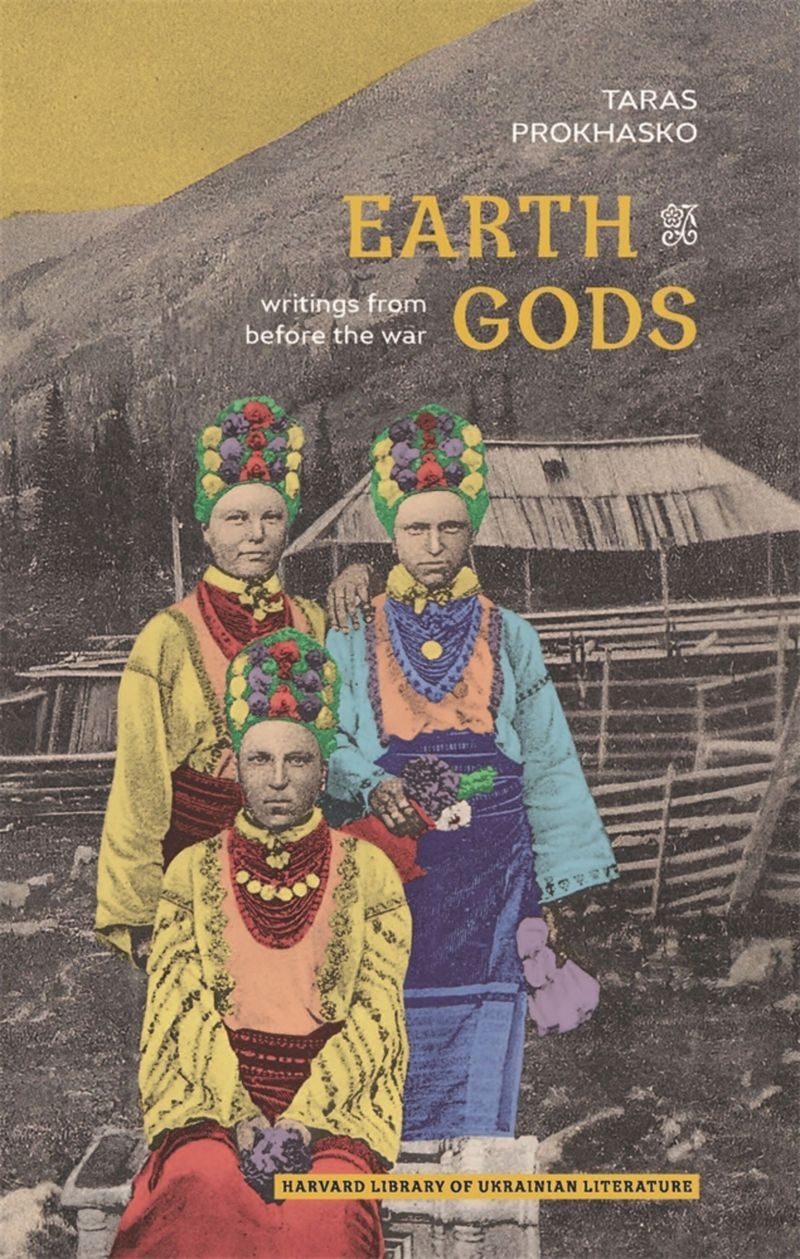
Earth Gods: Writing from Before the War by Taras Prokhasko, translated by Ali Kinsella, Mark Andryczyk, and Uilleam Blacker
The quiet, meditative, and deeply atmospheric prose of literary legend Taras Prokhasko has drawn parallels over the years to authors like Gabriel Garcia Marquez. The three texts included in this collection are some of his earliest and most famous works — they chart the difficult afterlife of 1991: Ukraine's reembrace of its independence, its attempts to articulate a cultural imagination unmediated by imperial tutelage, and the quieter, more intimate struggle to safeguard what drives it forward. As Prokhasko explores in these three works, this labor of preservation is not simply about resisting external threats. It is a quieter defiance against the erosion of time itself—the way, if left unchecked, time can erase a people’s sense of continuity just as thoroughly as any geopolitical force.
Dasein: Defense of Presence by Yaryna Chornohuz, translated by Amelia Glaser
One of Ukraine’s most compelling young poets, Yaryna Chornohuz writes from an intimate proximity to war. Her unwavering patriotism and years of military service resonate in every line of her work. The poems have a sharp, almost unbreakable clarity, as if the language itself had been hardened by the circumstances in which they were written. Lines like “all shoulders are too weak / to bear the heart that beats in you” capture the physical and psychological toll of war and the colossal toll on those who defend the country, even when sustained by the solidarity of their brothers- and sisters-in-arms. Refusing sentimentality, Chornohuz writes with a lucid yet evocative austerity: “the ones who will die fighting / are too clear-eyed / in war no one ever resolves to die fighting.” Her work unsettles precisely because it resists heroic mythmaking, insisting instead on the unadorned truth of what war asks of the living. In doing so, she compels readers far from the front to confront their own assumptions about safety in a world where violence currently draws ever closer to the doorstep.

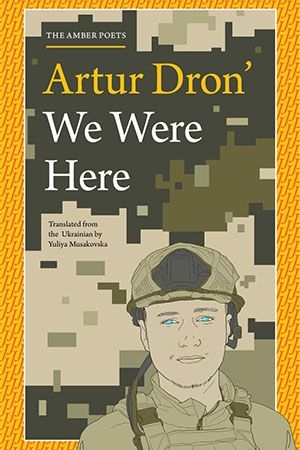
We Were Here by Artur Dron, translated by Yuliya Musakovska
The poems of the young Artur Dron — now serving in the Armed Forces of Ukraine — circle an old, uneasy question: what role can poetry still claim when the world has given itself over to war? Dedicated to his fellow soldiers, “both the living and the dead,” these spare, unillusioned texts dwell among the mourners: the families learning to live with absence, the wives who pray not for earthly reunion but for the mercy of meeting their beloveds in the next world, the quiet burden of promises made in peacetime and broken by history. Yet in the midst of this attrition, Dron seems to arrive at a kind of answer. Poetry cannot mend the rupture — he makes no such claim — but it is permitted to inhabit the void, to sound the dimensions of a loss it cannot redeem. As he writes in one of his most chastened lines: “They say literature / is all about words and the silence between them / only now / ours contains more of the latter.” In that widened silence, Dron suggests, poetry persists not as consolation but as witness.
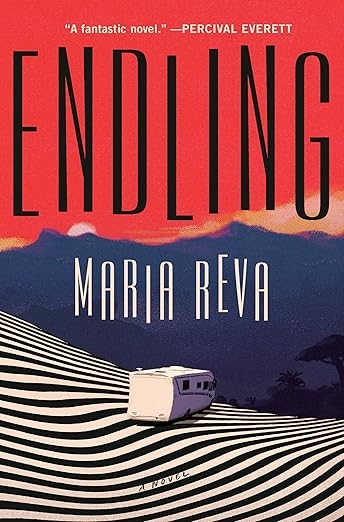
Endling by Maria Reva
In “Endling,” Maria Reva turns her narrative eye to the uneasy commerce of the mail-order-bride industry, following three Ukrainian women employed by an agency that brokers encounters between local “brides” and foreign men shopping for a wife. Their quixotic scheme — to kidnap a cohort of these visiting bachelors, ransom them, and thereby lay bare the misogyny underpinning the trade — is upended the very day it begins, when Russia launches its full-scale invasion of Ukraine. Longlisted for the prestigious 2025 Booker Prize, Reva’s novel moves with a blend of satire and moral clarity, mapping the collision of private desperation with geopolitical catastrophe. Though Reva writes from the Canadian diaspora, Endling is a reminder that the contours of contemporary Ukrainian literature extend well beyond national borders — and that its most trenchant observers may be those who write from the uneasy vantage of distance.
Note from the author:
Hi, this is Kate Tsurkan, thanks for reading this article. There is an ever-increasing amount of books about or related to Ukraine, Russia, and Russia's ongoing war of aggression against Ukraine available to English-language readers, and I hope my recommendations prove useful when it comes to your next trip to the bookstore. If you like reading about this sort of thing, please consider supporting The Kyiv Independent.