'Land for security' in Ukraine negotiations must be rejected
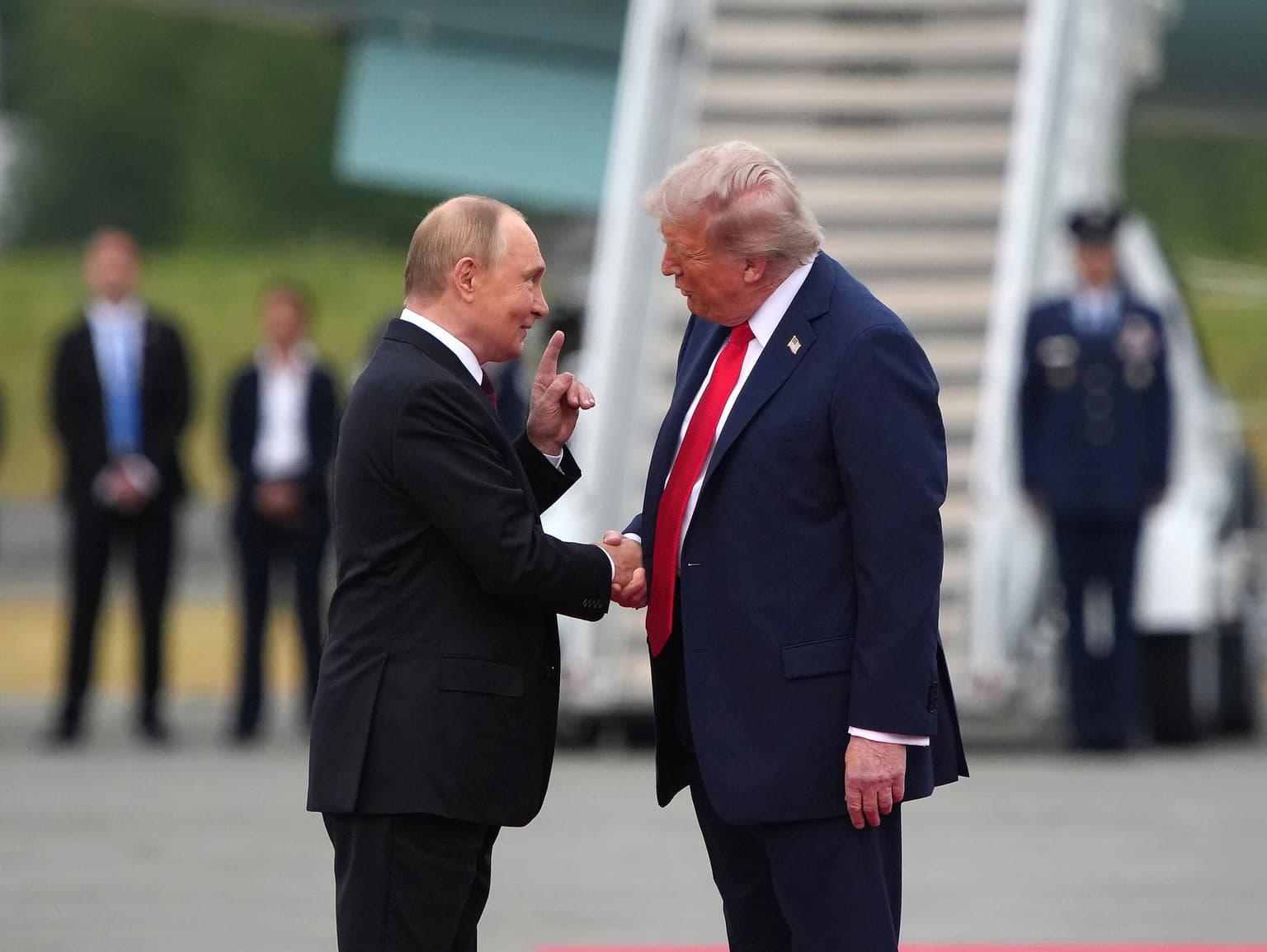
U.S. President Donald Trump (R) greets Russian President Vladimir Putin as he arrives at Joint Base Elmendorf-Richardson on Aug. 15, 2025 in Anchorage, Alaska. The two leaders are meeting for peace talks aimed at ending the war in Ukraine. (Andrew Harnik/Getty Images)
 on Google
Irwin Redlener
Senior advisor to the Institute for Global Policy at Columbia University
Even as the world is understandably distracted by war in the Middle East, talks to end the Ukraine-Russia war have just resumed in the United States, albeit without Russian representatives.
Since Ukraine has repeatedly signaled its resistance to even consider ceding territory, Putin’s negotiators have so far refused to join discussions.
That said, my concern is that, with or without Russian participation, U.S. President Donald Trump and his highly inexperienced negotiators will continue to press Ukraine to concede territory in exchange for some kind of security arrangement.
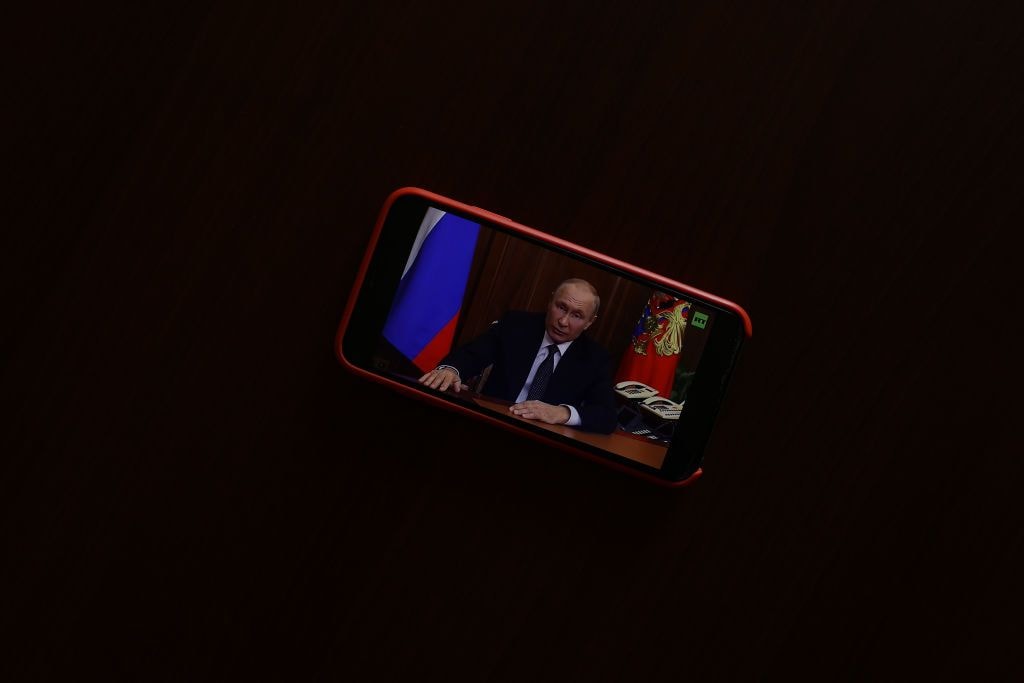
That is precisely the condition that Vladimir Putin keeps insisting is "non-negotiable." But territorial concessions to a brutal aggressor would be unconscionable for Ukraine and should be entirely unacceptable to Europe.
I write as an American physician and humanitarian who has worked closely with Ukraine since the full-scale invasion began.
As co-founder of the Ukraine Children's Action Project and a senior advisor to the Institute for Global Politics at Columbia University, I have spent years documenting the war's toll on Ukrainian children — thousands killed or injured, millions displaced, a generation subjected to the systematic erasure of their language, history, and identity in Russian-occupied territories.
And while conditions in Ukraine are extremely challenging, the stakes regarding the outcome of the war and the nature of the settlement extend far beyond Ukraine's borders.
The pressure being applied to Kyiv today follows a recognizable script.
Territorial concessions are presented as painful but necessary — a pragmatic path to ending the killing. Ukraine is told to be "realistic." The implicit message is that sovereignty is negotiable when the alternative is prolonged conflict. But history shows that territorial surrender to an expansionist aggressor never satisfies. It emboldens. It signals that the international order has a price, and that price can be extracted through force.
President Putin has stated openly and repeatedly that he does not regard Ukraine as a legitimate sovereign nation, and he has fabricated a narrative suggesting that Ukraine's government is populated with neo-Nazis.

He has prosecuted a war defined by mass atrocities, the abduction of tens of thousands of Ukrainian children, and the deliberate targeting of civilian infrastructure.
The International Criminal Court has issued a warrant for his arrest. A man who does not recognize Ukraine's right to exist will not be satisfied by Ukraine surrendering as much as 22% of its territory. He will treat it as confirmation that the strategy works — and he will undoubtedly return.
This matters to every European nation, not only Ukraine.
The post-World War II security order was built on a clear principle: borders cannot be changed by force. That principle must be inviolable. If it can be suspended for Ukraine because the war is taking an extraordinary toll in terms of lives and treasure, it can be suspended anywhere.
The countries of Central and Eastern Europe — Poland, the Baltic states, Moldova, Georgia — understand this with an even greater urgency and immediacy than some of their western counterparts.
Why President Trump continues to promote Putin's talking points has been the subject of extensive speculation. His antipathy toward Ukrainian President Volodymyr Zelensky is well known, as is his inexplicable adoption of Russia's conditions for ending the war.
More concerning is Trump's foot-dragging when it comes to providing Ukraine the military support it desperately needs.
Ukraine's sovereignty is an essential firewall against any Russian fantasy about westward expansion. Allowing Russia to consolidate its gains would relocate the threat closer to NATO's eastern flank, with a precedent reinforced that aggression pays.
It's also worth noting that Ukraine's president, under Ukraine's Constitutional principles, is not permitted to make territorial concessions without parliamentary approval and popular agreement verified by a national referendum.
I suggest that there is no viable alternative to a peace agreement that restores Ukraine's territorial integrity, delivers genuine security guarantees, and holds Russia accountable for its crimes.
That peace is harder to achieve than a ceasefire drawn along current battle lines. It requires sustained Western commitment, military and economic support, and the political courage to reject false shortcuts.
Even beyond the matter of Ukraine's sovereignty and Europe's security, there are the humanitarian realities that must be factored in on-going discussions.
The loss of life on both sides is already extraordinary. Speaking as a pediatrician who has spent decades working with children impacted by conflict, disasters, and severe social ills, conceding territory will be a nightmare for more than one million children living in contested regions who will be immediately subject to cultural erasure and propaganda-driven Russification.
None of this should be acceptable in a world striving to sustain a peaceful and civilized world order. That's a goal that seems increasingly unattainable, but should never be abandoned.
Editor's note: The opinions expressed in the op-ed section are those of the authors and do not purport to reflect the views of the Kyiv Independent.