'Impossible to ban grief' — how Russia tries and fails to hide its casualties in Ukraine
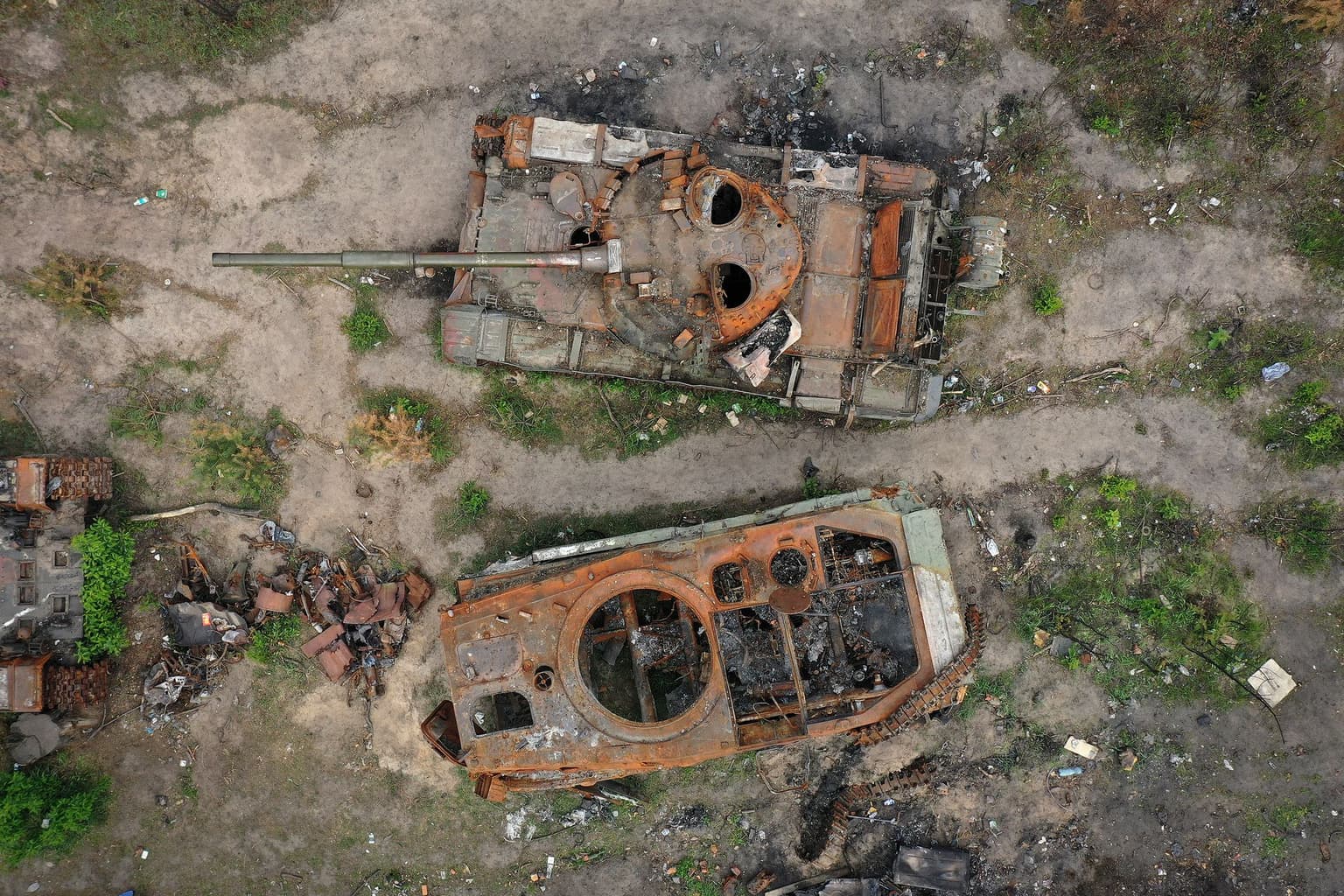
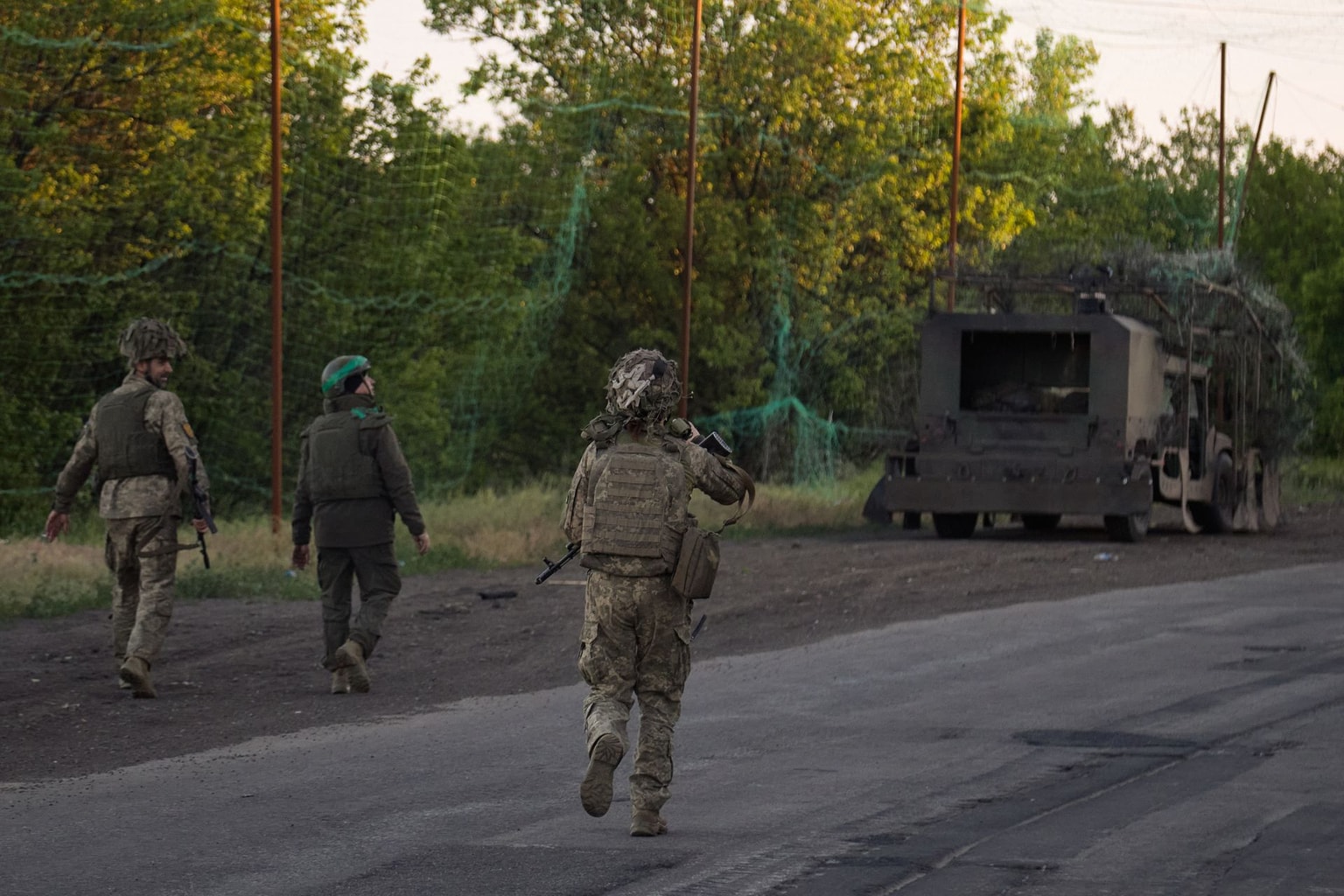
Destroyed Russian main battle tanks and armored vehicles lie beside a road in Irpin, Kyiv Oblast, Ukraine, on May 25, 2022. (Christopher Furlong / Getty Images)
 on Google
Russia has tightened control over information about its battlefield losses in Ukraine, cutting off data and closing one public loophole after another. The effort has not stopped the evidence of the dead from surfacing.
As 2025 came to an end, Western governments and independent groups alike tallied staggering figures for Russia's battlefield losses in Ukraine, reaching no fewer than 400,000 killed, wounded, and missing that year. According to some estimates, Russia could have lost more soldiers in 2025 than it did between 2022 and 2024 combined.
This data comes against the backdrop of Russia's continued, yet unsuccessful efforts to seize Ukraine's Donetsk Oblast, at an increasingly high cost in lives.
With Moscow remaining mute on its losses in Ukraine, the task of counting the dead has shifted to outsiders. Official Ukrainian and international estimates provide only a partial picture, so independent groups have turned to Russian social media and scattered state records to approximate how many soldiers have died in Russia's effort to occupy Ukraine.
No official Russian figures
Since the start of the full-scale invasion, Russian authorities have refused to release figures on their army's losses. While some official information was initially published, it has now been over three years since the last time Russia provided any figures, even heavily downplayed ones.
"In September 2022, Russian Defense Minister Sergei Shoigu claimed that Russia had suffered only 6,000 fatalities (since February 2022)," said Olha Polishchuk, who researches the war in Ukraine at ACLED, a leading NGO that tracks casualties of military conflicts worldwide. "Of course, if we relied only on this kind of data, we would be heavily underestimating the numbers of (Russian fatalities), because these kinds of figures are completely useless."

Numbers cited by Shoigu and other Russian officials since are "no more than a lie," agreed Dmitry Treshchanin, who tallies Russian deaths on the front line as part of a special project run by exiled Russian outlet Mediazona and the Russian service of the BBC.
While according to Polishchuk the lack of information from official Russian sources can be partly compensated by Ukrainian ones, these sources only paint a partial picture, and do not usually distinguish between killed and wounded Russian soldiers.
Estimates are also made difficult by the Ukrainian army's approach to reporting on Russian casualties, as not all sections of the front line are covered equally. "There is often a greater focus on regions which have more media attention, because some advances on the front line are happening there, while there is less information about other regions," Polishchuk said.
Another source of data comes from Western intelligence agencies that regularly attempt to assess Russian front-line losses, but these estimates are also far from perfect. "The classic formula for counting casualties is one soldier killed for three wounded," Treshchanin said. "The issue is that by 2025 this formula did not really work anymore: Fewer of those wounded survive than according to classic models, because gray zones have widened and because of progress in FPV drone technology."
Loopholes closed, but data still available
As official estimates, both Ukrainian and Western, are only partial, researchers have turned to a patchwork of indirect Russian statistical figures to calculate Russia's battlefield losses. One useful resource used to be data on excess mortality, measured by comparing how many people die in a given period to the number expected based on prior years, using Russia's official death registrations. The metric drew scrutiny in the wake of the COVID-19 pandemic, when Russia was suspected of hiding the real number of deaths caused by the coronavirus.
In the first year of the full-scale invasion, researchers were in turn able to use this data to reach a rough estimate of Russia's war-related casualties. This loophole, however, was closed in 2023, when Russia's statistical agency Rosstat was ordered to cease publications linked to demographics. These were never resumed.
Data on inheritance cases in Russia, which are published in a unique state register, emerged as another source of information. "To put it very simply, we look at the register and see if there is an abnormal number of inheritance cases for men in a given time period," Treshchanin said. "Together with other statistical data, this can give a relatively accurate estimate of the number of Russian soldiers who died in Ukraine."


Aside from this, Russia hides information on soldiers "missing in action," many of whom are in fact dead. Until recently, these figures could also easily be verified by scanning Russian court records. By December 2025, judges registered approximately 90,000 cases in which relatives asked for the legal recognition of the death of a Russian soldier.
Given the hefty sums that Russia pays to the families of those killed in combat, relatives often mobilize resources and file lawsuits, to have such deaths legally recognized and collect compensation payments. Following standard practices, these filings are normally published on the websites of the courts that process them.
"But in December, about 70,000 such cases were suddenly deleted, and in about 50 (out of 83) Russian regions, there are no cases left online at all," Treshchanin explained.
'Impossible to ban grief'
While Russia limits access to these and similar statistics, the country's social media remains flooded with information on Russian soldiers killed in Ukraine. This information will not disappear any time soon, journalists who spoke to the Kyiv Independent argued, meaning it will still be relatively easy to identify Russian soldiers who died in Ukraine.
"Very little changed in our work since 2022," said Regina Khasimova, a journalist with Idel.Realities, a regional service of U.S.-funded Radio Free Europe/Radio Liberty that covers Russia's Volga region. Khasimova collects data on Russian soldiers killed in the region, which is known for high casualty rates.
"It's true that people close their Vkontakte pages more often than before, but at the same time new pages with obituaries appear, so it's still not too difficult to find information on soldiers killed."
Seemingly, there is little that Russian authorities can do about this situation.
"Even in an authoritarian regime, it's impossible to ban people from grieving for their relatives," Treshchanin argued in turn.
"In 2025, a typical Russian military obituary goes as follows: ‘Ivan Sidorov’ of this or that village died in the special military operation, those who wish to bid him farewell will gather at this or that café ‘at 3 p.m.’ on this or that day. Tens of thousands of posts like this have appeared online since 2022."
In regions like Tatarstan and Bashkortostan, where the number of soldiers killed is particularly high, anonymous groups of activists also incite regular Russians to publish information about the deaths of their relatives, Khisamova explained.
"Random people then comment on posts saying they know someone else who died or that they know, for example, about 10 more people killed from their village," she said.

Paradoxically, information on Russian casualties in Ukraine also sifts through thanks to Russia's bureaucracy and authoritarianism. As part of this system, local authorities are informally required to conduct so-called patriotic activities and report on them on social media.
"(Sergey) Kiriyenko (the deputy head of Russia's presidential administration) previously ordered that all state institutions, including hospitals and schools, have a group on Vkontakte," Treshchanin explained. "So, for instance, in a school there is some commemorative event for a Russian soldier killed in Ukraine, children plant trees or something similar, and someone puts up a commemorative plaque. As there are many events like this, this helps identify a lot of Russian casualties in Ukraine."
All in all, while researchers are still far from tallying Russia's full losses for 2025, initial estimates show that the past year could have been the bloodiest for Russia since 2022. According to Mediazona data, in 2025 Russia lost "at least" 120,000 soldiers killed in action, but this number could be as high as 200,000, Treshchanin said, with a closer estimate expected to arrive later this year.
"The feeling for now is that 2025 was not just the bloodiest year (for Russia), but that 2025 will be more or less equal in terms of deaths to the three years of the full-scale invasion which preceded it," the journalist concluded.