'I betrayed my country' — the Ukrainian prison where women collaborators wait for Russia
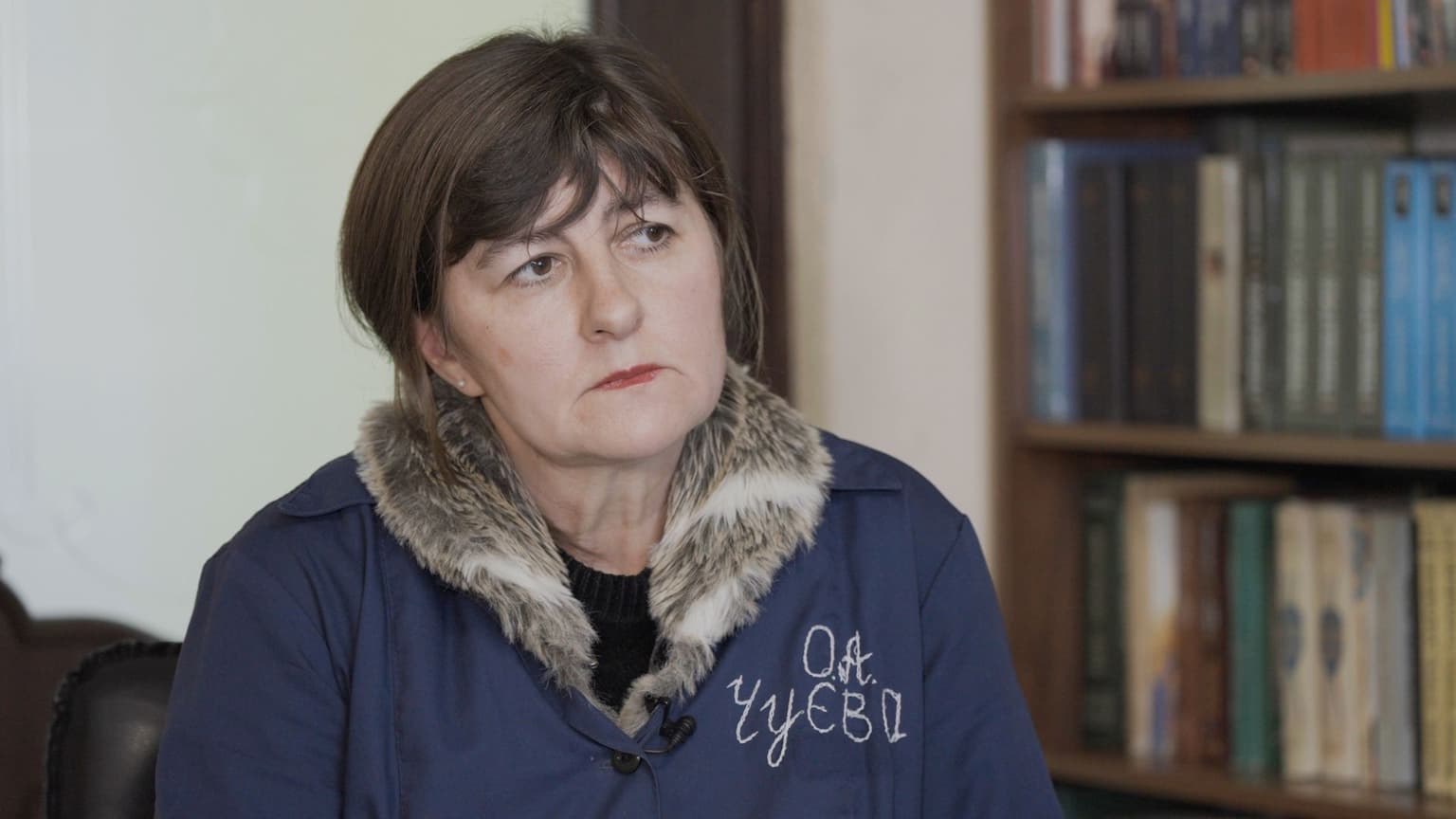
Olena Chuieva in a women's penal colony in Southeastern Ukraine on Feb. 5, 2026. (Olena Zashko / The Kyiv Independent)
 on Google
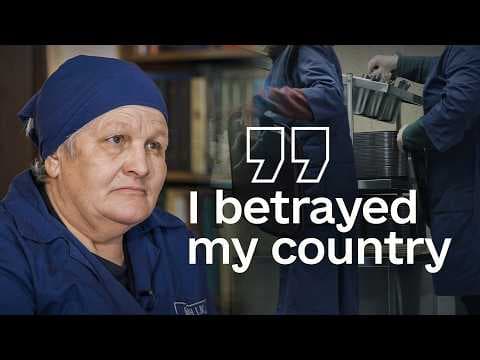
Nelia Checheta served the state for decades — first with the Soviet military in Turkmenistan and later in Ukraine's Emergency Service — earning official honors along the way. At 62, her story continues not with commendations, but with a long prison sentence for collaboration.
Checheta was convicted of passing information on Ukrainian troops and aircraft movements to an agent of Russia's Federal Security Service (FSB). She insisted the case was fabricated, but the evidence presented in court suggested otherwise.
With 1,115 convictions in 2025 alone, Ukrainian courts have sentenced thousands for collaboration since the full-scale invasion began. For those found guilty of aiding Russia, the stakes are stark: up to 15 years in prison, or life imprisonment.
Checheta was sentenced to 15 years in prison in 2023 and is now confined in southeastern Ukraine at the country's only women's penal colony for collaborators, where she is incarcerated alongside roughly 100 other inmates.
Checheta will remain imprisoned until she turns 75, but there is a slim possibility of an earlier release through a prisoner exchange. In a bitter twist, that hope rests with Russia: the very country she aided, yet one that likely has no use for her.
"I love Russia. I want to go home to Russia. I am Russian," Checheta, born and raised in Ukraine's Donetsk Oblast, told the Kyiv Independent.

Groundhog Day
Once inside, life in prison drags like Groundhog Day — each morning mirrors the one before, and the monotony stretches on for years.
In winter, the gloom deepens, as days blur into gray. At the same time, the facility's grounds are kept spotless — prisoners sweep the courtyard and clean the buildings daily, as part of their strict, hour-by-hour routine.
The colony has recently been renovated. Local authorities once considered using it to house people displaced by the war, but it ended up serving a different purpose.
Prisoners share rooms with three or four others. Some still have New Year’s decorations taped to the walls, and many keep photos of loved ones on their bedside tables. In one room, a pyramid of knitted toys rises on a shelf, made by another inmate. Inmates give some of these toys and drawings to prison staff.
Artem Merkotan, senior inspector of the colony's social education and psychological work group, keeps some of the prisoners' gifts in his office.
"Most (prisoners) struggle to accept the crime they have committed. They cannot come to terms with this reality."
At set times, prisoners can access the kitchen, place online orders at a designated store, or visit the colony's hairdresser, whose prices are posted on one of the floors. Phone calls to loved ones are free twice a week, but video calls cost Hr 1.75 ($0.04) per minute.
Some prisoners can work on the colony grounds, earning about Hr 8,000 ($185) a month — roughly Ukraine's minimum wage. Retirees also receive a pension.

With so much time to fill, many inmates also turn to books — often about justice — searching for answers as to why they ended up here and how to protect themselves, Merkotan said.
"(Prisoners) write to the courts and seek legal help. They also get advice from lawyers," Merkotan told the Kyiv Independent.
"But most struggle to accept the crime they have committed. They cannot come to terms with this reality."
Psychologists hold individual and group sessions, while colony staff run social and educational classes. Inmates often spend their time drawing, including patriotic pictures for Ukrainian national holidays — a paradox within walls built for those convicted of a serious crime against the state.

When asked how someone convicted of treason could draw a poster reading "Ukraine is peace and love," Merkotan explained that not all prisoners hold pro-Russian views.
"There are those who admit their guilt. They show it in their drawings. No one forces them," the inspector said.
"They justify their actions by saying they were trying to survive. Their trust was exploited in many cases."
But such cases are very rare.

Hope for Russia
Iryna Balan, 61, was sentenced in 2023 to five years in prison and barred from holding public office for a decade. During Russia's occupation of Kherson, she helped organize the illegal September 2022 referendum on annexation, handing out ballot boxes and urging residents to vote.
"I wanted to try my hand at this activity," Balan said. "The children discouraged me, but (their) mother was like a tank — she pushed forward."
After Ukrainian forces retook Kherson, Balan was detained in 2023. She not only helped stage the referendum but also cast her own vote to join Russia. Asked why, she said she hoped for a better life. Now, Balan said she had accepted responsibility.

"I admit my guilt. I confess that I betrayed my country," she told the Kyiv Independent.
Under her current sentence, Balan is due for release in September 2028. But she has applied to join the Ukrainian state project "Khochu k svoim" ("Back to my side" in English), hoping to be exchanged to Russia, where her son lives.
Ukraine’s Coordination Headquarters for the Treatment of Prisoners of War launched the project in July 2024, together with military intelligence (HUR), the Security Service of Ukraine (SBU), and the office of the parliamentary human rights commissioner.
Under the initiative, collaborators in custody can fill out a questionnaire requesting to be sent to Russia. Some agree to have their personal data published on the project's website, so relatives who may not know where they are, or even Russian authorities, can see it.
A representative of "Khochu k svoim" who spoke to the Kyiv Independent stressed that this is not a prisoner exchange in the traditional sense. Ukraine cannot legally swap its own civilians. Instead, collaborators depart for Russia while Ukrainians are returned from Russian captivity, the representative added.
As of February 2026, Russia is holding approximately 7,000 Ukrainians captive, including civilians — a violation of the Geneva Convention relative to the Protection of Civilian Persons in Time of War, according to President Volodymyr Zelensky.
Returning civilians from Russian territory remains more difficult than securing the release of military personnel. In 2025, Ukraine conducted 10 prisoner exchanges, bringing home 2,080 service members but only 230 civilians, the Coordination Headquarters for the Treatment of Prisoners of War said on Jan. 20.

Once a collaborator is sent to Russia under the program, their Ukrainian sentence is annulled. No one who has departed this way has returned — and it is unlikely that doing so would be easy.
"The Ukrainian Border Guard Service will decide this issue on a case-by-case basis," the representative of "Khochu k svoim" told the Kyiv Independent on condition of anonymity.
"I do not think people will be taken to court immediately, but there will be checks, and it will be difficult for them to enter."
Since the program began, 170 collaborators have left for Russia, according to the project. Hundreds more remain in limbo, waiting. For some, the countdown on their online profiles is nearing two years. Russia rarely moves to take back those who tried to assist it in its subversive activities in Ukraine.
"With this example, we are showing everyone that even if you are thinking of collaborating with the enemy, it is a bad idea," the representative said.
For many inmates serving sentences of up to 15 years, the program offers one of the few real chances to cut their time in prison.
Olena Chuieva, 50, is one of them. She received a lengthy sentence for passing information about the positions of Ukrainian forces in Donetsk Oblast to Russian special services. Chuieva said she acted "on impulse," claiming she only suspected — but did not know for certain — that she was corresponding with a Russian agent.
Before her arrest, Chuieva worked as a nurse at a mine in Toretsk, Donetsk Oblast. She still calls the city by its Soviet-era name, Dzerzhynsk — after Felix Dzerzhinsky, one of the architects of the Red Terror, the Bolshevik campaign of mass arrests and killings in the early 20th century.
Toretsk is now under Russian occupation. Though she has no relatives or home waiting for her in Russia, Chuieva called the prospect of leaving for the country that seized her city "logical."
"I love Ukraine and have always loved it. I grew up there. But it is not the same anymore, you understand? Ukraine is moving toward Europe. The mentality in Europe is completely different. I was born in the Soviet Union," Chuieva said.
"The religion is different (in Europe)… This Gregorian calendar. I cannot (accept it)... These same-sex marriages. I do not understand why they are welcomed. It is against God."

Asked when Ukraine stopped feeling like a place she wanted to live, Chuieva pointed to 2014 — the year Russia began its occupation of eastern Ukraine and annexed Crimea.
During the conversation, Chuieva acknowledged that the shelling from nearby Horlivka — under Russian occupation since 2014 — was carried out by Russian forces. Yet she shifted the blame to Ukrainian troops, accusing them of positioning themselves near civilians, allegedly putting them in danger. For the destruction of her home, she also faulted Ukraine more than the army that struck it.
Asked why she would go to the country that destroyed her home, she did not pause.
"Houses are destroyed, houses are built."
Like Balan and Checheta, Chuieva still waits for Russia to take her back.