Russia’s air defenses have a Flamingo missile-sized weak spot, report suggests
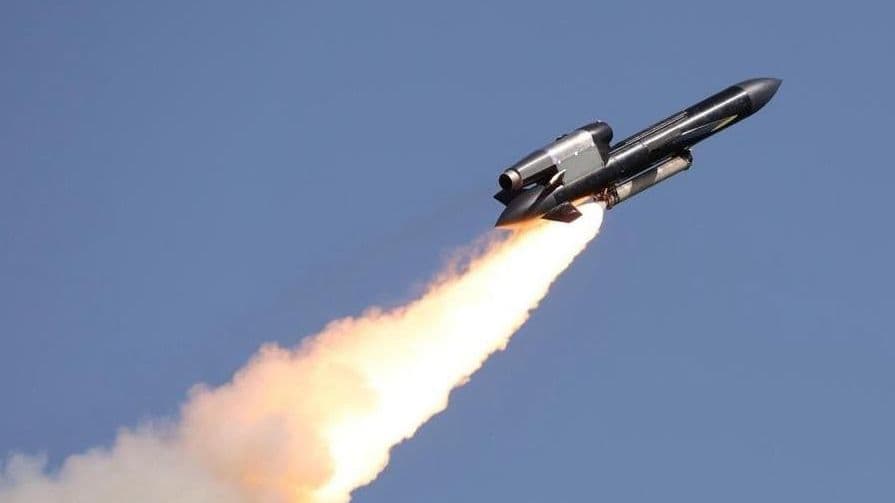
Launch of the Flamingo cruise missile in an undated photo. (militarnyi.com)
 on Google
Ukraine's domestically produced cruise missiles could help deal a devastating blow to Russia's air defense production, enabling increasingly effective long-range drone strikes against other targets inside Russia, a new report published on Dec. 12 says.
The report from the Royal United Services Institute (RUSI) and titled "Disrupting Russian Air Defence Production: Reclaiming the Sky," identifies "significant vulnerabilities" in the production process of several of Moscow's most important air defense systems.
Alongside stricter export controls on critical Western machinery and sanctions on raw materials used in radar production, the report calls for prioritizing strikes on "critical nodes within air defence production that are vulnerable to deliberate attack."
It highlights the concentration of facilities used to manufacture and assemble the Pantsir air defense system in Tula, Russia, just 350 kilometers from the Ukrainian border.
The report notes that the area is heavily defended and that Ukraine's long-range strike drones have so far failed to cause significant damage, but adds that as "Ukraine’s stockpile of indigenous cruise missiles expands, the ability to reach and damage the relevant targets improves."
Ukraine is developing several cruise missiles, most notably the Flamingo which was described by President Zelensky as "the most successful" missile Ukraine currently has.
It has a claimed range of 3,000 kilometers (1,864 miles) and a 1,150-kilogram warhead.
The report notes that Russia uses the Pantsir system primarily for the medium-range defense of critical infrastructure against long-range strike drones, meaning that if production were significantly disrupted, these sites would become more vulnerable to Ukraine's long-range drones.
"Ukraine could, therefore, mount an operation to saturate the defenses on an approach to Tula before delivering a significant blow to Pantsir production with cruise missiles – ironically resulting in limiting Russia’s ability to defend other targets over the course of 2026," the report says.
"These are but a fraction of the points of vulnerability identified in Russia’s integrated air defence production," it adds.

Ukraine repeatedly uses homegrown long-range drones to launch attacks on Russia's oil infrastructure. Russia's oil and gas production has continued to come under attack as Kyiv attempts to cripple Moscow's primary source of funding for its war in Ukraine.
In addition to weakening Russia's defenses against Ukrainian strikes, the report notes that it would have the added strategic benefit of leveling the playing field between Russia and NATO.
"A systematic effort to exploit these vulnerabilities could have a disproportionate impact on assisting Ukraine to strike the economic backbone of the Russian war effort and reduce the barriers to NATO airpower, consequently deterring future Russian aggression by denial," it says.
Russian drone incursions into NATO airspace earlier this year revealed a glaring flaw in NATO and Europe's defenses — they don't have an effective way to shoot down Russia's cheap, mass-produced drones.
The report also highlights vulnerabilities in the production process of two of Russia's most advanced long-range air defense systems, the S-400 and the S-500.
Any disruption to the production process of these could cause major headaches for Russia as they form an integral part of the country's weapons exports.
Purchases of air defense systems were one of the key discussion points during Russian President Vladimir Putin's recent visit to India.