How should Europe deal with Trump's Ukraine policy?
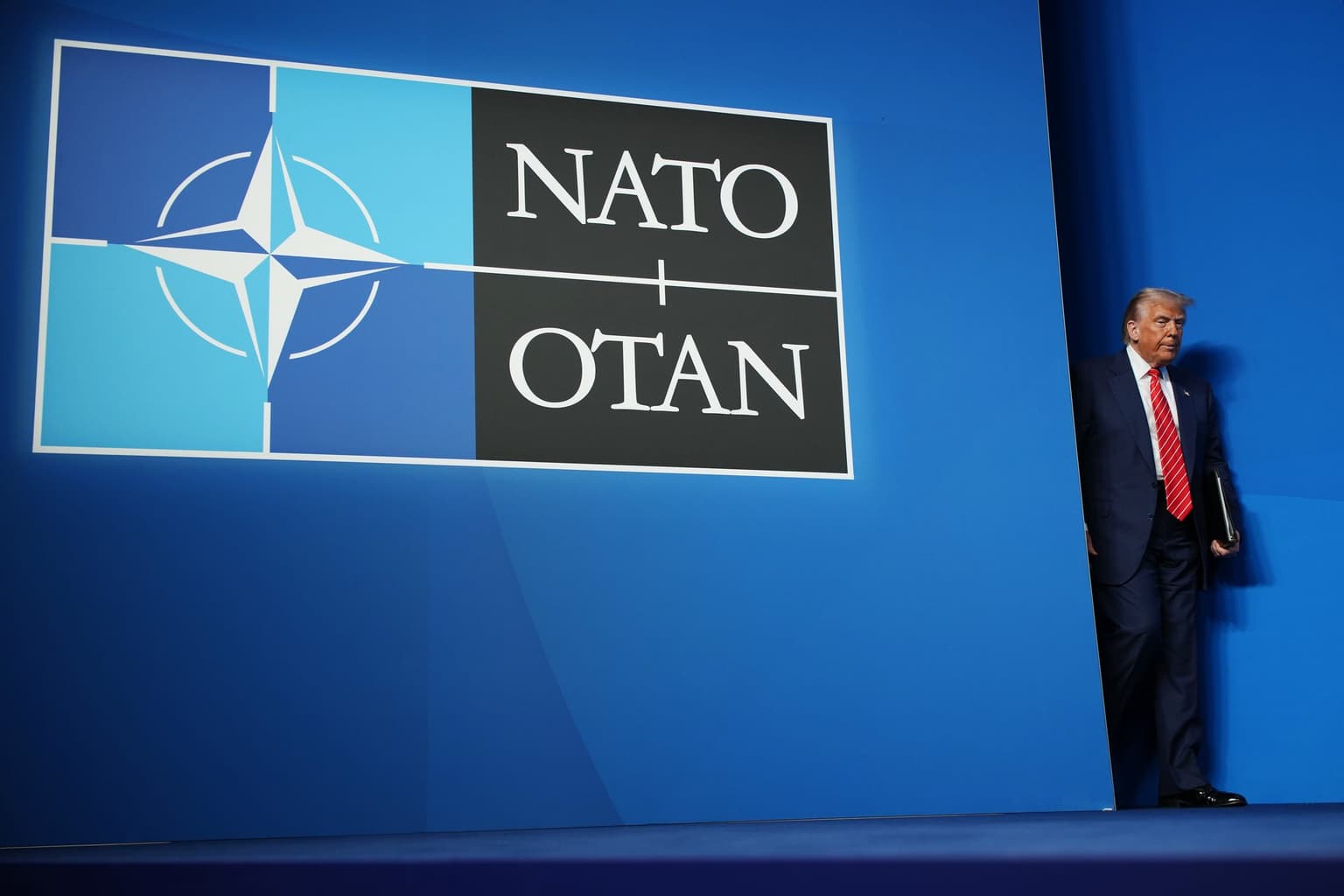
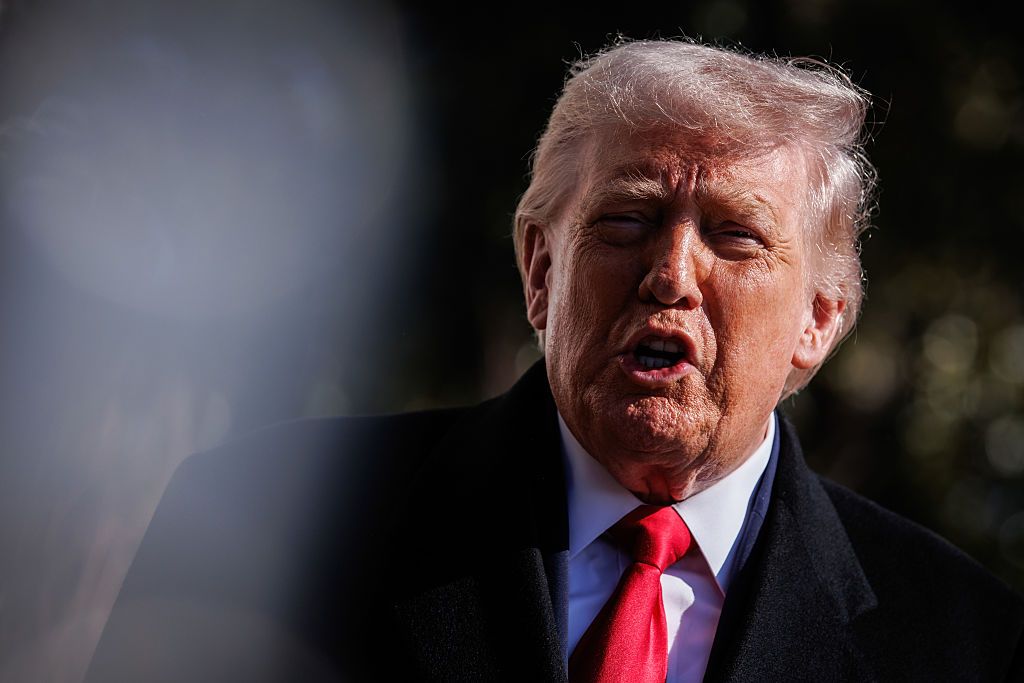
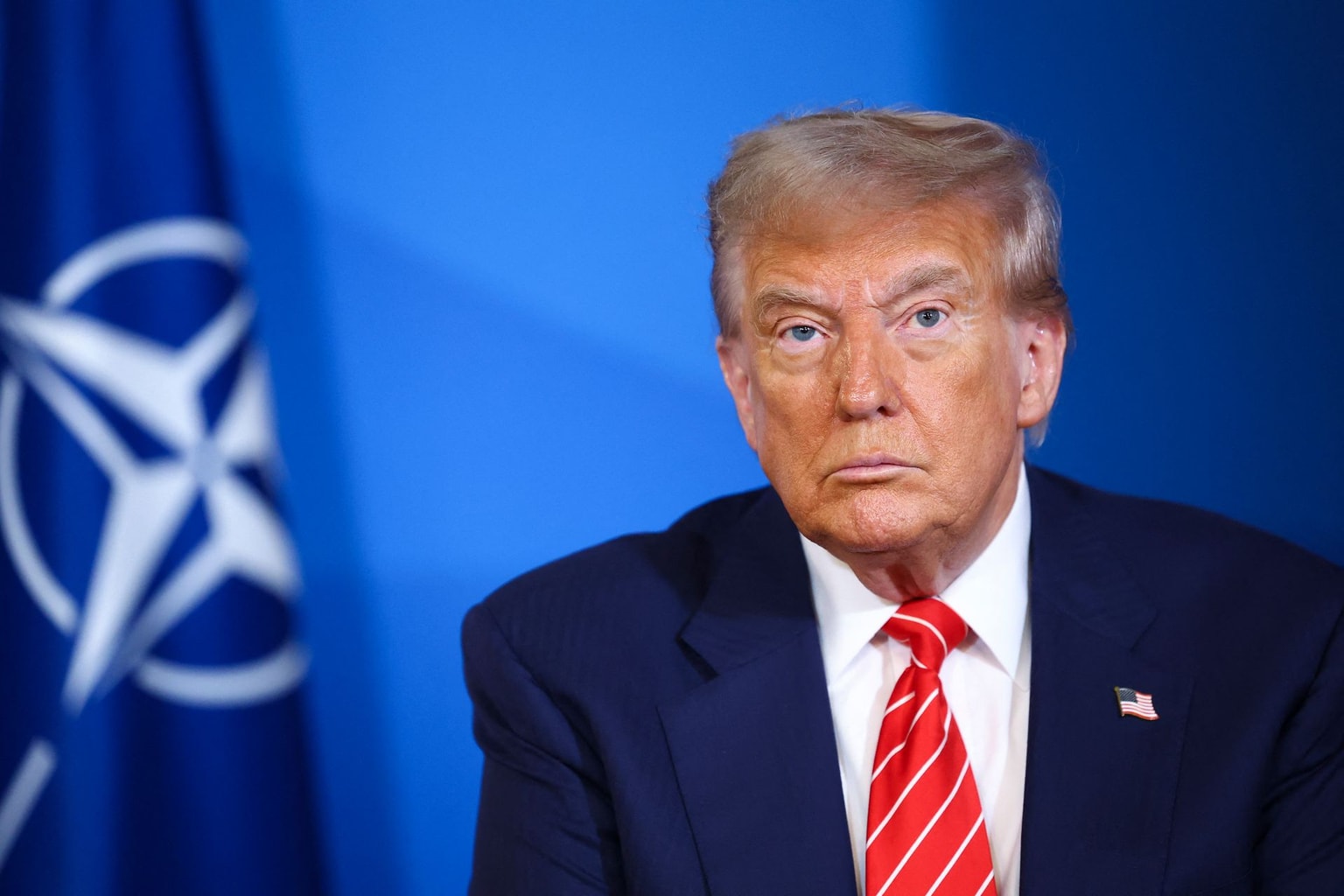
U.S. President Donald Trump arrives to speak to the press following the NATO summit in The Hague, Netherlands, on June 25, 2025. (Andrew Harnik / Getty Images)
 on Google
Andreas Umland
Policy fellow at the European Policy Institute
The U.S. attack on Iran has opened a new set of strategic dilemmas for Western support of Ukraine and efforts to contain Russia.
Yet, already before the latest escalation in the Middle East, there were various vagaries for Europe's approach to Trump's attempts to end the Russo-Ukrainian War.
These risks will remain independently from the length and outcome of the Iran War.
Tensions have been constantly rising, over the last year, between the U.S. and its European allies over how the West should respond to Russia's attack on Ukraine. They may increase further this year. European politicians face more and more dilemmas in their conduct vis-a-vis the White House.
Despite Washington's lenient stance toward Russia, Europeans must keep the U.S. in the Western coalition supporting Ukraine. European leaders and diplomats are therefore at least giving the appearance of supporting Trump in his approach towards the Russo-Ukrainian War.
This is even though the U.S. government has already reduced military aid to a minimum and often appears to be more of an apologist for Russia's war than a supporter of Ukrainian self-defense and a just peace.
A significant portion of the intelligence and material support that the U.S. continues to provide Kyiv with cannot be fully replaced with Europe's current capabilities.
Any restriction or delay in the transfer of data to the Ukrainian armed forces or in the sale of weapons by the U.S. increases the risks for Ukraine in the war. Setbacks on the battlefield, further destruction of Ukraine's energy infrastructure, or, in the worst case, a military or political collapse of Ukraine would have far-reaching consequences for much of Europe.
The U.S. government wants to end the Russo-Ukrainian War not by pressuring but through concessions to Moscow. It is trying to impose an unjust peace on Ukraine with dubious conditions.
A ceasefire without securing the government-controlled territory, with insufficient Ukrainian long-term defense capabilities, and without security guarantees from a militarily strong and determined alliance of pro-Ukrainian states would generate little confidence.

Such a ceasefire would be potentially unstable and hinder Ukraine's recovery and integration into the EU.
Even in the case of an initially stable truce, Kyiv's incomplete control over Ukraine's legitimate state territory would make multilateral and lasting security guarantees for Ukraine difficult, if not impossible, as renewed escalation would draw the guarantor powers into a new Russo-Ukrainian War.
Worse, an agreement that rewards Russia's violation of international law would encourage Moscow to engage in further aggression. A victorious peace would free up Russian capacity for operations in other regions, thereby increasing the Russian threat to Europe.
Finally, Ukraine's accession to the EU is unlikely as long as the country's security situation is not permanently resolved through NATO membership or an equivalent militarily credible solution.
The promise of defense assistance in Article 42.7 of the Treaty on European Union would not be a sufficient deterrent against renewed escalation in its current form due to the EU's lack of military structures.
Trump's recent push to annex Greenland has further complicated the situation for Europe. The EU's response was resolute, as Trump's insistence on the U.S. annexation of the territory of a European country crossed too many red lines.
The most acute danger seems to have been averted at the World Economic Forum in Davos in January. But Trump's style suggests that the issue, or similarly adventurous ideas, could return to the agenda.
The new transatlantic tensions increase the risk of a split not only within the Euro-Atlantic alliance but also among EU member states.
For some European countries, opting for a bilateral security partnership with the U.S. instead of European unity could be a tempting option. The Greenland example indicates how the Trump administration could try to force Europe to choose between supporting Ukraine on the one hand and other European security interests on the other.

For example, Washington could make Greenland the price for continuing to sell weapons to Ukraine.
Against this backdrop, the EU and Europe as a whole must pursue an even more determined approach to the continent's security than before. They should develop a comprehensive European self-defense strategy and structure that requires little or no U.S. involvement. It is encouraging that concerted European efforts have already succeeded in averting antagonistic U.S. strategies toward Ukraine in 2025 and toward Denmark in early 2026.
However, against the backdrop of the U.S. midterm elections in the fall of 2026, a renewed push by the Trump administration for a partial surrender of Ukraine could be looming.
Europe must then be prepared for the possibility that diplomacy alone may not be enough to bring Trump back into line. Europeans should help Ukraine more directly to withstand U.S. pressure and be prepared to openly oppose the Trump administration.
This also means that Europe must finally take an active role in the, so far, trilateral negotiations between Russia, Ukraine, and the U.S., or open an alternative consultation triangle between Russia, Ukraine, and the EU.
For this to make sense for Europe, i.e., to enter the ongoing talks or open its own channel of negotiation with the Kremlin, Moscow must develop a genuine interest in ending the war, however.
A new European strategy should therefore include tougher economic measures against Russia and more military support for Ukraine. The EU must take the lead with greater determination, as the U.S. is no longer ready to exert sufficient pressure on Moscow.
Without significant changes in the sanctions regime or on the battlefield, new rounds of negotiations involving or led by Europe will be as fruitless as the U.S.'s year-long shuttle diplomacy.
In addition to increased military aid to Ukraine, the use of frozen Russian assets is an obvious option for Europe, which should be revisited within the EU. Brussels is now in a stronger position to exert influence, as it is keeping Ukraine afloat financially and holds the majority of frozen Russian assets.
The most controversial question is to what extent Europe is able to act without or even against the United States.
In a worst-case scenario, is Europe prepared to accept the loss of the U.S. as a security guarantor, at least in the short term?
Although the scope for constructive relations with the Trump administration is shrinking, it may still be possible to repair relations with a future U.S. administration. However, if a transatlantic rift occurs in the meantime, this would give Russia the opportunity to intensify its aggression in Ukraine or even beyond.
Editor's note: The opinions expressed in the op-ed section are those of the authors and do not purport to reflect the views of the Kyiv Independent.
read also
 Tim Zadorozhnyy
 Martin Fornusek
 Abbey Fenbert