How Russia attempts to legalize the occupation of Crimea
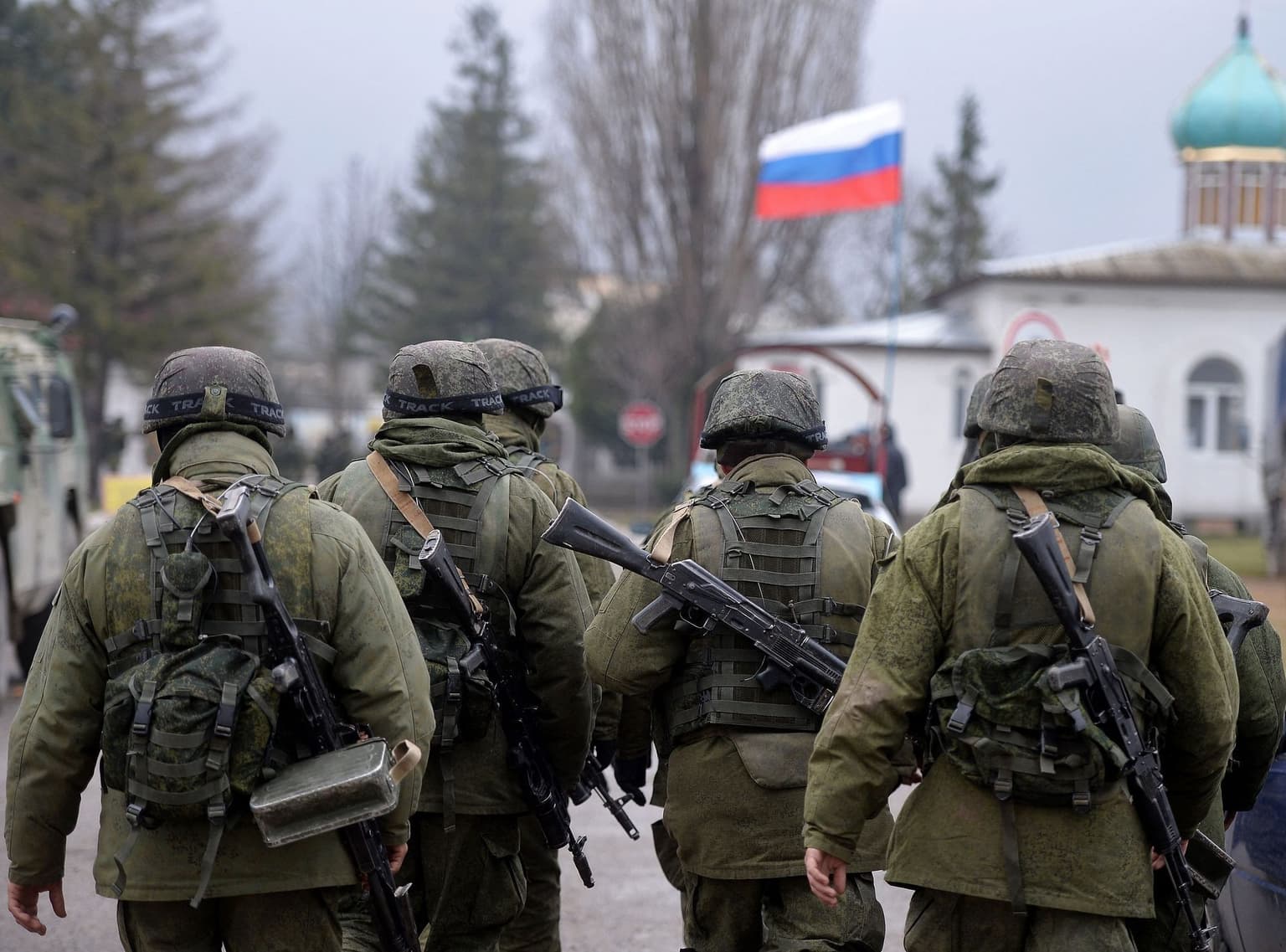
Russian soldiers in Perevalne, Crimea, Ukraine, on March 20, 2014. (Filippo Monteforte / AFP / Getty Images)
 on Google
Olha Kuryshko
Permanent Representative of the Mission of the President of Ukraine in the Autonomous Republic of Crimea
Throughout the occupation, Russia has sought international legitimacy alongside its physical control of the Crimean peninsula.
Narratives such as "Russia has a historical right to Crimea" or "the peninsula's residents chose to join the Russian Federation" continue to circulate in the international information space.
Their spread is the result of Russia's deliberate and systematic policy, which occupation authorities refine annually.
While previously limited to rhetoric from local Russia-installed politicians, since 2022, the Mission of the President of Ukraine in Crimea has documented a vast propaganda arsenal.
This range includes fabricated stories about foreign migrants and child manipulation, as well as the use of foreign technology to sustain the digital presence of occupation authorities.
Over 12 years, Crimea has become a testing ground for information warfare aimed at justifying the invasion and normalizing the Russian occupation.

Migrants as an additional tool to legalize the occupation
Since 2014, Russia has tried to convince the world of Crimea's "integration." When this fails, it exploits vulnerable groups through propaganda.
Foreign migrants are one such group. Enticed by Russian advertising and "high wage" promises, some arrived to work, only to have their stories turned into propaganda clips that justified the occupation.
In 2025, the Mission documented a trend of videos featuring an alleged German plumber, a Polish electrician, a British taxi driver, or a French nanny working in Crimea. In these scripts, locals are portrayed as their employers.
In this way, Russian propaganda depicts an "inverted reality" where Russia appears as a new "hub of opportunity" while Europe has allegedly lost its economic appeal.


These clips claim foreigners "embrace Russian culture." An alleged French nanny joining a Russian family symbolizes this "new" society. Notably, these migrants speak Russian, creating an illusion that Europeans eagerly integrate into Russian "norms" — a tactic to justify forced Russification.
Another key element of this propaganda is the attempt to flip the reality of global migration. In fact, many are trying to flee Russia, with European countries remaining the top destinations for migrants.
The videos intentionally distort this reality, presenting Russia as a "new economic and cultural hub" where people seek a "better life."
This campaign flips global migration realities to normalize the myth of a "prosperous Russian Crimea."
"Artek" and children as diplomatic tools
Alongside targeting adults, the occupying administration focuses on youth—future resources for the occupier's political, economic, and military goals.
To maximize impact, Russia integrates its tools into fields attractive to young people.
Artek, sanctioned by Ukraine since 2025, was a Soviet childhood symbol for generations before Ukraine's independence. Attendance was an achievement; top pioneers were selected based on various criteria.


Since 2014, Russia has turned the camp into a "re-education" site for Ukrainian children, imposing its narratives. It continues the Soviet practice of privileged access, now targeting winners of contests organized by Russian "cultural centers" abroad.
Propaganda peaked after 2022; beyond years of distorted history, children are now being militarized and used for "child diplomacy."
A vivid example of this is the "Children's Declaration," allegedly adopted in 2025 by Artek participants from over 67 countries. This appeal to heads of state was intended for the UN General Assembly.
The occupying administration presented this as a child-led initiative within programs marking Artek's centenary and a "century of public diplomacy."
The true goal is to promote a narrative of Russia's actions as aligned with "peacekeeping values" and its "special role" in international dialogue.
Exploiting foreign cybersecurity tools
A critical component of Russia's attempt to legalize the occupation is the use of technology.
Since 2014, the occupying administration has operated a network of "official" websites using SSL/TLS certificates. These certificates, used by most websites, encrypt data between the user's browser and the site they visit.
In 2025, the Mission found that 140 out of 144 investigated occupation-linked websites use certificates from GlobalSign NV (a Belgian company owned by Japan's GMO GlobalSign K.K.).
The use of these technologies sustains the digital operations of the occupying structures and helps spread disinformation, creating a facade of "legitimacy." Furthermore, these certificates allow Russia to control the information space and bypass international sanctions.
This and other trends demonstrate that the battle for Crimea is fought not only on the battlefield but in information, culture, education, and technology.
Through these channels, Russia attempts to normalize the occupation, reshape global perception, and create a new reality where illegal land grabs are presented as "historical justice."
Despite these efforts, international law remains unequivocal: Crimea is part of Ukraine. Russia's attempts to legalize the occupation are merely elements of a long-term information war.
Editor's note: The opinions expressed in the op-ed section are those of the authors and do not purport to reflect the views of the Kyiv Independent.