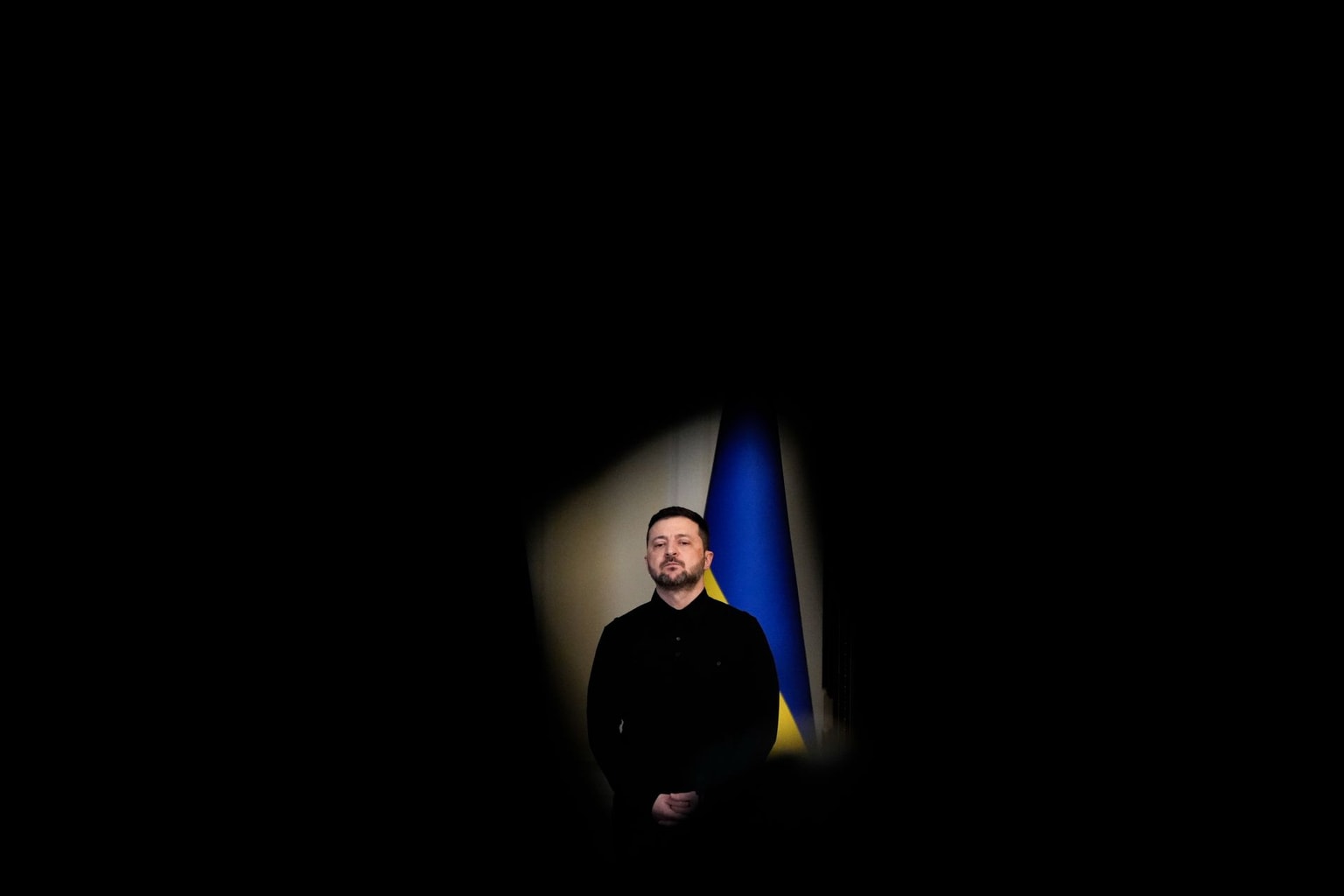
How Europe is rediscovering the bomb
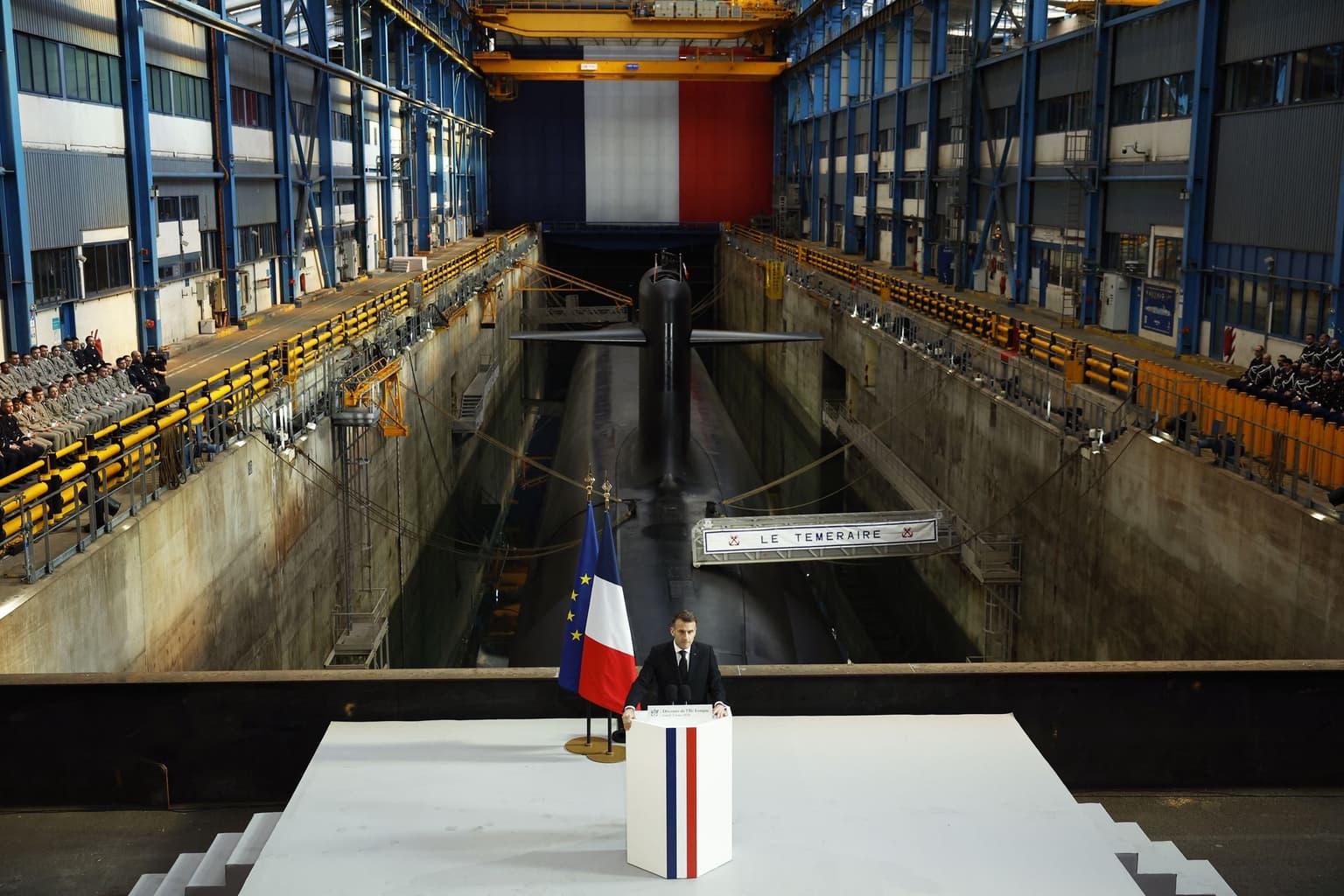
France’s President Emmanuel Macron delivers a speech in front of the nuclear-powered ballistic missile submarine Le Téméraire (S617) during a visit to the Île Longue naval base in Crozon, France, on March 2, 2026. (Yoan Valat / Pool / AFP via Getty Images)
 on Google
Caught between bellicose Russia and an unsteady U.S., Paris is expanding its nuclear arsenal and moving to strengthen European deterrence.
The EU's only nuclear power announced on March 2 that it would increase the number of its warheads from roughly 290 to undisclosed levels — the first such move since 1992.
France is also signalling its new nuclear "forward deterrence" could extend to European allies, while inviting them to joint nuclear exercises.
Francois Heisbourg, a security expert at the Paris-based Foundation for Strategic Research, told the Kyiv Independent that "nuclear deterrence has come back into the framework of European security because of Russia."
Amid the war in Ukraine, Europe confronts its gravest risk of a direct confrontation with Moscow since the Cold War. Analysts say France's decision could force the Kremlin to rethink its strategic calculations toward the continent.
Europe's nuclear powers, France and the U.K., "are never going to match Russia in terms of numbers and diversity of the nuclear arsenal," Darya Dolzikova, a nuclear deterrence and security expert at Royal United Services Institute (RUSI), told the Kyiv Independent.
"But that's not necessarily how deterrence works. Russia just needs to be unsure whether it can count on the French not using their nuclear weapons in defense of European allies."
Deterring Moscow
Russia's nuclear stockpile includes about 5,500 warheads — the single largest arsenal in the world, with the U.S. being the close second.
Since the Cold War, European NATO allies have primarily relied on the American nuclear umbrella to deter a Russian assault.
The U.S. has not signalled intent to withdraw this protection. But President Donald Trump's unpredictability — and his disparaging attitude toward allies — make discussions about Europe's deterrence vis-à-vis Russia more urgent than at any point in decades.
"What I'd like is for Europeans to regain control of their own destiny," French President Emmanuel Macron said at the Ile Longue naval base when announcing changes to the nuclear doctrine this week.

The French nuclear delivery arsenal includes four Triomphant-class submarines, which can launch ballistic missiles up to 10,000 kilometers (6,000 miles). Rafale fighter jets can also carry nuclear-armed cruise missiles with a range of 500 kilometers (over 300 miles).
France has now opened the door for temporarily stationing its nuclear-armed planes in allied countries. A number of allies have signaled interest in deepening cooperation.
Berlin and Paris have announced the establishment of a joint "nuclear steering group," and German Chancellor Friedrich Merz touted "conventional German participation in French nuclear exercises."
"French nuclear forces being physically present in a number of European countries certainly does make Russian calculus more difficult."
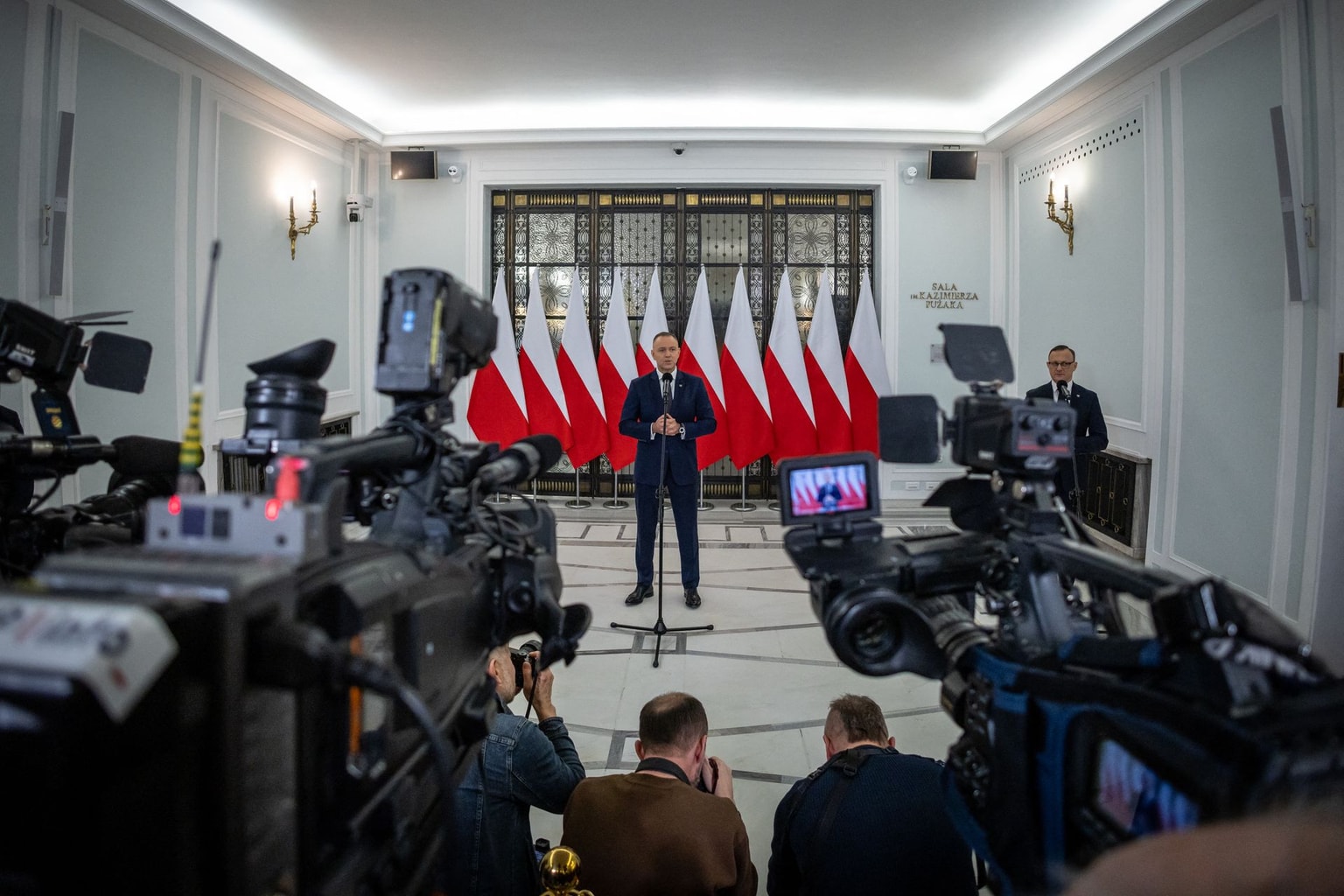
"Poland is in talks with France and a group of closest European allies on the program of advanced nuclear deterrence," said Polish Prime Minister Donald Tusk, whose country borders Russia's heavily armed Kaliningrad exclave.
Macron revealed that Paris is also leading talks on European nuclear cooperation with the U.K., the Netherlands, Belgium, Greece, Sweden, and Denmark.
These changes signal the broadening of the French nuclear force's role, which had been "essentially about France and the neighbourhood," Heisbourg says.
"French nuclear forces being physically present in a number of European countries certainly does make Russian calculus more difficult," the expert notes.
Paris also understands that "the Russians will only take this seriously if we have an increased nuclear arsenal," he added.

European umbrella?
In Europe and the neighborhood, the U.S. is estimated to store about 100 tactical nuclear weapons at six bases in Belgium, the Netherlands, Germany, Italy, and Turkey.
France and the U.K. are the only other two NATO allies to possess their own nuclear weapons.
But while London's arsenal is heavily reliant on U.S. technical input, the French one is independent — positioning it as a potential cornerstone of a more autonomous European deterrent.
France's nuclear doctrine has always been framed as defensive, designed to protect the country's sovereignty and its "vital interests."
However, the definition of those interests has been left intentionally vague.
In March 2025, when the blowout between Trump and President Volodymyr Zelensky in the White House exposed widening rifts between Washington and Europe, Macron suggested France's nuclear force could be linked to a broader European defense.

While this notion is not necessarily new in France, recent transatlantic upsets have led even traditionally skeptical allies to consider it seriously.
"In the past, France's European partners were reluctant to participate in this debate, for fear of signaling a lack of confidence in the U.S. umbrella," says Pierre Haroche, an expert in European security at the Catholic University of Lille.
The fact that even Germany has shown interest is a "consequence of Trump's policy," the expert added.
Nevertheless, Macron made it clear that the new proposed "forward deterrence," while a distinct effort, is "complementary to NATO's."
"The French nuclear deterrent is not replacing the U.S. deterrent," Dolzikova says. "It is reinforcing the European dimension of the French nuclear deterrent, which has existed for a long time."
Domestic concerns
Paris has made clear that it would not share decision-making powers on the use of its nuclear weapons — a move that would be highly unpopular across the French political spectrum in any case.
According to Haroche, the French nuclear policy is closely tied to the Elysee Palace, meaning that the "future of this policy will depend on Macron's successors."

Many opinion polls name Jordan Bardella, the 30-year-old head of the far-right National Rally (RN) party, as a potential frontrunner in the 2027 French presidential election.
But while the RN has long been skeptical of a "pan-European" nuclear doctrine, the party's co-leader, Marine Le Pen, stopped short of rejecting Macron's latest changes.
"I will tell our allies OK to geographical deployment, but then there must be something in return," Le Pen said, adding that the partners would have to purchase French — rather than, for example, American — equipment.
Heisbourg said he does not expect the far-right party to go against the plan, pointing out that the French people "are very proud of their nuclear weapons" and of "playing a great role in European affairs."
"To go against something which is seen by French public opinion as increasing our role… is not something which goes without a political penalty."
read also
 Francis Farrell
 Olena Lapenko
 Anna Borshchevskaya
Note from the author:
Hi, this is Martin Fornusek.
I hope you enjoyed this article. In our team, we believe fact-based and truthful reporting should be available to all — that's why we don't use any paywall.
If you'd like to help us provide you with more in-depth coverage of Ukraine's struggle against Russian aggression, European politics, and other topics, please consider joining the Kyiv Independent community.