Failed Ukrainian mechanized attack near Pokrovsk ignites online storm over assault regiment's tactics
 on Google
A mechanized attack by Ukraine's 425th Assault Regiment — better known as Skelia — outside Pokrovsk in Donetsk Oblast has sparked a wave of criticism from key Ukrainian figures online concerning the unnecessary loss of manpower in reckless assaults.
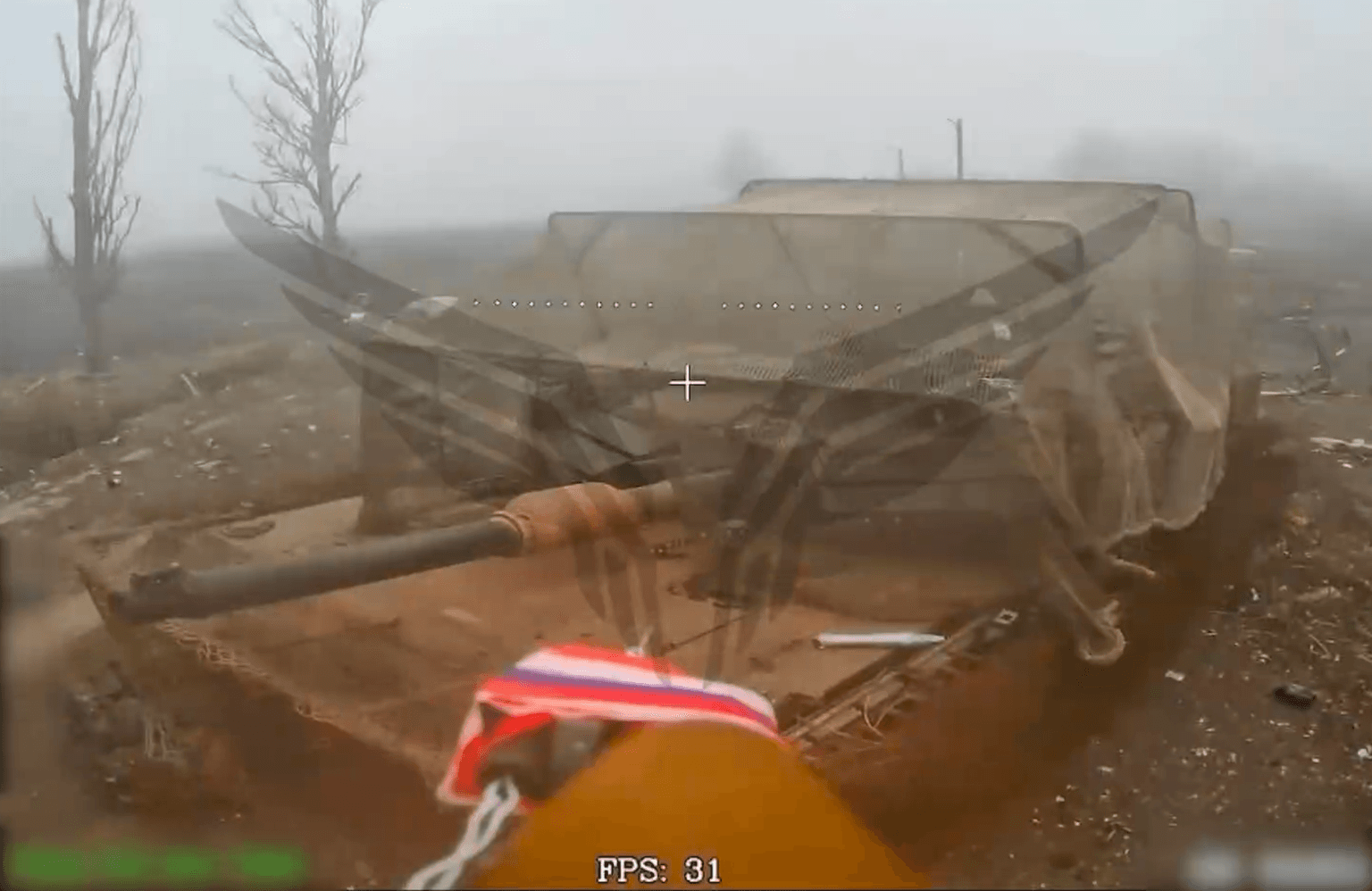
On April 1, Serhii Sternenko — one of the most prominent Ukrainian volunteers providing support to the military and recently named advisor to newly-appointed Defense Minister Mykhailo Fedorov — spoke out about the failed attack the previous night, sharing Russian drone videos of the destroyed equipment that had been posted on Telegram.
The original video, posted by Russia's elite Rubicon drone unit, shows their drones destroying a Ukrainian M1 Abrams tank, a BMP-2 infantry fighting vehicle, and a M1117 armored mobility vehicle, as well as several hits on individual soldiers in the field.
Later in the day, more footage of the destroyed vehicles emerged online, quickly geolocated to confirm the attack occurred on the E-50 highway running west from Pokrovsk, near the village of Hryshyne, now contested.

Skelia's tactics in this attack, Sternenko said, were just the latest example of a systemically wasteful approach to offensive operations in the unit — among other assault regiments — that leads to excess Ukrainian personnel losses, often for little to no tangible gains.
"Treating our people like this is a crime, and there must be accountability for this," the volunteer and advisor wrote.
"What they are doing to people in certain formations is no better than Russian practices. This must end."
In the evening, Skelia responded to Sternenko on social media, acknowledging the loss of the vehicles, and of two soldiers killed in action nearby.
"To complete the task and save the lives of the fighters, favorable weather conditions were used, people moved in armored vehicles with additional protection, reliable communications, aerial reconnaissance, and fire support with drones, artillery, and tanks was established," the post read, explaining the use of armored vehicles.

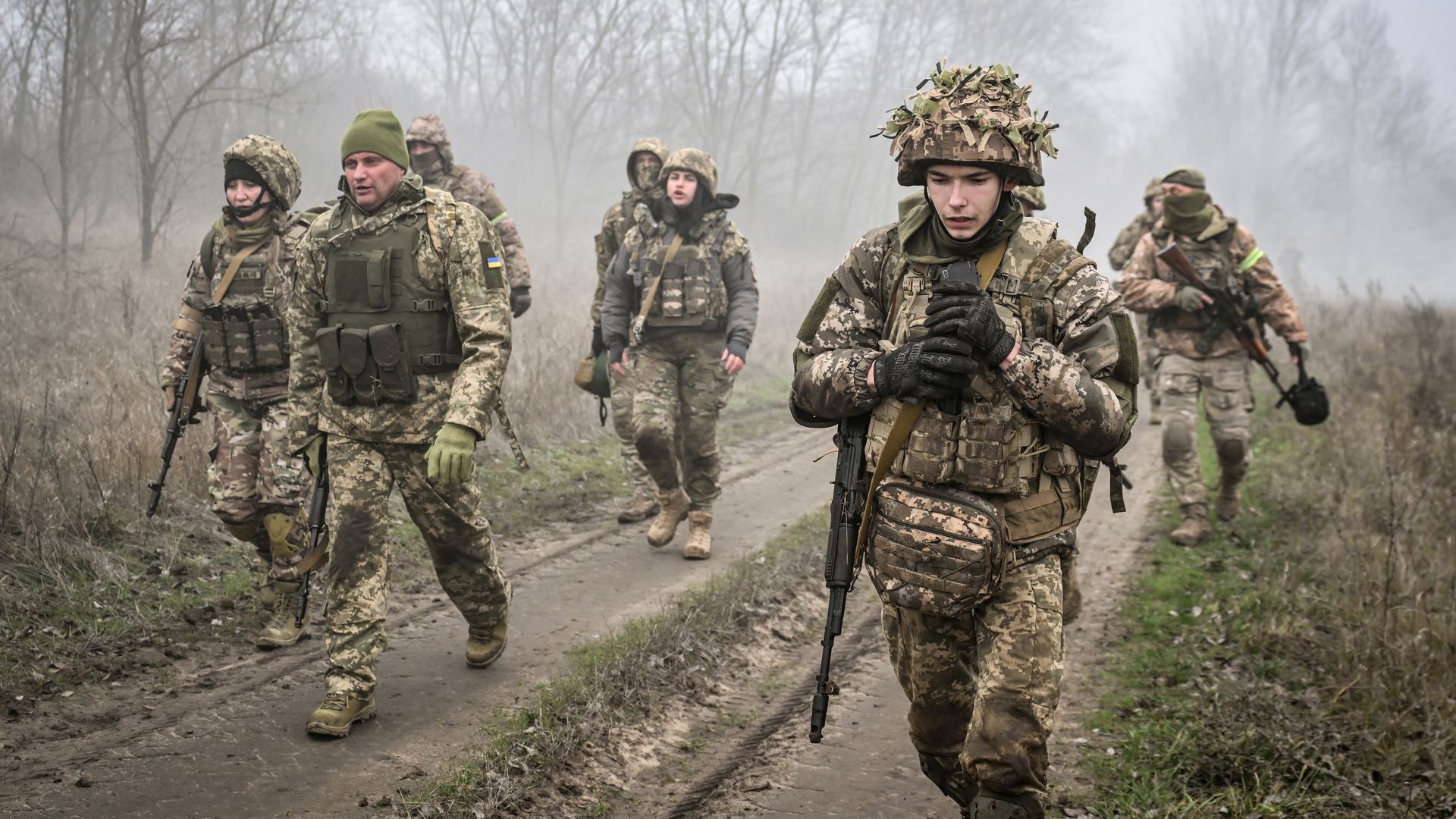
According to Skelia, the attack was nonetheless a success, as the infantry managed to dismount the vehicles and continue the mission, while the fifth armored vehicle in the column survived unscathed, having successfully evacuated the crews of those that had been destroyed.
On the same day, veteran Ukrainian war journalist Yuliia Kyriienko, who works for Ukraine's state-backed United News television marathon, visited Skelia, where she filmed a radio exchange purportedly with one of the infantrymen dropped off in the attack, saying that everything was quiet and going to plan.
The Kyiv Independent could not independently verify the fate of the Skelia assault soldiers involved in the attack.

Skelia's response concluded with a personal challenge to Sternenko himself.
"If Mr. Sternenko knows how to organize assault actions against the enemy's strongholds in Pokrovsk," the post read, "we are ready to give him, like all Ukrainian men and women who have not yet been mobilized, the opportunity to apply his experience in practice as part of our unit and take a direct part in the defense of the motherland."
The post was reshared by the official account of the Armed Forces of Ukraine, hinting at tension between the high command in the military and the new defense ministry leadership, which announced an audit of battlefield losses on March 2.
Since Russia's full-scale invasion, Sternenko has become one of Ukraine's top military-oriented volunteers, working with a focus on building and supplying hundreds of thousands of drones to Ukrainian units across the front line to help hold back Russian assaults.
In doing so, through his social media channels the long-time nationalist activist has also become one of Ukrainian society's most trusted thought leaders on matters regarding the war, often not holding back in his criticism of systemic issues in the country's military leadership.
In January 2026, Sternenko was brought into the official fold when appointed as an advisor by Fedorov, who has brought a reinvigorated focus on drones and technology to his new role as defense minister.
Skelia is one of, if not, the largest of a group of specialized assault regiments, brought together and expanded by Ukraine's Commander-in-Chief, Oleksandr Syrskyi.

Over the past year of Russia's full-scale war, the unit has received a disproportionately large portion of incoming mobilized troops, using them in "firefighting operations" to counterattack advancing Russian forces across the front line.
Balancing out the division of new draftees between units has been a task on the radar of the president's office since last year, as announced in December by presidential advisor Pavlo Palisa, but so far, there has been little evidence of progress.
Since summer last year, Skelia has been especially active in the Pokrovsk area, successfully clearing the city after a mass Russian infiltration into the city in July, and conducting numerous raids into its northern neighborhoods, before Russia established full control of Pokrovsk over winter.

As part of Ukraine's corps command reforms, the defense of the Pokrovsk area has for months been the responsibility of the 7th Rapid Reaction Corps of the Air Assault Forces.
"The above actions are being studied and investigated by the higher military command. An official check is being conducted," the 7th Corps wrote on April 2 of the mechanized assault.
In practice however, Skelia, along with many of the other units inside Ukraine's Assault Forces, are well-known to answer directly to Syrskyi, who himself has been notorious for an appetite for assaults, and micromanaging combat operations down to the tactical level.
When asked directly by the Kyiv Independent whether their command was part of planning the operation or whether Skelia answers to the corps in Pokrovsk at all, the 7th Corps declined to comment.
For other public military thought leaders, Skelia's attack outside Pokrovsk was only the latest incident pointing to the inefficient use of manpower by the country's top general.
"What questions can there really be to the unit commander, if Syrskyi personally commands at the command posts of regiments and corps?" Bohdan Krotevych, ex-Chief of Staff of Ukraine's legendary Azov Brigade, and a frequent critic of the Commander-in-Chief, said in a post on social media on April 1.
"He (Syrskyi) personally approves assault operations, personally distributes the majority of mobilized people to his favorite units, completely ignoring the order of the President of Ukraine regarding fair distribution."
In a battlefield saturated with drones in the air on both sides, and defined by a "kill zone" stretching back up to and sometimes over 20 kilometers from the front line itself, the survivability of armored vehicles in mechanized assaults has consistently declined over time.
With their advantage in manpower and armored vehicles, Russian forces continue to attempt mechanized assaults, albeit more rarely, with commanders over 2026 telling the Kyiv Independent that often months go by without such an attack from the enemy, which has instead focused on infiltration tactics.