Russia's new Izdeliye-30 missile makes strikes harder to anticipate
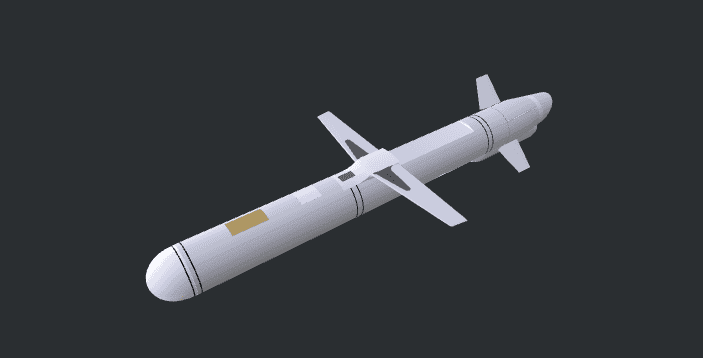
Russian Izdeliye-30 cruise missile. (militarnyi.com)
 on Google
Even as Russia sharply expands drone production, it continues to develop deadlier weapons, including missiles. Its latest, the Izdeliye-30 cruise missile, flattened a residential building in Kharkiv in early March within seconds, killing 11 people.
"It is a mistake to assume that the future belongs exclusively to drones," Vladyslav Vlasiuk, the Ukrainian president's commissioner for sanctions, said following the strike.
Russia is seeking to build cheaper but equally destructive weapons. The Izdeliye-30 is one such development. It carries a larger warhead than its predecessor, the Kh-101, and can be launched from both strategic bombers, large, long-range aircraft such as the Tu-95MS and Tu-160, and tactical aircraft, the frontline combat jets Russia uses more often in Ukraine, such as the Su-34, Su-30SM, and Su-35S. That gives Russia more ways to launch missile attacks and makes them harder for Ukraine to anticipate and intercept.

Russia's growing ability to launch such missiles from tactical aircraft could alter the dynamics of the war. Until launch, it is nearly impossible to know whether those jets are carrying long-range missiles for strikes deep inside the country or other munitions intended for use along the front line.
"It is clear that Russia is expanding the range of platforms capable of carrying these weapons," Ukrainian military historian and defense expert Andrii Kharuk told the Kyiv Independent.
"It is trying to respond flexibly and adapt to evolving wartime conditions."
Cheaper, but deadlier
The first reported use of the Izdeliye-30 missile in Ukraine came in late 2025, according to Ukraine's military intelligence (HUR).
Yet Anatolii Hrapchynskyi, deputy director of a company that produces electronic warfare systems and a reserve Air Force officer, said references to the missile's development date back to late 2024.
The Defence Intelligence of Ukraine has published an interactive 3D model, the main assemblies, and components of the enemy’s new cruise missile “izdeliye-30,” as well as data on 20 enterprises involved in its production cooperation chain.
— Defence Intelligence of Ukraine (@DI_Ukraine) March 2, 2026
🔗: https://t.co/shMagPCZHE pic.twitter.com/6XgEsxVatf
"At that time, Russia was actively using cruise missiles because it could not ramp up its use of ballistic missiles, in part due to a failed agreement on supplies from North Korea," Hrapchynskyi told the Kyiv Independent.
"(Russia) needed something to scrape by."
HUR said the Izdeliye-30 was developed by the Zvezda Design Bureau, part of Russia's JSC Tactical Missiles Corporation (KTRV), which has been under sanctions by the European Union, the U.S., and several other countries since 2022.
The new missile was not built from scratch. Instead, it incorporates features of systems Russia has long deployed in its war against Ukraine.
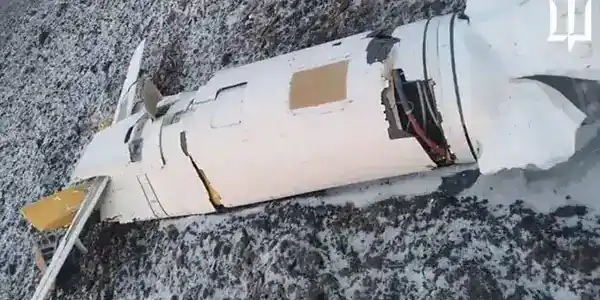
According to HUR assessments, the Izdeliye-30 uses a pyro-valve pneumatic system similar to the Kh-35U anti-ship missile and an aircraft launch mechanism similar to the AKU-5M systems used for the Kh-101, Kh-55, and Kh-555 cruise missiles.
The Izdeliye-30 has a wingspan of three meters, can carry an 800-kilogram warhead, and has a range of at least 1,500 kilometers (930 miles). It is also equipped with a jam-resistant satellite navigation system "Kometa-M12," which Russia primarily uses on its long-range drones, as well as components sourced from the U.S., Switzerland, China, and the Netherlands.
According to Vlasiuk, some of the foreign components found in the missile used in the March 7 strike on Kharkiv were manufactured in 2023 — information Ukraine has already shared with its partner countries.
Hrapchynskyi said the Izdeliye-30 is an upgraded version of the Kh-101 cruise missile, capable of carrying roughly twice the payload of the Kh-101, which has a 400-kilogram warhead, though with a shorter range.
"Russia has long been seeking a way to reduce costs while increasing the payload capacity of these weapons," Hrapchynskyi said.

"The Kh-101 missile has a range of over 2,500 kilometers (1,550 miles), but it has typically been used at distances of up to 700 kilometers (435 miles). Most likely, this was very costly," he added.
The Kh-101 is launched from Russian strategic bombers, notably the Tu-95MS, which can carry up to eight missiles. Yet during the war in Ukraine, Russia has suffered significant losses to its strategic aviation fleet, much of which was inherited from the Soviet Union.
Many of these aging bombers require costly and complex maintenance, while producing new ones remains a major challenge.
The situation was further complicated by Operation "Spiderweb," carried out by the Security Service of Ukraine (SBU), which reportedly hit more than 40 aircraft on Russian territory in 2025 and, according to the SBU, disabled 34% of Russia's cruise missile bombers at key airfields, causing an estimated $7 billion in damage.
The shift involved integrating cruise missiles with tactical aircraft, the experts told the Kyiv Independent.
Even before the Izdeliye-30 appeared, Russia carried out a similar upgrade of the Kh-59 cruise missile, developing the Kh-69, which offers increased range and can be launched from tactical aircraft such as the Su-30 and Su-35, according to Hrapchynskyi.
The Kh-69 entered service in 2024 and demonstrated its effectiveness in April that year, when Russian tactical aviation struck the Trypillia Thermal Power Station with the missiles, leaving consumers across three regions without electricity.

Tactical bombers are easier to conceal at airfields and harder to track before long-range missions, whereas strategic aircraft are visible even during the preparation phase, Kharuk said.
Although tactical bombers can carry only one or two missiles, they are far more numerous in the Russian air force's fleet than strategic aircraft, he added.
At the same time, Kharuk said the Izdeliye-30 is likely no more difficult to shoot down than other cruise missiles, but intercepting ballistic missiles remains Ukraine's main unresolved challenge.