Drone warfare is tragically transforming humanitarian aid
As drones reshape the battlefield, aid workers face growing risks — and hard choices about how to adapt.
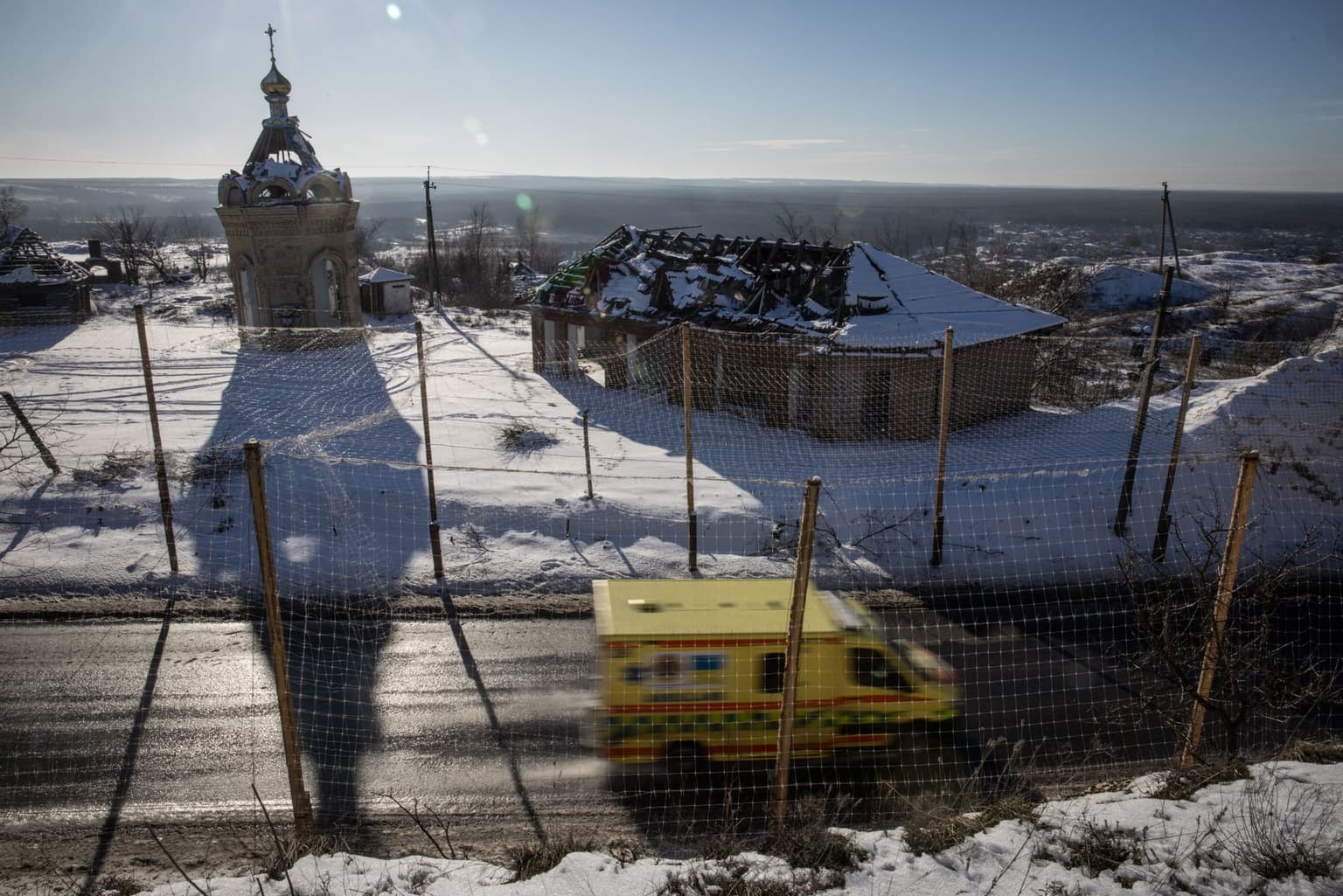
An ambulance car on a road covered in anti-drone netting in Izium, Kharkiv Oblast, Ukraine, on Feb. 22, 2026. (Chris McGrath / Getty Images)
 on Google
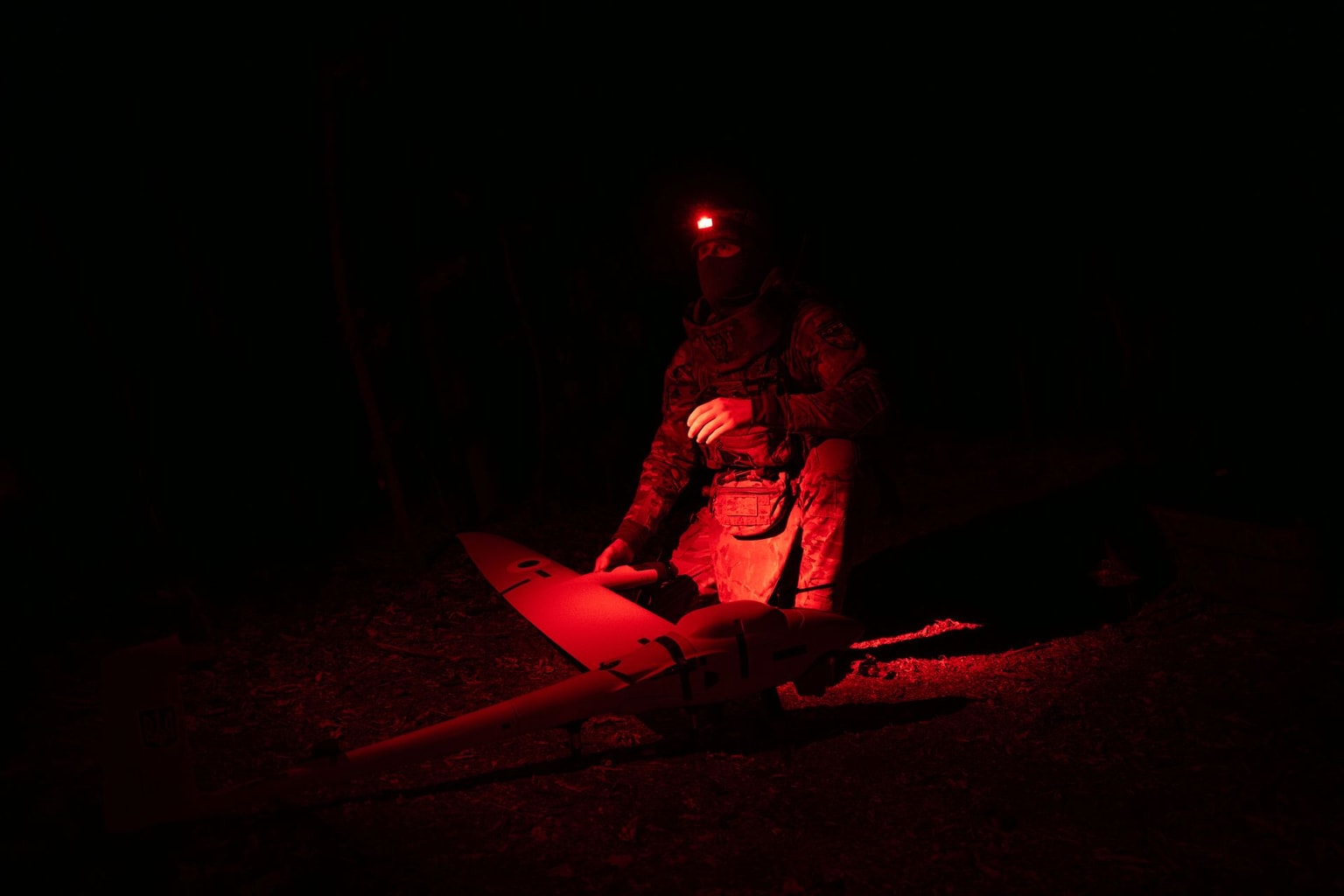
"Drone! Drone! Drone!" — trainees shout as miniature helicopter blades buzz overhead. At a Safer Access security course near Kyiv in late February, aid workers are learning how to react when their mission comes under fire.
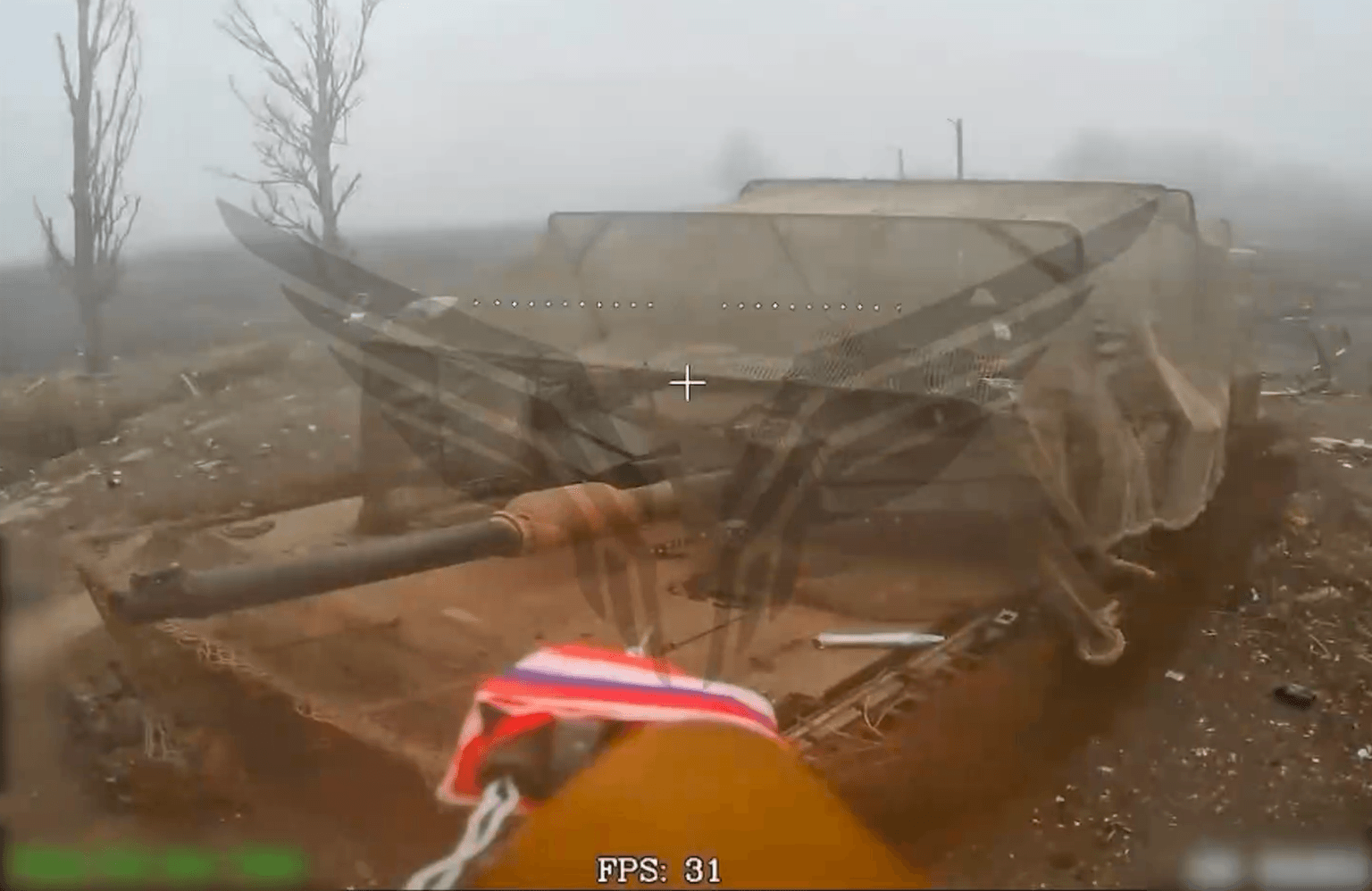
Seconds later, they shout: "Attack! Attack! Attack!" The trainees throw themselves into the snow. There’s a flash of mottled green and iridescent purple: a grenade with propellers, dives toward them. It hits, explodes. They count to five, then scramble for cover.
The course, offered since April 2025, is a milestone in humanitarian aid’s tragic transformation. Once-manageable risks have turned into targeted threats as the high-visibility markings and legal protections that have long defined aid work are being tested.
In response, organizations are seeking a new consensus — on technology, on tactics, and on how far they can adapt without compromising the principles they are meant to uphold.

Across Ukraine, drones have become one of the United Nations’ main "concerns." Tom Fletcher — the U.N.’s top humanitarian official — admitted at an international press conference in March that aid workers are "struggling to keep up with that innovation in killing."
On the ground, the innovation is impossible to ignore. Roman Bohaiov evacuates civilians from front-line villages with East SOS. Until 2023, his teams could work even if a battle raged one street over. Stray bullets were a risk, but no one expected to be targeted. But by 2024, he says, drones imposed a "kill zone" within ten kilometers of the front line, blocking aid from reaching vulnerable people.
The ubiquitous first-person view (FPV) drones used widely on both sides of the war in Ukraine are equipped with cameras, meaning it should be easier to avoid harming civilians. But conflict monitor Armed Conflict Location & Event Data (ACLED) says that while drones were envisioned as "precision instruments of targeting, reducing civilian casualties," Ukraine has seen an "absolute shift."
Though both sides deploy drones, the Russian army’s use has been described as cynical. Human Rights Watch argued there is "an apparent Russian strategy whose primary purpose has been to spread terror among the civilian population" through drone attacks. Russian recruits are said to use front-line cities as training grounds — turning them into killing fields that are often called "human safaris."

Aid workers have long relied on international law and high-visibility markings to avoid being targeted in conflict zones. Under international law, soldiers are required to "do everything feasible" to avoid hitting civilians, with NGO logos designed to make them think twice. But in a war where Russian forces appear to deliberately target civilians, those safeguards offer only limited protection.
The model was always fragile. Italian fascists bombarded Red Cross hospitals in 1930s Ethiopia — to say nothing of the situation in Palestine or Sudan in recent years. Despite the dangers, humanitarian vehicles continue to be emblazoned with bright colors and large logos to show they are not taking part in the fighting.
Andrea de Domenico — head of the U.N.’s Office for the Coordination of Humanitarian Affairs in Ukraine, or OCHA — says that "high visibility is the best way to ensure that you declare, you make a statement, of your identity, that is clear and not equivocal."
To maximize visibility, organizations can use the U.N.'s Humanitarian Notification System. Both armies are told about the mission, leaving no doubt about the targeting.
Using the notification system is optional, but the OCHA argues that it works well. For 2024 and 2025, they record 268 "instances of violence" against humanitarian personnel or kit, when the notification system was not in play. By comparison, there have only been two incidents where the system was in use — from 2015 until today, suggesting it reduces targeting.
Despite these statistics, faith in visibility has been shaken. Some organizations have experimented with taking markings off their vehicles' roofs or removing them altogether. When it comes to the notification system, some consider it too risky to tell the Russian army, or else find the process slow. At least three days’ notice is required — impractical for emergency response.
For field workers, there’s a sense that debate over visibility is misplaced. The Ukrainian NGO Southern Development Strategy uses visibility markings, but aid worker Taras Bukrieiev feels they make little difference to Russian drones. East SOS’s Bohaiov echoes this. "Our cars are marked, and we follow the rules," he said. The question is whether the aggressor does the same.
When soldiers ignore their duty to avoid civilians, some argue that precautions beyond visibility are needed.
Back on the Safer Access training grounds, the trainees brush the snow off their bulletproof vests. It’s time to learn how to detect drones using frequency analyzers — tools that notice radio control signals sent by drone pilots. Successful detection can offer crucial minutes for taking cover.
Each organization must decide whether the gadgets are useful, the trainers emphasize. Caution permeates the humanitarian community, with good reason. They must take care to "do no harm" — not provoking a worse situation for themselves or the people they are there to help.
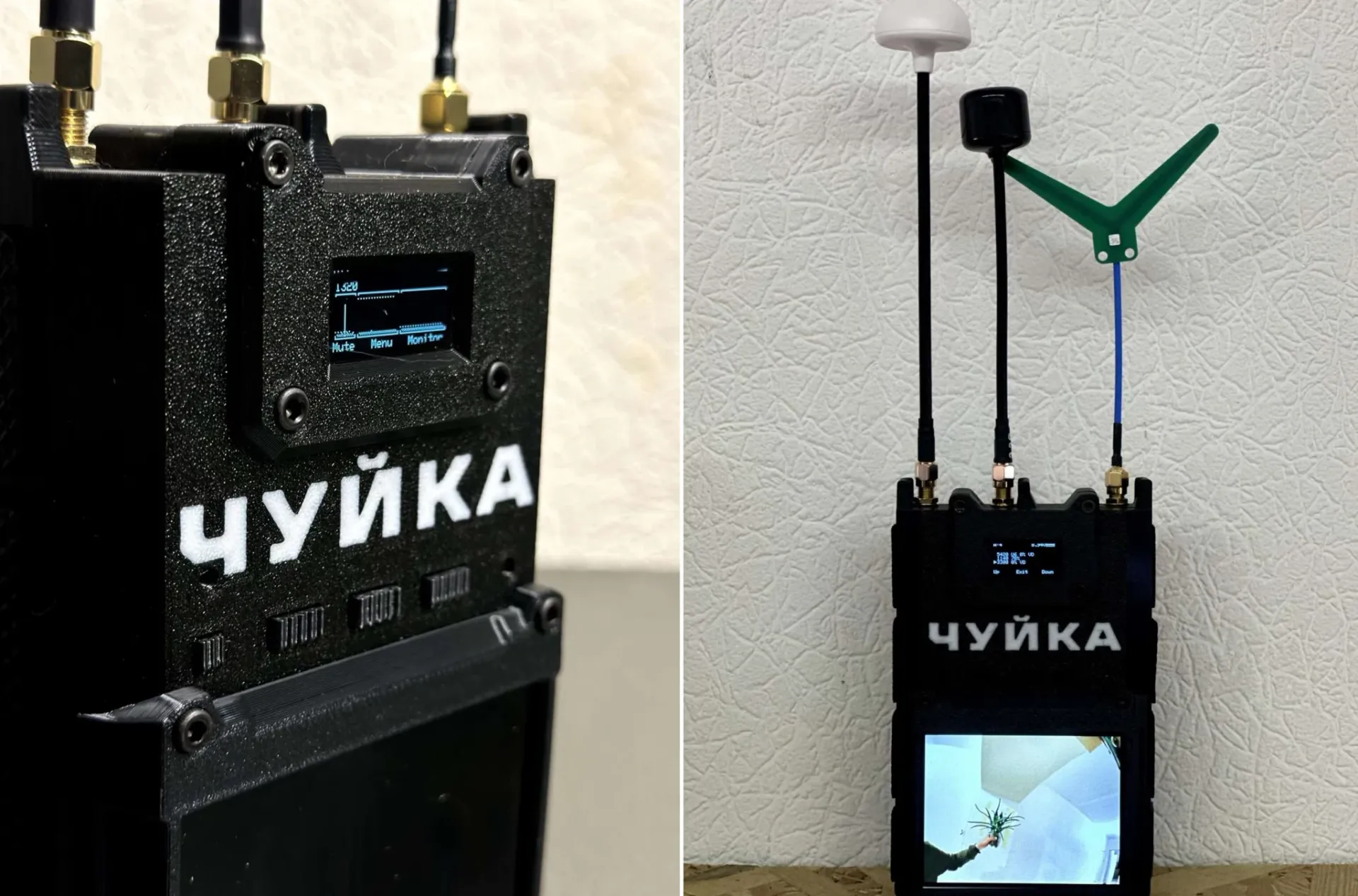
If the devices disrupt military operations, for example, it would jeopardize humanitarian neutrality.
Most seem to agree now that detectors don’t cause disruptions to the military. Like cars in traffic tuning into the same radio station, the drone is unaffected by the detector, and the pilot is none the wiser.
Beyond passive detection, some are already knocking drones from the sky using controversial radio jammers. U.N.-aligned organizations regard this with skepticism, if not dismay. Jamming blurs the distinction between combatants and humanitarians, the Safer Access trainers say. The argument in favor, as documented in a Truth Hounds investigation, is that this represents legitimate self-defense.
Though it’s appealing to use a new kit to counter a new threat, the systems are far from a silver bullet. Some drones are already impervious to both detection and jamming and focusing on handheld devices can distract people from their immediate surroundings.
Whatever their preferred solution, front-line workers perceive that outdated safety protocols and technological misunderstandings slow down adaptation. Debating behind closed doors doesn’t help either, they say.
One security coordinator determined to keep up is Cassie Blackett-Ord. Working for ActionAid, she argues for people working closest to the front line to be heard. Considering the pace of military innovation, she says, adaptation "is contingent upon having an open mind" and understanding the field.
Another international NGO — Nonviolent Peaceforce — published a report in January calling for drone detectors and training to be funded.
In its work, the organization says it comes up against basic misconceptions. This confusion isn’t limited to civilians. A Ukrainian military source recently complained that "most engineers and all pilots know nothing about radios and antennas."
To address this, Nonviolent Peaceforce sends people to the Safer Access training. They are in the early stages of launching an advisory group, which they say would facilitate informed debate.
East SOS signed Nonviolent Peaceforce’s call to mainstream drone detectors. Looking back, East SOS’s Bohaiov says that things are moving in "the right direction."
But where there is will, funding can fall short. Security costs are consuming a growing share of NGO budgets — a reality he believes decision-makers have yet to fully grasp. Beyond drone detectors, organizations must invest in training, bulletproof vests, and armored vehicles.
"We can even provide our own anti-drone training for other people," Bohaiov says. "We could do it, we have a lot of experience, but we need resources for it."
Author's note:
Hi, this is Liliane Bivings, the editor of this article. Thank you for reading. The front lines of Russia’s war against Ukraine are becoming increasingly dangerous each day, making the work of humanitarian workers and journalists ever more difficult. But we at the Kyiv Independent remain committed to finding ways to tell these stories and to bringing the truth to the world.
If you'd like to support our work, please consider becoming a member of the Kyiv Independent so we can continue to publish more stories like this one.