Does Russia or China actually threaten Greenland? Experts say Trump's warnings don't match reality
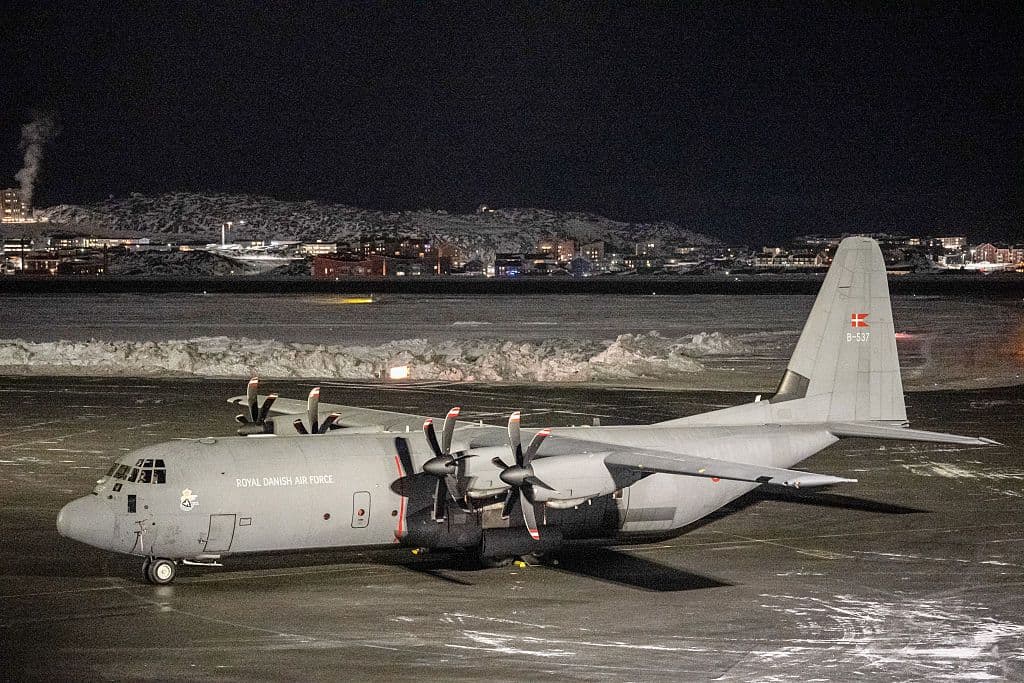
A Royal Danish Air Force (RDAF) Lockheed C-130J Super Hercules is parked on the tarmac at Nuuk international airport on Jan. 15, 2026 in Nuuk, Greenland, the day after it arrived transporting Danish military personnel. (Alessandro Rampazzo/AFP via Getty Images)
 on Google
President Donald Trump has been fixated on controlling Greenland, suggesting that U.S. ownership of the island is crucial in blocking Russian and Chinese expansion.
"If we don't go in, Russia's going to go in, and China's going to go in," Trump said.
The White House reinforced that message on Jan. 14, posting an image on X that cast the island as facing a stark choice — alignment with the U.S. or with a Russia-China bloc.
Greenlandic and Danish officials have rejected that premise outright, ruling out any takeover and warning that threats of force would amount to coercion against NATO territory.
Security experts and European officials say Greenland faces no immediate military threat — raising a pointed question: are Trump's warnings about Greenland genuine security concerns, or a pretext for a more unilateral U.S. push in the Arctic?

An old idea, newly escalated
Trump's Greenland obsession is not new. He first suggested acquiring the island in 2019, prompting outright rejection from Copenhagen and Nuuk.
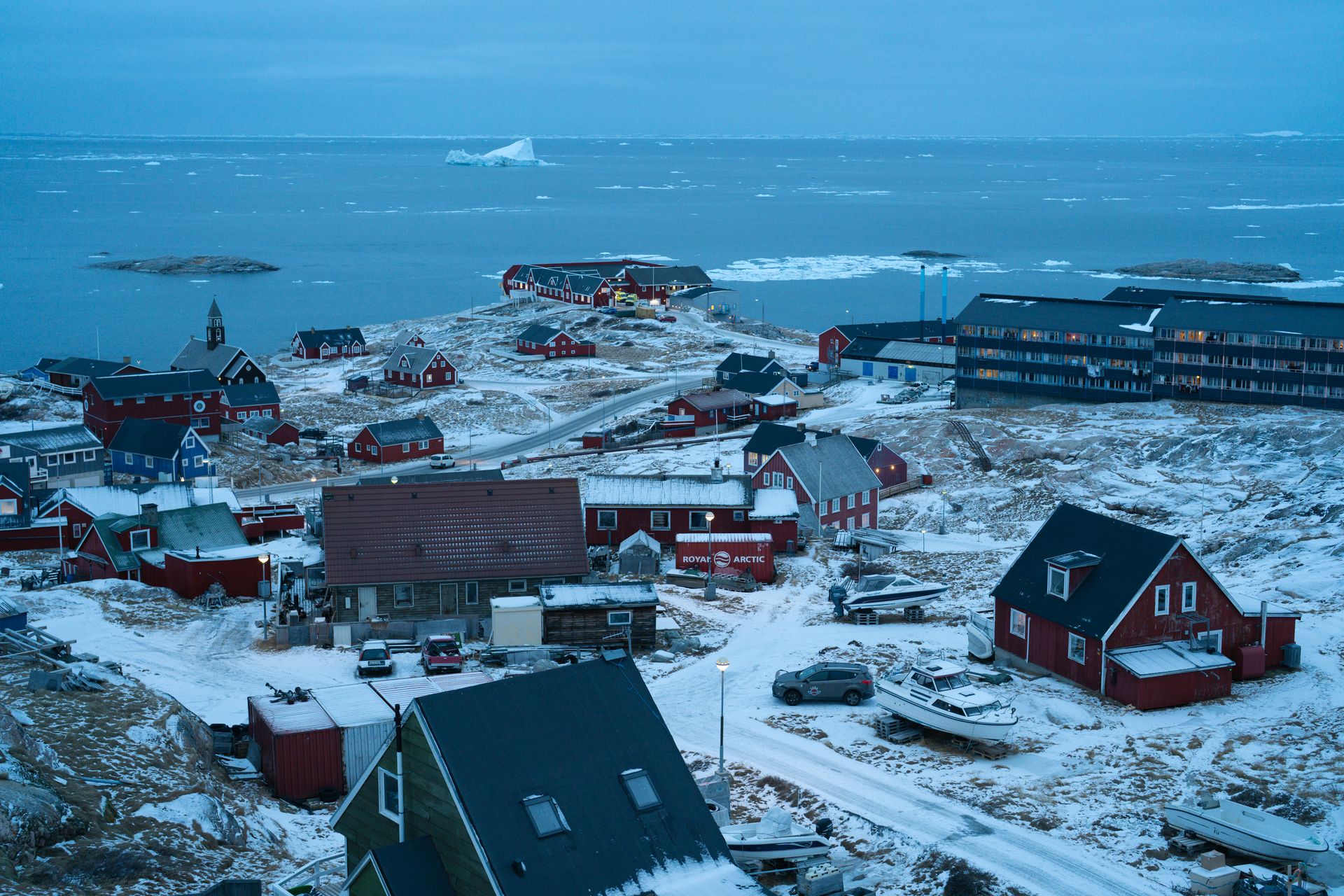
Greenland is a vast Arctic territory between North America and Europe and the world's largest island outside the continents. It spans roughly 2.2 million square kilometers, several times larger than Germany, yet is home to only about 56,000 people, most of them Indigenous Inuit.
Its location gives it outsized value for missile early-warning systems and for monitoring military and commercial activity across the Arctic — a region gaining significance as melting ice opens new shipping routes and economic opportunities.
Since returning to the White House last year, Trump has sharply intensified his rhetoric, repeatedly saying the United States would acquire Greenland "one way or the other."
After a successful military operation in Venezuela that resulted in the capture of dictator Nicolas Maduro, Trump opened up to using military force, against foes and allies alike.
"There's not a thing that Denmark can do about it if Russia or China wants to occupy Greenland," Trump said on Jan. 14. "But there's everything we can do — we found that out last week with Venezuela. I can't rely on Denmark being able to fend themselves off."
Trump then on Jan. 17 took the threats a step further, announcing the U.S. would impose 10% tariffs on eight NATO allies — Denmark, Norway, Sweden, France, Germany, the U.K., the Netherlands, and Finland — until "a deal is reached for the complete and total purchase of Greenland."
The tariffs will go into effect on Feb. 1 and increase to 25% on June 1, he said.
Trump cast the sale of Greenland as a matter of global security.
"China and Russia want Greenland, and there is not a thing that Denmark can do about it," he wrote on TruthSocial. "They currently have two dogsleds as protection, one added recently. … This is a very dangerous situation for the Safety, Security, and Survival of our Planet."
Russia, China, and Arctic reality
While Danish officials acknowledge that the Arctic security environment is changing, they insist that Trump's conclusions are overstated.
Danish Foreign Minister Lars Lokke Rasmussen said he shares concerns about Greenland's vulnerability to growing interest, but stressed that Denmark is already responding.
"We definitely share the concern that the Arctic is not any longer a low-tension region," he told Fox News, pointing to nearly $15 billion invested last year in Greenland's capabilities.
Experts say that broader concern does not translate into an imminent threat.
"There is no serious or immediate security threat to Greenland from Russia or China that would justify U.S. talk of using force," Fabian Zuleeg, chief executive of the European Policy Center, told the Kyiv Independent.
Moscow and Beijing do have interests in the Arctic, Zuleeg said, but those interests are being managed through existing diplomatic, economic, and security mechanisms.
"Framing this as an urgent military threat is therefore misleading."
Others say Trump's warnings may reflect anxiety over longer-term trends rather than an immediate danger. Rebecca Pincus, a senior fellow at the Foreign Policy Research Institute, pointed to China's research icebreakers, which have made regular Arctic deployments.
Greenland occupies an important position, particularly in relation to Russian undersea capabilities, Pincus said. Still, she added that there is no immediate threat to the island.
Justina Budginaite-Froehly, a nonresident senior fellow at the Atlantic Council's Europe Center, said the Greenland debate should be seen through the lens of intensifying great-power competition in the Arctic, not fears of an imminent seizure.
"The issue is not the physical seizure of Greenland by Russia or China, but the risk that insufficient Western presence there could weaken the ability of Europe and the U.S. to monitor and deter Russian and Chinese activity in the broader Arctic region," she said.
European officials note that Greenland, as part of a NATO member state, is protected under Article 5, so any attempt by Russia or China to seize it — as Trump suggested — would trigger a full alliance response.
What Washington actually wants
Analysts say U.S. interests center on security and resources, with China and Russia used in rhetoric as a ploy.
"The two main U.S. interests in Greenland are the radar base at Pituffik, which is part of the NORAD early-warning system, and the island's strategic mineral deposits," Pincus said.
The Pituffik base plays a critical role in NORAD, the joint U.S.-Canadian command responsible for detecting and tracking potential missile threats across North America, particularly from Russia.
Preventing China from gaining control over Greenland's mineral resources is also a key concern for Washington and its allies.
Zuleeg argued that U.S. security concerns are being exaggerated to justify a more unilateral and coercive approach.
Washington already holds extensive basing and surveillance rights on the island and could expand its military presence through cooperation with Danish and Greenlandic authorities, without resorting to threats.

High costs for NATO unity
While Trump's warnings dominate headlines, analysts say the potential costs of U.S. action would be steep.
For NATO, the sudden focus on Greenland has become an unwelcome distraction. Since Russia launched its full-scale invasion of Ukraine in 2022, the alliance has focused on strengthening its eastern flank amid fears Moscow could target another member state.
Trump's aggressive push risks undermining that unity. Analysts warn it could weaken NATO's credibility and cohesion, turning an Arctic security debate into a source of internal tension.
"It would undermine Danish and Greenlandic sovereignty, fracture NATO unity, and fatally weaken the moral and political basis for supporting Ukraine's fight for freedom," Zuleeg said.
More broadly, he said, it risks normalizing the idea that great powers can seize or pressure other countries for strategic gain, accelerating the erosion of international norms.
Russia has reacted approvingly to Trump's rhetoric. Former Russian President Dmitry Medvedev sarcastically urged Trump to annex Greenland quickly, highlighting Moscow's interest in Western divisions.
In the end, Greenland remains strategically important but far from a crisis zone.
Trump's warnings may reflect anxieties over the Arctic's future more than the danger now — and European officials say that diplomacy and alliances should address these challenges.