With Iran's uprising suppressed, Trump signals that military strikes are back on the table
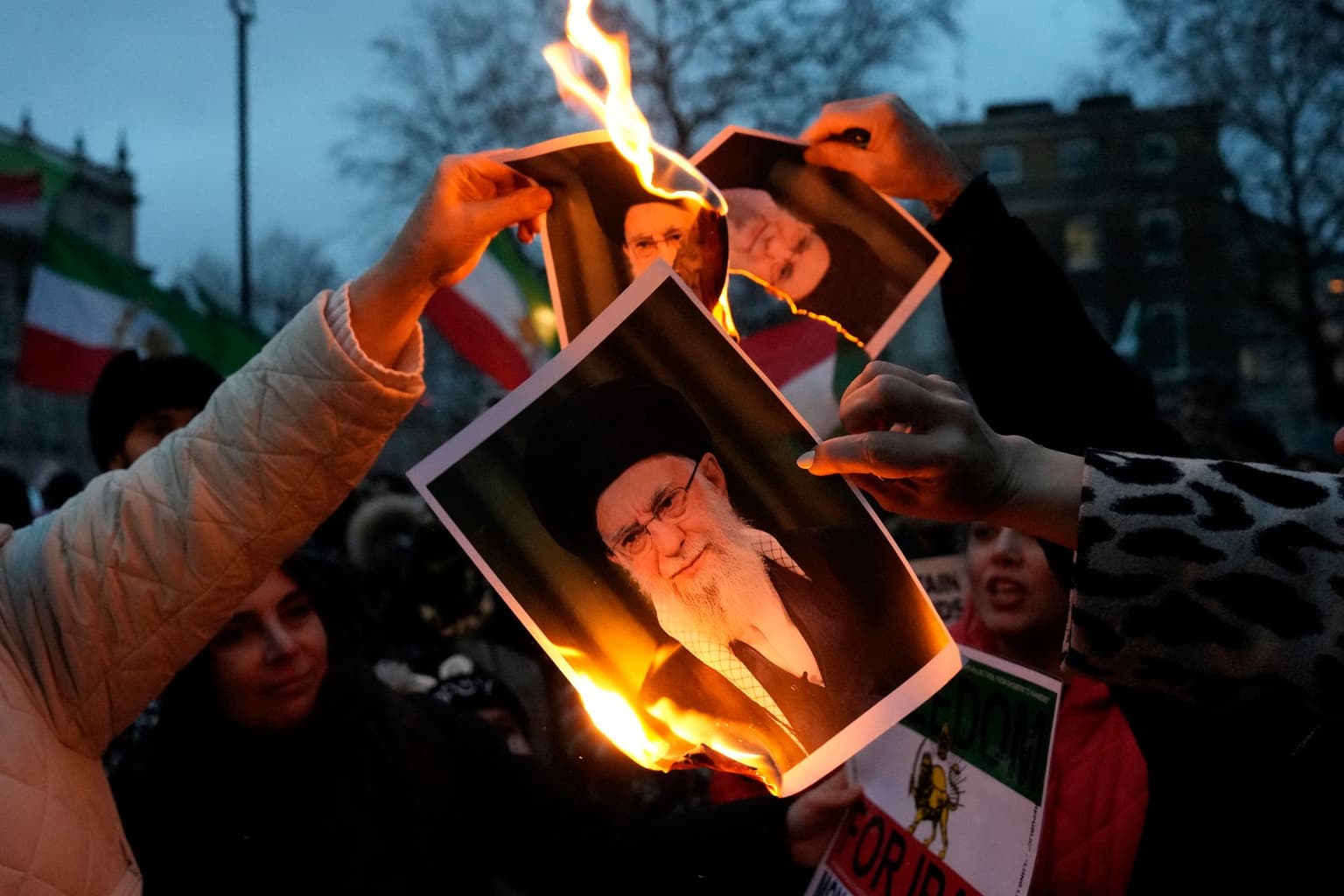
Protesters burn images of Iran’s Supreme Leader Ayatollah Ali Khamenei during a rally in solidarity with Iran’s uprising on Whitehall in central London, U.K., on Jan. 11, 2026. (Carlos Jasso / AFP via Getty Images)
 on Google
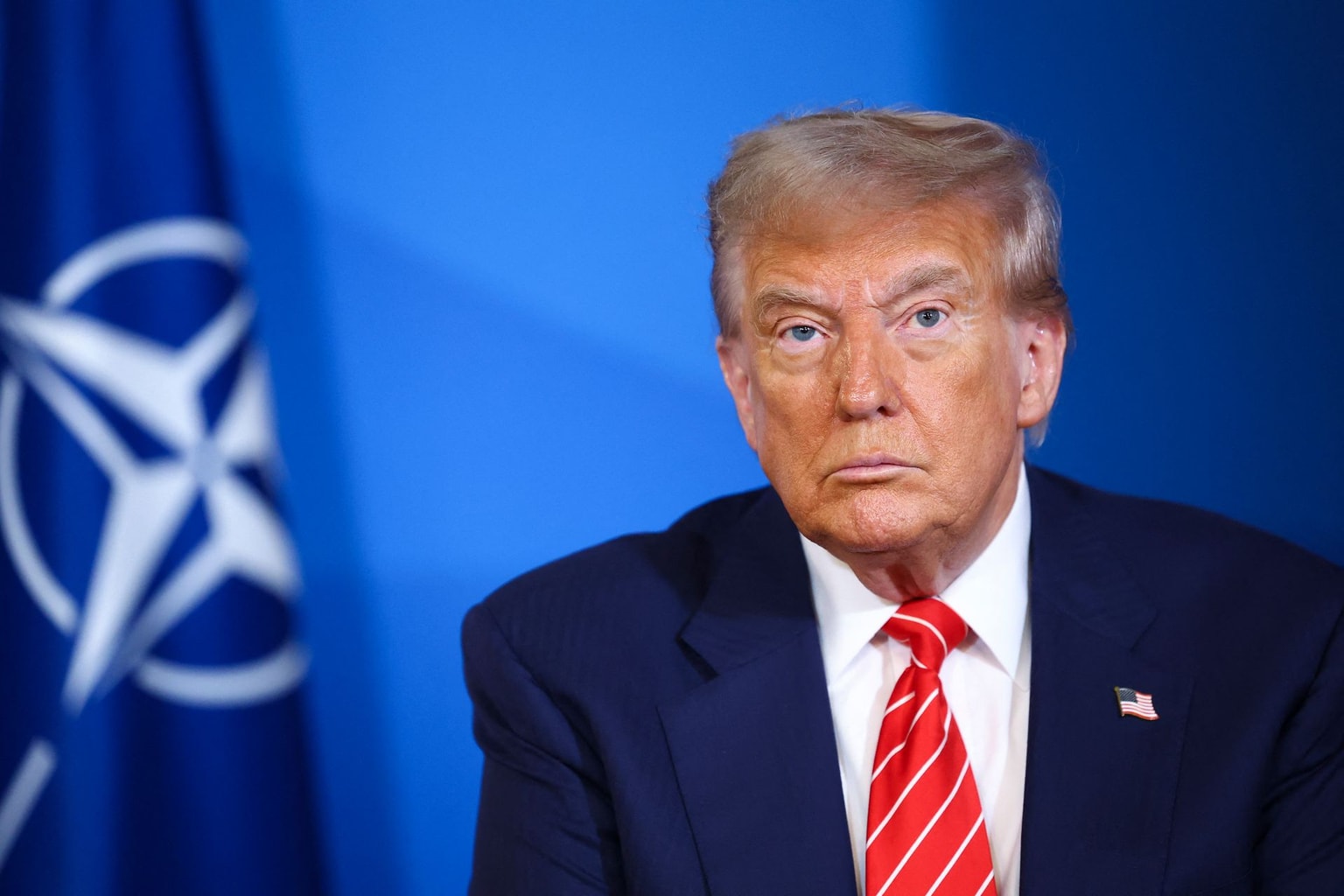
U.S. President Donald Trump issued another ultimatum to Iran on Jan. 28, threatening to strike the regime if it does not agree to a deal on limiting its nuclear weapons program.
Earlier in January, Iran was rocked by nationwide protests fueled by high inflation and the sharp depreciation of the Iranian rial. The protests quickly took a political turn, with demonstrators calling for the removal of Supreme Leader Ayatollah Ali Khamenei.
The scale of the unrest was unusually broad, with demonstrations reported in more than 100 cities and towns, involving tens to hundreds of thousands of people. At the height of the protests, Trump urged the demonstrators to continue their effort, adding that "help is on its way."
The protests were crushed, and thousands were killed by the Iranian regime, while Trump has been accused of effectively betraying the protesters.
The U.S. has likely postponed attacks on Iran due to a lack of U.S. forces in the region at the time of the protests, the reluctance of regional powers to get involved, and doubts over the efficiency of such attacks, analysts say.
At the same time, a U.S. military buildup in the Middle East continues, indicating that an attack is likely to happen, experts say.
"It is highly likely that a strike on Iran will indeed be carried out," Serhiy Danylov, an expert at Ukraine's Association of Middle East Studies, told the Kyiv Independent. "It's possible that a strike might be chosen even with full awareness that it won't lead to the immediate collapse of the regime — simply in order to fulfill Trump's promise, so that he can announce another victory."

Iran's largest massacre
The demonstrations in Iran peaked on Jan. 8-9, when hundreds of thousands took to the streets in one of the largest uprisings in Iran's modern history.
According to Iran's Human Rights Activists News Agency, security forces killed at least 6,092 protesters, and the number of deaths under investigation is 17,091.
Time reported on Jan. 25, citing Iranian Health Ministry sources, that 30,000 people could have been killed. According to the TV channel Iran International, 36,500 were murdered.
Several weeks after the killings, Trump said on Truth Social that "a massive Armada is heading to Iran" and is ready to "rapidly fulfill its mission, with speed and violence, if necessary."
"Hopefully Iran will quickly 'come to the table' and negotiate a fair and equitable deal — NO NUCLEAR WEAPONS," Trump wrote. "As I told Iran once before, MAKE A DEAL!"
"The next attack will be far worse!" Trump added, comparing a future strike to a U.S. attack on Iranian nuclear facilities in June 2025.
CNN reported on Jan. 29, citing its sources, that the Trump administration was considering a strike on Iran after preliminary discussions over limiting the country's nuclear and ballistic missile programs failed to make progress.
The U.S. may attack Iranian leaders and security officials responsible for the killings, as well as nuclear sites and government facilities, according to the sources.


No military assets
One reason for the delay in Trump's reaction is that "when the protests culminated in early January, the United States didn't have many military assets in the region," Aron Lund, a Middle East analyst at Century International, told the Kyiv Independent.
"The carrier group that had been in place previously was long since diverted to Venezuela," he added.
The Trump administration's indecisiveness can also be attributed to doubts over the effectiveness of strikes.
"The military utility of strikes is also not clear," Charles Kupchan, a senior fellow at the Council on Foreign Relations, told the Kyiv Independent. "What would the targets be? Would Washington aim at regime change, or just try to stop the Iranian regime from killing protesters?"
Reluctance among key players
Iran's Arab neighbors, allied with the U.S., are not happy about the prospect of a war either.
"Several U.S. allies also lobbied Trump to avoid clashes with Iran, as they feared being targeted by Iran in response," Lund said. "The United States did not have sufficient anti-missile defenses on site to protect all these nations, in the event of a serious conflict."
Israel, a major U.S. ally and Iran's archenemy, is also non-committal.
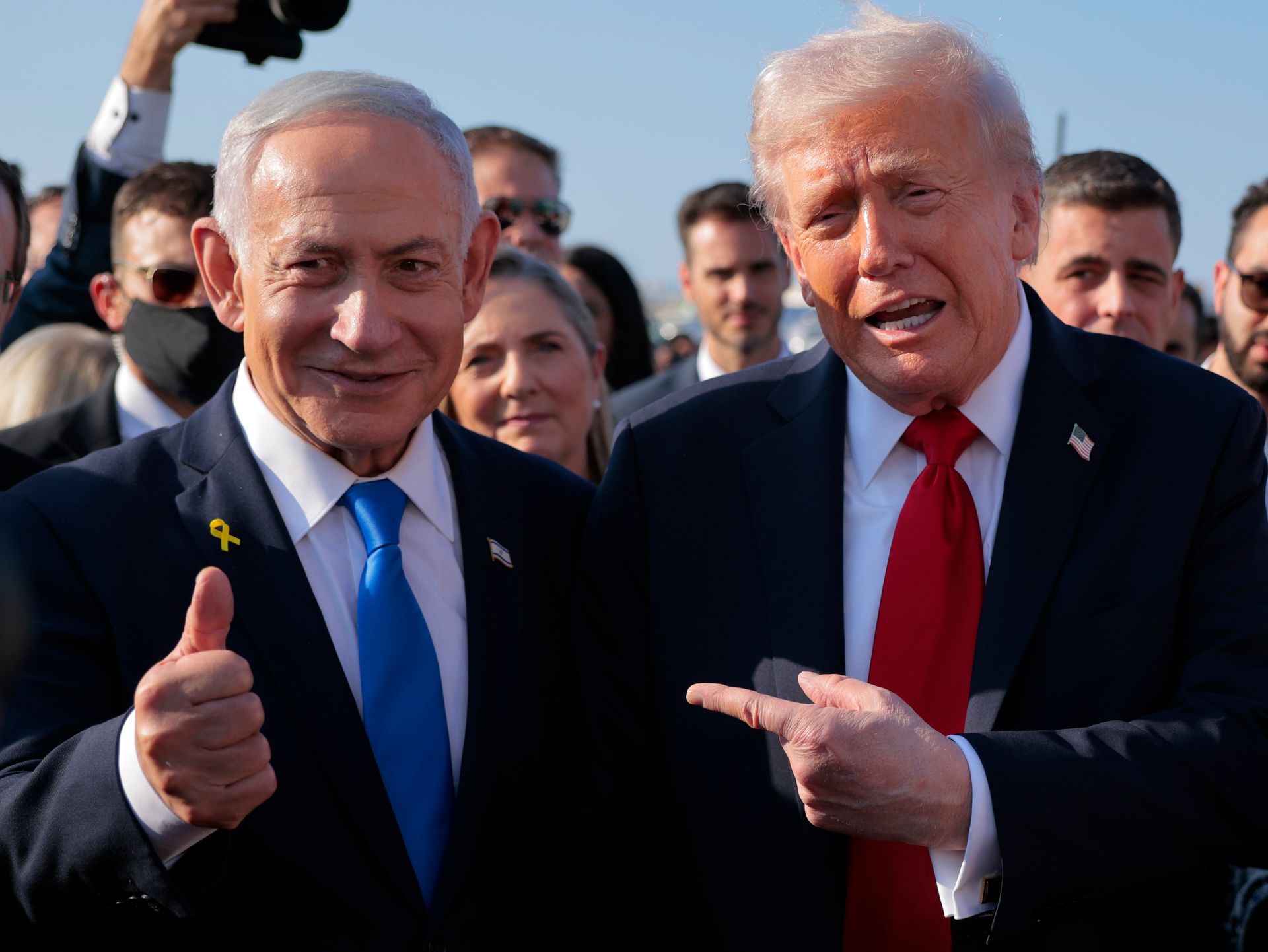
The New York Times reported on Jan. 15, citing its sources, that Israeli Prime Minister Benjamin Netanyahu had asked Trump to delay a possible strike on Iran.

Olli Ruohomäki, a Middle East expert at the Finnish Institute of International Affairs, argued that Israel has been cautious because Iran has "vouched for revenge in case Israel attacks."
Danylov said that Israel "wants the Americans to carry out the attack, they really want the regime to be overthrown, but they don't really want to take part in it themselves because the outcome is uncertain."
"To imagine that the leadership would simply be bought off or intimidated — for example, that the supreme leader would be eliminated and the others would effectively shift to cooperation — is, for now, impossible to conceive in Iran."
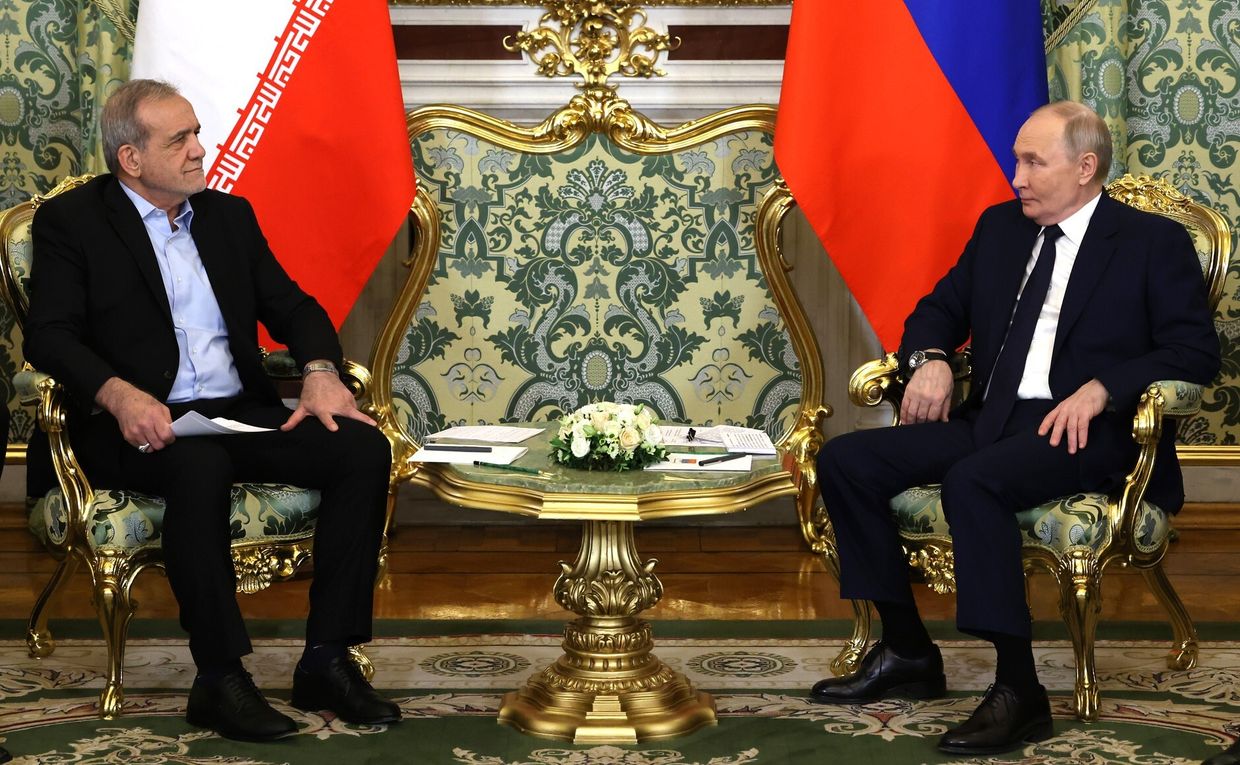
Russia, a major ally of Tehran, has offered itself as a mediator between Israel, the U.S., and Iran.
On Jan. 16, Russian President Vladimir Putin spoke with Netanyahu and Iranian President Masoud Pezeshkian during back-to-back phone calls.
Analysts say, however, that the Kremlin's influence on the situation in Iran has been negligible.
"I'm sure that Putin does not want to see regime change taking place (in Iran), because he has already lost Syria and Venezuela," Ruohomäki said. "But it's not like Russia is coming to the rescue."

Military buildup
Despite the delays, in recent weeks there has been a military buildup around Iran, with the U.S. bringing aircraft and ships to bases in the region. On Jan. 26, a U.S. aircraft carrier and its supporting warships arrived in the Persian Gulf.
The buildup indicates that an attack on Iran is likely, according to experts.
Danylov argued that the U.S. could carry out a "retributive strike targeting those responsible for the mass executions and killings of people on the streets of Iranian cities: that is, strikes on Islamic Revolutionary Guard Corps (IRGC) headquarters, Basij units, and pinpoint eliminations of those held responsible."
Ruohomäki compared the ongoing buildup in the Middle East to "the buildup of naval forces and military assets in the Caribbean before the U.S. attack (on Venezuela on Jan. 3) took place."
He believes that, if Trump decides to strike Iran, the attacks will likely be "symbolic surgical strikes" that "would not change the balance in favor of the demonstrators."
Sascha Bruchmann, a military analyst at the Middle East office of the International Institute for Strategic Studies, said, however, that "the current buildup is not yet indicative of an immediate strike."

"While capabilities are moving into the Middle East, I think the capacity is not there," he told the Kyiv Independent. "My assessment is that what we are seeing as of today is not enough to defend U.S. assets, interests, and allies in the Middle East. It looks to me as if the U.S. military is preparing options, but it is unclear whether a decision has been taken or which decision that would be."
Bruchmann said that, if the U.S. wants to "degrade the IRGC and give the protests room to breathe," one aircraft carrier "might not be enough."
"It all depends on defections inside Iran's security system, which we haven't seen this far, and whether the protests can be rekindled once again," he added. "The U.S. can weaken the regime and its forces, but it is hard to overthrow a government from the air."
Venezuela scenario
Instead of trying to topple the regime completely, Trump may decide to decapitate it and make it more friendly to the U.S., similarly to Venezuela, analysts say. Since the U.S. kidnapped President Nicolas Maduro on Jan. 3, the Venezuelan regime has cooperated with the Trump administration.
"What might happen in a place like Iran is not that democratic forces rise to power, but rather that the military takes over," Ruohomäki said.
The new regime could "lessen antagonism against Israel and the West," he added.
However, this will be more challenging than in Venezuela.
"At the moment, this is hardly realistic — the regime's character is entirely different, and its power and capacity, especially military capacity, are different (from Venezuela)," Danylov said. "The regime is more consolidated. To imagine that the leadership would simply be bought off or intimidated — for example, that the supreme leader would be eliminated and the others would effectively shift to cooperation — is, for now, impossible to conceive in Iran."
But despite the challenges, the regime is doomed, according to Danylov.
"The protests have been crushed by gunfire, but at any opportunity, they will resume," he said. "Within the elite, they fully understand that this system has no future, and everyone realizes this is a dead end. The system can no longer function this way."