China, Iran help Russia prop up economy in occupied Ukrainian territories, report says
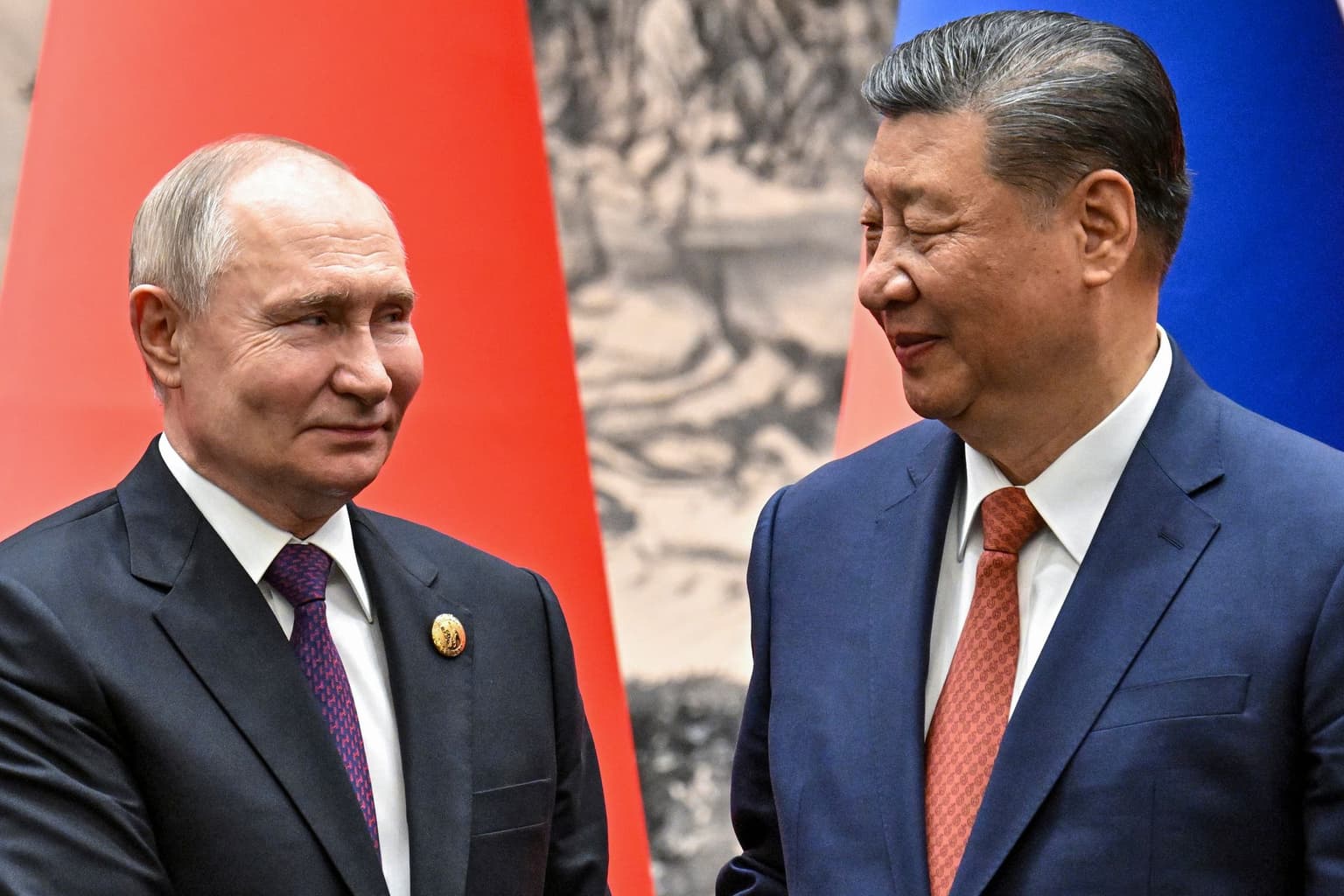
Chinese President Xi Jinping (R) and Russia’s President Vladimir Putin (L) in Beijing, China, on May 16, 2024. (Sergei Bobylev / Sputnik / Kremlin Pool / AP)
 on Google
The authoritarian regimes of China, Iran, and North Korea are actively engaged in reshaping the economy within Russian-occupied territories in Ukraine, a new report has revealed.
The Eastern Human Rights Group and the Institute for Strategic Research and Security published an analytical report last week that features the role of Russia's allies in the economic reorientation of all Ukrainian territories occupied by Russia since 2014 and during the full-scale invasion.
The report indicates that Russia has been substituting Western technology and financial systems in Crimea, occupied parts of Luhansk, Donetsk, Zaporizhzhia, and Kherson oblasts, with the backing of China, Iran, and North Korea, to circumvent international isolation and sanctions from Europe and the United States.
Vera Iastrebova, the head of the East Human Rights Group, told the Kyiv Independent that Russia aims to retain control over the occupied territories but requires external allies willing to operate outside "standard international rules" to compensate for "Russia's own weaknesses."
"The entry of China, Iran, and North Korea to the temporarily occupied territories is not a sign of (Russia's) strength but a sign of forced adaptation," Iastrebova said.
"It forms a new model of occupation economy — opaque, militarized, dependent on shadow routes, cheap politically motivated decisions, and external suppliers who are not interested in the region's development but only in its functional exploitation."
She said that that in the occupied territories, China, playing the biggest role, acts as a technological and industrial contractor, Iran serves as a partner for shadow schemes and alternative logistics, and North Korea is more of a symbolic political ally within anti-Western solidarity.
"This is not just a matter of foreign trade or equipment import," Iastrebova said.
"It is an attempt to fundamentally change the long-term civilizational, technological, and political trajectory of these territories, complicating their future return to the Ukrainian and European legal, economic, and humanitarian space."
China
China is viewed as the primary player in economic cooperation within the occupied territories. The report states that China opted for "de facto integration without de jure recognition" of the regions.
While China is officially neutral, 17 Chinese companies identified in the report were in contact with the occupational authorities. Chinese corporations, such as Huawei, SANY, and China General Technology Group (Genertec), enter the occupied territories through Russian "proxy firms."

Furthermore, mobile connections in occupied territories are largely dependent on Chinese equipment — about 6,000 mobile phone base stations were deployed in the occupied southern and eastern regions using Chinese equipment.
The occupied territories are also experiencing "yuanization," with the Chinese yuan emerging as the second-largest currency, and businesses using covert methods such as WeChat's red envelopes, a mobile application developed by the Chinese technology company Tencent, and the USDT cryptocurrency to make payments.
The report states that 79 bank branches in the occupied territories are officially selling cash yuan.
Moreover, a Chinese representative openly participated in the III New Silk Road Forum in the occupied Crimean Peninsula in October 2025. The event was attended by representatives of large and medium-sized businesses in China and local officials. The goal of the forum was to strengthen economic cooperation and "enhance Crimea's international image."
Iran
Unlike China, cooperation with Iran is still in its early stages, according to the report. Iran's main goal is to break the export isolation of occupied territories by moving seized Ukrainian grain and coal through its secret logistics networks.
The proxy Luhansk People's Republic's Ministry of Industry and Trade announced plans to export casein, a milk protein, to the Iranian market. This underscores Iran's function in taking in agricultural by-products that the occupied territories are now unable to sell to the West.

Also, Iranian companies, such as the RI-Group, have publicly announced intentions to invest in the industry, agriculture, and construction sectors of Russia's "new regions."
Iastrebova stated that if international sanctions pressure on Russia continues or worsens, Moscow will be forced to increasingly seek regimes willing to operate under conditions of isolation and high reputational risks. In this context, Iran might expand its role in clandestine logistics routes, the supply of certain technologies, and schemes to bypass export restrictions.
North Korea
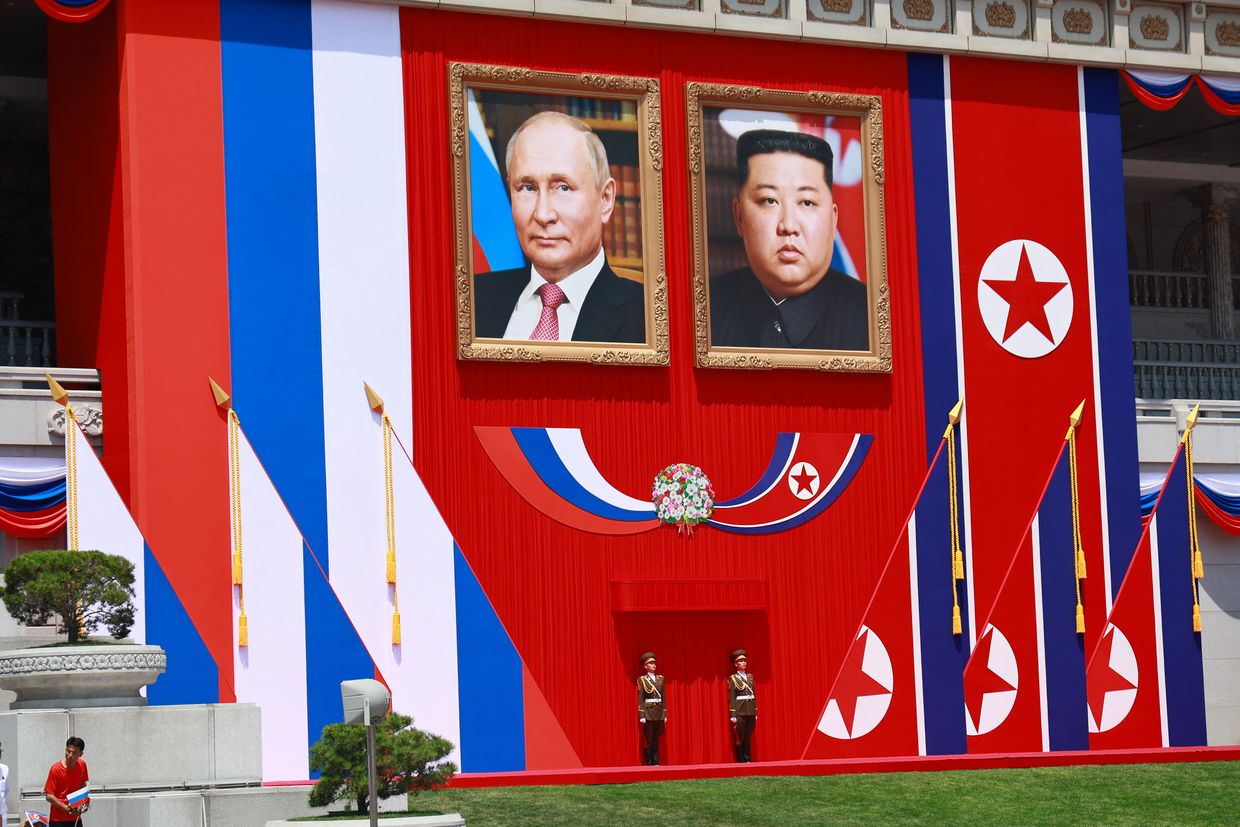
North Korea is one of the few countries to recognize Russia's sham referendums in occupied territories in September 2022. The so-called vote at gunpoint has been declared null and void by all countries that commented on the issue.

But their cooperation is primarily symbolic, involving youth delegation exchanges to Pyongyang and public celebrations in Donetsk featuring the North Korean flag.
In April 2025, delegates from the Russian youth organizations Young Guard and Volunteer Company, based in the occupied part of Donetsk Oblast, visited North Korea to formalize a cooperation agreement with local youth groups.
Iastrebova said that North Korea plays a special role in ideological support. She added that any external interaction with the occupied territories is used by Russia as propaganda to demonstrate that these territories are supposedly "not isolated," "integrated into an alternative international system," and have "external partners."
The impact on the occupied territories
According to Iastrebova, the long-term consequences of such economic involvement will be complex and deeply destructive for the occupied territories.
"It forms a new model of occupation economy — opaque, militarized, dependent on shadow routes, cheap politically motivated decisions, and external suppliers who are not interested in the region's development but only in its functional exploitation," she said.
Moreover, given the technological and infrastructural subordination of the occupied territories, Ukraine's deoccupation would require not only the political and legal restoration of control but also the large-scale dismantling of systems created with Russia's allies' participation.
read also
 Katie Marie Davies
 Kateryna Hodunova