Chart of the week: Ukraine sees its coldest January in 16 years
(Nizar al-Rifai/The Kyiv Independent)
 on Google
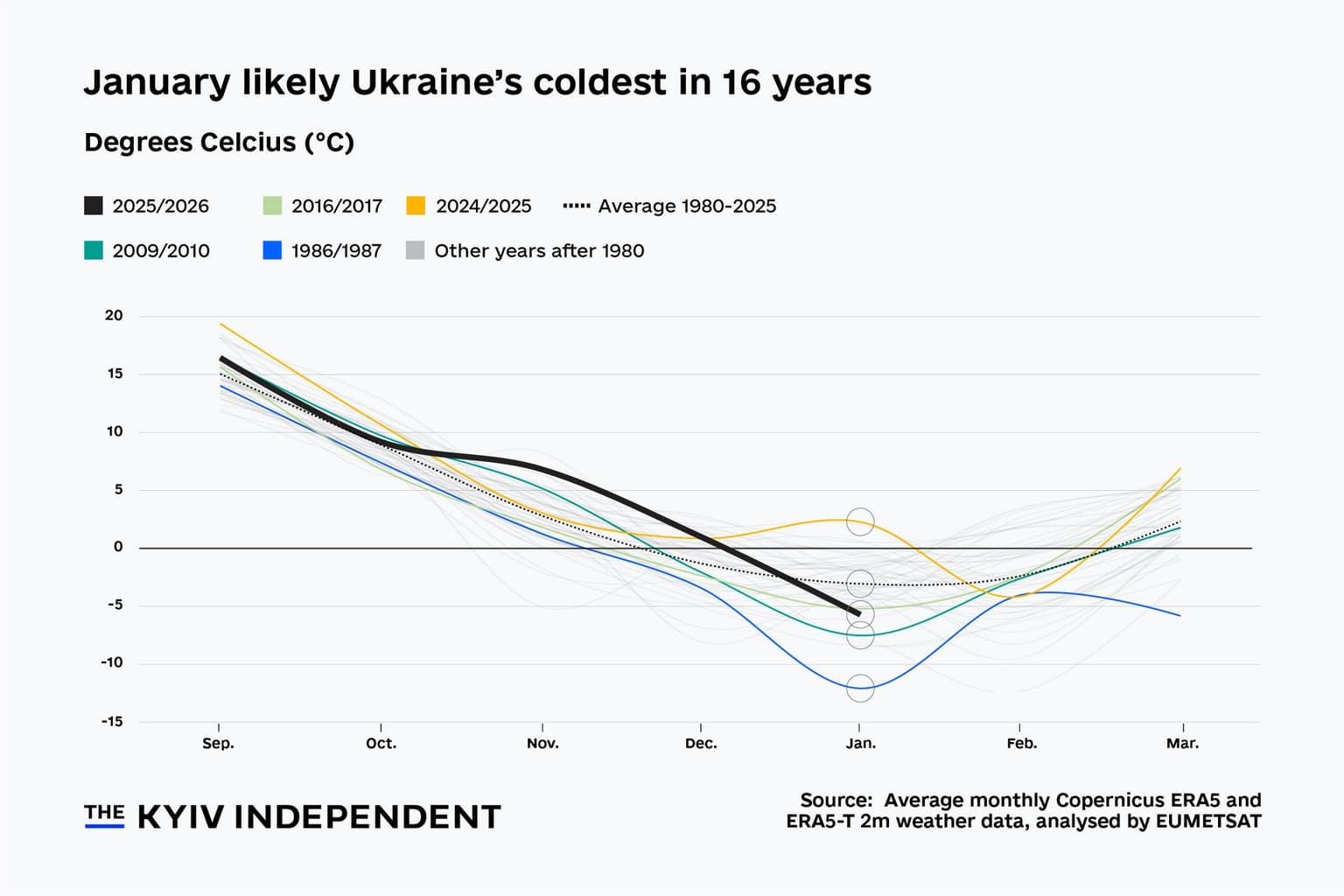
Last month was likely Ukraine’s coldest January since 2010, according to an analysis of preliminary Copernicus Climate Change Service weather data provided by Europe's EUMETSAT satellite agency.
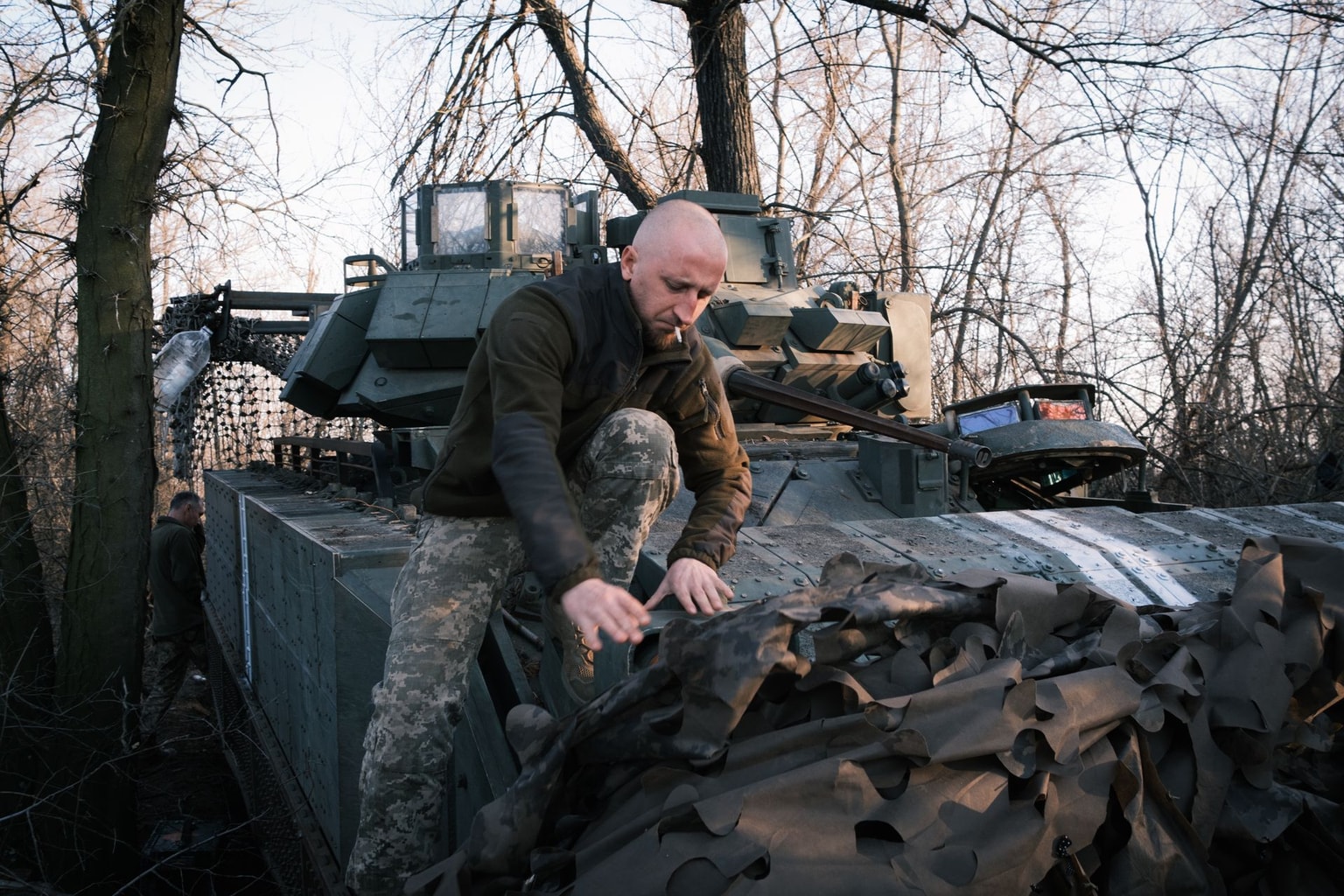
Temperatures in Ukraine last month reached reported lows of -20 degrees Celsius (-4 degrees Fahrenheit), rarely climbing above zero. Russian attacks on Ukraine's energy infrastructure that cut power, heating, and water across the country made people's homes dangerously cold. Pavements turned to ice-rinks, and trees froze solid.
The coldest spell came between Jan. 11-21, when average daily temperatures dropped to between -8.3 degrees Celsius (17 degrees Fahrenheit) and -12.6 degrees Celsius (9 degrees Fahrenheit), causing aid organizations to warn that the freezing conditions were worsening the humanitarian toll of the war.
Oxfam said Russia's attacks on Ukraine's energy infrastructure were "turning winter into a weapon," while Doctors Without Borders reported cases of hypothermia among civilians near the front line who were unable to "get warm in their homes."
Temperatures plunged again on Jan. 30-31, as a short and ambiguous halt on strikes was announced following a phone call between U.S. President Donald Trump and Russian President Vladimir Putin.

An analysis by EUMETSAT, which monitors weather, climate, and the environment, shows that January 2026 was markedly colder than in recent years, with an average temperature of -5.8 degrees Celsius (21.6 degrees Fahrenheit). That’s far colder than in the Januaries since 2022, when the lowest was -1.9 degrees Celsius (28.58 degrees Fahrenheit).
January 2025 was particularly warm, averaging 2.3 degrees Celsius (36.1 degrees Fahrenheit), the unseasonable weather helping to reduce strain on the energy system.
The last time January temperatures averaged around -5 degrees Celsius (23 degrees Fahrenheit) was a decade ago, in 2016 and 2017. Before that, the coldest January was in 2010, when the average temperature fell below -7 degrees Celsius (19.4 degrees Fahrenheit) during a coldwave across Europe.
Despite the frigid January, Ukraine’s climate is still warming. A very cold January actually fits that picture — scientists from Kyiv-Mohyla University found that climate change involves "increased temperature variability during winter." This means that it’s harder to guess what Ukraine’s winter weather will be like each year.
The cold weather last month didn’t go unnoticed among Ukraine’s farmers, but it isn’t all bad news. An analyst from the Ukrainian Agribusiness Club said that "significant frosts have been observed" in January. Still, they judged that "substantial snow cover" protected the winter crop, allowing it to continue its normal growing cycle.
The country remains in bleak mid-winter. The government plans for the cold to last until around April each year. Forecasts for February show another cold snap.