Any comparison of the US-Iran conflict to the Russia-Ukraine war is ignorant
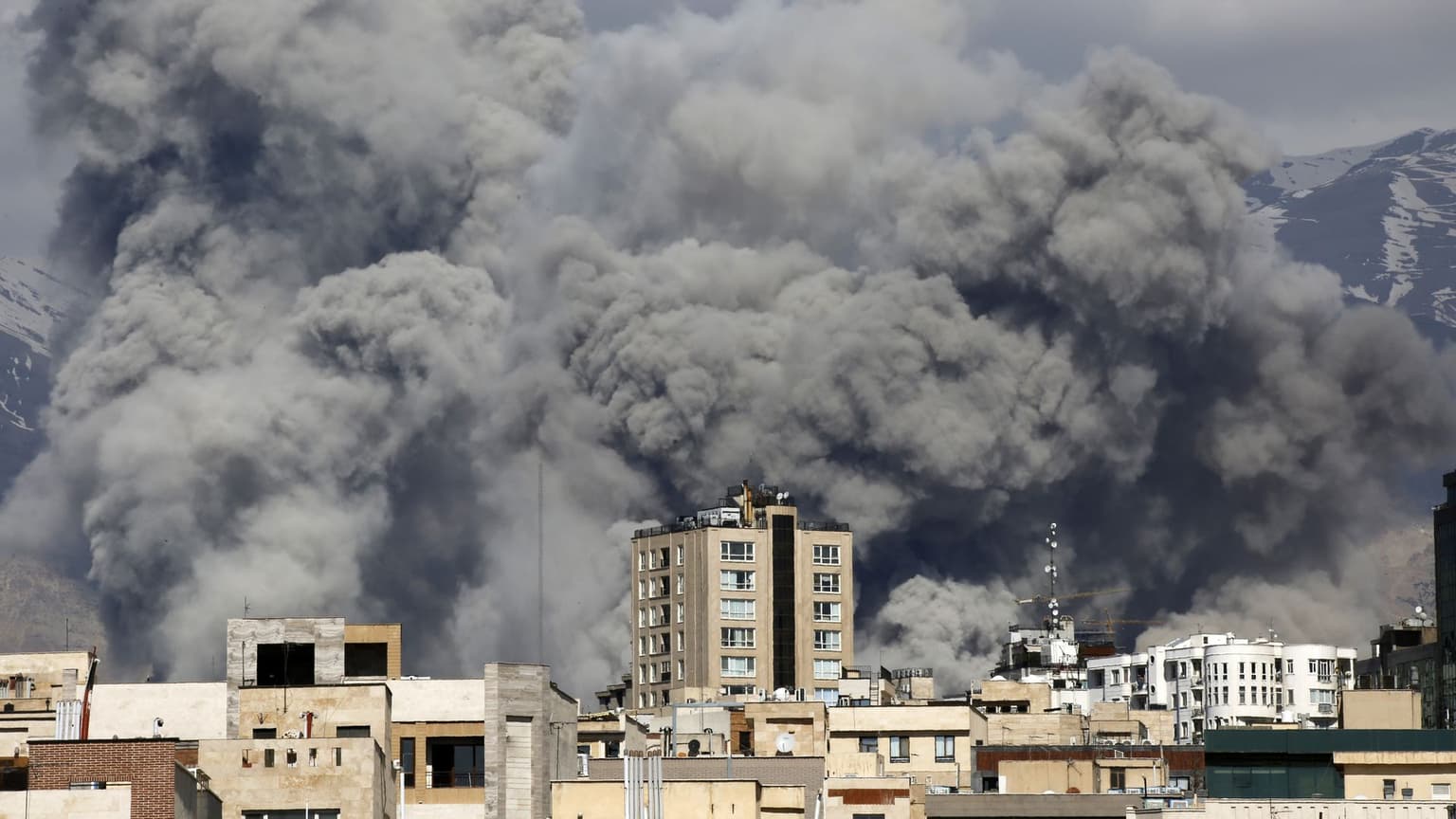
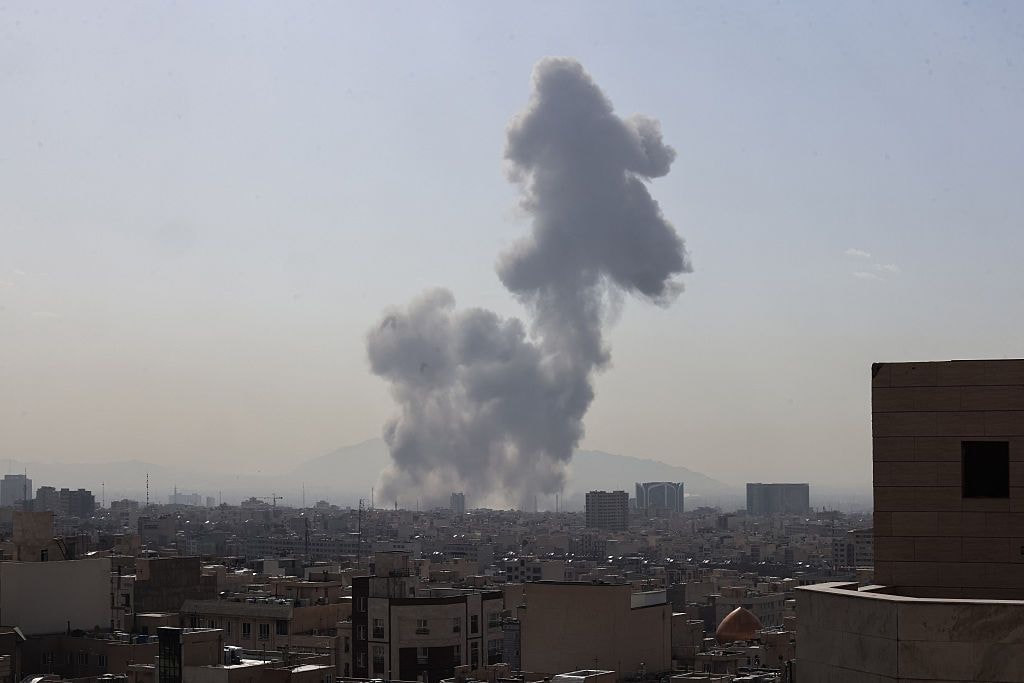
Smoke rises from the area after it was targeted in attacks as a series of explosions are heard in Tehran, Iran, on March 1, 2026. (Fatemeh Bahrami / Anadolu via Getty Images)

Michael Rubin
Senior fellow at the American Enterprise Institute
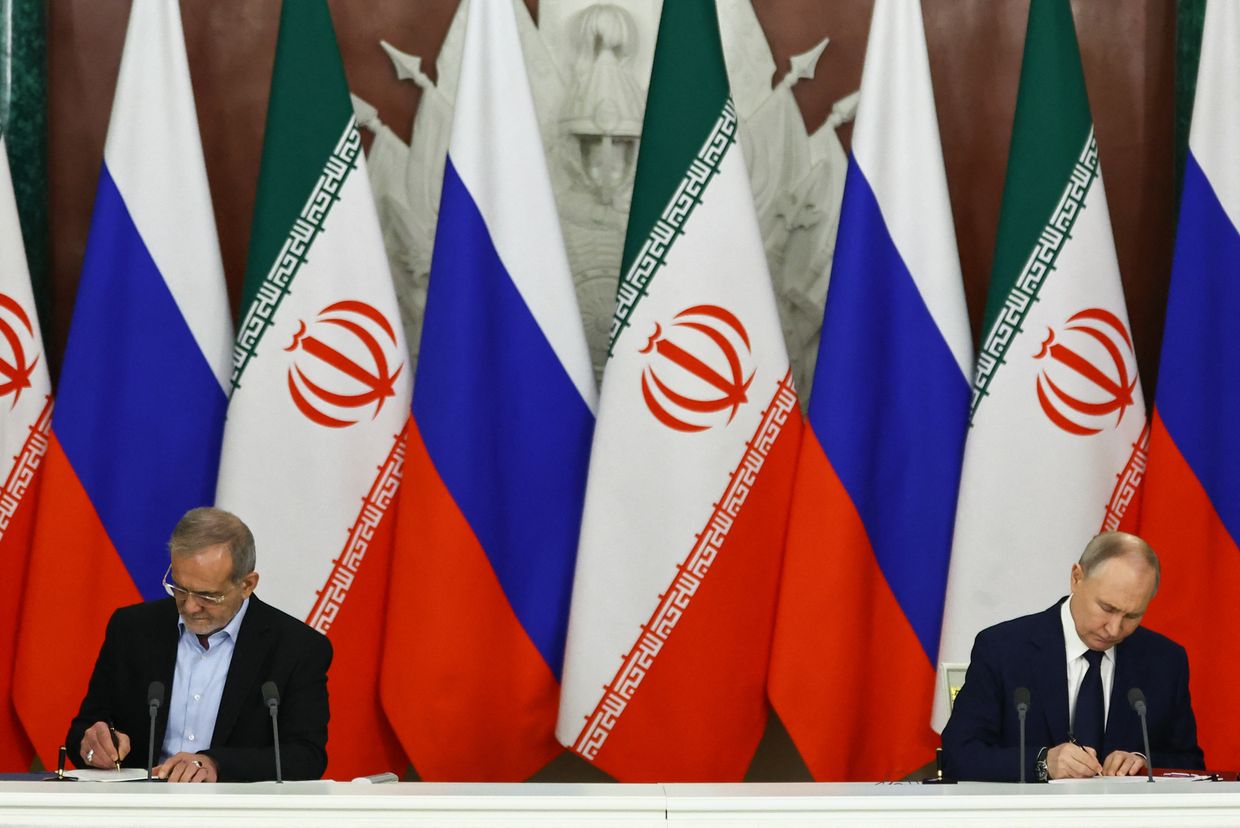
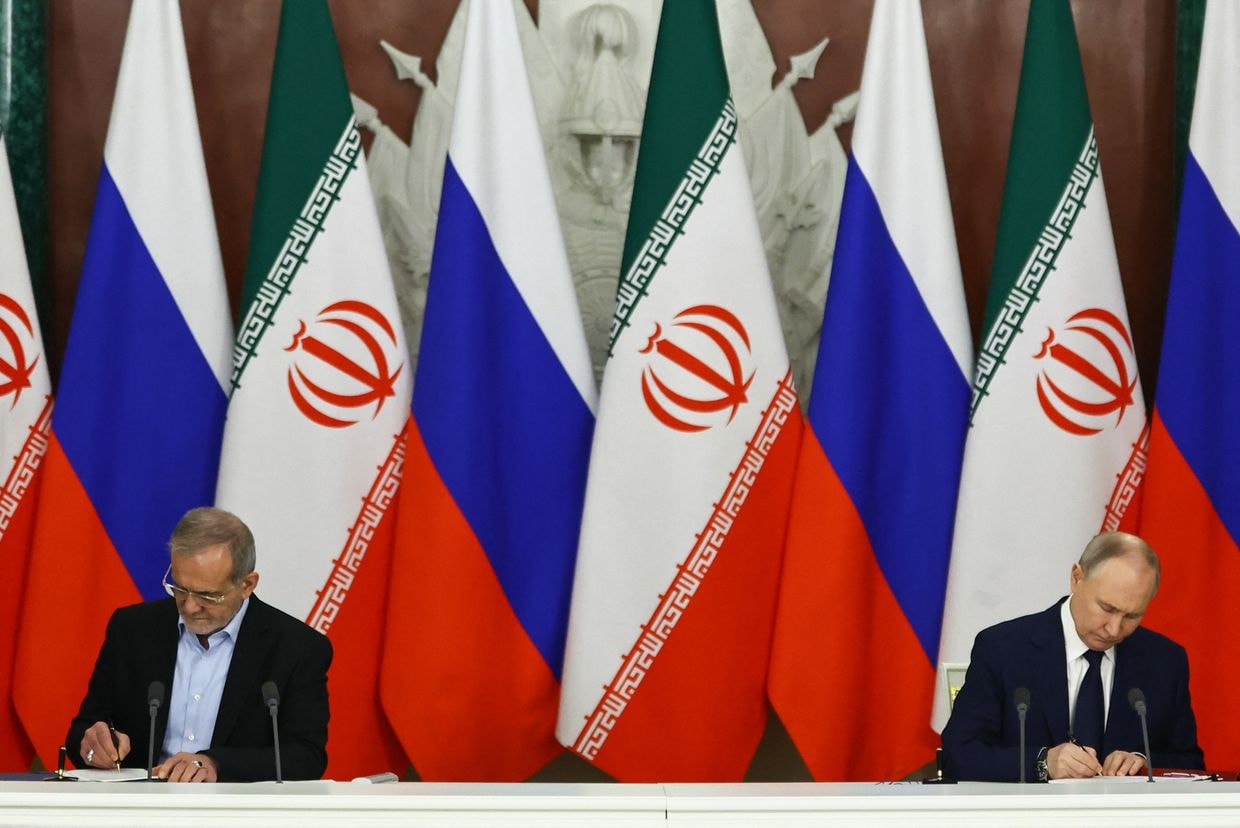
As President Donald Trump ordered U.S. forces to begin their assault on Iran, David Hearst, the editor-in-chief of the Middle East Eye, a Qatari-funded, Al Jazeera offshoot, declared, "There is a chilling but uncanny resemblance in the way Donald Trump is preparing to attack Iran, and the way Vladimir Putin invaded Ukraine."
It is an ignorant statement infused with moral confusion.
On July 12, 2021, Russian President Vladimir Putin published "On the Historical Unity of Russians and Ukrainians" in a Kremlin journal.
It was a masterclass in misinformation that would make Nazi propagandist Joseph Goebbels proud. He argued the name Ukraine referred only to Russia's periphery, and Ukrainian simply meant border guard. The idea that Ukraine's language, culture, and church were legitimate, he suggested, was the manifestation of external propaganda compounded by a failure of his predecessors to rebut the falsehoods.
In follow-up speeches shortly after and on the first day of his invasion of Ukraine, Putin built on his historical interpretation to justify his land grab. What Putin envisioned was a war of eradication and annexation. He sought to erase Ukraine and steal its resources.
Trump's military action is different. While the Ukrainian people chose Volodymyr Zelensky in a free and fair election, no Iranian was allowed to vote for Supreme Leader Ali Khamenei.
Many Iranians disliked the regime. The country had witnessed repeated waves of protest, one of which erupted just a month before U.S. and Israeli forces targeted senior officials of the Iranian regime.


Seven weeks ago, the Iranian leadership slaughtered about 40,000 protestors in the streets, and then hunted down hundreds more in hospital wards.
The previous Ayatollah Ruhollah Khomeini sought to be all things to all people, promising an "Islamic democracy." Yet, when Khomeini returned to Iran, Iranians quickly learned his promise was empty.
Ruhollah Khomeini was even more brutal and corrupt than the Shah before him. He had something the Shah never did: The Islamic Revolutionary Guard Corps, which acted as a Praetorian Guard to protect the clerical elite from ordinary people.
Iran had elections, but only pre-selected figureheads could run, and none had the power to contradict the unelected supreme leader's policies. This is the reason why, with Khomeini's successor, Ali Khamenei, dead, Iranians began dancing in the streets.
The Islamic Republic, of course, did not just repress the Iranian people. Enshrined both in its constitution and more explicitly in the founding statutes of the Revolutionary Guards was the prerogative to "export revolution." The regime diverted billions of dollars over the years to proxy groups like Hezbollah, Hamas, and the Houthis.
The nuclear program was the last straw.
The regime never needed it for civilian energy. Iran possessed enough indigenous uranium to support eight reactors for 15 years. For one-third the cost, it could have upgraded its refinery and pipeline network and fuel the country for three centuries.
Nor, for all the regime's justification of its enrichment, did it ever use its own uranium for the Bushehr reactor. Every time the reactor needed fuel, Russia supplied it. Concern about Iran's activities was not based on secret intelligence that might be faulty, like before the 2003 Iraq war; rather, International Atomic Energy Agency (IAEA) inspections raised concerns.
In 2011, the IAEA published an annex to a report on "Possible Military Dimensions" to Iran's nuclear program, describing work Iran had done on warhead design, implosion devices, and mathematical modeling for explosions.
Should the regime achieve a nuclear weapon, it might become like Russia and feel so secure behind its own nuclear deterrence that it could lash out throughout the region.
While many regimes moderate with time, the Islamic Republic became more hardline as Khamenei and the Revolutionary Guards consolidated control and imprisoned even the so-called reformists whom they had tolerated a decade ago.
Rather than carrying out indiscriminate attacks on civilians, as the Russian army has done in Ukraine, the United States and Israel conduct precision strikes aimed at senior officials within the current Iranian regime.
Indeed, the purpose of U.S. action is decidedly not occupation. The United States is targeting regime leadership and the forces of repression. While the Pentagon has moved naval and airpower to the region, it has not deployed troops that might be used in an occupation.
Simply put, the Iran operation appears modeled more on Venezuela than on Iraq.
No one seeks to erase Iran from the map as Russia seeks to erase Ukraine. Nor is theft of resources a motive. While some groups chant about "No blood for oil" and spread calumny about U.S. motivations, Iran's resources are long in decline; several of its oil fields are now more than a century old and in the tail end of their economic life.
The U.S. acted when it became clear that diplomacy with Iran would not work.
While partisan critics can blame Trump for walking away from the Joint Comprehensive Plan of Action, that 2015 deal never removed Iran from its Nuclear Non-Proliferation Treaty responsibilities. The regime's playbook was always to run down the clock. Khamenei could not make meaningful concessions because his singular nuclear drive cost Iran upwards of $1 trillion from sanctions and lost development.
To concede now would cause his hardline base to question what their sacrifice had been for. Russian provision of anti-aircraft systems and reports that China might supply carrier-killer missiles narrowed the potential window for diplomatic resolution.
Ukrainian President Volodymyr Zelensky is right to support the fall of Iran's Islamic Republic. After all, this is a regime that has materially enabled Russia's invasion, supplying Shahed drones routinely launched on Ukrainian cities during the night attacks.


Zelensky stands on principle and acts with moral clarity, even when Trump's positioning on Ukraine falls short.
Ukrainians and Iranians both appreciate freedom because they understand how fragile it can be in the face of the forces of tyranny. As someone who has been to Ukraine and lived in the Islamic Republic of Iran, I see much in common between the two peoples.
Iranians reject the populism that brought Khamenei to power, and the totalitarian ideology he sought to impose. They value freedom and liberty. An Iranian diplomat related how he returned to Tehran after Iran abstained from the United Nations vote condemning Russia for invading Ukraine. His own family members berated him for not sticking up for the victim, especially as Iranians had once suffered from Iraq's 1980 invasion of Iran.
At the same time, Ukraine can serve as a model for Iran. It had a peaceful revolution to free itself from tyranny, and a judicial process to address corruption. Ukrainians understand how to diversify an economy and rebuild infrastructure. Iranians may be deeply suspicious of outsiders after centuries of exploitation, but they like and trust Ukrainians.
Perhaps then, as Iranians head to a series of referendums, a constitutional convention, and elections, they can lean on Ukrainians as neutral arbiters to referee disputes and certify legitimacy. As middle-sized powers that have similarly suffered tyranny and war, but emerged victorious, Kyiv and a free Tehran should be natural allies in the future.
Editor's note: The opinions expressed in the op-ed section are those of the authors and do not purport to reflect the views of the Kyiv Independent.
read also
 Kateryna Hodunova
 Tania Myronyshena
 Martin Fornusek