Europe's far-right parties face growing obstacle: Donald Trump
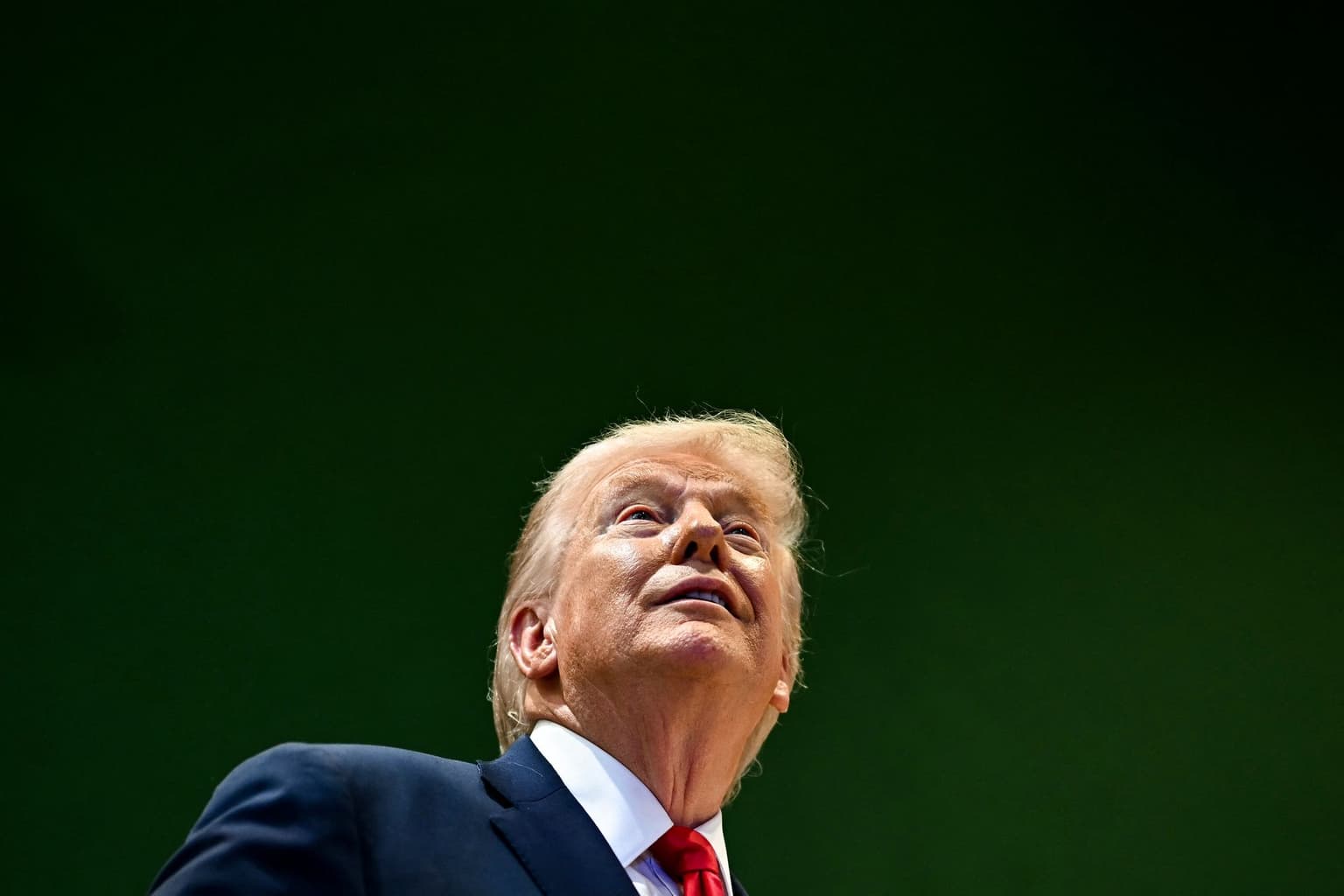
U.S. President Donald Trump in Davos, Switzerland, on Jan. 21, 2026. (Fabrice Coffrini / AFP via Getty Images)
 on Google
Donald Trump's bulldozer-style foreign policy is a gut punch for the far-right.
Nationalist parties in the U.K., France, and Germany — endorsed by the U.S. president — have pushed back against the American leader's claim on Greenland and the temporary threat of tariffs against those who stand in his way.
While aligned with Trump on immigration, enmity toward the EU, and a dovish stance on Russia, Europe's hard-right populists see their interests clash with MAGA's "America First" policy.
Experts who spoke to the Kyiv Independent say the rift underscores how brittle the nationalist-populist alliance really is.
"In this new dog-eat-dog world," the European right "will have to realign their position just as other political camps are doing," says Martin Bialecki, editor-in-chief of the journals Internationale Politik (IP) and Internationale Politik Quarterly (IPQ).

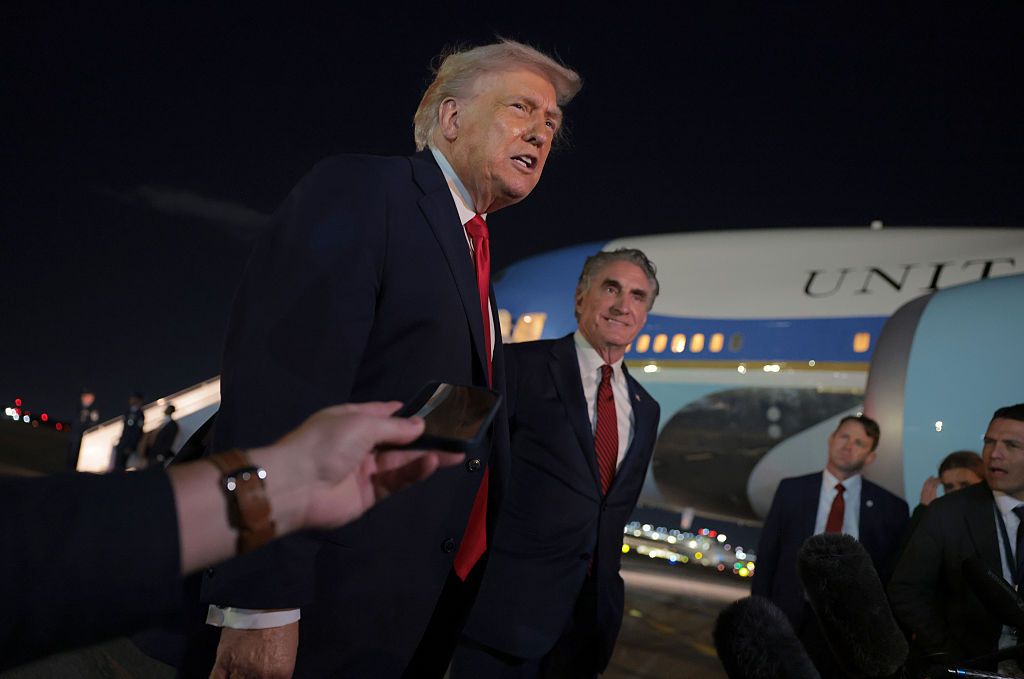
Greenland shakes the far-right
In the greatest rupture within NATO in decades, the U.S. president has briefly to impose tariffs on eight European countries — including France, Germany, and the U.K. — who oppose his aim to annex the ice-covered but strategically vital island.
Though Trump appears to have softened his stance on Greenland for now, his unpredictability means European capitals can never be certain the issue does not unexpectedly flare up again.
Trump’s brazen approach — including his initial refusal to rule out military force against a NATO ally — reflects a new interventionist turn that began with the U.S. capture of Venezuelan strongman Nicolas Maduro.
Even Trump's most vocal allies in Europe, such as the far-right Alternative for Germany (AfD), have criticized what appears to be a shift away from traditional MAGA-style isolationism.
Trump has "violated a fundamental election promise, namely not to interfere in other countries," said AfD co-leader Alice Weidel.
The chief of Germany's largest opposition party, which now leads the polls, urged the German government to avoid a "trade war and find a solution" in the Greenland dispute.
Another AfD leader, Tino Chrupalla, said that while the American "sphere of influence" should be considered, Trump's "Wild West methods" must be rejected.

Even sharper criticism came from far-right circles in France, a country traditionally more skeptical of the U.S. global leadership role.
National Rally (RN) leader Jordan Bardella said that Trump's threats against the sovereignty of a European country "are unacceptable."
The 30-year-old politician, seen as the front-runner in the upcoming 2027 presidential elections, called upon the EU to suspend its July trade deal with the U.S. and reject the tariff blackmail.

Commenting on the U.S military operation in Venezuela, Bardella denounced what he called the "return of imperial ambitions" and the erosion of international rules.
In the U.K., Reform Party leader Nigel Farage, who, like his ideological allies, tops the polls, said Trump's threat to use force — military or economic — over Greenland "threatens NATO" and represents the biggest fracture in the U.S.-U.K. ties "since Suez in 1956."
Farage, broadly seen as Trump's ally in Britain, who even backed the U.S.'s criticism of London's plan to hand over the Chagos Islands to Mauritius, called Washington's tariff pressure "wrong, bad, and very, very hurtful."
The reaction among Trump's European allies has not been uniform. Hungarian Prime Minister Viktor Orban, Czechia's new populist leader, Andrej Babis, and Matteo Salvini, head of the right-wing Lega Nord party, avoided criticizing Trump and urged restraint.
Mateusz Morawiecki, Poland's former prime minister, lent credence to Trump's argument about the supposed Russian and Chinese threat to Greenland.
But the response from nationalists — and possible future leaders — in Europe's three leading powers shows the ingrained contradictions in their alliance with Trump.
In 2025, a number of right-wing Trump-friendly parties, seen as clear favorites to win the next elections, have been defeated at the polls — primarily in Canada and Australia — showing just how toxic an alliance with the U.S. president can be.
"This shows how contradictory it is to support Trump's policy while pretending to be protecting your country's national sovereignty," says Sebastien Maillard, special advisor at the Institut Jacques Delors.
"Supporting the national interests of your country and supporting Trump's America First policy just isn't sustainable," he told the Kyiv Independent.

America First, Europe Last
Trump's affinity for Europe's far-right parties has been enshrined in the country's new strategic doctrine.
But while MAGA Republicans and Europe's national-populists find common ground on many issues, recent polls suggest that an alliance with Trump is becoming a liability.
A Politico survey published in December showed that only one-third of AfD and RN voters have positive views of Trump, as well as about half of Reform UK voters.
"For decades, the European right has built its political identity on the defense of national sovereignty," Bialecki says.
While this sentiment has been largely channeled against the EU, it is now Trump who is infringing on sovereignty and imposing his will upon European countries.
Jorn Fleck, senior director at the Europe Center at the Atlantic Council, notes that Trump's tariff threats endanger fragile economic growth in Europe and could affect key blue-collar constituencies.
Furthermore, the U.S. president's open mockery of Europe "hardly syncs with the nationalism and patriotic pride that is core to most of these parties' ethos and platforms," the expert added.
Since returning to office in January 2025, Trump has repeatedly denounced European countries as weak and accused them of parasiting on the U.S. military support by underfunding their own defense capabilities.
In turn, the U.S. president has adopted a more conciliatory tone toward Russian President Vladimir Putin, ostensibly sidelining European leaders from the peace process in Ukraine.

With dislike of Trump rising across the European public, nationalist parties will have to tread cautiously on allying themselves with the U.S. president, or risk losing voters, observers warn.
The Canadian parliamentary election can serve as a clear warning — seen as a clear favorite, Conservative Party leader Pierre Poilievre has seen his party lose a 20% lead following Trump's fixation on making Canada "the 51st state."
Poilievre has been an active supporter of Trump and has struggled to distance himself from the American president.
"(T)here are also questions about how much of an ideological and political match these parties ever really were, beyond shared stances on migration and culture war issues," Fleck says.
"Combined, the costs of cozying up to Trump are starting to outweigh any largely intangible ideological or marketing benefits."
Note from the author:
Hi, this is Martin Fornusek.
I hope you enjoyed this article. In our team, we believe that fact-based, truthful reporting should be available to all – that's why we don't use a paywall.
If you'd like to help us provide you with more in-depth coverage of Ukraine's struggle against Russian aggression, international politics, and more, please consider joining the Kyiv Independent community.