With slow progress on battlefield, Russia shifts to terror and sabotage in Ukraine
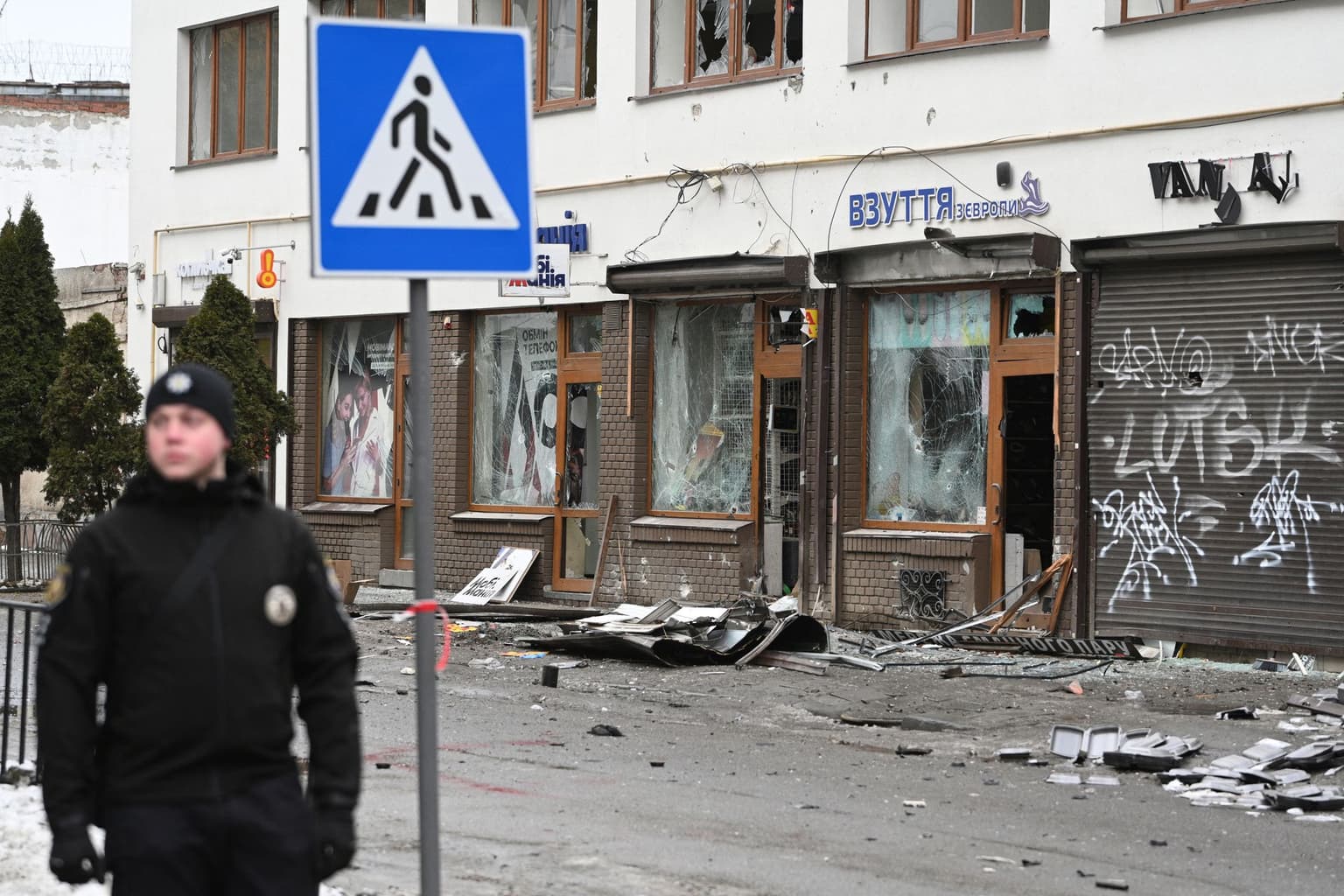
A Ukrainian police officer secures the area at the site of an explosion that struck Lviv, Ukraine, on Feb. 22, 2026, amid the Russian invasion. (Yuriy Dyachyshyn / AFP via Getty Images)
 on Google
Over the course of 48 hours last week, three explosions targeting Ukrainian police officers in different cities raised the prospect of a chilling new front in Russia’s campaign of terror against civilians.
On Feb. 22, two explosions hit the western city of Lviv near the Polish border after police responded to a call, killing a 23-year-old police officer and injuring 25 people. The next evening, an explosion occurred inside a police station in Dnipro, damaging the building. Later that same night in Mykolaiv, another explosion targeted patrol officers, injuring seven of them.
"This is not a coincidence. The enemy is deliberately trying to kill Ukrainian police officers who stand every day in defense of people and the state," the National Police said.
"We have intelligence indicating that the Russians intend to continue carrying out such attacks — essentially attacks on Ukrainians. We need greater protection for our people," Zelensky added.

A campaign in the rear?
Jamie Shea, a former NATO official and defense analyst at Chatham House, said the incidents are part of a broader effort to compensate for Russia's stalled battlefield progress.
"This is clearly a strategic shift on the part of Russia rather than isolated incidents. Russia is trying to compensate for its slow progress on the battlefield in Donetsk by taking the war directly to the Ukrainian population, hoping to break its will to resist," he told the Kyiv Independent.

According to Shea, striking cities far from the front line, such as Lviv, is intended to demonstrate that no region is fully protected from the war.
"It’s a way of demonstrating to the entire population its vulnerability," he said.
Shea said that the attacks are also linked to the ongoing peace negotiations, which Moscow may see as an opportunity to advance its interests.
"In a general sense Russia may be hoping that by breaking the will to resist in the civilian population, the latter will put pressure on Zelensky and his government to surrender and sue for peace at any price," he said.
How Russia recruits Ukrainians
Dmytro Zhmailylo, executive director of the Ukrainian Center for Security and Cooperation, said that Russia relies on locally recruited civilians in such attacks.
"Russia recruits vulnerable categories of citizens, promising them financial rewards or other benefits. This model reduces risks for professional agents and complicates crime prevention, becoming a serious challenge for Ukraine," Zhmailylo told the Kyiv Independent.
In the Lviv attack, one of the suspects is an 18-year-old woman from Kharkiv. According to the Security Service of Ukraine (SBU), she had been searching for "easy money" on Telegram when Russians contacted her and offered $100 to make a fake emergency call. Explosives detonated after police responded.

Zhmailylo said that the Ukrainian Center for Security and Cooperation has identified anonymous Telegram channels and entire networks offering supposed "easy money" that in reality recruit Ukrainians for sabotage.
These actions are reinforced by online narratives portraying "civilians versus military" and "civilians versus police."
"Police officers are portrayed as draft dodgers who do not want to fight. The recent attacks specifically targeted police in order to further polarize society and reinforce narratives imposed by Russia," Zhmailylo said.
Open mass terror
Russia’s use of terrorism inside Ukraine long predates the full-scale invasion.
In 2015 alone, SBU reported preventing hundreds of planned terrorist attacks and arresting 492 suspects linked to sabotage and terrorism, according to Zhmailylo.
After 2022, the hybrid war escalated into open mass terror. Missile and drone strikes began targeting civilian infrastructure on an unprecedented scale, making 2025 the deadliest year for Ukrainian civilians.
New measures
In response to the attacks, Ukrainian authorities have announced additional security measures.
Interior Minister Ihor Klymenko and SBU Deputy Head Vasyl Rudnytskyi said Telegram, which is one of the most popular messengers in Ukraine, needs stronger regulation, arguing that the platform is widely used to recruit individuals for sabotage.
Klymenko also said police response protocols to emergency calls will be revised, with greater use of canine units, bomb disposal teams, and additional operational checks before officers approach potentially dangerous scenes.