With Germany’s help, Ukrainian communities keep kindergartens and hospitals running through blackouts
Germany has supported the installation of new CHP units at major boiler houses to help support local residents during the winter (GIZ Ukraine).
 on Google
In the winter of 2023, just after Russia’s full-scale invasion of Ukraine began, Natalia Kovalenko, the director of a large kindergarten in Kyiv Oblast, was grappling with challenges that went far beyond lesson plans and playtime. As Russian attacks on Ukraine’s energy infrastructure intensified, her daily concerns narrowed to the most basic things: how to keep the building warm, and how to keep the lights on.
“Children need light and warmth,” Kovalenko told the Kyiv Independent. Once a metaphor, the phrase had become literal.
The staff set up a field kitchen and began cooking meals on an outdoor stove. They told the children it was a camping trip.
“Do you know how delicious that food turned out?” Kovalenko said, laughing. “The children kept asking for more.”
More than 400 children now spend over 10 hours a day at the kindergarten. Teachers are responsible not only for their education and care but also for their safety. Every air raid siren sends them all down to the shelter. In the early days, the staff sought to ease fears, turning the descent underground into a “treasure hunt.” They hurriedly drew maps, stuck colorful labels on the walls, and hid sweets in the basement. Over the next three years, the shelter itself changed, too. Painted walls, beds, and basic equipment transformed it into a bright, welcoming space.
“We decided together that we would continue working,” Kovalenko says. “Ukrainians adapt to everything. We don’t turn away from what’s ours.”
Yet the kindergarten staff were not left alone. Foreign partners came to support their efforts: last year, Germany helped install a Combined Heat and Power (CHP) unit in the kindergarten. When electricity is lost, the building automatically switches to its generator and continues operating without interruption.
“First of all, we needed to keep the children warm,” Natalia says. “Thanks to the cogeneration system, we had heating even when the rest of the town did not. This is the second autumn in a row that the children here have had warmth.”
While the children remained calm, helped by the staff’s creativity, it was the parents who felt the greatest sense of relief, Kovalenko explains.
This kindergarten is just one of thousands of institutions left without heat and electricity during Russian attacks. Across Ukraine, CHP units have become a crucial solution. Installed near apartment blocks, schools, and municipal facilities, they generate heat and electricity simultaneously, enabling communities to continue operating even when the national grid is damaged.
In the Kyiv Oblast town where the kindergarten is located, this approach now defines everyday resilience. In addition to the one at the kindergarten, Germany has supported the installation of new CHP units at a major boiler house. Even if the grid is struck again, thousands of residents will still have warmth in their homes.

This winter, about 24,000 people in the town can rely on the CHP unit for heat and electricity. It supports 73 apartment buildings and 18 public institutions, including four kindergartens, two schools, an outpatient clinic, and six administrative buildings.
Like the kindergarten in Kyiv Oblast, communities across Ukraine have benefited from Germany’s support through the German federal enterprise Deutsche Gesellschaft für Internationale Zusammenarbeit (GIZ), helping secure reliable energy for over 1.5 million people. By improving energy efficiency, communities can reinvest savings into strengthening local infrastructure, bringing warmth and light to more homes.
Communities turn to renewable energy
When Russia launched massive attacks on Ukraine’s energy infrastructure, the Odesa Oblast became one of the hardest hit. At one of the region’s multidisciplinary hospitals, director Dr. Vadym Hudyma began looking for ways to reduce the risks for patients.
The hospital’s aging generator could not carry the full load. In the event of a blackout, the staff would be forced to choose which essential systems to shut down—the elevators or the CT scanner. Either option, Hudyma knew, would compromise patient safety and the quality of care.
“It had to be switched on manually and needed about 15 minutes to start working,” he says. “For critical patients, those minutes could be fatal.”
The hospital treats everything from routine outpatient visits to childbirth and organ transplants from deceased donors. Its 163 beds are almost always full. Patients in the intensive care unit depend on ventilators. Each year, the facility serves more than 104,000 people, providing 120,000 outpatient consultations and treating around 10,000 patients.
In late 2022, the staff began working to reduce the risks. Over the following years, with the help of international partners, they installed new generators that can provide electricity, water, and heat without interruption. In the event of a blackout, the hospital switches to an alternative power source automatically in just a few seconds.
The next step was to reduce dependence on the grid altogether. In July 2024, with help from Germany, the town began installing solar panels, turning the hospital into its own miniature energy hub. Within a year, the panels produced 116,000 kilowatt-hours of electricity. This covers 14% of the hospital’s annual needs and helping create reserves for future emergencies.
“We began seeing the results within a year. Solar panels help us save electricity, cut costs, and reinvest those savings into installing new CHP units,” says Mayor Valerii Shovkaliuk.
Before the war, Ukraine’s renewable energy sector was expanding steadily. Now, solar power it is not just a question of climate, but of survival itself. Therefore, many communities are restoring renewable energy capacities. Since 2022, Germany has helped install 56 solar battery systems across 30 communities, including hospitals, administrative buildings, and essential municipal services.
Resilience took root in small actions
Every Ukrainian city has developed places where residents can get through outages. These hubs have charging stations, internet access, and hot tea. However, for many, daily life in the dark remains a struggle.
In one district of Kharkiv, residents of 16-story apartment buildings face some of the harshest challenges. The upper floors are entirely powered by electricity. When the power cuts out, light may return for only a few hours. Without it, people cannot cook or heat their homes. Elevators stop working, leaving elderly residents and those with limited mobility trapped inside their apartments.
Nadia, a retired woman, lives in one of these buildings. When blackouts grew longer and more frequent, her son approached her with an idea. He wanted to help their neighborhood, to make sure everyone could survive each day in the dark. That conversation became Nadia’s turning point.
She began going door to door, talking to neighbors, taking notes, and figuring out who needed what.
“I walked through dark stairwells, collecting information,” she says. “It’s physically hard for me, but what choice do I have? People need help. And it has to spread further.”
Her building alone has 64 apartments. Across four nearby blocks, the needs multiplied quickly. With support from Caritas Kharkiv, Germany and the EU, help began reaching those who needed it most. People received supplies: heaters, power banks, flashlights, and gas burners. Small items, but enough to make the day bearable when the lights go out.
Soon, residents from other buildings—many completely dependent on electricity—began calling Nadia for help.
“These things really helped us out, especially the gas burners. But people keep coming to me, so I hope I'll have the resources to help,” she says.
This is where GIZ’s project, Strengthening Communities in War-Affected Regions in Ukraine through Localized Action (EMPOWER), comes in. Working with local partners in the Kherson and Kharkiv regions – NGO “Unbreakable country”, the United Nations, Caritas Kharkiv – the project identified residents’ most urgent needs and created survival kits.

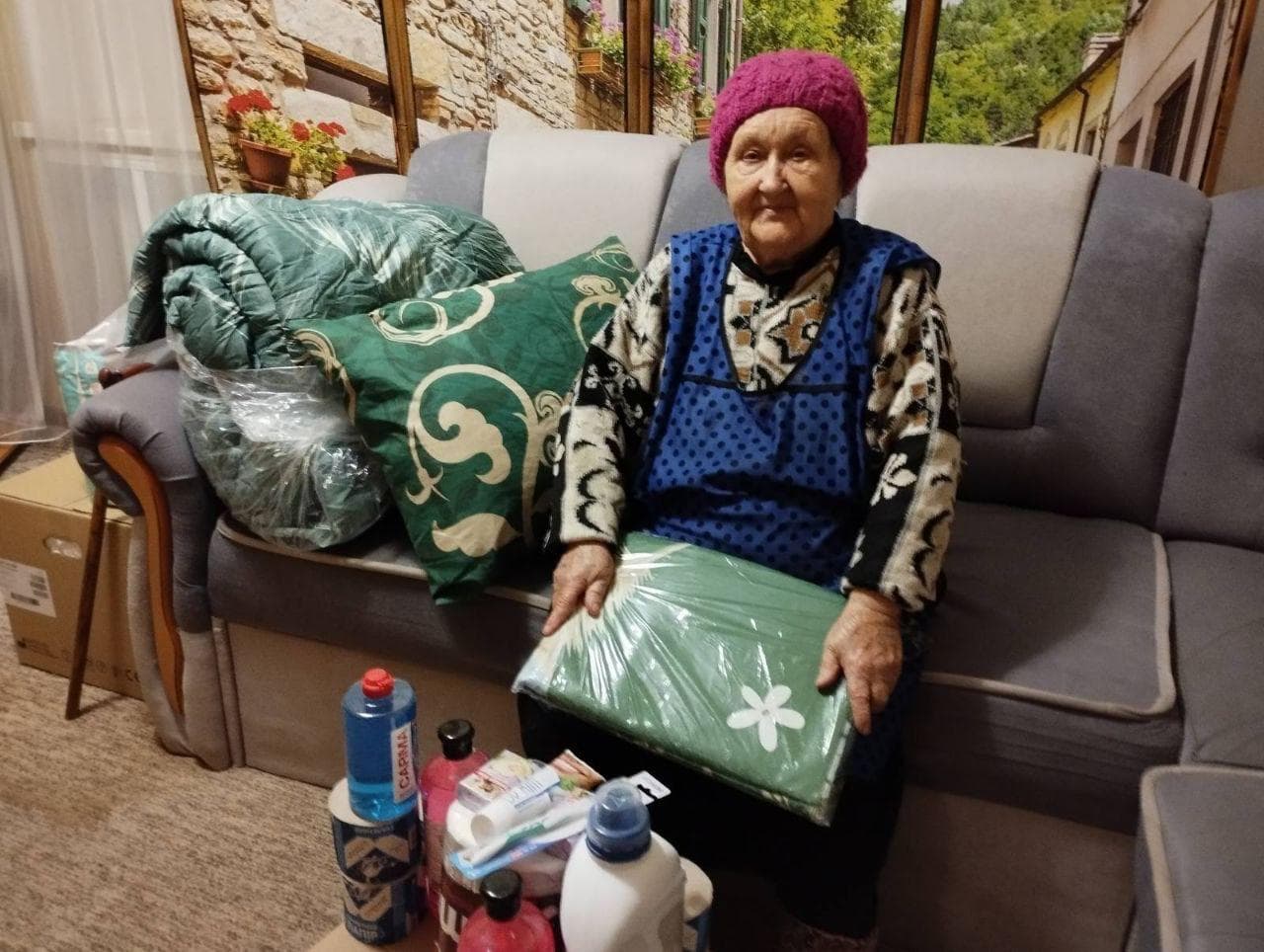
In the Kherson region, many elderly and mobility-impaired residents live in private homes constantly monitored by Russian drones. These houses become dangerously cold in winter. In Komyshany, the efforts of Germany and the local partner NGO “Unbreakable country” focused on distributing warm blankets and bed linen to help people stay safe.
Resilience grows when people face hardship. Programs from Germany and other international partners help sustain and scale their efforts. Across Ukraine, similar efforts are quietly building strength — in kindergartens and hospitals, town halls and private homes. Even as the energy system remains under constant threat, people are finding ways to keep the lights on and keep life moving.