We interviewed Iran’s envoy to Ukraine and it was absolutely wild
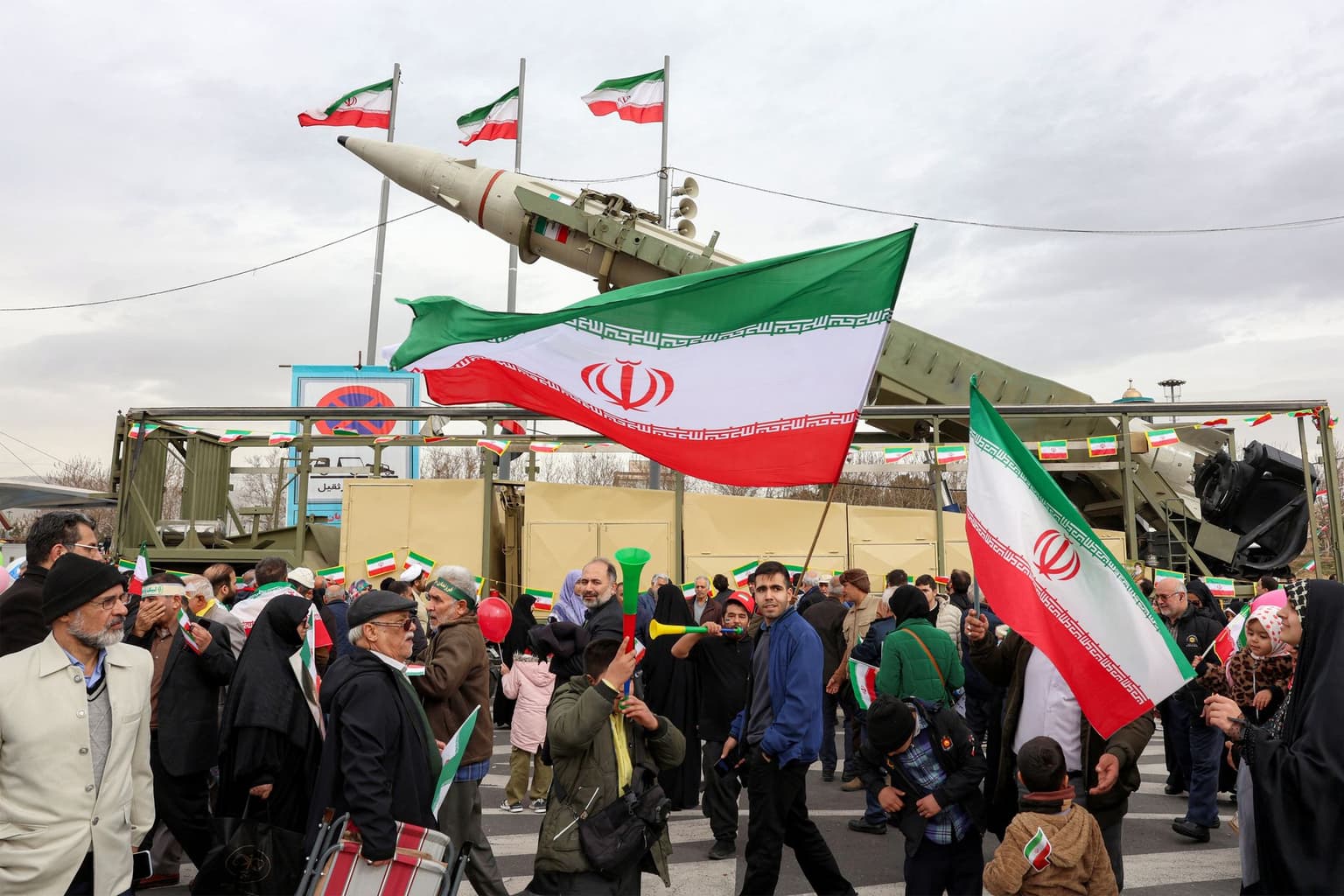
People walk with Iranian national flags near a ballistic missile launch vehicle in Tehran, Iran, on Feb. 11, 2026. (AFP / Getty Images)
 on Google
Two days after the assassination of Iran's Supreme Leader Ayatollah Ali Khamenei by U.S.-Israeli strikes earlier this month, the Iranian embassy in Kyiv was in mourning.
Candles flickered on the floor beneath his portrait. Heavy curtains muted the daylight. Staff dressed in black directed visitors into a small side room, where a condolence book lay open.
But, outside, there was no queue.
Each page of the book was turned before a new visitor approached. No one could see what had been written before. When asked, embassy staff declined to show the messages inside.
One of the few who came, a young man named Volodymyr, said he had come to write what he called a "small emotional release." He spoke of Russian attack drones — originally imported from Iran and then copied by Moscow — exploding near his family home, and of what he described as Iran's role in supporting Russia's war.
"Every enemy of my people will get what they deserve," he told the Kyiv Independent he wrote in the condolence book.

The next day, the Kyiv Independent interviewed Iran's chargé d'affaires in Kyiv, after Ukraine expelled the country's ambassador in 2022.
Shahriar Amouzegar spoke in Farsi, through an interpreter. In an extraordinary conversation, he rejected accusations that Iran had played a role in Russia's war against Ukraine, and insisted that his country has remained neutral — despite volumes of evidence to the contrary.
The Kyiv Independent has fact-checked his claims.
'Iran is neutral'
Amouzegar: "The accusation was that we participated in the Russia-Ukraine war. We were accused of being involved in that war. But we have repeatedly said that this is not our war and that we are completely neutral in it. We have repeatedly said that we were ready to mediate between Russia and Ukraine. Unfortunately, our views were ignored.
”Instead, there was only propaganda against us.
"We have opposed the war from the beginning, even since 2014. We did not recognize (the annexation of) Crimea, even though some other countries did. We have always said that we respect the territorial integrity of Ukraine, and that Ukraine's territorial integrity must be respected. We declared our opposition to the war. If you had come toward us, if you had engaged with us, perhaps this war would have ended sooner. We, too, were harmed by this war, because the greatest harm for us was that it damaged our relationship with you.
"Our relations with Russia are entirely normal. They are not beyond the kind of relations we have with other neighbors. We have similar relations with Turkey, Pakistan, and other countries around us."
What the records shows:
Iran publicly maintains that it is neutral in Russia's war against Ukraine and has not participated in the conflict. The evidence, however, tells a different story.
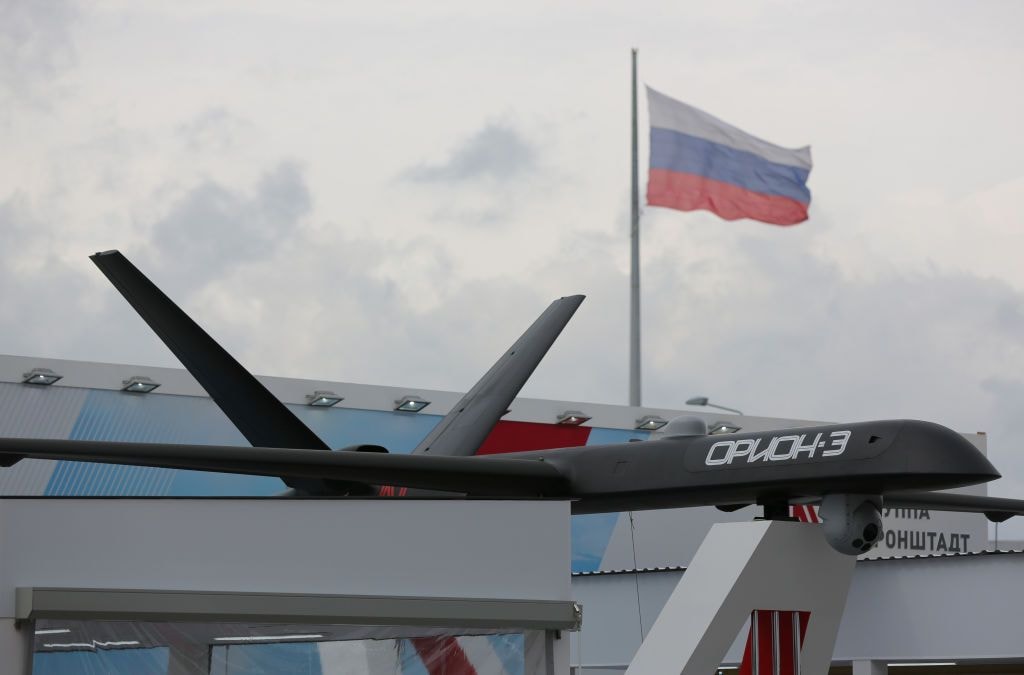
In November 2022, Ukrainian officials said Iranian military instructors were present in Russian-occupied Crimea to train Russian forces to operate Iranian-designed Shahed-136 drones. Then-National Security and Defense Council Secretary Oleksiy Danilov said Ukrainian forces had killed some of those military advisors. Danilov said they had been deployed specifically to help Russian troops pilot the Iranian-supplied drones. The Institute for the Study of War assessed that they were likely members of Iran's Islamic Revolutionary Guard Corps (IRGC).

Those same drones – the Shahed-136 – would go on to become one of the defining features of Russia's full-scale invasion of Ukraine, targeting civilian homes and infrastructure on a daily basis.
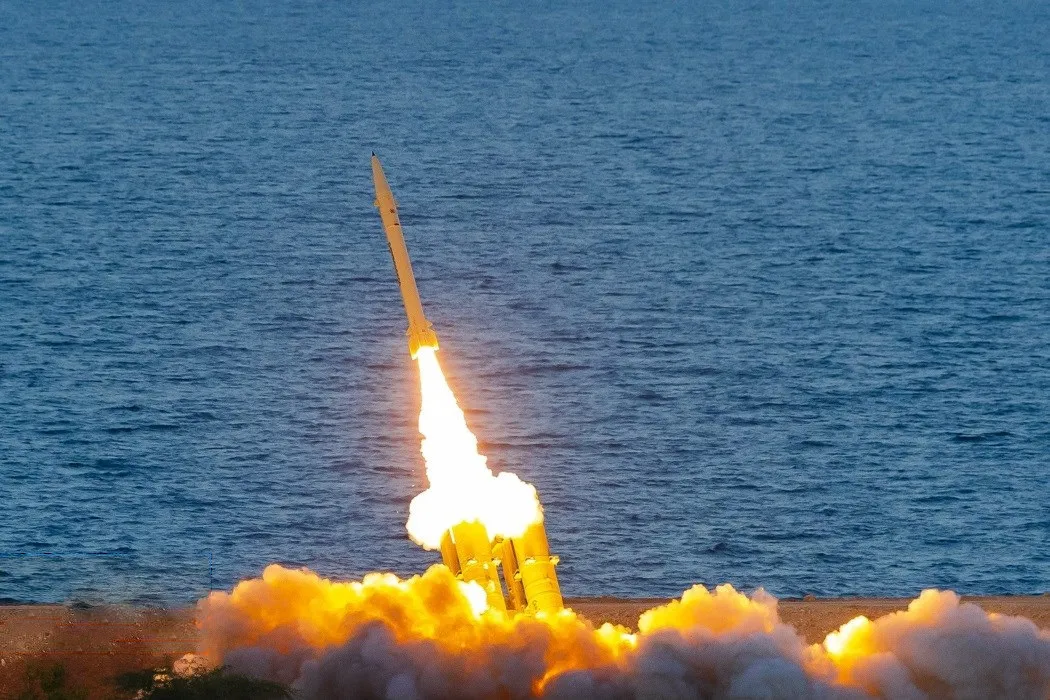
Ukrainian intelligence also says Iran has transferred more than 350 Fath-360 short-range ballistic missiles to Russia. For unknown reasons, the missiles have not yet been deployed, but they further illustrate the depth of military cooperation between the two countries.
Diplomatically, Tehran has avoided formally recognizing Moscow's illegal attempts to annex Ukrainian territory. Iranian officials say they do not recognize Russia's annexation of Crimea and continue to refer to Ukraine's territorial integrity.
At the United Nations, however, Iran has consistently declined to support resolutions condemning Russia's war. Since 2022, Tehran has either abstained or voted against every major UN General Assembly resolution on the conflict, including those condemning Russia's attempted annexation of Ukrainian regions and demanding the withdrawal of Russian forces.
The two countries' deepening partnership was formalized in January 2025, when presidents Vladimir Putin and Masoud Pezeshkian signed a 20-year Comprehensive Strategic Partnership Treaty in Moscow.

The Shahed question
Amouzegar: "We have said many times that we did not provide any weapons to Russia for the war in Ukraine. Before the war in Ukraine, as part of previous cooperation, we had given Russia some drones. Russia later copied them, reproduced them, and, unfortunately, used them against Ukraine.
"This does not mean that we participated in the war in Ukraine. Unfortunately, the perception has been created in Ukraine that we gave drones to Russia for use against Ukraine. This is not correct at all."
What the record shows:
Iran's chargé d'affaires argues the drones used by Russia in its war against Ukraine were supplied before the full-scale invasion and later copied by Moscow. Independent investigations suggest the cooperation continued well after the war began.
In May 2025, research organization C4ADS published an analysis of leaked internal documents detailing an industrial agreement signed in November 2022 — nine months after the full-scale invasion of Ukraine — between the Russian company Alabuga Machinery JSC and the Iranian firm Sahara Thunder. The contract was facilitated through Generation Trading FZE, a company registered in Ras Al Khaimah in the United Arab Emirates.

The agreement outlined a plan to establish large-scale production of Shahed-136 drones inside Russia's Alabuga Special Economic Zone. According to the documents, the project targeted the production of roughly 6,000 drones over about two and a half years, with a reported contract value of 108.5 billion rubles, equivalent at the time to roughly $1.7-1.8 billion.
The arrangement included the delivery of drone kits, technical documentation, engine and avionics components, and warhead elements. According to the leaked materials, the plan allocated more than 300,000 hours of training in Iran and another 300,000 hours at the Alabuga Special Economic Zone to support the localization of drone manufacturing.


High-resolution satellite imagery analyzed by the Institute for Science and International Security shows rapid construction and expansion at drone production facilities inside the Alabuga Special Economic Zone beginning in late 2022. The timeline aligns with the industrial partnership described in the leaked documents.
Recovered drone debris from Ukrainian battlefields also reflects the evolution of the program. Early wreckage matches the design characteristics of the Iranian Shahed-136. Later drones, re-labeled by Russian forces as Geran, show modifications consistent with domestic manufacturing and incremental adaptation.
Following these revelations, the U.S. and EU imposed sanctions on companies involved in the drone production network.
Self-defense and regional alliances
Amouzegar: "We have been subjected to aggression. We are responding to aggression. This is legitimate self-defense based on international law and the UN Charter. We stand on our own feet. We have not asked anyone for help."
"As for groups like the Houthis, Hezbollah, and others active in West Asia, they are not dependent on us. They took inspiration from our revolution. They are acting in pursuit of the independence of their own countries and against dependence on America and certain Western countries.
"People in the region have become awakened. They no longer want to live under the domination and colonial control of Western powers. They say that their resources belong to them, that they themselves have the right to decide for their countries, and we support this way of thinking in the world. The era of colonialism is over.".
What the record shows:
On Feb. 28, 2026, the U.S. and Israel launched coordinated strikes across Iran to counter what the Trump administration described as threats from Iran's missile program and nuclear ambitions. On the first day of the operation, dubbed "Operation Epic Fury," U.S. strikes killed Iran's Supreme Leader Ali Khamenei along with several senior officials and hundreds of civilians.
U.N. human rights experts later condemned the assault as a violation of international law, calling the attack an act of aggression carried out without authorization from the U.N. Security Council.

Within hours of the initial attack, Iran launched retaliatory missile and drone strikes against Israel and neighbouring countries hosting U.S. forces across the Gulf, including Bahrain, Kuwait, Qatar, and the United Arab Emirates. Some strikes hit civilian infrastructure, including airports and hotels. The exchange quickly widened the conflict, effectively pulling the Middle East into war.
Armed groups aligned with Tehran soon launched attacks across the region, opening additional fronts abroad in support of Iran.
These groups are part of the so-called "Axis of Resistance," a loose regional network of armed movements that maintain financial, military, and ideological ties with Tehran. Iran has cultivated these relationships for decades through funding, weapons transfers, and training, allowing Tehran to project influence across the region without deploying its own forces.
Hezbollah (re)opened a Western front against Israel, launching large rocket barrages into northern Israeli towns near the Lebanese border. Israel responded with intensified airstrikes across Lebanon, including heavy bombardment in Beirut, strikes in the country's south, and attacks in the Beqaa Valley. In the first two weeks of fighting alone, Israeli operations killed nearly 600 people and displaced more than 750,000, according to Lebanese authorities.
In Iraq, Iran-aligned militias operating under the banner of the "Islamic Resistance in Iraq" launched drone and missile attacks on U.S. military assets and diplomatic facilities, including a strike on a U.S. diplomatic support center in Baghdad. The attacks came as the United States carried out airstrikes against militia positions across the country, effectively pulling Iraq into the confrontation.
The conflict also drew reactions from Ukraine. Zelensky publicly voiced support for the U.S. and Israeli strikes, pointing to Iran's military cooperation with Russia during the war in Ukraine.
Women and the state
Amouzegar: "I would like to take this opportunity, with March 8 (International Women's Day) approaching, to congratulate you and all Ukrainian women who these days are standing shoulder to shoulder with their men and working hard for their country."
What the record shows:
While Amouzegar appeared keen to ingratiate himself with the Kyiv Independent's female reporter, in Iran itself, women's rights remain a painful political issue and women certainly cannot stand "shoulder-to-shoulder" with men. Laws governing marriage, divorce, child custody, inheritance, employment, and freedom of movement place women in a subordinate legal position, often requiring the permission of a male guardian for major decisions.
Mandatory veiling is one of the most visible elements of this system, requiring women to adhere to strict dress codes in public, and is enforced by morality police and other state institutions. Human Rights experts have increasingly used the term "gender apartheid" to describe these conditions, pointing to the systematic nature of gender-based discrimination embedded in law and policy.


The issue gained global attention in 2022 after the suspicious death of Mahsa Amini, a 22-year-old woman detained by morality police, which triggered nationwide protests.
Authorities responded with a violent crackdown, using mass arrests, lethal force, and internet shutdowns to suppress the protests. Human rights groups report that more than 500 people were killed and around 22,000 detained, with widespread reports of beatings, torture, and abuse in custody.
Protests and repression
Amouzegar: "First, protests and demonstrations exist everywhere in the world. The protests that began in Iran were economic and livelihood-related, and that is accepted. We believe that people have the right to criticize government policies and even to protest. Our constitution allows that. It is entirely legal.
"But we believe that it must not lead to violence, nor endanger national security or national interests. Unfortunately, the Zionist regime and the United States exploited that opportunity. They sent their own agents into Iran. They themselves admit that they sent Mossad agents into Iran. They turned what had been peaceful economic protests into violence. Weapons were used. Many of our police were killed, and many ordinary people were also killed, in order to create deaths that could then be used in propaganda to claim that the Iranian state had killed them.
"Let me ask you: would you allow someone to come and shoot at your police? If tomorrow there were a rally on Independence Square and people opened fire on police forces, would that be acceptable to you?"
What the record shows:
More than three years after the 2022 protests, demonstrations erupted again across Iran in late 2025 over rising prices, inflation, and currency instability.
The protests quickly spread and evolved into broader demonstrations against the government. Protesters in many areas openly criticized Iran's political leadership and called for systemic political change.
Iranian officials have blamed foreign governments, including the United States and Israel, for instigating the unrest.


Human rights organizations say they have found no evidence that the protests were orchestrated by foreign states, describing the demonstrations instead as largely domestically driven.
Iranian security forces responded with a nationwide crackdown. Amnesty International, Human Rights Watch, and other monitoring groups say security forces used live ammunition, mass arrests, and internet shutdowns to suppress the demonstrations.
The number of people killed during the protests remains disputed. Iranian authorities imposed internet blackouts and restricted access for international journalists and investigators during the protests.
Iranian state media reported that 3,117 people died, including protesters and members of the security forces.
Independent monitoring groups report significantly higher numbers. The Human Rights Activists News Agency (HRANA) has been able to verify 6,000 deaths based on witness accounts, hospital records, and video evidence. Other estimates suggest the toll could be substantially higher, with tens of thousands of additional cases still under review and some assessments placing the total at over 20,000, though these figures cannot be independently verified.
During the interview, Amouzegar compared the protests to the possibility of demonstrators opening fire on police in Kyiv.
For many Ukrainians, however, the memory of state violence against protesters is deeply familiar.
During the 2013-2014 EuroMaidan Revolution, also known as the Revolution of Dignity, Berkut riot police opened fire on protesters in central Kyiv, killing more than 100 people, now known as the "Heavenly Hundred.