US to triple Patriot interceptor missile output — this is why
 on Google
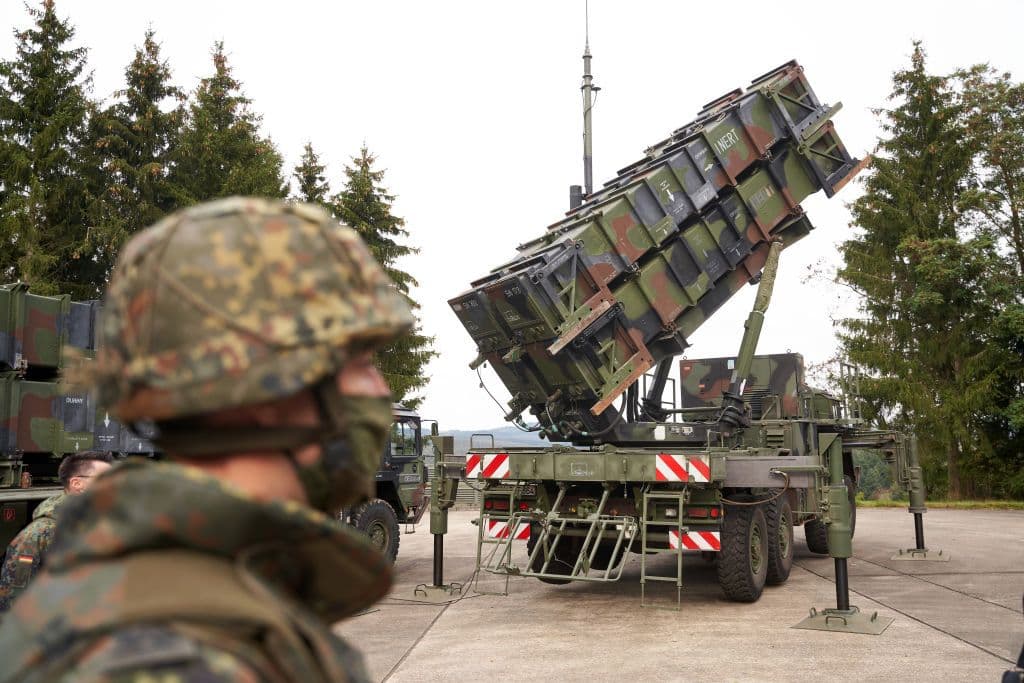
The U.S. will more than triple production of interceptor missiles used in Patriot air defense systems, in response to surging global demand, the U.S. War Department announced on Jan. 6.
Demand for PAC-3 interceptors has surged amid Russia's full-scale invasion of Ukraine and mounting security challenges for U.S. allies worldwide. Ukraine, which currently operates up to ten Patriot systems, relies on these missiles to protect cities and critical infrastructure.
The PAC-3 Missile Segment Enhancement (MSE) interceptors, to be produced under a new seven-year framework agreement with the Patriot system's missile manufacturer Lockheed Martin, are essential for defending against modern threats, including ballistic and cruise missiles.
The interceptor features advanced hit-to-kill technology, enabling it to destroy high-speed missiles, such as Russia's Kinzhal and Zircon, with precision.
Under the agreement, annual production of PAC-3 MSE interceptors is set to increase from about 600 missiles to roughly 2,000 per year, significantly expanding U.S. and allied air defense capabilities.
The U.S. currently makes around 600 yearly, but Iran, for example, is believed to have a stockpile of of over 1,000 ballistic missiles.
The deal is part of a new acquisition model designed to accelerate weapons production by providing long-term demand guarantees to defense manufacturers. U.S. officials say the approach is intended to encourage industrial investment, shorten delivery timelines, and strengthen supply chains without requiring large upfront government spending.
"We will award companies bigger, longer contracts for proven systems so those companies will be confident in investing more to grow the industrial base," U.S. War Secretary Pete Hegseth said in November when unveiling the new strategy.
According to the Department of War, Lockheed Martin will support investments needed to scale production, while both the company and the U.S. government may share benefits from increased efficiency and output.
The framework agreement establishes the basis for a future supply contract, which will still require congressional authorization and funding.
"This marks a fundamental shift in how we expand munitions production and collaborate with industry," said Michael Duffey, U.S. under secretary of war for acquisition and sustainment, calling the agreement a "win-win" for national security and taxpayers.
The U.S. Department of War said the new production model could be applied to multiple munitions programs in the future, as Washington seeks to replenish stockpiles, expand production capacity, and meet long-term demand from allies and partner nations.
Yet experts warn that the U.S. itself may not currently have even 25% of the interceptors needed to meet Pentagon plans, as many have been used in recent conflicts across the Middle East, the Guardian reported in summer 2025. The shortfall prompted the Trump administration to temporarily freeze the summer's transfer of munitions to Ukraine.
Ukraine places particular importance on the PAC-3 MSE interceptors due to their unmatched precision against high-speed ballistic missiles.
While a typical Patriot battery includes a mix of interceptors capable of downing aircraft, cruise, and ballistic missiles, the PAC-3 MSE is specifically engineered for the most advanced threats.
Though its range is shorter than earlier models — typically around 35 to 50 kilometers — the PAC-3 MSE can reach higher altitudes and engage faster-moving targets thanks to its dual-pulse motor and enhanced maneuverability.
These capabilities make it one of the few systems capable of reliably intercepting modern Russian missiles, such as Iskander and Kinzhal, as well as North Korea's KN-23.