Ukraine’s wartime businesses turn to foreign markets
 on Google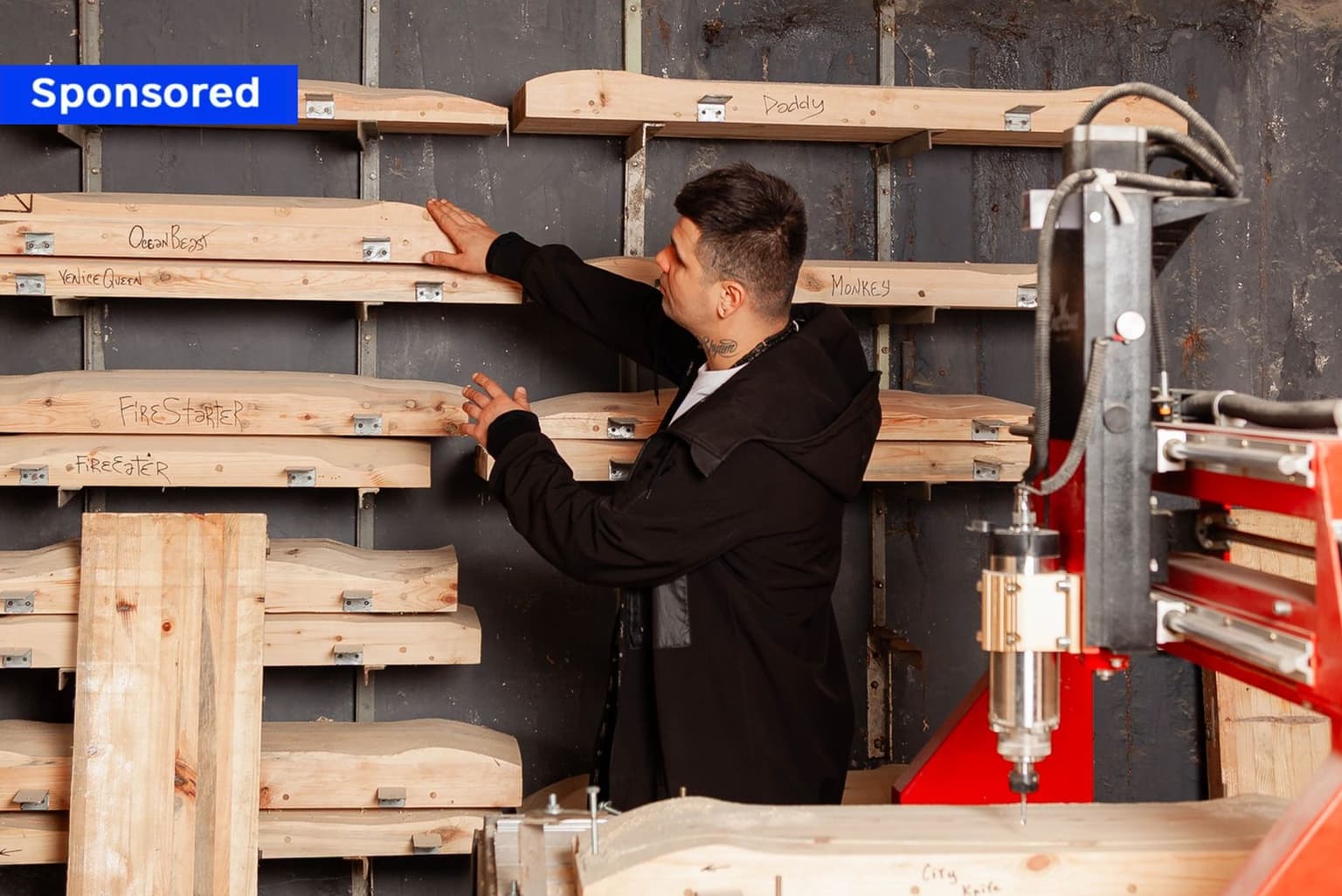
As fighting intensified in Ukraine’s Dnipropetrovsk Oblast in 2023, Anton Savchenko moved his small skateboard factory from Pavlohrad to nearby Dnipro. It was the second time he had to relocate the business to keep it running.
But the move solved only part of the problem. Soon, another threat emerged, putting the future of the business itself in doubt. In a country at war, demand for skateboards had all but disappeared.
Rather than shutting down, he began looking abroad. Today, he ships his boards to skaters in the United States and across Europe, far from the air raid sirens near his workshop.
Near Kyiv, entrepreneur Anna Rudenko has made a similar pivot to foreign markets. She designs and produces functional toys and decor for children's rooms. What began as a small wartime workshop has grown into a business that ships products to customers in Australia and the United Kingdom.
Both are among the Ukrainian entrepreneurs supported by Helvetas Swiss Intercooperation, an international organization that develops models of economic resilience for small and medium-sized companies and helps them grow and reach new markets.
Their stories are far from unique. Since the start of the full-scale war, many Ukrainian businesses have had to rethink where and how they sell their products. Small and medium-sized enterprises (SMEs) are often described as the backbone of Ukraine's economy, yet just 18% of Ukrainian SMEs export their products — the lowest share in Europe. For many companies, breaking into international markets remains difficult.
“The war has shown that small and medium-sized businesses can adapt quickly,” says Mariana Kaganiak, an expert in international economic relations and lead for economic recovery at Helvetas. “But many entrepreneurs lack the resources, knowledge, or staff needed to work with foreign markets.”
The difficulties Ukrainian exporters face today are rooted in a longer economic shift that began a decade ago.
A decade of economic realignment
After the 2014 Revolution of Dignity, Ukraine sharply reduced its economic ties with Russia, which had previously accounted for about half of the country's exports. At the same time, the Deep and Comprehensive Free Trade Area (DCFTA) with the EU gave businesses an opportunity to reorient toward the European Union and other global markets.
That transition was not easy. While the EU’s free trade agreement opened access to a large market, Ukrainian companies had to meet the same regulatory standards as established European firms, often without comparable levels of state support.


“In many European countries, governments provide extensive support for exporters — from participation in exhibitions and trade missions to subsidizing the establishment of the international offices,” Mariana Kaganiak says. “In Ukraine, the resources available to businesses are much smaller, but the market requirements are the same.”
This gap has created a growing need for practical support for the Ukrainian exporters. To help address it, organizations such as Helvetas Swiss Intercooperation work with the Ukrainian companies and government institutions to strengthen export capacity and provide practical support for businesses trying to enter international markets.
Helping businesses navigate foreign markets
For many entrepreneurs, the biggest barrier to exporting is not product quality but information and access to clients.
“The main challenge is that companies often don’t know how to enter a foreign market or where to find partners,” says Kateryna Markevych, a Project Manager at Helvetas. “Breaking into B2B markets is especially difficult without existing contacts abroad.”
To help address this problem, Helvetas partnered with Diia.Business to develop the Dashboard of Export Potential of Ukraine’s Regions. The tool analyzes demand and regulatory requirements across more than 50 countries, helping businesses identify promising markets for their products.
Helvetas also contributed to the Catalogue of Export Support Tools, which gathers information on grants, training programs, financial support, and international platforms available to Ukrainian entrepreneurs.
The goal is simple: to help businesses quickly and easily find the resources and information they need to grow and enter new markets.
Knowledge that helps businesses grow
For many entrepreneurs, knowledge and training can be just as important as financial support. The experience of one Ukrainian brand illustrates how that combination can work in practice. Zhaga is an adaptive clothing brand founded by Anastasia Klymenko, an entrepreneur who also lives with a disability. Her company creates functional clothing for people with disabilities, including those injured during the war.

Through Helvetas-implemented programs, Klymenko received both financial assistance to expand production and training opportunities focused on sustainable manufacturing. During a study visit to Stockholm, she learned how to reuse materials and reduce waste in production and began introducing environmentally responsible solutions into her business.
Adapting under wartime conditions
Despite the disruption caused by the war, many Ukrainian regions have managed to keep their economies functioning. Agriculture, IT services, and relocated businesses have played a major role in this adaptation.
At the same time, research supported by Helvetas suggests that long-term recovery will require a deeper transformation of the economy. One approach gaining attention is smart specialization, which focuses on identifying the industries where each region has the strongest potential and directing support toward them.
“Smart specialization helps policymakers and businesses understand where real opportunities exist,” Mariana Kaganiak says. “It allows resources to be focused where they can have the greatest impact.”
For decades, much of Ukraine’s export strength came from raw materials and agricultural products. Economists increasingly argue that long-term growth will depend on producing more finished goods within the country.
Anton Savchenko’s skateboard factory offers one small example of that shift: a specialized manufacturer that turns raw materials into a finished product sold worldwide, even while operating in a region affected by war.
The transition toward higher-value production will take time. Building competitive industries requires investment, expertise, and stable institutions. Many Ukrainian entrepreneurs are already moving in that direction — finding new markets, developing new products, and building businesses that can compete globally despite the challenges of wartime.
“But this transition will require time, effort and, additional support from the government and donors,” Mariana Kaganiak says.
This material was produced with the support of Helvetas within the Ukraine Economic Resilience Programme (ERP), implemented with the support of Switzerland through the Swiss Agency for Development and Cooperation.
The programme is implemented by the ERP consortium consisting of Mercy Corps, Right to Protection, Helvetas Swiss Intercooperation, and JERU (Joint Emergency Response in Ukraine of Welthungerhilfe and Concern Worldwide).