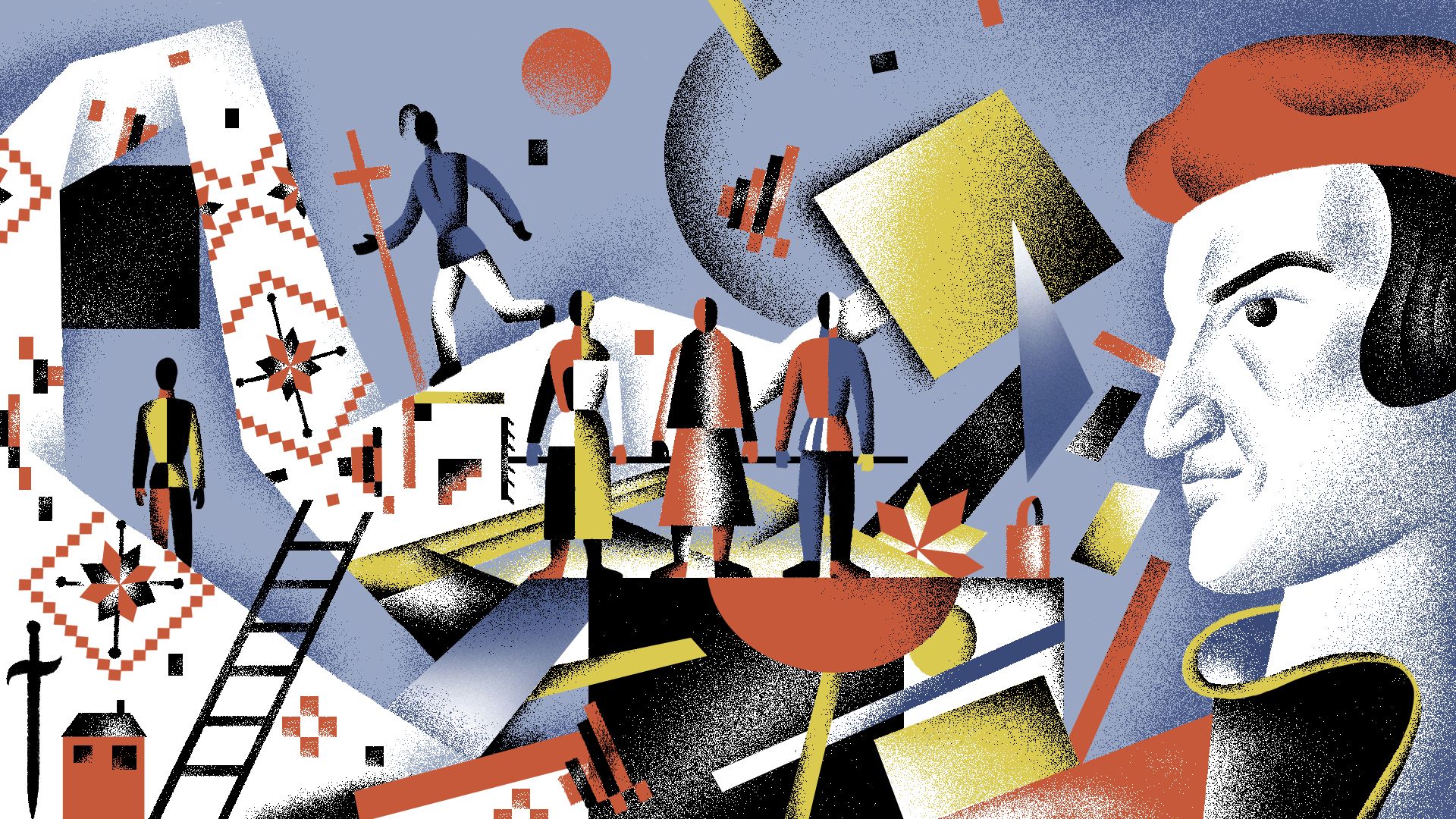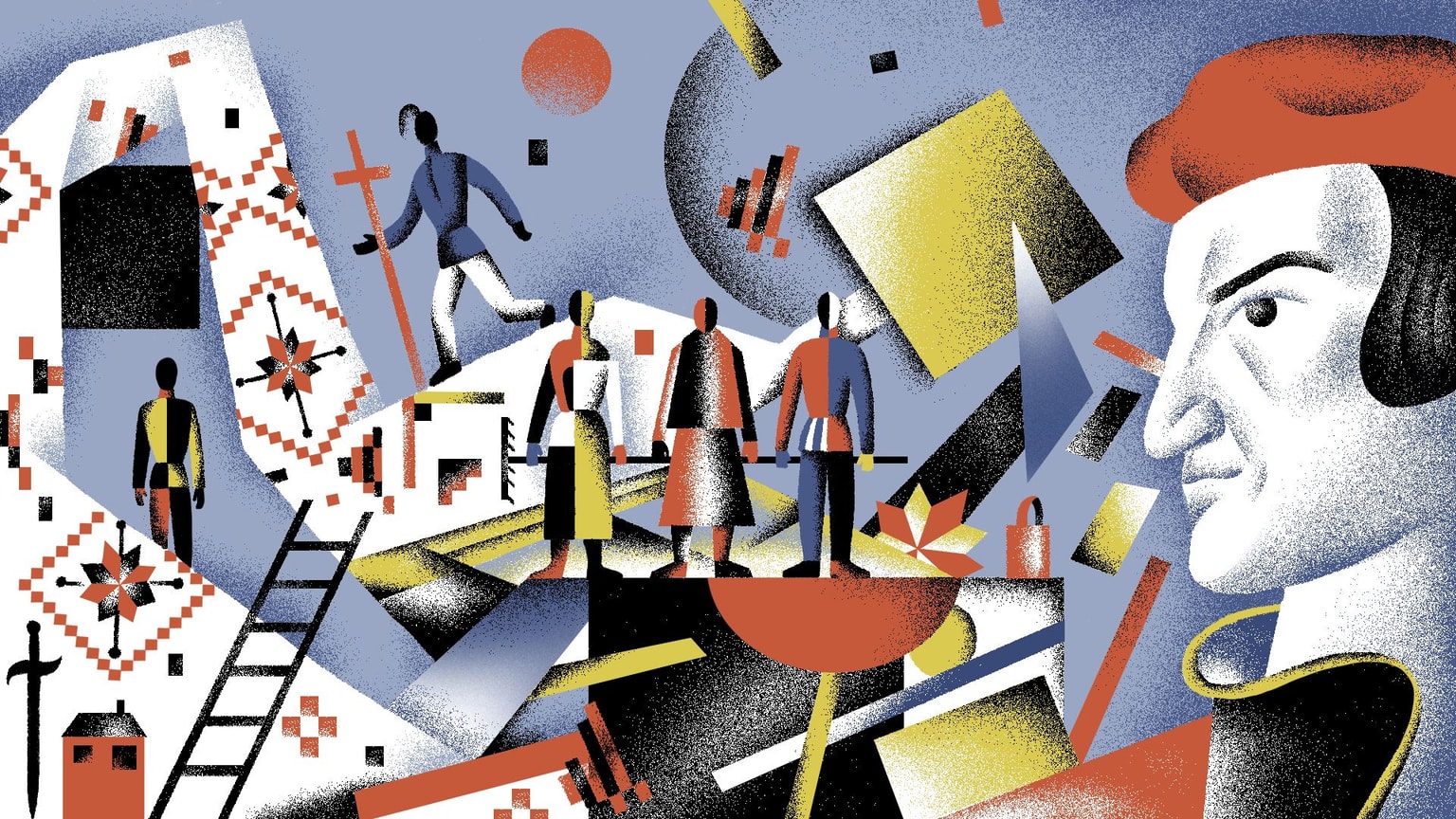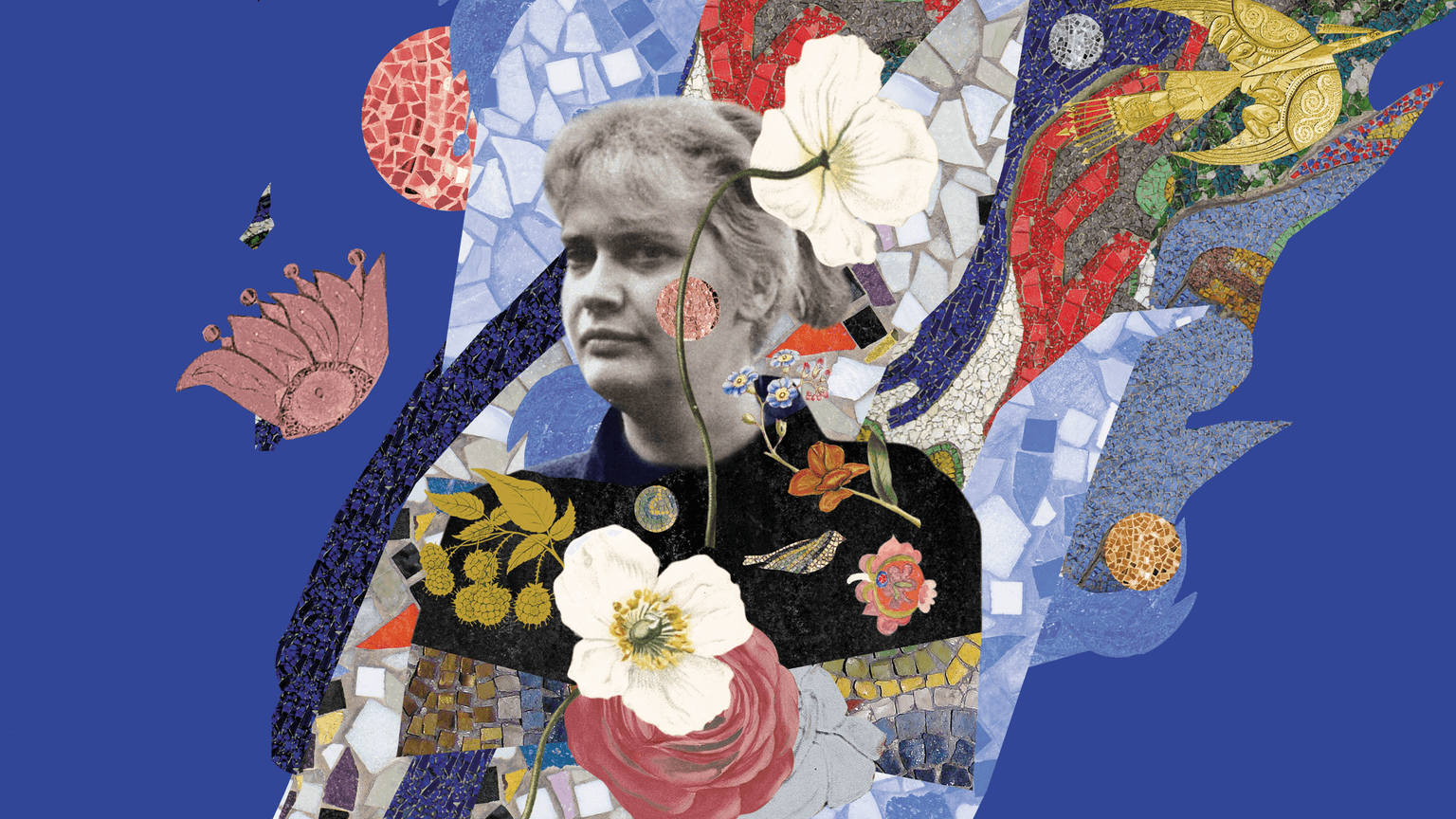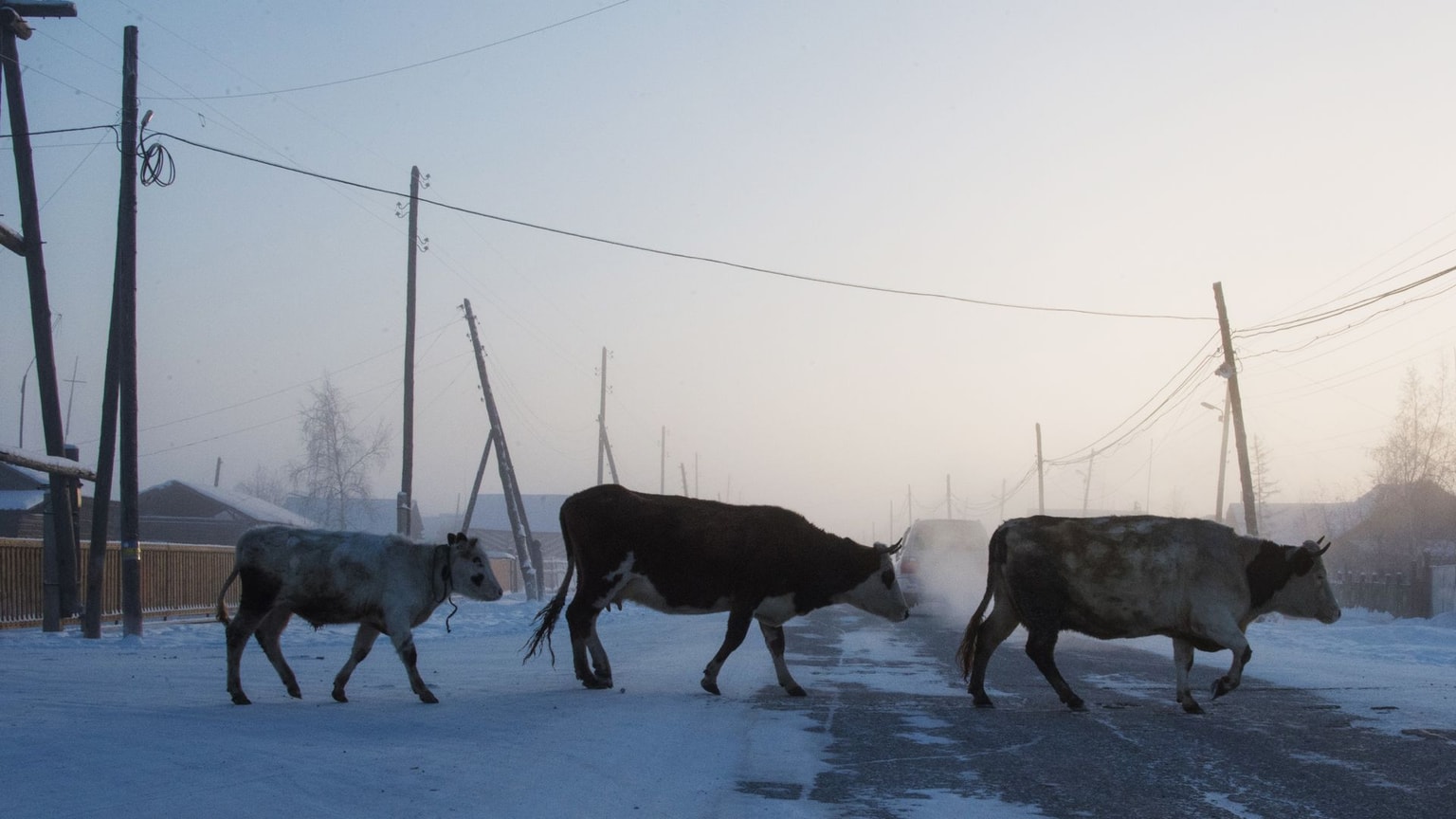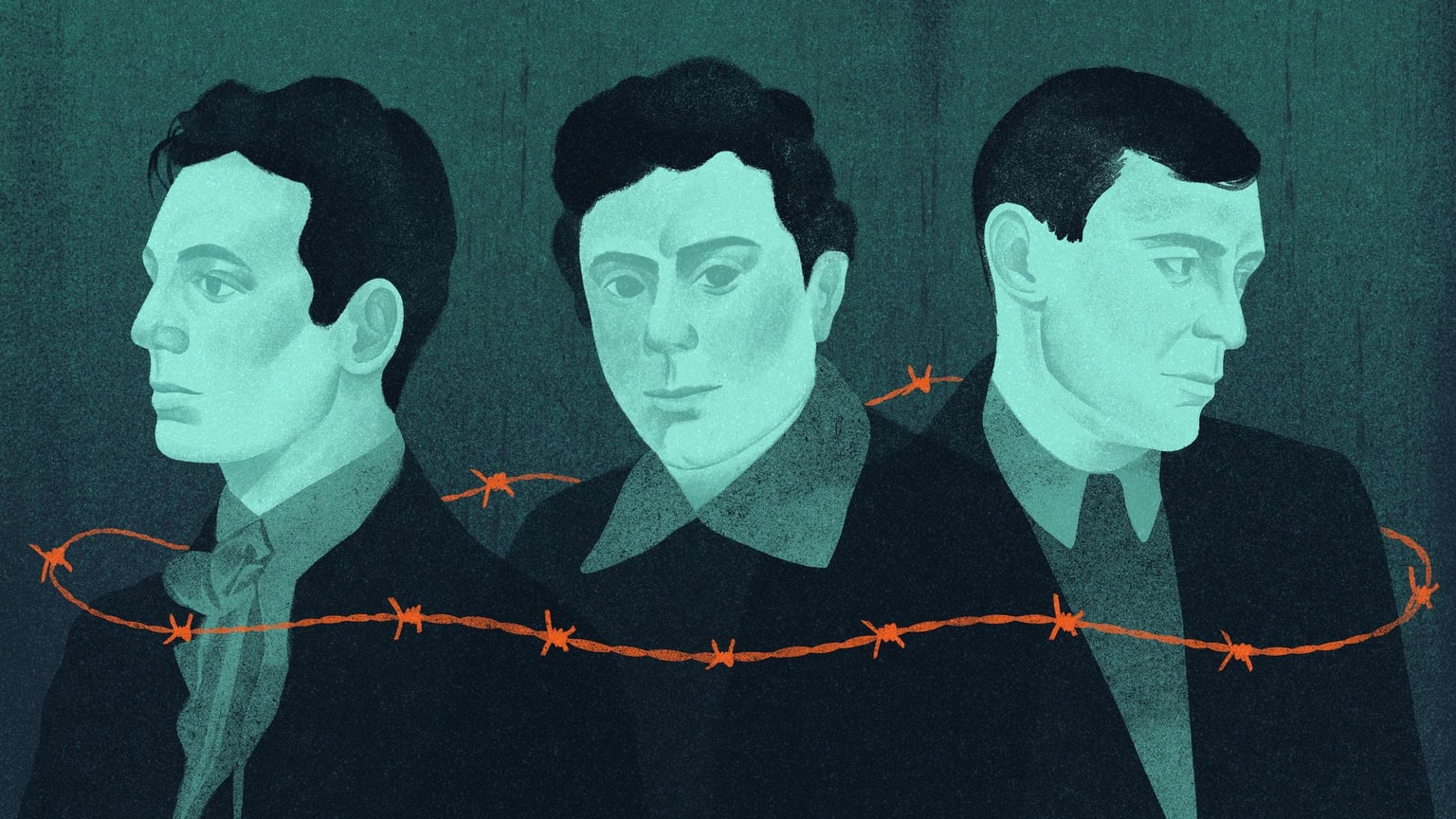
Theater director Les Kurbas, novelist and poet Mykola Khvylovy, and modernist writer Valerian Pidmohylny. (Daria Filippova / The Kyiv Independent)
A black-and-white portrait of a well-dressed, composed family draws the eye to a figure in the left-hand corner — Antin Krushelnytsky, the family’s patriarch, and a writer, educator, and former minister of education of the Ukrainian People’s Republic.
Likely taken in Kharkiv in the early 1930s, the photograph captures a moment of cultural rebirth for Ukraine. Krushelnytsky and his family were part of a generation of writers, artists, and intellectuals who believed Ukrainian culture could develop openly within the Soviet system after centuries of repression under the Russian Empire.
Instead, they were arrested one by one. Nearly all of the people in the photograph would be executed by Soviet authorities within a few years.
Krushelnytsky was first arrested in 1934, the year his two sons, Ivan and Taras, were executed. In November 1937, Krushelnytsky, his daughter Volodymyra, and sons Bohdan and Ostap were executed in Sandarmokh, Russia, alongside dozens of cultural figures from Ukraine and other countries occupied by the Soviet Union.
The photograph has since become a symbol of the Executed Renaissance — the systematic elimination of a generation of Ukrainian intellectuals who emerged in the 1920s and were later executed, imprisoned, or forced into silence during Stalin's purges of the 1930s.

The Revival cut short
The phrase "Executed Renaissance" was coined in the 1950s by Polish emigre editor Jerzy Giedroyc to describe what happened to Ukrainian culture in the 1920s and 1930s.
In the 1920s, the Soviet government briefly supported the growth of national cultures within a socialist system, a brief period referred to as "Ukrainization."
Ukrainian-language schools opened, publishing houses flourished, theaters staged new works, and literary groups debated modern art. For the first time in decades, Ukrainian culture operated through its own institutions.
At a time when Ukrainian culture was still associated with rural themes, the writers of this period explored the city, turning to themes of ambition, alienation, and social mobility. The novel "The City" written in 1928 by Valerian Pidmohylny, traces the psychological transformation of a young man navigating life in Kyiv.
Ukrainian theater became a site of sharp social critique and formal experimentation. In plays such as "Myna Mazailo" and "Narodnyi Malakhii," playwright Mykola Kulish used satire to confront questions of language, identity, and Soviet cultural policy, exposing the tension between ideological conformity and lived reality.
On stage, Les Kurbas transformed these texts into complex theatrical experiences. At the Berezil Theatre in Kharkiv, he developed a laboratory of experimentation that combined movement, rhythm, visual composition, and text. He moved away from realistic styles, using bold visuals and sharp scene changes instead, bringing Ukrainian theater closer to the European avant-garde.

One of the clearest expressions of this cultural momentum was the Literary Discussion of 1925–1928, sparked by Mykola Khvylovy. In a series of essays, he urged Ukrainian literature to move "Away from Moscow," calling for orientation toward European modernism rather than Russian cultural models.
The slogan was not a political demand for separation, but a call for aesthetic independence. Even so, it was treated as a threat. In 1933, after increasing pressure and disillusionment, Khvylovy took his own life.
Many of these cultural figures, including the ones mentioned above, lived in the Slovo (meaning "word" in Ukrainian) House, a purpose-built residence for writers in Kharkiv that became a center of literary exchange. It concentrated a generation in one place, making collaboration possible — and later — surveillance, inevitable.
By the early 1930s, Soviet authorities shifted from supporting national cultures to repressing them. Writers and artists were accused of nationalism or counterrevolutionary activity. Some were executed, others sent to labor camps, and many silenced or forced into conformity under Socialist Realism.
The repression reached its peak during the Great Terror of 1937–1938, a campaign of mass arrests and executions carried out across the Soviet Union. Officially presented as a purge of "enemies of the people," it targeted intellectuals, cultural figures, and national elites on a vast scale. For Ukraine, it meant the systematic elimination of a generation that had only just begun to define itself.
One of the most devastating episodes took place in November 1937, when more than a hundred Ukrainian writers, artists, and intellectuals were executed in Sandarmokh, a forest clearing in Karelia. Pidmohylny, Kulish, and Kurbas were all executed in Karelia that year.

A cultural revival that had only begun to take shape was brought to an abrupt end.
"If you look at the sheer numbers of Ukrainians who were executed and the timing of these events, you see that the Ukrainian case was a distinct one," says Columbia University professor and translator of Ukrainian literature Mark Andryczyk. "This was not incidental."
"The Russian imperial identity is fundamentally challenged by an independent Ukraine."
What remained
The violence of 1937 did not end after mass executions. It reshaped the entire structure of cultural life in Soviet Ukraine.
The brief period of "Ukrainization" was replaced by strict ideological control and censorship. Socialist Realism became the only permissible artistic method, and literature, theatre, and scholarship were expected to serve the state. Some writers adapted in order to survive — such as writer poet Pavlo Tychyna. Others withdrew into silence.
Even after partial rehabilitations in the late Soviet period, the loss was difficult to reverse. Names resurfaced in archives and publications, but the thread of a living culture had already been severed.
"There’s a rhythm, a pattern to this," says Andryczyk. "Every time Ukrainian identity has the opportunity politically to consolidate and develop, there comes a point when it has to be curtailed."
Nearly a century later, similar patterns can be observed. During its full-scale invasion of Ukraine, Russia has targeted museums and libraries, looted artworks, and killed writers and cultural figures. In occupied territories, the Ukrainian language and history have been banned from public life.
The methods differ from those of the 1930s, but the logic remains: to weaken a society by dismantling the cultural voices that sustain it. In this context, the Executed Renaissance is not only a historical term, but a warning.