Russia tightens control over abortion in Ukraine's occupied territories
 on Google
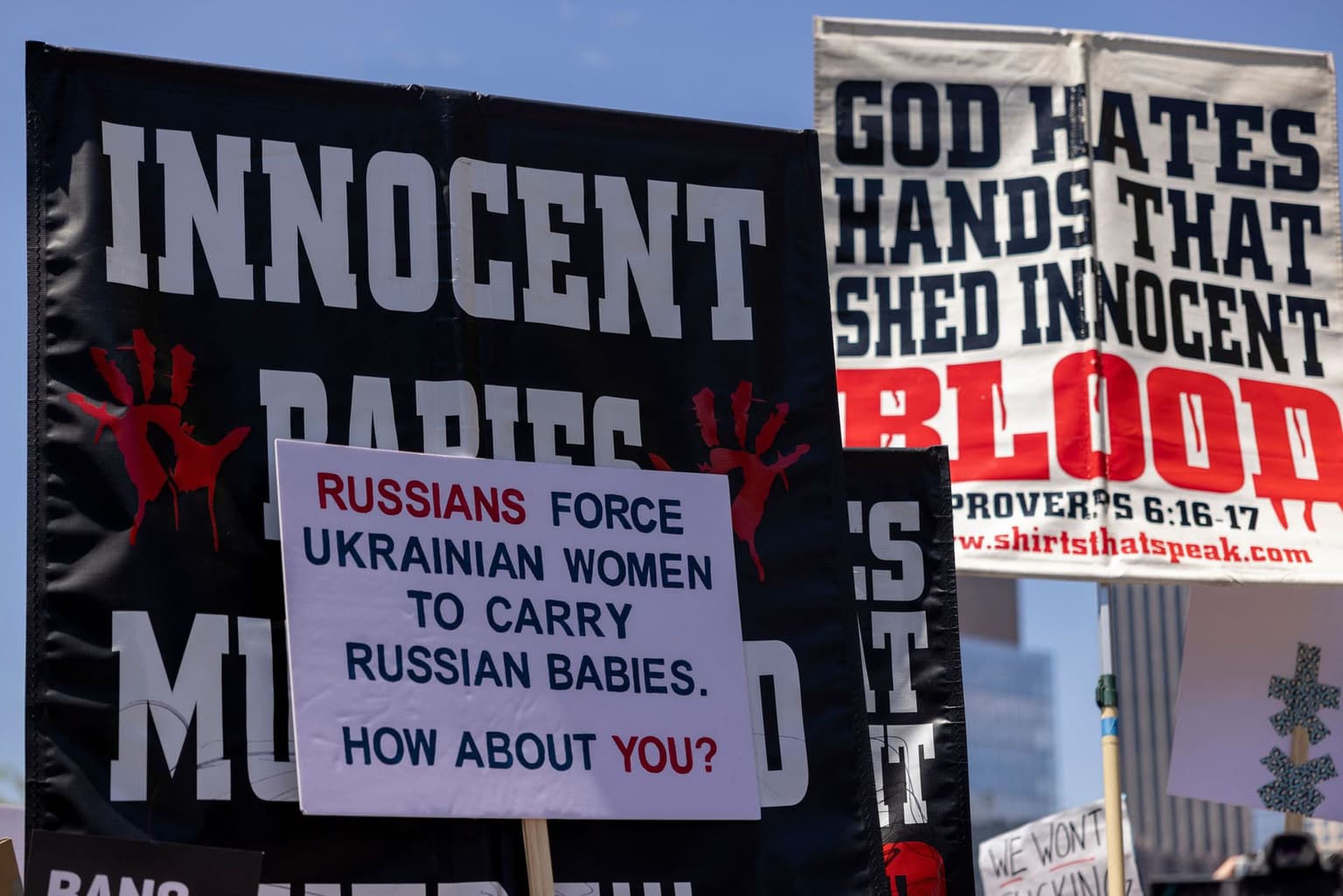
Russian-controlled authorities in occupied Ukraine are increasing restrictions on women's reproductive rights, effectively preventing them from accessing abortions, according to the NGO East Human Rights Group.
"The (Russian) regime needs children to be born, even if the child is unwanted, without proper conditions to grow up in," Vera Iastrebova, the head of the East Human Rights Group, told the Kyiv Independent.
"These children are then being raised to become future soldiers, as evidenced by the militarization of educational institutions."
Iastrebova said authorities in the occupied part of Donetsk Oblast have been taking steps to pressure pregnant women who want to have an abortion and have also placed restrictions on doctors.
Such restrictions on abortions are a consistent reproductive policy of Russia itself, against the backdrop of an escalating demographic crisis.
Iastrebova believes that women under occupation are the most vulnerable due to numerous cases of rape by Russian soldiers. She said that cases of sexual violence against women are concealed in the occupied territories.
"If a woman even claims that she was raped by Russian soldiers, she may not be granted victim status, but may instead be accused of discrediting the Russian army," she said.

The exact number of women raped and impregnated by Russian soldiers is unknown, but there have been cases where women have publicly shared their stories after escaping the occupied territories.
An investigation by the Kyiv Independent identified several Russian soldiers who committed rape.
As of June 2025, Ukraine documented 366 cases of sexual violence committed in connection with Russia's full-scale war, Ukraine's Foreign Ministry reported, though the actual number is likely far higher.
What is required if a woman in an occupation wants an abortion?
Iastrebova said that first, a woman must have a Russian passport to see a doctor.
Second, she needs to undergo necessary medical procedures like ultrasonography, which are not available in all parts of the occupied Donetsk Oblast, and not all women can afford it.
Third, the psychological pressure — if a woman insists on ending the pregnancy, she will be sent for a "disciplinary talk" with a priest of the Russian Orthodox Church.
"This is presented as an educational activity, although it is yet another element of control over decision-making," Iastrebova said.

How are medical workers pressured?
According to Iastrebova's sources in medical facilities in the occupation, doctors face bureaucratic and coercive pressure from the authorities.
"Doctors must submit various papers and reports showing that all measures have been taken to prevent pregnancy termination. However, there is no standardized method for doing so, so the result of abortion may lead to questions from the occupational authority," Iastrebova said.
She added that private clinics can also refuse to do an abortion, because this may lead to problems obtaining a license in the future.
Moreover, doctors working under occupation are mainly supporters of Russian politics and the state, and some of them moved there initially from Russia. Iastrebova said that their goal is to ensure that healthcare complies with the Kremlin's policy.
These restrictions have led to a rise in criminal abortions, as people resort to this procedure outside of medical institutions. The consequences of such abortions may lead to health problems for women and possible criminal liability.
In the occupied part of Kherson Oblast, Russians launched a "birth rate support" program to "fight abortion," Ukraine's National Resistance Center reported on Oct. 9, 2025.
In occupied Crimea, private hospitals have been forbidden from performing abortions since 2023.