Russians dubious as bomb shelters appear 1,000km from Ukraine
 on Google
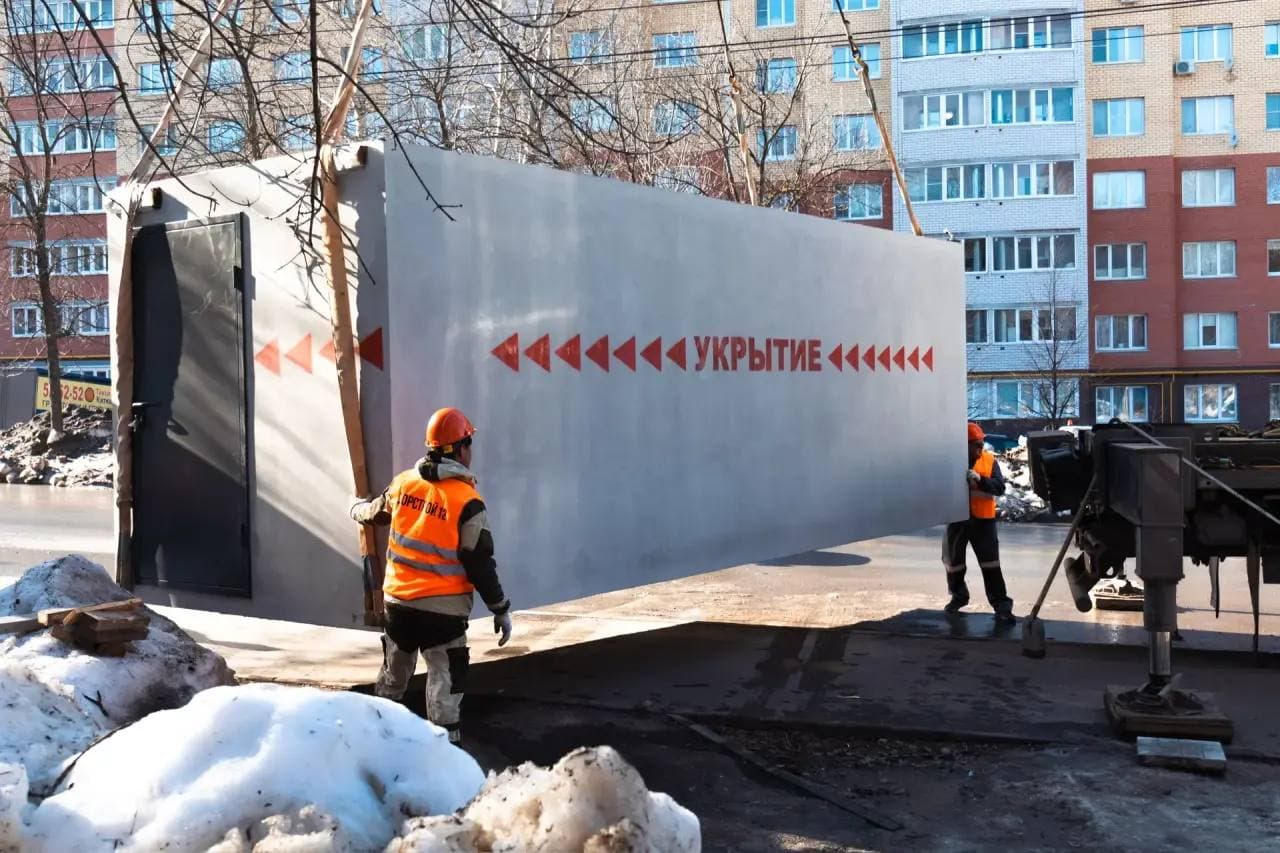
In a sign of just how far Moscow's war is being felt inside Russia itself, bomb shelters are now appearing more than 1,000 kilometers (620 miles) from Ukraine in Cheboksary, the capital of Russia's Chuvashia Republic.
Local authorities reported on March 26 that they have begun installing 11 concrete shelters against aerial threats, following repeated strikes on a local defense factory, the VNIIR-Progress plant.
The facility manufactures GNSS receivers and antennas for GLONASS, GPS, and Galileo systems, including Kometa modules used in long-range drones, missiles, and guided aerial bombs, according to Ukraine’s General Staff.
Local officials framed the move as a safety measure, but residents were less convinced.
"Why do we even need them? We do not live near the border," one comment reads on a local Telegram channel Serditaya Chuvashia ("Angry Chuvashia" in English). Others mocked the shelters as "dog kennels," "public toilets," or products of “corruption schemes," suggesting someone had "pocketed money" from their construction.
In 2025, local authorities installed modular shelters in public spaces in Penza, located roughly 700 kilometers (430 miles) from the Ukrainian border, citing their "successful use" in Belgorod — a border region regularly targeted by Ukrainian strikes.
Earlier, hundreds of similar shelters were installed in Belgorod and dozens in Kursk, according to Russian independent media Meduza. Now, these measures are spreading deep inside Russia.
Yet most of these facilities offer little protection against missiles and are primarily designed to shield against drones, even though Chuvashia has already been targeted by Ukrainian Flamingo missile strikes.
Russia's civil defense system remains in poor condition, even as the full-scale invasion enters its fifth year and Ukrainian strikes reach new regions of Russia that were previously out of range.
As of 2025, only 16% of shelters in Russia were fit for use and fully met safety standards. Many of those that did not meet the criteria were being used for other purposes, including storage, parking lots, and even as saunas, according to the Russian independent news outlet Verstka, which cited Russia's Emergency Situations Ministry.
While local authorities began constructing the first concrete shelters in Cheboksary, Chuvashia has long been targeted by Ukraine, with the first drone attack occurring on March 9, 2025.

At the same time, this Russian republic has been involved in the Russian-Ukrainian war since its earliest stages.
Russian forces are actively recruiting men in the region, offering financial incentives and other benefits. The Chuvashia Republic spent 10.7 billion rubles (nearly $130,000,000) in 2025 on payments to soldiers and their families, a threefold increase compared to the previous year.
Recruitment incentives were also raised, with one-time contract bonuses reaching up to 2.1 million rubles (nearly $26,000), even as the regional budget remains in deficit.
The Serditaya Chuvashiya Telegram channel also regularly publishes lists of residents killed in the war, from former prisoners recruited specifically for prisoners' "Storm Z" units to professional athletes and young people who have just reached eligibility for service in the Russian army.
According to estimates based on open-source data, 1,527 people from the republic were killed in the war in Ukraine in 2025 — twice as many as in 2024. The actual death toll could be much higher, as many Russian soldiers are reported missing in action or presumed to have deserted.