Few politicians are interested in Anti-Corruption Court's effective work, court's head says
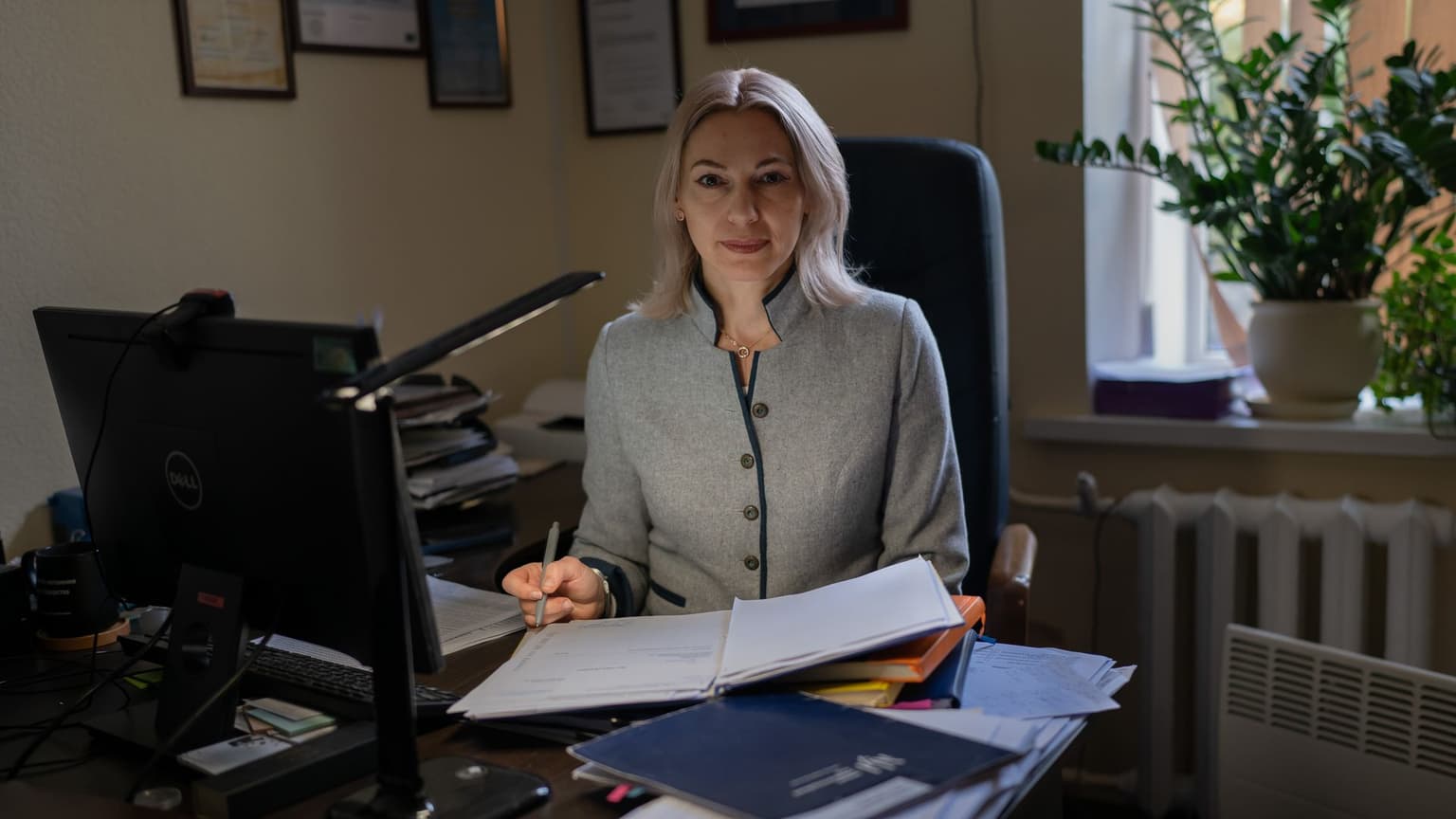
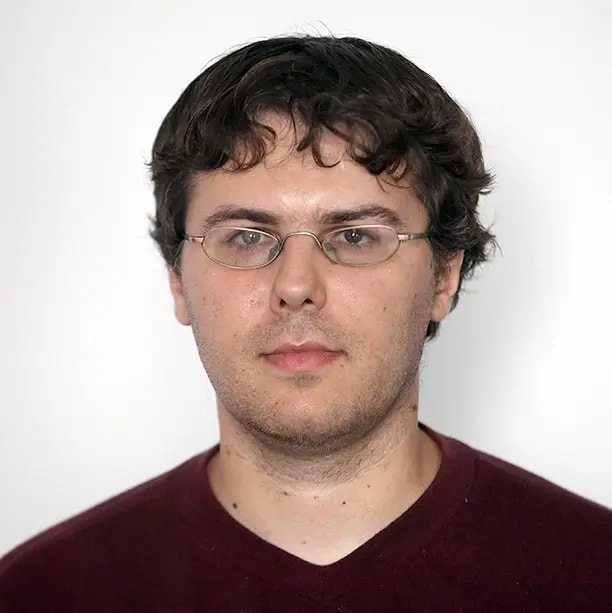
Vira Mykhailenko, head of Ukraine’s Supreme Anti-Corruption Court in Kyiv, Ukraine, on Oct. 31, 2025. (Viacheslav Ratynskyi / The Kyiv Independent)
Few decision makers are interested in making the High Anti-Corruption Court actually work, Vira Mykhailenko, the court's head, said in an interview with the Kyiv Independent.
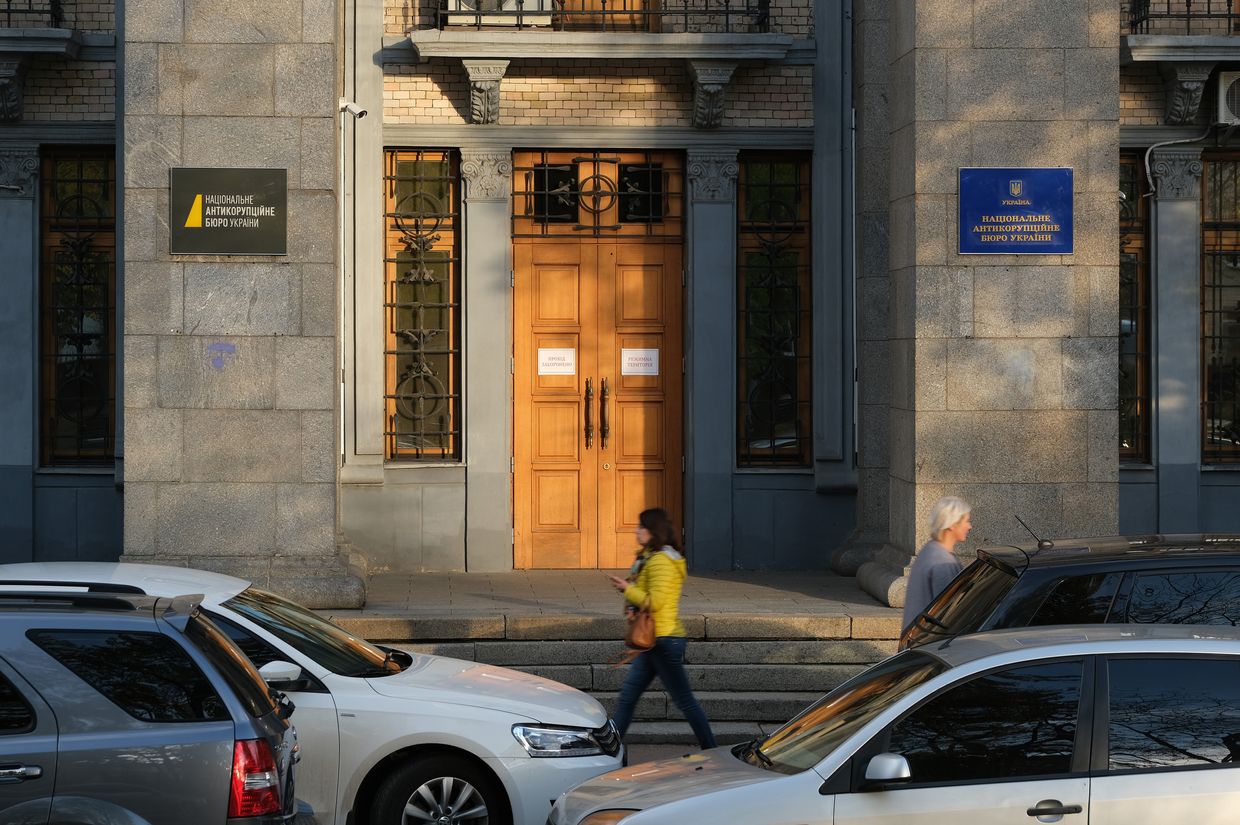
Set up in 2019 as part of a Western-backed reform, the court was designed to rule on cases brought by the National Anti-Corruption Bureau (NABU) and the Specialized Anti-Corruption Prosecutor's Office (SAPO).
The three institutions were created from scratch to fight top-level corruption instead of traditional courts and law enforcement agencies, which were mired in graft and were seen as ineffective.
And while the Anti-Corruption Bureau and the Anti-Corruption Prosecutor's Office have been bringing high-profile cases to court, the court itself has been slow in handing out verdicts.
"In our country, there are very few people — people who make political decisions and decisions that impact the social and legal system — who are interested in making us work effectively," Mykhailenko said.
With a large-scale corruption scheme uncovered by the bureau in October, leading to two ministers being ousted and eight people being charged, Mykhailenko now faces a daunting task — to finally prove that her court is capable of delivering justice.

An attack on anti-corruption infrastructure
Mykhailenko, 44, worked at private law firms starting from 2007.
She became a judge of the High Anti-Corruption Court and the court's spokesperson in 2019 and was elected as the court's chairwoman in 2023.
Mykhailenko turned out to be at the helm of the court just as Ukraine's entire anti-corruption infrastructure faces its greatest challenge yet.
A law signed by President Volodymyr Zelensky in July subordinated the NABU to the prosecutor general, an official appointed by the president.
Although the law was later annulled, the conflict between the President's Office and the anti-corruption agencies continues to this day.
In September, Mykhailenko said that the High Anti-Corruption Court faced a threat to its independence.
In her interview with the Kyiv Independent, Mykhailenko was careful in her comments on the July law.

"What is there to comment?" she said. "They've rolled everything back."
She distanced herself from the conflict between the NABU and the Security Service, seen as loyal to the president, saying that "these are law enforcement agencies that have resources and power, and we're a court."
Mykhailenko argued, however, that now "there may be a law that would limit the High Anti-Corruption Court's autonomy or capabilities."
"Now these probabilities are felt more than before," she added.
Delayed cases
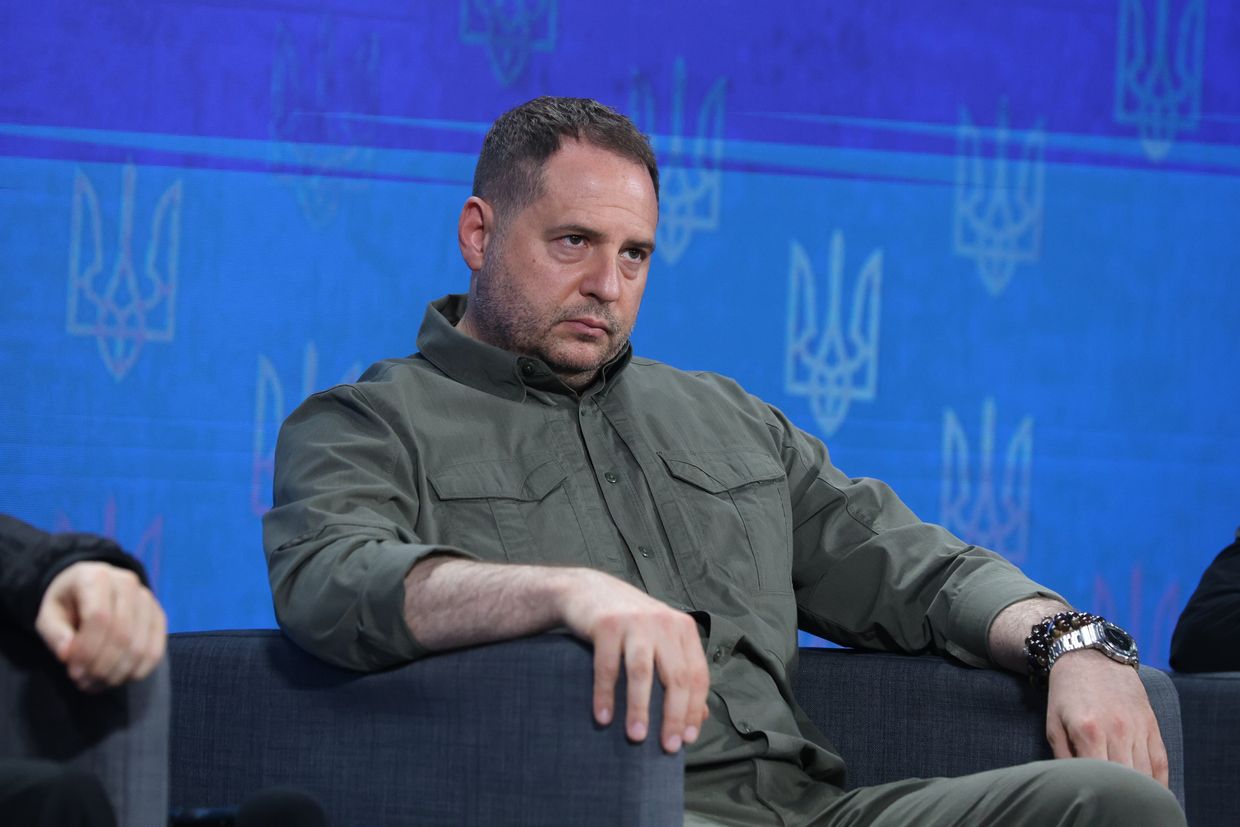
The confrontation between the anti-corruption agencies and the President's Office culminated on Nov. 28, when the Anti-Corruption Bureau searched the premises of Andriy Yermak, then head of the President's Office.
Yermak resigned amid the corruption scandal the same day.
The searches followed a large-scale corruption case involving the state nuclear power monopoly Energoatom.
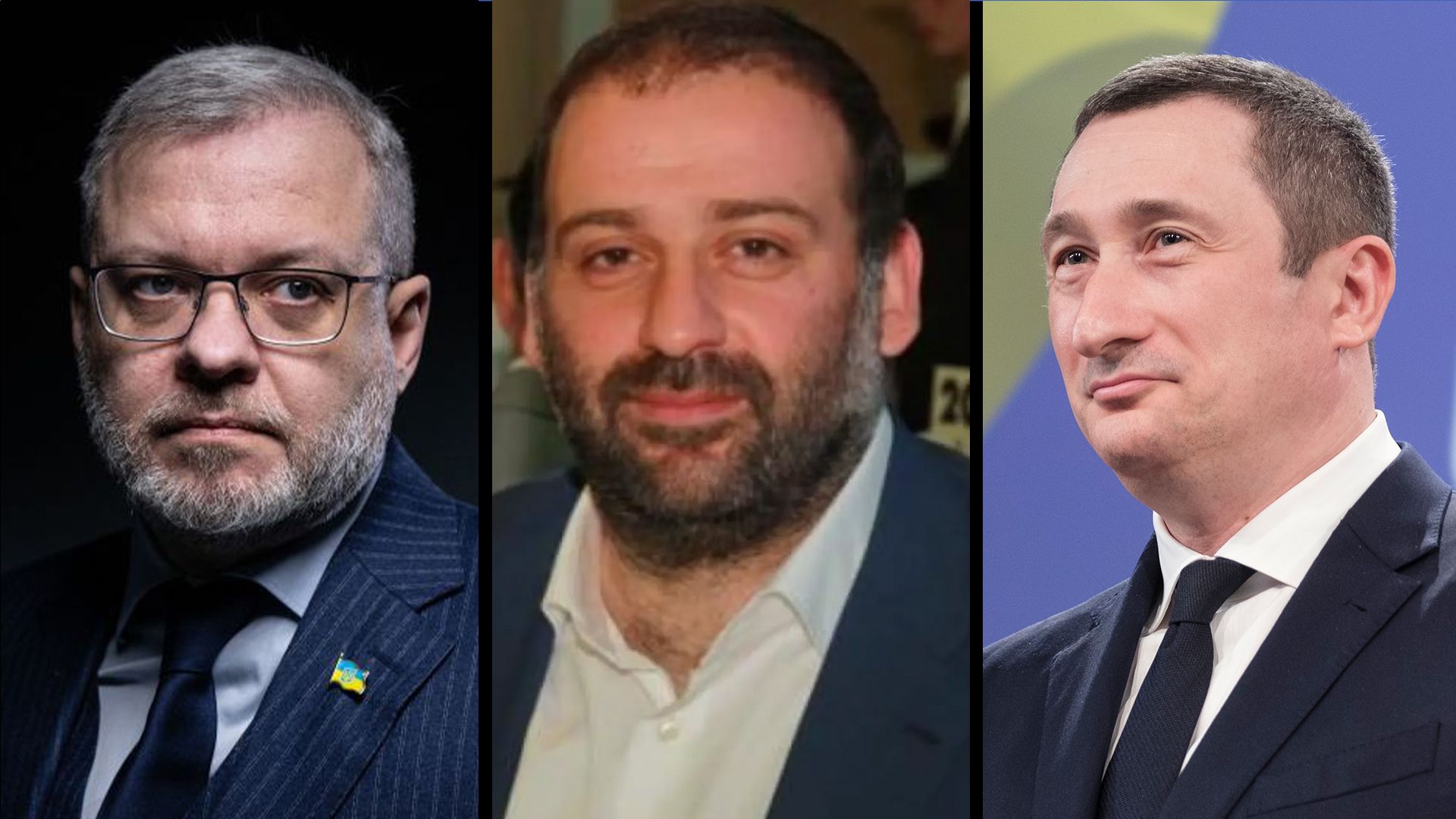
Those implicated include former Deputy Prime Minister Oleksiy Chernyshov, Justice Minister Herman Halushchenko, who served as energy minister earlier this year, and Rustem Umerov, former defense minister and current secretary of the National Security and Defense Council.
All eyes are now on the court.
With few verdicts in high-profile corruption cases handed out since 2019, the High Anti-Corruption Court's performance has come under scrutiny.
The court is still deliberating major corruption cases that began many years ago — such as those against Oleh Hladkovsky, ex-secretary of the National Security and Defense Council; former Odesa Mayor Hennadiy Trukhanov, and tainted judge Pavlo Vovk.
One notable exception is the case against Roman Nasirov, former head of the State Fiscal Service. In October, he was sentenced to six years in jail in an abuse of power case.
But Chief Anti-Corruption Prosecutor Oleksandr Klymenko said in an interview with the Kyiv Independent in October that many old high-profile corruption cases may soon be closed because the statute of limitations will expire.

Meanwhile, the court exempted former lawmaker Mykola Martynenko from criminal responsibility in June due to the statute of limitations.
Mykhailenko downplayed the significance of the issue.
"I wouldn't elevate this to the level of a critical issue," she said. "Undoubtedly, there are cases that may be closed due to the statute of limitations. That does not mean that justice has not been served in such instances. Justice is served in any case."
Mykhailenko also said that some cases had been closed because they "were objectively submitted to the court within a timeframe in which it was simply impossible to examine them."
A common complaint is that suspects' lawyers often delay proceedings indefinitely by abusing their procedural rights.
Klymenko argued, however, that it is ultimately the judges' responsibility to make sure that cases are heard on time. He proposed introducing more severe disciplinary penalties for judges when cases are closed due to the statute of limitations.
Mykhailenko said, however, that "currently the legislation does not provide clear mechanisms that would allow a judge to prevent" abuses by lawyers and indefinite delays.
"From the perspective of the Criminal Procedure Code, (tools for preventing abuses) are very limited — but we try to work with what we have," she added.
Top corruption and petty corruption
The High Anti-Corruption Court has been praised by experts and activists for a higher number of verdicts in petty and mid-level corruption cases than traditional courts. However, it has also been criticized for delivering few verdicts in top corruption cases.
From the court's creation in 2019 until June 2025, the High Anti-Corruption Court had convicted a total of 258 people.
These include 10 members of parliament and Cabinet officials, 13 regional lawmakers, 23 judges, five prosecutors, 27 state company executives, and 20 lawyers.
"Who decides whether it's high-level corruption or not?"
The list includes no top officials from the President's Office and no ministers, except for former Ecology Minister Mykola Zlochevsky, who served under pro-Russian ex-President Viktor Yanukovych.
In 2023, Zlochevsky signed a controversial plea bargain and got away without a real or suspended prison term, paying a fine.
Mykhailenko believes that criticism is unjustified.

"Who decides whether it's high-level corruption or not?" she said. "The law sets out specific conditions under which a case is to be considered by the High Anti-Corruption Court... The court cannot say: 'We won't take this case because it's not high-level corruption, but we will take that one because it involves a prominent name'."
Mykhailenko also argued that "before the creation of the High Anti-Corruption Court, there were no convictions involving prosecutors, judges, heads of state-owned enterprises, or members of parliament."
The court's handling of high-level cases has not been ideal, however.
In 2023, the court upheld prosecutors' decision to close the Rotterdam+ corruption case and was lambasted by the Anti-Corruption Action Center over the decision.
The scheme, which allegedly sought to pass Ukrainian coal off as foreign, was initiated under former President Petro Poroshenko and benefited oligarch Rinat Akhmetov's energy company DTEK.
As the court's spokesperson, Mykhailenko defended the court's decision at that time, arguing that it was acting independently and effectively.
The decision on Rotterdam+ was later canceled by the court's appeal chamber.
Mykhailenko told the Kyiv Independent that she "feels absolutely comfortable" when facing criticism and pressure from both civil society and the authorities.
"In criminal cases — more often than in other ones — one of the sides is often unhappy," she said. "When both sides are unhappy, it seems to me that it's a very good signal that says that the court is absolutely independent."
Mykhailenko also argued that "as people, we might want to act otherwise, but as judges we can only act according to the tools that we have."
"That's why the question arises — either there's a problem with judges or with the law," she said. "But isn't there a third option — that something is wrong with (society's) perception?"