Ukraine Reforms Tracker Weekly — Issue 44
 on Google
Editor’s note: This is issue 44 of Ukrainian lawmaker Yaroslav Zhelezniak’s weekly "Ukraine Reforms Tracker" covering events from Jan. 13–Feb. 6, 2026. The digest highlights steps taken in the Ukrainian parliament related to business, economics, and international financial programs.
IMF benchmarks and soft commitments
Ukraine launches re-attestation of Economic Security Bureau staff
Ukraine has formally launched the second phase of reform of the Bureau of Economic Security (known by its Ukrainian acronym BEB), requiring mandatory re-attestation of all employees. An official order initiating the process was published on Jan. 29.
The re-attestation process will begin with senior leadership, including heads of departments at the central office and regional branches. Managers have 14 days to either apply for certification and confirm their professional qualifications or resign.
The process will then expand to include rank-and-file employees.
Ukraine advances customs head selection as 16 candidates move to next round
Ukraine has narrowed the field of candidates competing to lead the State Customs Service, advancing 16 applicants to the next stage of a competitive selection process.
Thirty-eight candidates initially participated in an anonymous computer-based aptitude testing held in Kyiv on Jan. 17. Candidates needed to score at least 107 points to qualify for the next round.
The upcoming phase, scheduled for early February, will include tests on legal knowledge. It will also include background checks and integrity screening, which will continue until final interviews.
Ukraine’s parliament opens session without progress on IMF-linked legislation
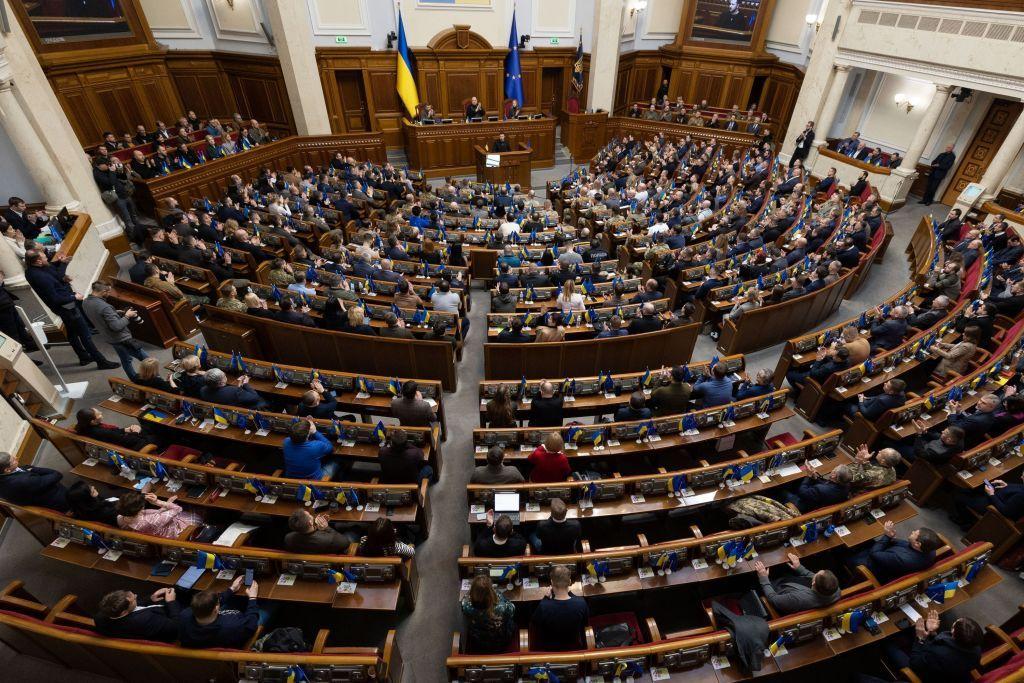
Ukraine’s parliament formally opened its new legislative session on Feb. 3 but failed to pass any legislation, including key bills tied to international financial assistance programs.
Under the constitution, parliament must open its session on the first Tuesday of February. However, lawmakers had opted only for a procedural opening, with voting expected to begin later in the month due to widespread absences linked to foreign travel and regional commitments.
As of Feb. 6, the legislative agenda still lacks most bills required under Ukraine’s International Monetary Fund and European Union financing programs. The only relevant draft currently scheduled is legislation foreseen under the Ukraine Facility program and dealing with modernizing district heating infrastructure (draft law #14067).
As for the steps indicated as prior actions for the new program with the IMF, Government officials are now considering introducing some of them through amendments to existing law proposals that already sit with the Parliament including draft law #14025 on taxation of digital platforms and draft law #12360 on customs performance KPIs. Worth noting, draft law #14025 failed to be included into the parliamentary agenda for the last two months and has yet to pass even its first reading.
Plans to cut value-added tax exemptions for individual entrepreneurs have stalled amid concerns that the proposal would fail to secure sufficient support in the parliament as well as public pushback. The government has so far refrained from formally submitting the legislation draft.
Obligations to the EU
Parliamentary committee rejects government SEPA bill
A parliamentary committee on finance and tax policy has delayed consideration of a government-backed draft law aimed at aligning financial monitoring rules with European Union standards after lawmakers raised concerns about its impact on individuals.
Members of the committee debated draft law #14327 on Feb. 3, ultimately deciding to withdraw the proposal and prepare a revised version.
Lawmakers criticized the proposal as premature, arguing that Ukraine’s financial monitoring authorities should first undergo institutional reform before imposing stricter compliance obligations on citizens.
Selection commission extends deadline for ARMA Head applications
Ukraine has extended the application deadline to select a new head of its Asset Recovery and Management Agency (ARMA), citing lack of candidates for the competitive and credible selection process. The selection commission voted to extend the deadline by three weeks to Feb. 9 after receiving only 13 applications.
Other key issues
Ukraine opens probe into $3.4 million ‘green tariff’ fraud scheme
Ukraine’s anti-corruption authorities uncovered a scheme to embezzle 141.3 million hryvnia (~$3.4 million) in state funds allocated under the country’s renewable energy subsidy program.
The National Anti-Corruption Bureau (NABU) and Specialized Anti-Corruption Prosecutor’s Office (SAPO) identified nine suspects, including Rostyslav Shurma, a former deputy head of the Presidential Office and former supervisory board member of state energy giant Naftogaz, as well as his brother Oleh Shurma, who owns a network of companies in Ukraine and abroad.
Investigators allege that commercial power generation facilities located in Russian-occupied parts of the Zaporizhzhia Oblast continued receiving state payments for energy despite being outside Kyiv’s control.