Deadly, elite, and scaling — inside Russia’s Rubikon front-line drone system
New Russian drone initiatives have eroded Ukraine's early edge in UAV warfare, reshaping the battle for the skies
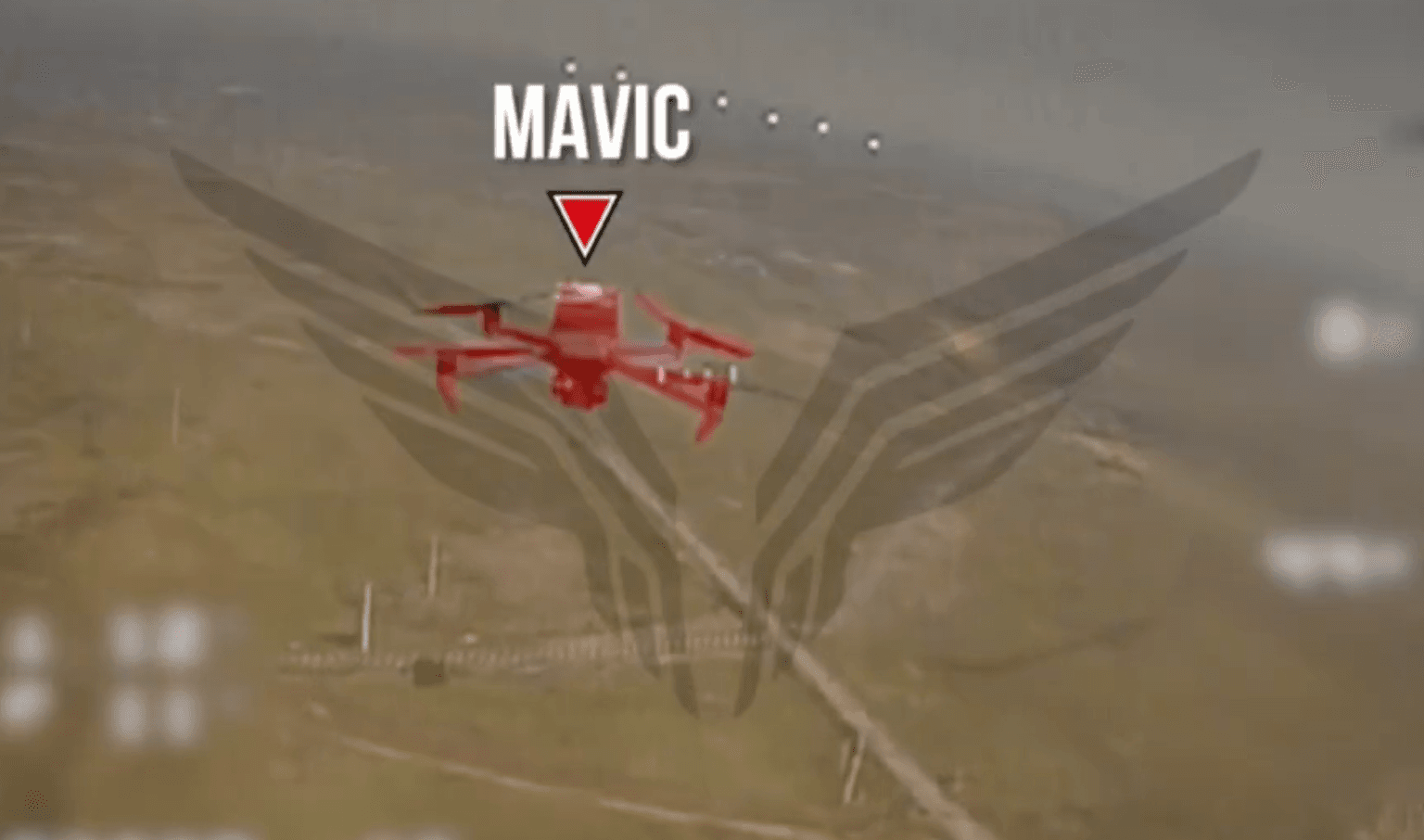
Alleged Ukrainian DJI Mavic drone targeted by russian interceptor in an unspecified location in a video posted on Nov. 28, 2025. (Rubikon/Telegram)
 on Google
An unfortunate realization is dawning across the front lines and filtering through Kyiv: Ukraine has, in effect, lost its hard-fought advantage over Russia when it comes to drones.
"Komers," a deputy commander of a drone unit within Ukraine's Safari Assault Regiment in Donetsk Oblast, remembers clearly when "Judgement Day" and "Judgement Night" — two then-new elite Russian drone units — rolled into the Russian positions across the line from him this past spring.
"We build out information about who’s coming and going, but even when we didn’t have information, we noticed that the drone tactics changed," Komers told the Kyiv Independent. "At a certain moment, over maybe two or three days, the tactics changed completely. It wasn’t the unit on the line anymore."
Russia has centralized what began as a patchwork of volunteer drone groups into a state-backed system that is training pilots, ramping up production, and specializes in hunting Ukrainian drone operators and the networks that support them. Ukrainian soldiers and experts say that shift is rapidly eroding Ukraine’s early edge in drone warfare and poses a growing threat to its ability to hold the line.
For Komers and his unit, that shift showed up almost immediately on their stretch of the front. The new enemy drone unit was more adept at targeting their supply lines.
"First and foremost, they hit across our logistics and our eyes," Komers continued. "These guys, unfortunately, migrate from here and there. They can be in Pokrovsk, then in Kupiansk, then again in Pokrovsk, then in Toretsk and wherever else."

The major difference is that these new drone pilot units are breaking up the dense logistical network of not just vehicles but internet connection nodes undergirding Ukraine’s own UAV success — and by extension the whole of the Ukrainian line.
A constellation of new drone units is spreading across the Russian lines. In the Russian rear, new training and production facilities are cropping up to supply them. In a fairly standard manner, Judgement Day began as a volunteer unit. But the Russian Defense Ministry has semi-formally brought Judgement Day and Judgement Night into its own stable of increasingly centralized and professionalized drone units.
Indeed, today, Judgement Day’s Telegram channel is almost entirely reposts from what is in fact the public centerpiece of Russia’s front-line drone strategy today: Rubikon.
Rubikonization
Rubikon specializes in hunting down Ukrainian drone units — the pilots themselves, but also shooting their UAVs out of the sky.
Video montages — often multiple daily — frequently focus on Rubikon interceptions of Baba Yagas. These heavy bomber units based off of DJI Matrices but outfitted with thermal cameras have allowed Ukrainian units to terrorize Russian soldiers by night and have been a consistent area of Ukrainian aerial dominance in the nocturnal near-front, as rank-and-file Russian soldiers have lacked the night vision necessary to strike back. "Baba Yaga" comes from Russians naming it after a dread witch of folklore.
"Vulnerability to Baba Yagas has long been a sore point for the Russians. Especially at night, Baba Yagas seem to reign," Sam Bendett, a UAV expert for the Center for Naval Analysis, told the Kyiv Independent.
Rubikon’s work clipping the Baba Yaga’s wings is just one striking example within an overall massive uptick. In January, Rubikon published footage of just 31 strikes, a figure that rocketed upward in June, reaching 1,016. In November, it was up 2,246.

The Kyiv Independent cannot verify each of these strikes, and notes that it’s an element of informational warfare to exaggerate the effectiveness of your own weapons while downplaying those of the enemy. But it is clear that Rubikon has become not just a major threat to the Ukrainian military, but also the focal point of Russia’s drone strategy.
Maybe more impressive than striking down Ukrainian heavy bomber drones is that Rubikon and company have gotten precise enough to hit network infrastructure — everything from patch antennae to Starlink terminals along the field. While likely cheaper than the drones the Russians are using, blowing up the technology that keeps Ukrainian drone fighters connected to the internet is a brutally effective form of encirclement in such network-dependent fighting.
Origins
Project "Archangel" is one of the Russian volunteer drone projects whose rise helps explain just what happened that made Russian drones so much more dangerous in the intervening year and a half.
"The enemy understood quicker the specifics and realities of the current war and took measures to build out their volumes," Project Archangel wrote back in June 2024. Lamenting that Russia was on the back foot in the overall sector, the organization said that despite decent production, the actual equipment, training and technical support in Russian units were all "hobbling."
Its founder, Mikhail Fillipov hails from east of Moscow. Ukrainian investigators have dated Archangel's origins to 2022.
"Russians really scale and that's the biggest threat."
Since then, Archangel has built an anti-air drone, likewise called the Archangel. The organization has also taken to mass training, including a mass camp in Berdyansk and a veritable outlet chain of schools for drone pilots cropping up in occupied territories from Crimea to Kherson.
Such groups are common elements of a phenomenon termed "the People’s VPK," using the Russian abbreviation for the military-industrial complex.
Rubikon began as the Defense Ministry's attempt to replicate this sort of volunteer org in August 2024, but has become Russia’s flagship drone combat unit. LostArmour, a weapons-tracking project, highlights only Rubikon’s strikes among specific drone units.
While LostArmour is run by pro-Russian volunteers and, for example, doesn’t publish Russian weapons losses, a New York Times analysis in January found 97% of its published entries accurate, with 95% certainty.
The Rubikon unit has also seen an abundance of press coverage in recent weeks. But it’s only the most public face of a trend in which the Russian government has pulled such groups into its own structures, leaving their remaining independence in doubt.
"Most of them are connected to the MoD," Bendett said. "The military and government are moving to coordinate and co-opt some of these efforts."
Komers, for one, believes these drone groups to be projects of Russia’s Federal Security Bureau, or FSB, though he cautions, "that’s just from my point of view."
Education and production projects like Archangel feed the increasing professional frontline work of Rubikon, which has itself at least informally absorbed many other units — including Judgement Day. Bolstering all of this is Russia’s ready access to Chinese supply chains, leading to increasingly well-trained, coordinated, standardized and well-kitted Russian drone fighters.
For Bendett, the professionalization of these units across the military is "very dangerous," culminating in the emergence of Russia’s Unmanned Systems Forces earlier this month.


"Russians really scale and that's the biggest threat," Kate Bondar, a fellow at the Center for Strategic and International and former staffer at the Ukrainian Finance Ministry, told the Kyiv Independent. Bondar noted that non-Russian drone purchasers looking to buy from Chinese manufacturing were stuck behind backlogs of Russian orders extending to May 2026.
"I don't want to be too pessimistic, but when I cross check information and it confirms it looks really threatening," Bondar said.
Ukraine is loath to surrender the edge in drone warfare it once held over Russia. Given the importance of drones and their attendant scrappy innovation to Ukraine’s defense against a larger Russian army — not to mention Ukraine’s self-perception — the question is critical to the future of defense.
"So imagine (Russia) will have more drones, more people, better software," Bondar said. "I don't know if in Ukraine they realize it or not, because everyone's just talking about Rubikon, Rubikon, Rubikon."
Komers cautioned against despair given the continued back-and-forth between Ukrainian and Russian drone units, but emphasized that the problem is not going away.
"The situation is continuing to get worse. Unfortunately, the enemy is continuing to improve. As in, when someone says, ‘the enemy is a moron,’ they aren’t going to live for long," said Komers.