Investigation: Secret visits to Moscow by China’s military expose deep defense cooperation, military procurement deals
The Kyiv Independent identified four dozen Chinese officers and defense industry employees who quietly visited Russia to negotiate military contracts during Russia's war in Ukraine
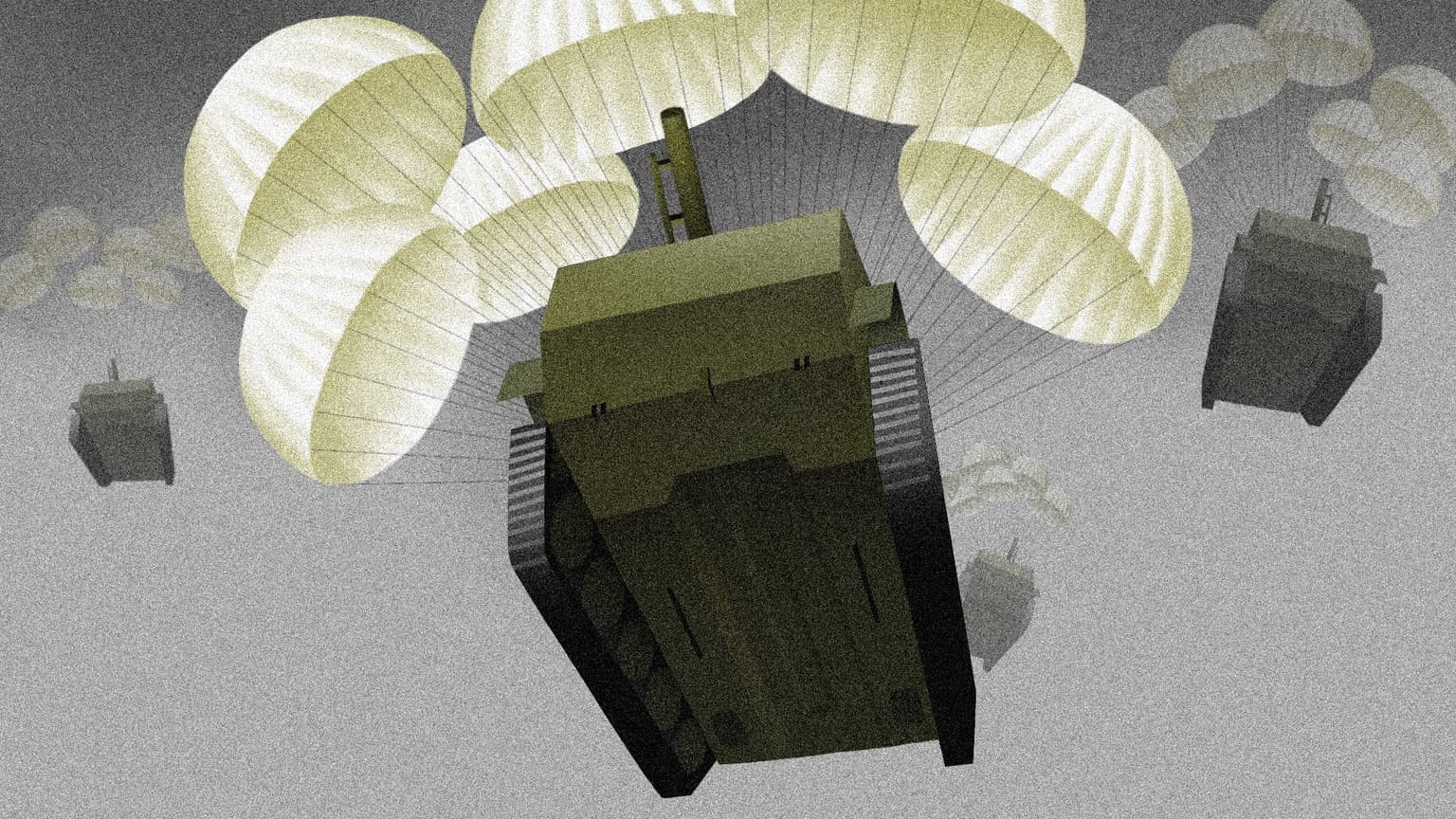
The Kyiv Independent identified several dozen Chinese military members and arms industry workers who maintained ties with Russia’s defense sector. (Nataliia Shulga/The Kyiv Independent)
 on Google
Key findings:
- After Russia launched its full-scale war against Ukraine, China decided to purchase Russian aircraft, combat vehicles, ammunition, and equipment to enhance its paratroopers.
- Chinese officers and representatives of defense manufacturers have repeatedly visited Russia to inspect examples of weaponry and negotiate deals.
- In 2023 and 2024, Beijing entered into several confidential contracts with Moscow to acquire Russian armaments, with the funds intended for Russian arms manufacturers being subject to international sanctions.
- The known deadline for implementing some of the contracts is 2027.
- The Kyiv Independent has identified several dozen Chinese military personnel and employees of arms manufacturers who continued to cooperate with the Russian arms industry, thereby violating international sanctions.
A little over a month after Russia's full-scale invasion of Ukraine in 2022, the Russian government received a request from China, according to leaked correspondence reviewed by the Kyiv Independent.
In it, Beijing asked to buy a set of weapons and armored vehicles for airborne troops. The request, numbered ZH2022-Y53, was received on April 7, 2022, the documents show.
Three weeks later, according to the documents, Russia's Federal Service for Military-Technical Cooperation instructed Rosoboronexport, the state-owned company responsible for all arms exports from Russia, to demonstrate Russian air-droppable combat vehicles to a Chinese delegation.
Rosoboronexport started preparing for the visit. The delegation arrived in Moscow a year later, in April 2023.
This was one in a series of meetings that led to several military contracts between China and Russia, signed after the start of Russia's war with Ukraine.
The agreements are set to provide sanctioned Russian arms manufacturers with revenue from the export of their weaponry to China. In return, China will receive weaponry and equipment for its airborne forces, the PLAAF Airborne Corps, which have been strengthening amid expectations of an attack on Taiwan.
The Kyiv Independent learned the details of the agreements from the leaked documents of subsidiaries of Russia's largest defense conglomerate, Rostec. These documents include internal letters, meeting minutes, a draft intergovernmental contract, copies of the Chinese officers' passports, and other documents.
To verify the facts outlined in the documents, we used Russia's flight, customs, and court records, as well as facial recognition software.
We identified some of the negotiators and individuals responsible for establishing agreements that have strengthened China’s military cooperation with Russia amid its war in Ukraine, despite international sanctions.
Taken together, the leaked documents and corroborating records reveal a largely hidden arms pipeline running from Moscow to Beijing since the start of Russia's full-scale war against Ukraine. They show China discreetly seeking Russian aircraft, armored vehicles, ammunition, and training for its paratroopers, funneling new money to sanctioned Russian defense companies while signaling a deepening strategic partnership.
"It shows the world that Russia has a true, tremendous friend in Beijing," Daniel Fu, a research associate at Harvard Business School, told the Kyiv Independent about the leaked documents.
This investigation is based primarily on a large leak of Russian defense industry documents, supplemented by earlier leaks and open-source data.
The dataset, which was studied by the Kyiv Independent, is known in international media as a leak of Russian documents obtained by the Black Moon hacktivist group in 2025.
Based on these documents, the U.K.'s defense and security think tank, the Royal United Services Institute (RUSI), in collaboration with The Washington Post, the Financial Times and The Times, reported that Russia had agreed to supply China's army with weapons and armored vehicles to equip an airborne battalion.
The Kyiv Independent obtained these documents from its own sources. Along with data on armored vehicles and weapons, we discovered references to a contract for purchasing aircraft. We also found indirect confirmation of the aircraft deal in Russia's customs records.
Additionally, we will reveal some behind-the-scenes details — participants, timeline and venues. Apart from the Black Moon leak, we used a previous leak of Rostec documents, obtained in partnership with the Organized Crime and Corruption Reporting Project (OCCRP).
Rosoboronexport, as well as the PRC Ministry of National Defense and Chinese arms manufacturers NORINCO and AVIC, did not respond to the Kyiv Independent's request for comment.
Taken together, the leaks point beyond earlier reporting about a single battalion’s worth of equipment, revealing a broader pattern of Chinese delegations and contracts with Russian arms makers.
Chinese officers’ quiet trips to Russia
A key element of the cooperation is the steady flow of Chinese officers and defense industry officials who have been traveling to Russia since 2023 for closed-door talks. By piecing together leaked Russian documents with photos and travel data, the Kyiv Independent was able to identify many of these previously anonymous visitors by name and rank.
Chinese Major General Fan Jianjun was photographed during his visit to the annual Russian arms forum in the Moscow suburbs in August 2023. He was pictured showing then-Russian Defense Minister Sergei Shoigu models of Chinese weaponry.
Fan Jianjun represented China's highest military authority, the Central Military Commission of the People's Republic of China (PRC). In 2023, he led the Bureau of Military Equipment and Technical Cooperation within the Equipment Development Department of the PRC Central Military Commission.
The Bureau's procurement division purchases imported weapons and equipment for China, including from Russia.
None of the Russian media that covered the event mentioned who was in the photo next to Shoigu.

This was not the Chinese major general's first visit to Moscow that year. According to the leak of Russian defense industry documents, Chinese delegations of various compositions have repeatedly visited Russia to negotiate future purchases of Russian weaponry, and Fan Jianjun was a part of some of those delegations.
Unlike the arms exhibition, the rest of the visits were completely confidential — neither side has publicly addressed any of those closed-door meetings, and we could not locate any public images of them.
Most of the Chinese military delegation members are not public figures, but some of them have appeared in photographs elsewhere at different times, usually without their names or titles being mentioned. The circumstances and locations of these images indirectly confirm that they indeed are the people mentioned in the leaked Russian documents.
Commanders of the Chinese Air Force and paratroopers participated in secretive meetings in Russia, including Senior Colonel Xiang Guangqiang from the PLAAF Airborne Corps, as revealed in the leaked documents.
As the Kyiv Independent discovered using facial recognition software, in 2024, Xiang Guangqiang was photographed in Morocco during a Chinese delegation “knowledge sharing” visit to the First Parachute Infantry Brigade.

Xu Hongguang, who also visited Russia in 2023, was captured in a random photo taken by visitors to the 2018 International Army Games. He was photographed near the “Airborne Platoon” pavilion, where the international airborne troops competition was held. His uniform bears the caption “China paratrooper.”
The same set of leaked Russian defense industry documents identify him as a colonel of the PLAAF Airborne Corps.

Representatives of the largest Chinese state-owned arms manufacturers also participated in closed-door negotiations in Russia, including NORINCO, which manufactures armored vehicles, weapons, and ammunition, and AVIC, which manufactures Chinese military aircraft, UAVs, and helicopters.
In total, the Kyiv Independent identified 40 Chinese military personnel and representatives of arms manufacturers who visited Russia during its war with Ukraine to negotiate purchases of Russian weaponry. Slide through the charts below for the full list.


These unpublicized visits show that the cooperation is being managed not just by state companies, but by senior figures across China's airborne forces and military. Their visits laid the groundwork for the specific aircraft and armored vehicle deals that followed.
What preceded the recent Chinese-Russian arms deals
To understand why Beijing turned to Moscow for new equipment after 2022, it helps to look at how the two sides were already working together before the full-scale invasion. A smaller prewar contract known as “Sword” set the technical and bureaucratic framework for the much larger deals that came later.
By the time the Kremlin invaded Ukraine, Russia and China had already signed a contract worth about $36 million, codenamed "Sword." Under it, Russia was to develop software and hardware to automate command of China's airborne troops by integrating battlefield data from multiple sources.
Signed in 2019 with completion planned by the end of 2022, "Sword" was repeatedly delayed by the COVID-19 pandemic, bureaucratic holdups on both sides, and financial problems at the Russian subcontractor, the Scientific Research Institute of Communication and Control Systems (NIISSU).
According to the leaked documents, in the first half of 2025, the project was still in progress. The outcome is unknown because the recent Russian defense industry leak contains documents only up to May 2025.
The documents indicate that China was dissatisfied with the delays. Even so, in April 2022 it offered Russia additional cooperation, seeking to strengthen Chinese airborne troops. This time Beijing was interested in armored vehicles and aircraft, sending a formal request just over a month after Russia launched its full-scale war in Ukraine.
In other words, even as the “Sword” project struggled with delays, Chinese officials were already seeking a new, more ambitious package of Russian hardware. The next step was to see what Moscow could actually offer.

First try: old aircraft
China's first move was to look at the aging transport planes that have long underpinned Russia's airborne operations. The visit that followed shows how Beijing tested the option of buying secondhand aircraft before shifting to a more modern model.
In March 2023, a group of Chinese military personnel arrived in Russia to inspect the old Il-76TD military transport aircraft, registered RA-76843. Such aircraft are capable of transporting military equipment weighing up to 46 tons over a distance of up to 3,900 km (2,400 miles).
The Chinese officers considered purchasing this aircraft after repairs. The aircraft was inspected on March 4, in Ryazan, 200 km (125 miles) southeast from Moscow. The Chinese delegation flew to Moscow from Beijing two days before the inspection.
The visit is confirmed not only by the recently leaked documents of Rostec companies, but also by Russian flight records from 2023. Those records were leaked two years ago after a hacker attack on a Russian ticket booking system.
In Ryazan, the Chinese representatives visited the 360 ARZ aircraft repair plant, where the Il-76TD RA-76843 aircraft was parked. They were shown the documentation on the aircraft, and looked at the aircraft itself.

The Russian security service, FSB, ensured that the Chinese guests would not be able to steal any information. They were not allowed to bring phones or cameras into the plant — all items had to be left at the plant's entrance before passing through the metal detector. Any notes taken by the Chinese officers had to be handed over to the Russian side for inspection before the end of the visit.
The Kyiv Independent found no evidence of further sale of the Il-76TD aircraft with the registration RA-76843 — it's still owned by the private Russian company Transleasing, which is currently undergoing bankruptcy proceedings.
Yet, the very next month, Chinese military representatives flew to Russia again.
The failed attempt to buy this older Il-76 did not halt the talks. As our reporting shows, instead, it pushed Chinese negotiators toward newer refueling and transport aircraft that could both extend range and support airborne drops.
Next aircraft inspection and alleged purchase
The April 2023 visit to Ryazan marked a turning point in those negotiations. This time, the focus was on a newer Il-78M-90A tanker that could double as a transport and a platform for dropping vehicles.
On April 27, 2023, another Chinese delegation visited the same aircraft repair plant in Ryazan. This time, they came to see the Il-78M-90A refueling aircraft with the registration RF-78741 — the first model of this type of aircraft manufactured in Russia. Its construction was completed in 2018.
This tanker aircraft can refuel military planes both in the air and on the ground. Potentially, it can function as a military transport aircraft and be equipped to drop vehicles. This feature was particularly appealing to Chinese buyers.

The visit likely resulted in a deal. The leaked minutes of the 2024 Chinese-Russian negotiations mention a Chinese-Russian contract dated Nov. 8, 2023 — about seven months after the visit — that pertains to the purchase of similar refueling aircraft.
"Il-78MK-90A aircraft must be capable of air-dropping equipment and cargo," read the minutes. According to the document, "all necessary tests outlined in the contract must be conducted by the Russian side before the delivery of aircraft to the PRC.”
The number of aircraft and future delivery dates are not specified in the documents available to the Kyiv Independent. Yet, according to one of the documents, China considered acquiring equipment from Russia for 10 such aircraft.
Additionally, in 2024, China asked Russia to train Chinese pilots and engineers on how to operate the Il-78MK-90A aircraft when deploying vehicles from it. They requested that the training be conducted on PRC territory.
In Russian customs records, the Kyiv Independent found confirmation of China's interest in these types of aircraft. According to the records, in April 2024, a Rostec subsidiary exported technical documentation for the Il-78 to China.
The buyer is listed as the Bureau of Military Equipment and Technical Cooperation of the Equipment Development Department of the Central Military Commission of the PRC. According to Russian flight records, the then head of the bureau, Major General Fan Jianjun arrived in Russia in April 2023, when the tanker aircraft was unveiled.
In addition to purchasing aircraft, Beijing might have sought Russian help to repair Russian-made planes already in service with the PLA Air Force. In 2023, the Russian aircraft repair plant, 360 ARZ, confirmed that it was ready to accept two of China's Il-76s for repair.
Later, in April 2024, China also asked Russia to send a delegation as soon as possible to assess the condition of 10 Il-76MD cargo planes owned by the Chinese army. Russia had to retrofit the equipment of these aircraft so that Russian airborne vehicles could be dropped from them.
Seen together, the leaked minutes, customs filings, and repair plans point to a multi-layered aviation package: new refueling aircraft for China, training for their crews, and upgrades to the existing fleet so it can handle Russian-made airborne vehicles.
Inspection and purchase of armored vehicles and weapons
At the same time, Chinese negotiators were looking beyond aircraft to the vehicles and weapons those planes would carry. A series of factory tours and field demonstrations in 2023 led directly to a draft contract to equip Chinese paratroopers with Russian hardware.
In April 2023, Russian defense officials presented a delegation from China with combat vehicles and demonstrated the loading process onto an Il-78M-90A aircraft.
The airborne vehicle demonstration was scheduled to take place at the Ryazan Higher Airborne Command School and the loading of equipment onto the aircraft took place at the aircraft repair plant, 360 ARZ.
Also in April, a Chinese delegation visited the Training Systems factory, which manufactures equipment to train military personnel to operate combat vehicles, and Technodinamika, which manufactures parachutes for dropping heavy vehicles and paratroopers.
Four months later, in August 2023, another Chinese delegation arrived in Russia. It also inspected combat vehicles and weapons of Russian paratroopers, according to the minutes of the meeting, obtained by the Kyiv Independent.
After visiting a number of Russian arms manufacturers, they went to observe Russian combat vehicles at the arms exhibition. At the same exhibition, Major General Fan Jianjun was photographed presenting the Chinese booth to Shoigu.
The August visit was about more than mere curiosity. According to the meeting minutes, at that time, the two countries finally agreed that China would procure Russian combat vehicles, ammunition and parachute systems for air-dropping combat vehicles and paratroopers.
In September 2023, China was to submit a final request with a list and quantity of equipment. Then the Russian side was to send a draft contract. The Kyiv Independent found it in the leak.
A year later, on October 15, 2024, a contract for the purchase of Russian airborne equipment was presumably signed. This is evident from the leaked note dated April 2025, which describes the contract and mentions the date of signing.
Based on the draft contract, China ordered 37 airborne armored infantry fighting vehicles, 11 anti-tank guns, 11 armored personnel carriers, four command vehicles, various parachute systems for dropping these vehicles from aircraft, as well as ammunition, airdrop equipment for Il-78MK-90A military aircraft, and gear for paratroopers.


The total value of the contract is approximately $585 million. China will make payments to Russia gradually as the products are delivered. According to the draft contract, the first 30% of the contract value, which amounts to $175 million, is scheduled to be paid to Russia in 2025. The next 15% is to be paid in early 2026.
The draft contract reads that payment must be made in U.S. dollars to the account of an authorized Russian bank.
Subsequent documents also refer to the preparation of a contract for Russian specialists to train Chinese military personnel in operating the purchased equipment. These training sessions were scheduled to take place in both Russia and China.
Although neither Russia nor China announced these negotiations and deals, Rostec hinted at them. In April 2024, the Rostec website announced that Rosoboronexport offered to equip foreign airborne troops. It described a variety of armored vehicles, weapons, and parachutes that China was covertly negotiating.
The announcement came on April 10, 2024, at a time when the Russian delegation was in Beijing for a meeting with Chinese officials for another round of contract negotiations, as leaked meeting minutes reveal.
“While there may be reasonable doubts about Russia's ability to supply Il-78s to China during its war with Ukraine, in the case of the armored fighting vehicles, unfortunately, there is no doubt Russia is capable of supplying them,” says Ivan Kirichevsky, a service member of Ukraine's Armed Forces and a weapons expert at Defense Express, a Kyiv-based military think tank.
By late 2024, what had started as discreet inspections and factory visits had solidified into a major procurement deal, even as both governments kept the talks secret. Its timing and structure offer a rare glimpse of why Beijing is focusing on better equipping its airborne forces, and how far ahead it is planning.
Why the 2027 delivery date?
The delivery schedule built into the armored vehicle draft contract offers a rare look at how Moscow and Beijing are thinking about time, as the production and testing timelines align with dates already featured in debates over a possible Chinese invasion of Taiwan.
“All units and assemblies must be new, not previously used,” reads the draft contract for armored vehicles and ammunition. “The year of manufacture of the main units and assemblies must not be earlier than 2024.”
Russia promised to produce the main vehicles and ammunition within 1.5 years from the date of the first payment. The production of parachute systems, anti-tank guns, and landing equipment for aircraft is expected to take from two to almost three years.
This means that the contract cannot be fully executed before 2027. The year corresponds to the deadline, by which the Chinese army is supposed to be ready to invade Taiwan, if necessary, according to U.S. intelligence and analysts’ assessments. Although many experts doubt that the PLA will receive the command to start the operation in 2027.
"It's not necessarily a deadline for invasion. I think China's main deadline for Taiwan unification or reunification, as they call it, is 2049," said Daniel Fu from Harvard Business School, who studies possible Taiwan scenarios and U.S.-China relations.
According to Daniel Fu, in the coming years, the priority of PRC leader Xi Jinping will be to stabilize the economy, which is currently facing numerous challenges related to demographics, the real estate sector, and supply chain bottlenecks.
In his 2025 review for The Jamestown Foundation, a Washington-based defense policy think tank, the researcher examines recent Chinese military exercises and the intense debate among Chinese strategists and think tankers regarding the approach to a potential military contingency in the Taiwan Strait.
Recent PLA drills around Taiwan and remarks from Chinese scholars and commentators indicate a strategic shift toward prioritizing a naval blockade over other scenarios.
"There's some heated debate about what China's approach to Taiwan would actually look like. Will it be an airborne invasion scenario, or it could be another option," Daniel Fu explains.
The 2027 deadline in the contract does not prove that Beijing has set a firm date for action, but it does show how military planning and procurement are being aligned with long-term political goals on Taiwan. That makes the arms pipeline from Russia an important piece of a much wider strategic picture.
Mutually beneficial cooperation under sanctions
Beyond specific contracts, the deals uncovered in the leaks highlight how Russia and China are using each other to offset their own vulnerabilities. For Beijing, Russian equipment is a source of combat-tested technology; for Moscow, Chinese orders bring in hard currency and political backing despite sanctions.
China's purchases of Russian weaponry are part of a broader effort to enhance all branches of the People's Liberation Army. For years, China has been actively training its troops in various operations and equipping its army with domestically produced ships, missiles, aircraft and armored vehicles, as numerous international reports indicate.
The leaked Russian-Chinese documents indicate that the PRC aims to gain practical combat experience by learning from Russian paratroopers, since Chinese airborne forces currently lack such experience. By obtaining Russian equipment, China can also study foreign technology and integrate it into its domestic production.
For Russia, these agreements provide a source of external funding for its state-owned arms manufacturers, which have been dealing with international sanctions and a decline in export orders. Additionally, these contracts secure continued political support from China, propping up the Kremlin geopolitical influence.
"It turns out that the Russian-Chinese alliance is now stronger than ever," defense expert Kirichevsky concludes.
Finally, Chinese state-owned arms manufacturers have been spotted assisting Russia with its needs in the war against Ukraine. According to The Wall Street Journal, AVIC shipped parts for Su-35 fighter jets to a subsidiary of Russia’s state conglomerate Rostec following the 2022 Russian invasion of Ukraine. Politico reported that NORINCO shipped rifles to a Russian private company, which did business with the Russian state and military.
Both NORINCO and AVIC are already subject to U.S. sanctions, as are Russia's Rostec and its subsidiaries, including Rosoboronexport and arms manufacturers involved in the production of armored vehicles, ammunition, and aircraft.
In 2018, during Donald Trump's first term, the U.S. imposed sanctions on the Equipment Development Department of China's Central Military Commission and its then head for purchasing fighter jets and missile systems from Russia in 2017 and 2018.

Yet, the U.S. has not publicly responded to a series of reports in the global media regarding new purchases of Russian equipment for Chinese paratroopers.
This might be explained by the U.S.-China attempts to end their trade war and reach a deal over rare earth minerals, analysts believe.
"There are still options on the table for responding to such Russian-Chinese arms agreements, as China is concerned about potential sanctions on its banks," says Agiya Zagrebelska, a Ukrainian sanctions expert and representative of the NGO Economic Security Council of Ukraine. However, she says, the U.S. administration is unlikely to be ready for drastic moves at the moment.
Viewed together, the secretive trips, draft contracts, and shipment records point to a level of Sino-Russian military cooperation that is deeper and more resilient than either side admits in public.
The same agreements that help finance Russia's war in Ukraine also lay the groundwork for potential future Chinese military action, complicating efforts to isolate Moscow and shaping the military balance far beyond the current battlefield.
Note from the author:
Hey! This is Alisa, the author of this story.
As a true fan of exploring documents that were never meant to be made public, I found it fascinating to piece together China's secret path to recent arms agreements with Russia.
What saddens me is the lack of response from global players to the ongoing military cooperation between the two countries. But that is no reason to stop doing our work.
If you want to support our investigative efforts, become a member of the Kyiv Independent. Together, we can accomplish more.