EU unveils 2 options for getting $90 billion to Ukraine in coming years
 on Google
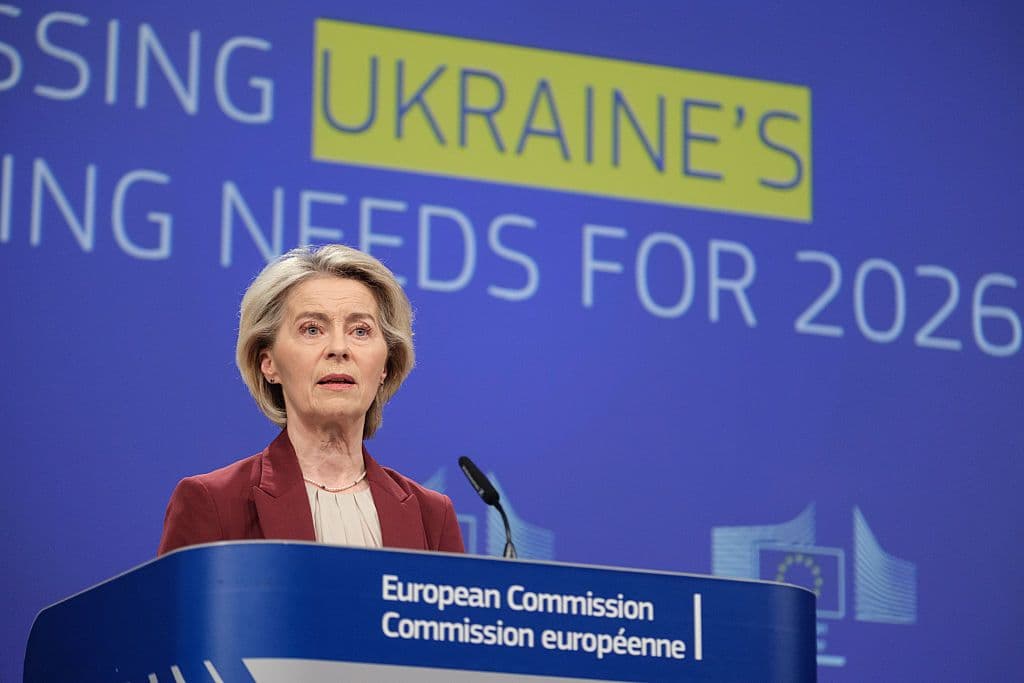
European Commission President Ursula von der Leyen unveiled two options for financing Ukraine over the next two years, as Kyiv approaches an existential cash crunch.
Speaking at a press conference in Brussels, von der Leyen said that under the first option, European countries would jointly borrow and lend the money to Ukraine. All 27 member states would have to be on board for the plan to go ahead.
The second option is the long-stalled "reparations loan" initiative, which would lend immobilized Russian central bank reserves to Ukraine. Ukraine would only pay back the money in the case that Russia pays Ukraine reparations.
That second option would only need a "qualified majority" vote — at least 15 countries representing 65% of the EU's population.
President von der Leyen said that the money would give Ukraine "the means to lead peace negotiations from a position of strength."
Ukraine will run out of cash by mid-2026 without additional financial support, and is reliant on Europe to foot the bill. Von der Leyen's announcement comes as the reparations loan — first floated in September 2025 — faced mounting obstacles in recent weeks, including strong opposition from Belgium.
A 28-point peace plan drafted without European input in November caused surprise after it proposed channeling some of those assets into a joint Russia-U.S. investment vehicle, raising questions over the politics of pursuing such a scheme altogether.
Von der Leyen said that the EU would cover two-thirds of Ukraine's needs over the next two years, which she said amounts to 90 billion euros, leaving the rest to international partners.
But Commissioner for Economy Vladis Dombrovskis said that there were up to 210 billion euros of immobilized assets in the EU, which "is the maximum loan amount which could be used" for a potential reparations loan.
The quantity foreseen under joint borrowing — the first option — is yet to be determined.
Ukraine needs approximately $63 billion in financial support over 2026-27, according to the International Monetary Fund. But when including combined military and financial estimates, the EU estimates that Ukraine needs roughly 135 billion euros ($157 billion).
Von der Leyen said that Ukraine would need to meet several conditions in order to receive the funds, which would be paid out progressively, including respect for democratic norms, the rule of law, and commitment to the fight against corruption.
The reparations loan plan — option two — has faced staunch opposition from Belgium, which cites legal and financial risks. Belgium's arguments are contested by lawyers and financial scholars.
Von der Leyen said that the commission had "listened very carefully to Belgium, and has taken almost all of (their concerns) into account."
But Maxime Prevot, Belgian foreign minister, said earlier on Dec. 3 on the sidelines of a NATO summit that "the text the commission will table today does not address our concerns in a satisfactory manner."
European countries will now discuss the details over the next weeks before a crucial summit on Dec. 18–19, where leaders will gather at a summit and vote on an option.