Chart of the week: Ukraine's shadow war behind enemy lines is picking up
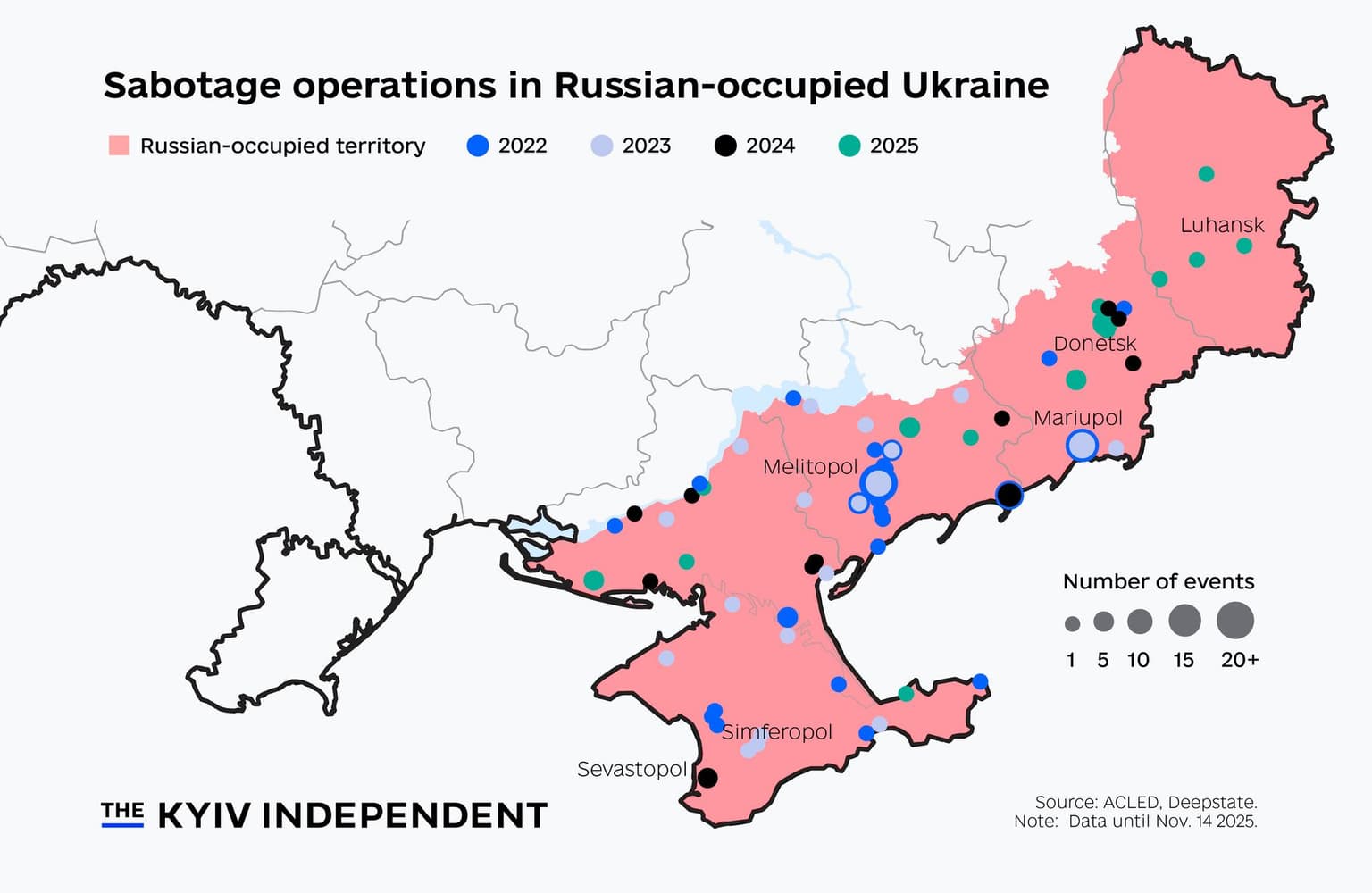
Ukrainaian sabotage operations in Russian-occupied Ukraine from 2022-2025. (Nizar al-Rifai/The Kyiv Independent)
 on Google
Sabotage activity in Russian-occupied territories is picking up after a two-year lull, according to a new report by ACLED, an organization that tracks conflicts around the world.
Pro-Ukrainian militias were particularly active in the occupied territories in 2022 following Russia's full-scale invasion, the report found — although this declined as Russia consolidated control through suppressing protests, torture, and executions.
"In 2023 and 2024, the data shows that Russia's crackdown worked," Nichita Gurcov, senior analyst at ACLED and author of the report, told the Kyiv Independent.
"But in 2025, sabotage is picking up again."
This year, ACLED recorded 37 episodes of sabotage as of Nov. 14 — more than in 2023 or 2024, and mostly driven by one armed partisan group: Atesh.
A pro-Ukrainian militia originally from Crimea, Atesh is responsible for over half of the incidents recorded within the occupied territories in 2025. The group progressively expanded operations in the occupied territories, and since 2024, has operated within Russia itself.

"Since Crimea has been occupied for over a decade, our impression is that they (members of Atesh) blend in, facing fewer hurdles in accessing occupied territories and mainland Russia," says Gurcov.
"We assume that they are more mobile than Ukrainians from the newly occupied territories, who probably face higher scrutiny from Russian security forces," he added.
ACLED identified almost 700 incidents of anti-Russian sabotage within Russia since the full-scale invasion. Aside from Atesh, those behind the attacks include the Ukrainian forces and Russian anti-war groups, and the Freedom of Russia Legion — a militia aligned with Ukrainian special forces.

Popular targets include railway and communications infrastructure, local authorities, and Russia's banking infrastructure.
But many smaller acts of sabotage likely go unrecorded — earlier this year, the Kyiv Independent reported on an all–female partisan group Zla Mavka, who claim to have mixed laxatives into food and drink served to Russian soldiers.
Russian sabotage in Ukraine has also picked up. According to the report, there have been around 400 incidents of sabotage throughout non-occupied Ukraine, with two-thirds of those attributable to recruits of Russian special services.
"From the data, it looks like Russia learned from Ukrainians how to recruit local proxies," says Gurcov, highlighting that often those people are young, unemployed, and motivated by cash.
"And it's not happening only in Ukraine. It's happening in Europe now, too. Anyone with a phone and access to encrypted messaging apps is a target."
Two Ukrainians are suspected of sabotaging the Warsaw–Lublin railway line in Poland last month, a crucial line for delivering aid to Ukraine.